
Adverse Event Monitoring for Biosimilars: How Safety Surveillance Works Today
 Jan, 20 2026
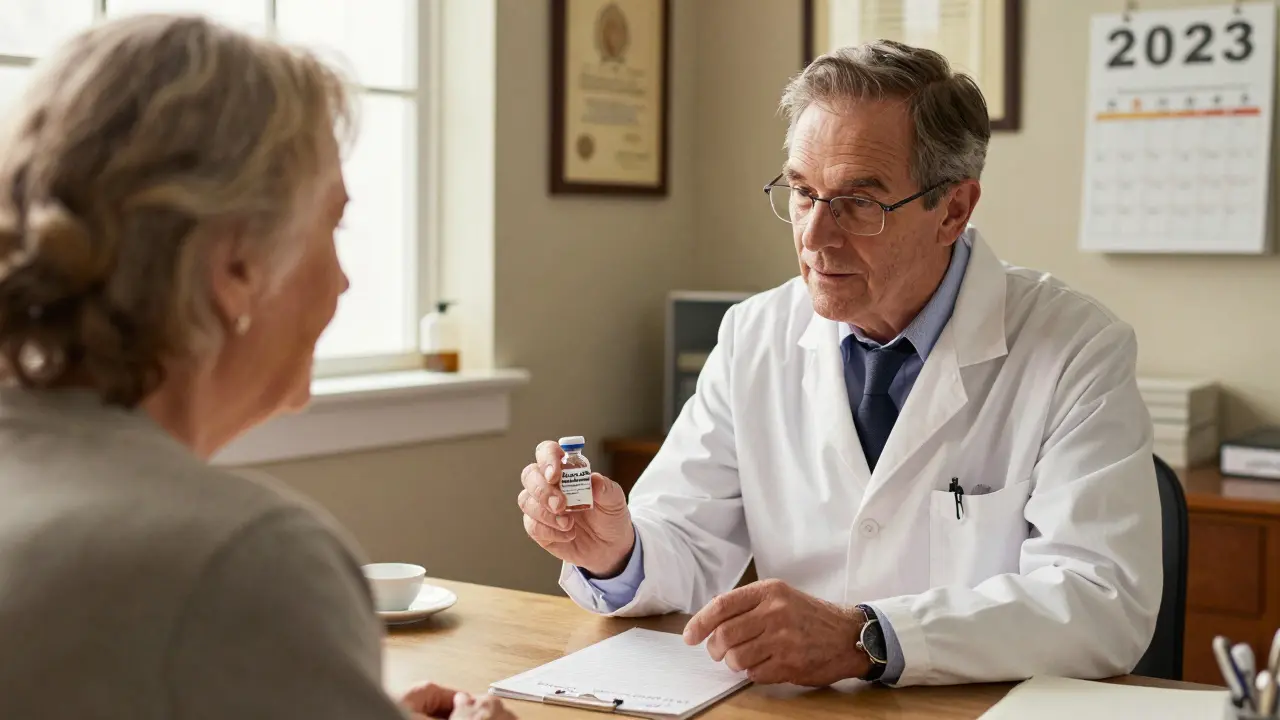
When a patient gets a biosimilar instead of the original biologic drug, they’re not getting a copy like a generic pill. Biosimilars are made from living cells-complex, delicate, and hard to replicate exactly. That’s why safety monitoring for biosimilars isn’t just a formality. It’s a critical, ongoing system designed to catch tiny differences that could affect patient safety.
Why Biosimilars Need Special Monitoring
Unlike small-molecule generics, which are chemically identical to their brand-name counterparts, biosimilars are highly similar but not identical. Even small changes in manufacturing-like the type of cell line used or how the protein is folded-can trigger immune reactions in patients. These reactions, called immunogenicity, can cause everything from mild rashes to life-threatening conditions like anaphylaxis or neutralizing antibodies that make the drug stop working. This isn’t theoretical. In 2015, a Danish study tracked over 1,200 patients switching from the reference drug to a biosimilar for rheumatoid arthritis. No new safety signals emerged. But in 2021, a U.S. hospital system noticed a spike in infusion reactions among patients on a specific biosimilar. Only after checking batch numbers did they find the issue was tied to one lot. Without proper traceability, that signal would’ve been lost in the noise.How Adverse Events Are Reported
Healthcare providers and patients report adverse events through national systems like the FDA’s FAERS or the EMA’s EudraVigilance. In the U.S., serious reactions must be reported within 15 days. Non-serious ones have a 90-day window. But here’s the problem: most reports don’t include the exact product name. In Canada, 87.3% of biologic adverse event reports in 2022 used brand names only. That means if a patient gets Amjevita (a biosimilar of Humira) and has a reaction, the report might just say "adalimumab." Is it the biosimilar? The original? Or another biosimilar? No one knows. A 2022 survey of U.S. physicians found that 63.4% felt confused when documenting these events. Hematologists and oncologists-those treating cancer patients with biosimilars-had the highest confusion rates at 81.7%.Product Identification: The Big Gap
The U.S. tried to fix this in 2017 by requiring biosimilars to have a four-letter suffix-like "-abp21" for Amjevita. But most prescribers still don’t use it. Pharmacists often substitute without telling the patient or doctor. A rheumatologist in Baltimore told Medscape she now writes both the brand and manufacturer name on every prescription: "I’ve had three cases where the pharmacy switched without documentation. I couldn’t tell if the reaction came from the biosimilar or the original. Now I make sure it’s written down." Spain solved this differently. In 2020, they required biosimilars to be clearly labeled in electronic health records. Result? Adverse event reporting accuracy jumped from 58% to 92%. That’s not magic-it’s good systems. Canada took a harder line. Starting January 1, 2023, all adverse event reports must include the specific manufacturer. Non-compliance can cost up to $500,000 CAD. The EU doesn’t require suffixes but mandates that biosimilar manufacturers track batch numbers and report them with every adverse event.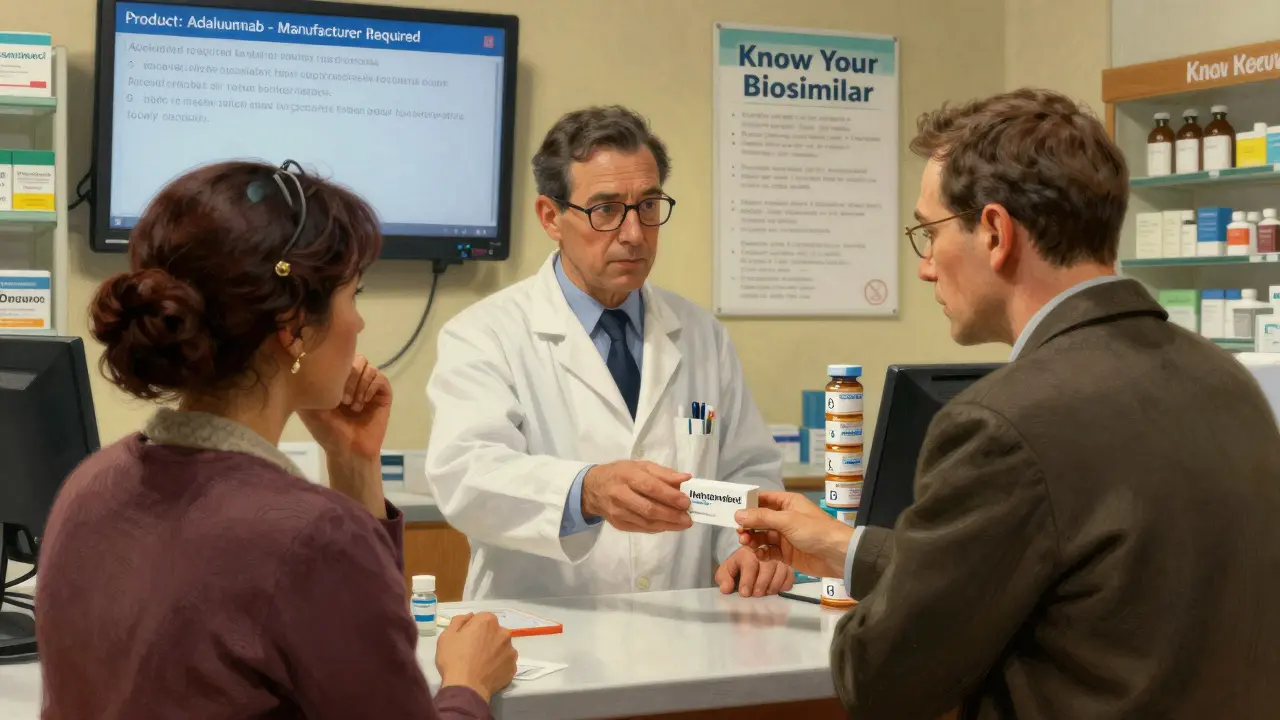
Active Surveillance: Going Beyond Reports
Spontaneous reporting is like waiting for smoke before calling the fire department. Active surveillance watches for fire before it starts. The FDA’s Sentinel Initiative uses real-world data from over 200 million patient records-insurance claims, hospital EHRs, lab results-to look for patterns. If a biosimilar suddenly shows more cases of lupus-like symptoms compared to the reference product, the system flags it. This isn’t guesswork. It’s statistical analysis across massive datasets. In Europe, the EMA launched VigiLyze in 2022-an AI tool that scans 1.2 million new case reports each year. It identifies signals with 92.4% accuracy. It doesn’t replace humans, but it cuts through the noise. One hospital in Sweden used VigiLyze to detect a rare case of vasculitis linked to a biosimilar for Crohn’s disease. The signal was too subtle for manual review.What’s in the Risk Management Plan
Every biosimilar must come with a Risk Management Plan (RMP). This isn’t a formality-it’s a living document. It must include:- How immunogenicity will be monitored in real-world use
- How to distinguish reports of the biosimilar from the reference product
- Plans for post-marketing studies if needed
- Training materials for prescribers and pharmacists
The Underreporting Problem
Despite all these systems, underreporting is rampant. In 2021, IQVIA found that biosimilars made up 8.7% of biologic prescriptions in the U.S. but only 0.3% of adverse event reports. That’s a huge gap. Why? Patients don’t know what they’re taking. A 2022 Arthritis Foundation survey found 41.2% of patients on biosimilars couldn’t say whether they received the reference product or the biosimilar. Pharmacists? Only 37.8% of U.S. pharmacists knew the correct reporting elements in a 2021 study. And even when reports come in, they’re often incomplete. A single report might say "infusion reaction" without the drug name, batch number, or patient ID. That’s not enough to trace anything.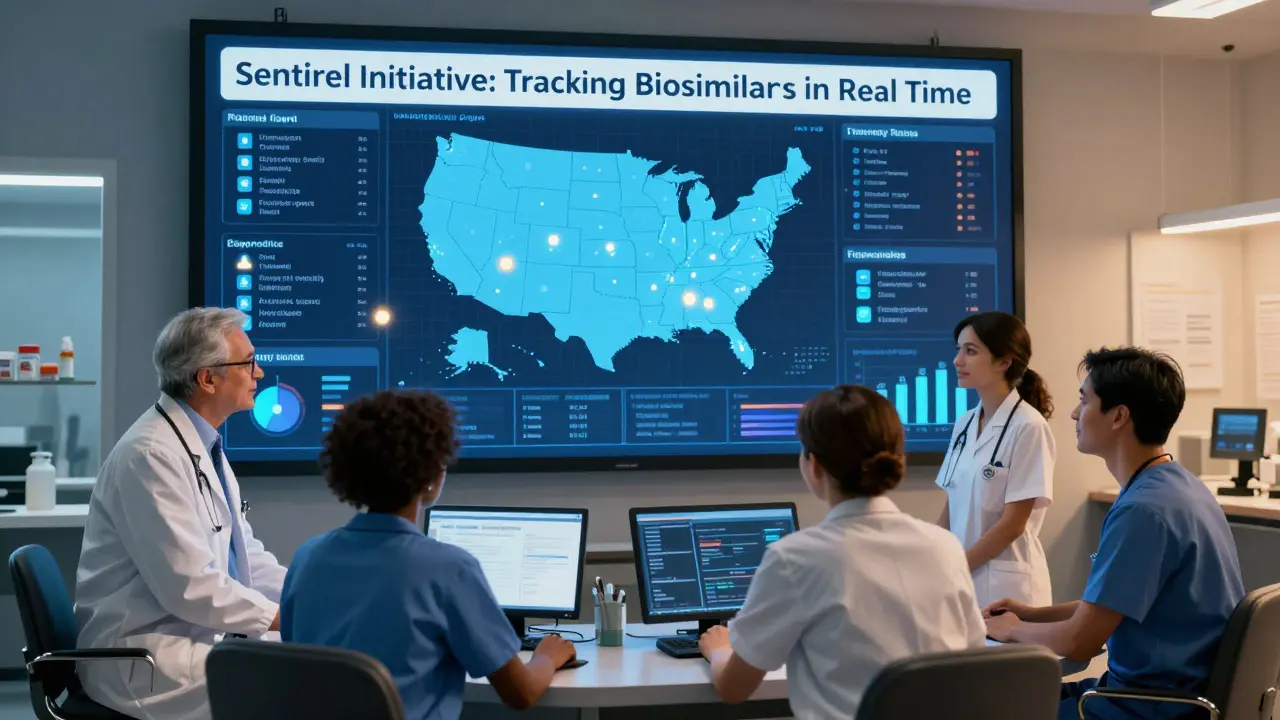
Technology Is Changing the Game
New tools are emerging to fix these gaps. AI-powered natural language processing can scan unstructured clinical notes-doctor’s handwriting, nurse’s comments, discharge summaries-and pull out biosimilar names, batch numbers, and symptoms automatically. Mid-sized pharma companies are spending $250,000 to $500,000 to integrate these tools. It takes 4-6 months. But it’s worth it. One company reduced reporting errors by 68% in 18 months. The future? A global unique identifier for every biologic batch-like a barcode on a medicine vial that links to a database. The International Pharmaceutical Regulators Programme is pushing for this by 2026. Pilot studies in Switzerland showed it could cut attribution errors by 73.5%.Costs and Challenges Ahead
Pharmacovigilance for a single biosimilar costs about $2.1 million per year in the U.S. That’s 18.3% of total post-approval spending. For companies with multiple biosimilars, it adds up fast. But the bigger challenge is scale. In 2022, the U.S. approved 10 new biosimilars. The EU had 43 approved by the end of that year. The global market is expected to hit $34.9 billion by 2028. Right now, most systems were built for one or two biosimilars. They’re not ready for 300. The WHO warned in 2023 that current systems will need a complete redesign by 2030. The biggest missing piece? Standardized ways to measure immunogenicity across different products. Right now, 87.2% of national regulators don’t have one.What This Means for Patients
You don’t need to be a scientist to understand this: if you’re on a biosimilar, you should know exactly which one you’re taking. Ask your pharmacist. Check your prescription. Write down the manufacturer name. If you have a reaction, report it-and make sure they know which product you used. Biosimilars save money. They expand access. But only if we can trust their safety. That trust isn’t automatic. It’s built through clear labeling, accurate reporting, and systems that don’t lose track of who got what. The technology exists. The rules are mostly in place. What’s missing is consistent action-from doctors, pharmacists, patients, and manufacturers alike.Are biosimilars as safe as the original biologic drugs?
Yes, based on current data. Regulatory agencies like the FDA and EMA require biosimilars to show no clinically meaningful differences in safety, purity, or effectiveness compared to the reference product. Real-world studies in Denmark, Canada, and the U.S. have not found higher rates of serious adverse events. But safety monitoring continues because small differences in immunogenicity can emerge only after thousands of patients use the drug over time.
Why can’t biosimilars be called "generics"?
Generics are exact chemical copies of small-molecule drugs. Biosimilars are made from living cells, so they’re inherently more complex. Even tiny changes in manufacturing can affect how the drug behaves in the body. That’s why they’re called "similar," not "identical." They require more testing and ongoing safety monitoring than generics ever did.
How do I know if I’m getting a biosimilar?
Ask your doctor or pharmacist. The product name should be clearly listed on your prescription and pharmacy label. In the U.S., biosimilars have a four-letter suffix (e.g., Humira vs. Amjevita). In Canada and Europe, the manufacturer name is required on the packaging. If you’re unsure, request the specific name and manufacturer before taking the medication.
What should I do if I have a reaction to a biosimilar?
Contact your healthcare provider immediately. Then, report the reaction. When you do, make sure to include: the exact name of the product (including manufacturer), the batch number (found on the vial or box), and your symptoms. Even if you’re not sure which product you received, report it anyway-this helps regulators spot patterns.
Why do some countries use suffixes and others don’t?
The U.S. adopted four-letter suffixes in 2017 to help track biosimilars in reports and electronic records. The EU decided against them, fearing confusion and that patients might think biosimilars are inferior. Instead, they rely on brand names and batch tracking. Canada uses brand names and now requires manufacturer identification in reports. There’s no global standard yet, but efforts are underway to harmonize.
Is there a global database for biosimilar adverse events?
Yes. The World Health Organization’s VigiBase holds over 28 million individual case safety reports from over 130 countries. National systems like the FDA’s FAERS and EMA’s EudraVigilance feed into it. All reports use standardized medical coding (MedDRA) so data can be compared across borders. But not all countries report fully, and many still don’t include batch numbers or manufacturer details.
Can biosimilars be switched back and forth safely?
For non-interchangeable biosimilars, switching isn’t recommended without medical supervision. For FDA-approved interchangeable biosimilars, studies show switching is safe in most cases. But long-term data is still limited. The FDA now requires post-marketing studies for interchangeable products to monitor effects of multiple switches. Patients should be informed and monitored closely if switching occurs.
How do I report an adverse event from a biosimilar?
In the U.S., report to the FDA through MedWatch (online or by phone). In Canada, use the Canada Vigilance Program. In the EU, report to your national authority. Always include: the product name (including manufacturer and batch number), your symptoms, when they started, and whether you were taking any other medications. If you’re unsure of the product, report anyway-your report still helps.
Jerry Rodrigues
January 20, 2026 AT 17:14Sangeeta Isaac
January 22, 2026 AT 09:47Uju Megafu
January 24, 2026 AT 07:10lokesh prasanth
January 24, 2026 AT 23:06Samuel Mendoza
January 25, 2026 AT 16:41Melanie Pearson
January 27, 2026 AT 09:53MARILYN ONEILL
January 27, 2026 AT 19:40Philip Williams
January 28, 2026 AT 21:22Malvina Tomja
January 29, 2026 AT 14:04Glenda Marínez Granados
January 29, 2026 AT 20:53Coral Bosley
January 31, 2026 AT 08:57Alex Carletti Gouvea
February 1, 2026 AT 18:05