
Asthma and COPD Medications: Key Interactions and Safety Risks You Need to Know
 Dec, 23 2025
Asthma & COPD Medication Safety Checker
Check Your Medications for Safety Risks
Enter medications you're currently taking to see if any could interact dangerously with your asthma or COPD treatments.
Safety Results
When you’re managing asthma or COPD, your inhaler isn’t the only thing that affects your breathing. Many of the medications you take for other conditions - pain, allergies, heart issues, even colds - can quietly make your lungs worse. These aren’t rare side effects. They’re common, dangerous, and often overlooked. In fact, 37% of moderate-to-severe COPD patients are taking at least one medication that could trigger a flare-up or hospitalization, according to experts at National Jewish Health.
What Medications Are Actually Dangerous?
Not all drugs are created equal when it comes to respiratory safety. Some are obvious risks, like opioids. Others? You’d never guess they’re a problem.Opioids - think oxycodone, hydrocodone, morphine - slow down your breathing. For someone with COPD, whose lungs are already struggling, this can be deadly. Combine opioids with benzodiazepines (like Xanax or Valium) and the risk of severe respiratory depression jumps by 300%. The FDA’s own data shows that 17% of opioid-related hospitalizations in COPD patients involved this exact combo.
Nonselective beta-blockers like propranolol and nadolol are another silent threat. These are often prescribed for high blood pressure or heart rhythm issues. But they block beta-2 receptors in your lungs - the same ones your asthma inhaler tries to open. In susceptible people, this can drop FEV1 (a key measure of lung function) by 15-25%. That’s enough to trigger a full-blown attack. Selective beta-blockers like metoprolol are safer, but even then, 2-5% of asthma patients still react.
NSAIDs - ibuprofen, naproxen, aspirin - are common pain relievers. But for about 10% of adults with asthma, especially those with nasal polyps, these drugs cause sudden, severe bronchoconstriction. One Reddit user, "BreathingHard2020," described a near-fatal asthma attack after taking ibuprofen for a headache. It wasn’t an anomaly. Asthma + Lung UK’s 2023 survey found that 31% of respondents had breathing problems linked to non-respiratory meds.
Anticholinergics are trickier. You’re probably taking them in your inhaler - tiotropium, glycopyrrolate, umeclidinium. But if you’re also taking oxybutynin for an overactive bladder, diphenhydramine (Benadryl) for allergies, or amitriptyline for depression, you’re doubling down on anticholinergic effects. This can lead to dry mouth, constipation, urinary retention - and in men with COPD, a 28% higher risk of acute urinary retention, according to the European Respiratory Society.
Certain antibiotics and antifungals like clarithromycin and ketoconazole interfere with how your liver breaks down other drugs. They can cause dangerous buildups of bronchodilators like salmeterol or formoterol, increasing the risk of heart palpitations, tremors, or even arrhythmias.
Why Do These Interactions Happen?
It’s not just about what you’re taking - it’s how your body handles it.Many asthma and COPD drugs are metabolized by the liver using the CYP3A4 enzyme system. When another drug blocks that system - like ketoconazole or clarithromycin - your bronchodilator stays in your system longer than it should. That’s why a standard dose of salmeterol can become toxic if you’re also on an antifungal.
Then there’s the additive effect. Two drugs that do the same thing - like two anticholinergics - don’t just add up. They multiply. One inhaler might be fine. Add a bladder pill and a sleep aid, and suddenly your body is drowning in anticholinergic activity.
And don’t forget masking. Alpha-agonists in some cold medicines can reduce your heart rate, hiding the early warning sign of beta-agonist overuse - rapid heartbeat. You think you’re fine, but your lungs are being overworked. By the time you feel symptoms, it’s too late.
What About Newer Medications?
The landscape is changing. Newer drugs like ensifentrine (a dual PDE3/4 inhibitor) are being combined with LAMAs for better results. But research shows no benefit - and possible harm - when paired with SABAs like albuterol. That’s why combination inhalers like Anoro Ellipta (vilanterol + umeclidinium) and Bevespi Aerosphere (formoterol + glycopyrrolate) are designed with specific, proven pairings.Even biologics - the newer injectables for severe asthma - aren’t immune. While they don’t directly interact with other drugs, their use often means patients are on more medications overall. More meds = more chances for something to go wrong.
And the FDA is paying attention. Their Sentinel Initiative now actively tracks respiratory drug interactions. Early data shows rising concerns with opioid-LAMA combos - a dangerous mix that’s becoming more common as COPD patients age and develop other chronic conditions.

How to Protect Yourself
Knowledge is power - but only if you use it.Keep a complete, up-to-date medication list. Not just your inhalers. Include every pill, patch, supplement, herbal remedy, and over-the-counter cold medicine. Write down the dose and why you take it. Do this every time you see a doctor - even your dentist.
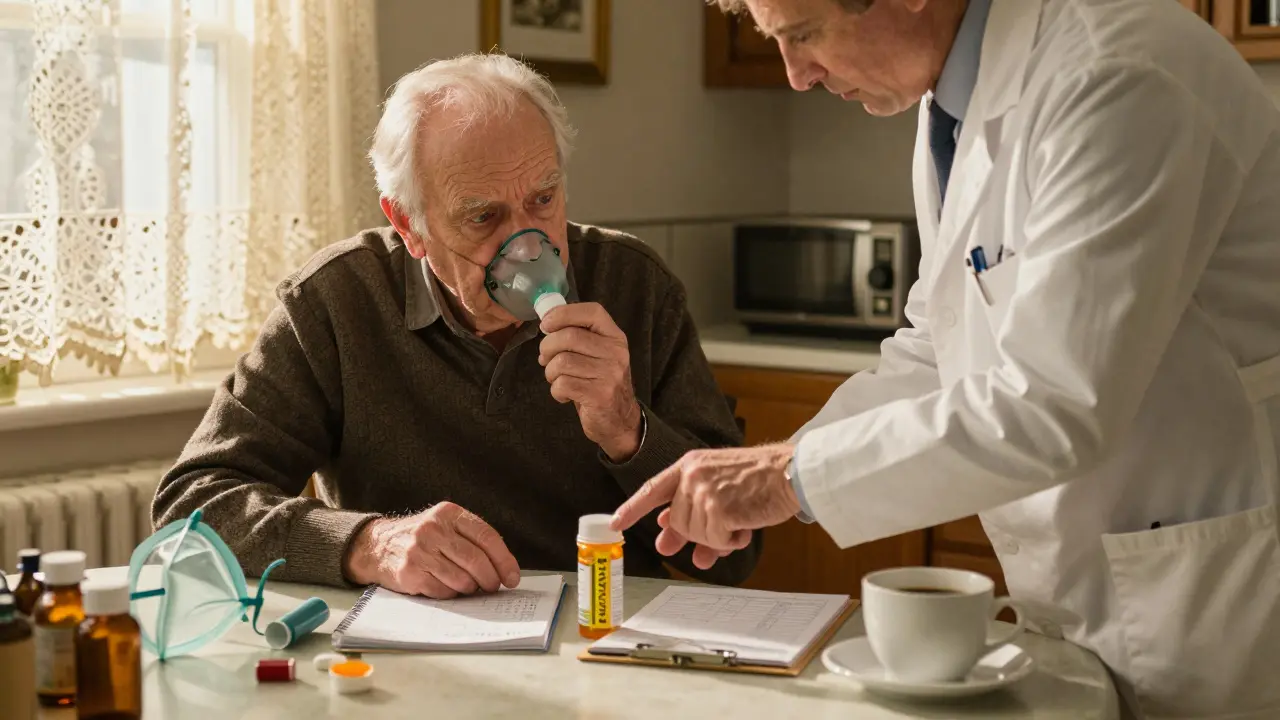
Do the "brown bag test." Once a year, or after any new prescription, bring all your meds - in the actual bottles - to your pulmonologist or pharmacist. Don’t rely on memory. Pills get mixed up. Labels fade. Bottles get lost.
Ask your pharmacist before taking anything new. Pharmacists are trained to spot interactions. They see hundreds of prescriptions a day. A simple question - "Will this affect my breathing?" - could save you a hospital trip.
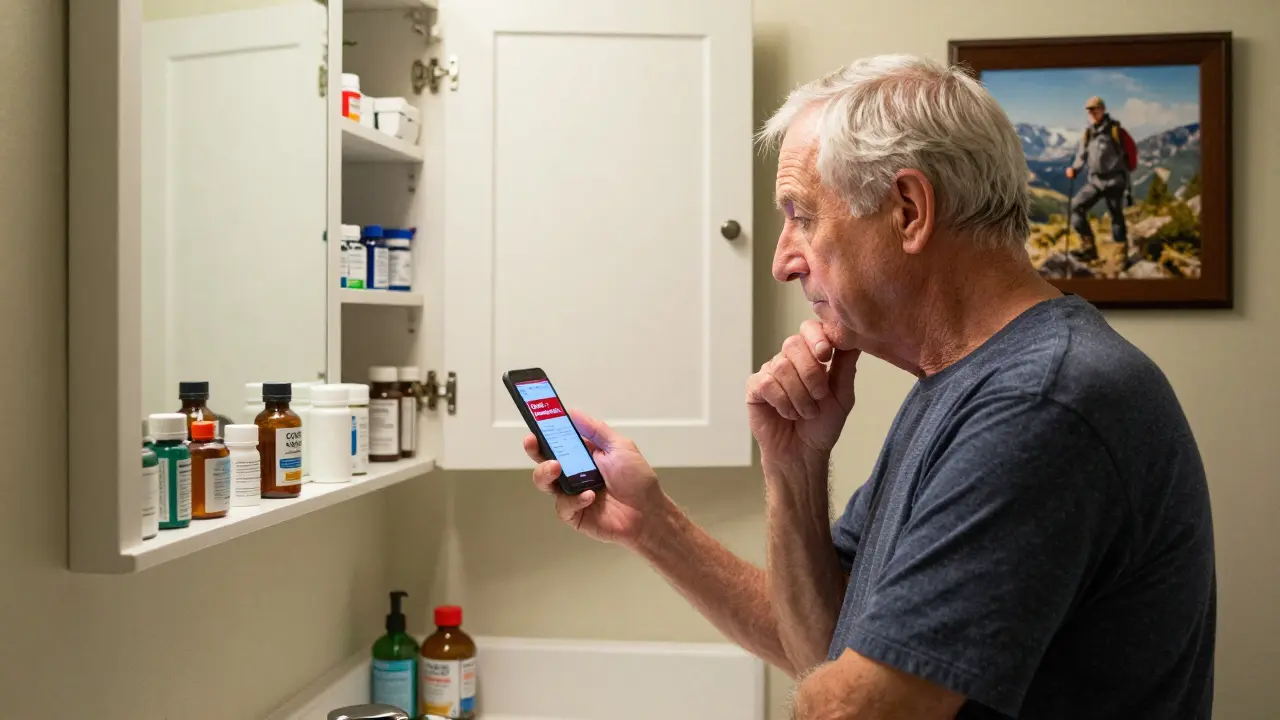
Use digital tools. The COPD Medication Safety App, launched in 2023, checks over 95% of commonly used drugs for interactions with respiratory meds. It’s free, easy to use, and works offline.
Know your warning signs. If you suddenly feel more short of breath, dizzy, confused, or your heart is racing - even if you think it’s "just a cold" - stop and reassess. Don’t wait. Call your doctor.
What Doctors and Pharmacies Are Doing
Healthcare systems are catching up. Clinical pharmacists working in respiratory clinics have cut dangerous drug combinations by 43% in just 12 months, according to a 2022 study. Electronic health records now include alerts for high-risk combos - like opioids with benzodiazepines - and have reduced dangerous prescriptions by 29%.The American Lung Association’s "Medication Safety Action Plan" gives patients a color-coded chart to track meds, side effects, and red flags. It’s simple. It’s practical. And it works.
Doctors are also shifting how they prescribe. The 2021 BLOCK-COPD trial showed that switching COPD patients from nonselective to selective beta-blockers reduced exacerbations by 14%. That’s not just a statistic - it’s fewer hospital stays, fewer missed workdays, fewer nights spent gasping for air.
Real People, Real Risks
Behind every number is someone’s life."COPDSurvivor87" on Reddit spent three days in the ICU after mixing oxycodone with diphenhydramine. His oxygen saturation dropped to 82%. He didn’t know Benadryl could do that. Neither did his doctor.
On the COPD Foundation’s forums, a thread titled "Medication Roulette" has over 240 comments. People sharing near-misses: a heart pill that made their breathing worse, a muscle relaxant that triggered panic attacks, a supplement that interacted with their inhaler.
These aren’t mistakes. They’re system failures. Patients aren’t being warned. Prescriptions aren’t being checked. And too many people assume their inhaler is the only thing that matters.
What You Can Do Today
1. Grab your meds. Pull out every bottle, box, and pill organizer you have.2. Write them down. Name, dose, frequency, reason. Don’t skip the ginseng or the melatonin.
3. Call your pharmacist. Ask: "Are any of these dangerous for my lungs?"
4. Bring the list to your next appointment. Don’t wait for your next flare-up to ask.
5. Download the COPD Medication Safety App. It’s free. It’s real. And it’s updated for 2025.
You don’t need to be a medical expert to protect yourself. You just need to be informed - and willing to ask the hard questions.
Your lungs are working harder than you know. Don’t let a pill you didn’t think mattered make it worse.
Andrea Di Candia
December 23, 2025 AT 18:10It’s wild how we treat our lungs like they’re just background noise until they scream. I used to think if it wasn’t an inhaler, it couldn’t hurt my breathing. Turns out, my nightly melatonin and that ibuprofen for my knee? Total landmines. I started keeping a little notebook - meds, supplements, even that chamomile tea I swore was harmless. Now I bring it to every appointment. Small habit. Huge difference.
And honestly? I’m grateful this post exists. Too many of us are flying blind.
bharath vinay
December 25, 2025 AT 04:0637%? That’s the number they want you to believe. The real statistic is that Big Pharma doesn’t want you to know how many of these drugs are designed to keep you dependent. Opioids? Beta-blockers? NSAIDs? All of them were pushed hard by companies who knew the risks but didn’t care as long as the prescriptions kept rolling in. The FDA? A rubber stamp. Your pharmacist? Paid to look the other way. Wake up.
Dan Gaytan
December 26, 2025 AT 17:09This is so important 💙 I just showed this to my dad - he’s got COPD and was taking that Benadryl for allergies every night. Didn’t realize it could tank his oxygen. We called his pulmonologist today and switched him to a non-drowsy option. He’s already breathing easier. Thank you for sharing this. People need to hear it.
Also, the COPD Medication Safety App? Downloaded it. Lifesaver.
Usha Sundar
December 28, 2025 AT 12:53My inhaler cost more than my rent last month. But I’m not touching anything else. Not even aspirin.
claire davies
December 28, 2025 AT 21:09Oh my goodness, this hit home in the most unexpected way. I’m from London, and I’ve got asthma - not severe, but enough that I’ve had my fair share of ‘mysterious’ flare-ups. I used to blame the weather, the pollen, even my cat. Turns out? It was the codeine-based cough syrup I took after my flu last winter. My pharmacist had no idea I was on a LAMA inhaler. No one asked. No one flagged it.
Now I carry a laminated card in my wallet - ‘Asthma Patient. Avoid: NSAIDs, Anticholinergics, Opioids.’ I hand it to every new doctor. They’re always surprised. But then they thank me. It’s not about being difficult - it’s about being the only one who’s paying attention.
And yes, I’ve downloaded the app. I even showed my mum. She’s 72, on five meds, and thought ‘herbal tea’ was safe. We had a long chat. She’s now on a safer alternative for her sleep. Small wins, right?
Wilton Holliday
December 30, 2025 AT 06:54Just want to say - if you’re reading this and you’re scared? You’re not alone. I’ve been there. I thought my breathing issues were just ‘getting older.’ Turns out, it was a beta-blocker for my blood pressure. Switched to metoprolol, and my FEV1 jumped back up. My doctor didn’t know either - he just saw ‘hypertension’ and wrote the script.
Don’t be afraid to push back. Ask: ‘Is this safe for my lungs?’ Say it like you mean it. You’re not being difficult - you’re being smart. And if they roll their eyes? Find a new doctor. Your lungs don’t get a do-over.
Abby Polhill
December 30, 2025 AT 19:10From a clinical pharmacology standpoint, the CYP3A4 inhibition cascade with macrolides and azoles is particularly concerning in polypharmacy COPD cohorts. The pharmacokinetic half-life extension of long-acting beta-agonists can lead to supratherapeutic plasma concentrations, triggering adrenergic overstimulation - manifesting as tachycardia, tremor, and paradoxical bronchospasm. The ERS guidelines (2023) recommend TDM for salmeterol in patients on concomitant ketoconazole. The app is a useful heuristic, but it lacks granular CYP isoform mapping. Still, better than nothing.
Bret Freeman
December 31, 2025 AT 12:28They don’t want you to know this. They don’t want you to know that your inhaler is just a Band-Aid while they pump you full of drugs that make you sicker. The FDA? They’re owned. The doctors? They’re trained to trust the pill, not the patient. I’ve seen people die from this. And the system? It just moves on to the next one. This isn’t medicine. It’s profit-driven negligence. And you? You’re the next target.
Stop trusting the system. Start trusting yourself. And stop taking anything you didn’t personally research. Every. Single. Pill.
Lindsey Kidd
January 1, 2026 AT 09:17Thank you for writing this. I’m a nurse, and I’ve seen too many patients come in gasping because they took ‘just one’ Advil. I always ask about OTC meds - but most people don’t even think to mention them. I’m printing this out and handing it to every COPD patient I see. 💙
Rachel Cericola
January 2, 2026 AT 10:32Let’s be real - the real problem isn’t just the drug interactions. It’s the lack of coordination between specialists. My pulmonologist didn’t know I was on oxybutynin. My urologist didn’t know I had asthma. My PCP didn’t know I was on salmeterol. Three different doctors. Three different charts. No one talking. And I was the one who had to connect the dots after I almost ended up in the ER.
That’s why I now insist on a single pharmacist managing all my meds. I pay for a medication therapy management (MTM) session every quarter. It costs $50. I’ve saved $12,000 in ER visits since. This isn’t just advice - it’s survival. If your doctor won’t coordinate? Find one who will. Your lungs will thank you.
CHETAN MANDLECHA
January 3, 2026 AT 01:03While the pharmacological interactions described are indeed valid, one must also consider the socio-economic context wherein patients in developing nations may have limited access to specialized pulmonary care. The suggestion to consult a pharmacist may be impractical where pharmacies lack trained personnel or where medications are procured through unregulated channels. A standardized, low-tech patient education pamphlet, distributed via primary health centers, may yield greater population-level impact than digital applications. The principle remains: awareness, however low-tech, saves lives.