
Best Reliable Online Resources for Generic Drug Information
 Jan, 5 2026
Why generic drug info needs to be accurate
More than 78% of all prescriptions filled in the U.S. are for generic drugs. That’s over 3.8 billion prescriptions a year. But knowing which generic is safe to swap for another isn’t always obvious. Some generics work the same way. Others don’t. And getting it wrong can mean your blood pressure doesn’t drop, your seizure returns, or your thyroid levels go haywire. The stakes are real. In 2022, nearly 7.4% of medication errors reported to the Institute for Safe Medication Practices were tied to confusion over generic drugs - especially around therapeutic equivalence. You need trustworthy sources. Not blogs. Not forums. Not random websites with ads for weight loss pills.
DailyMed: The official FDA label source
If you want the exact wording the FDA approved for a drug - down to the warnings, dosing notes, and storage instructions - DailyMed is the only place to go. It’s run by the National Library of Medicine and pulls directly from the FDA’s official drug labeling system. Every change the FDA makes to a drug’s label shows up here within 72 hours. As of October 2023, it had over 92,000 drug entries. That’s nearly every generic and brand-name drug on the market.
It’s not pretty. The layout is clunky. The language is technical. But if you’re a pharmacist, a nurse, or someone who needs to verify whether a generic is truly interchangeable, DailyMed is your gold standard. Hospitals and pharmacies rely on it for compliance. State pharmacy boards in 37 states require access to DailyMed or similar FDA-approved sources. It’s the only free resource that’s legally recognized as the official source of drug labeling in the U.S.
MedlinePlus: Simple, clear, and made for patients
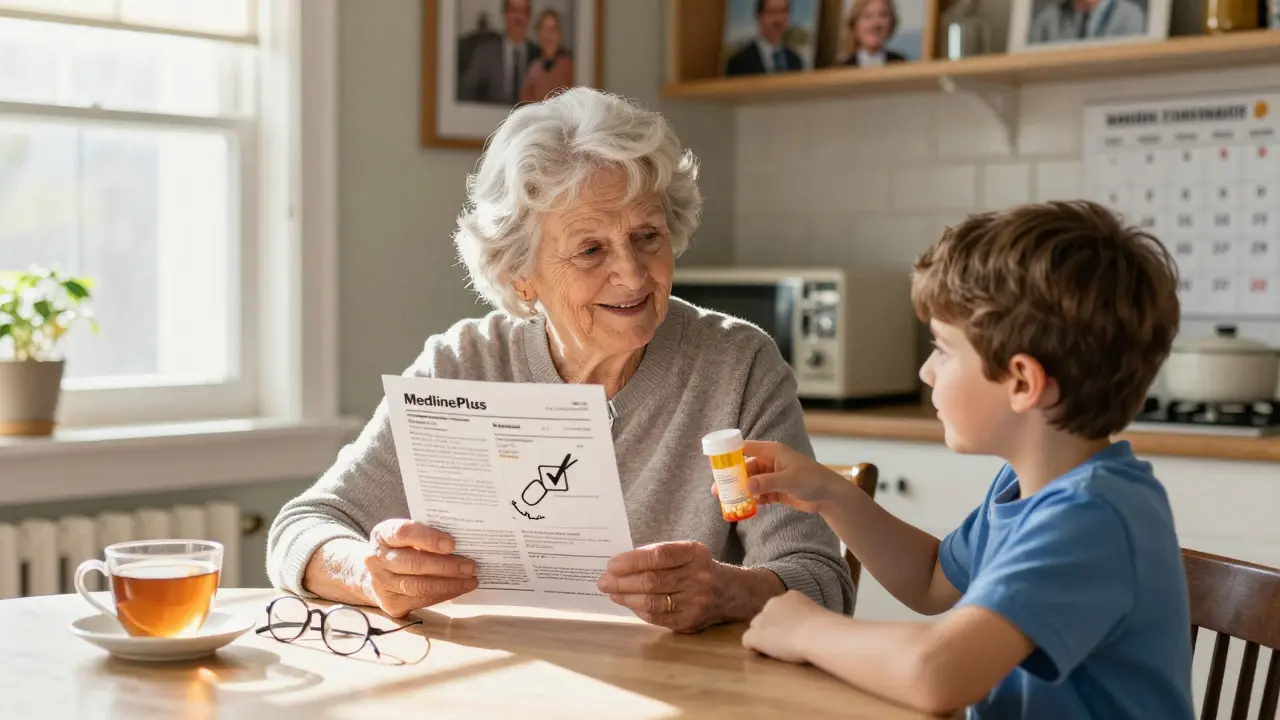
MedlinePlus is what you give to your mom, your teenager, or your neighbor who just got a new prescription. It’s also run by the National Library of Medicine, but it’s built for people who aren’t doctors. The reading level is set at a 6th to 8th grade level. No jargon. No Latin terms. Just plain English. It covers over 17,500 drugs, herbs, and supplements, with easy-to-read monographs on side effects, what to avoid, and what to expect.
It’s updated 15 to 20 times a day. That’s faster than most news sites. And it’s available in Spanish too. In 2023, over 450,000 healthcare providers used it to answer patient questions. Patients give it a 4.7 out of 5 stars on Google. The most common praise? “It explained my medicine in a way I finally understood.” The most common complaint? “It doesn’t tell me exactly how many pills to take.” That’s because it avoids giving specific dosing - it points you to your doctor instead. That’s actually a strength. It keeps people from guessing.
Drugs.com: Fast, free, and full of tools
Drugs.com gets 12 million visits a day. Why? Because it’s fast. Type in a drug name, and you get a summary in seconds. It has a pill identifier tool that lets you match a pill by color, shape, and imprint - and it works 89% of the time. Its drug interaction checker caught 92.4% of dangerous interactions in a Johns Hopkins study, beating most free alternatives.
It pulls data from FDA labels, AHFS Drug Information, and Micromedex, so the info is solid. The downside? Ads. Lots of them. And the layout can feel cluttered. But for quick checks - “Can I take this with my beer?” or “What does this pill look like?” - it’s hard to beat. Many pharmacists and nurses use it as their first stop before digging into more detailed sources. One Reddit user summed it up: “I use DailyMed for the fine print. Drugs.com for the 3 a.m. panic check.”
The FDA Orange Book: For when equivalence matters
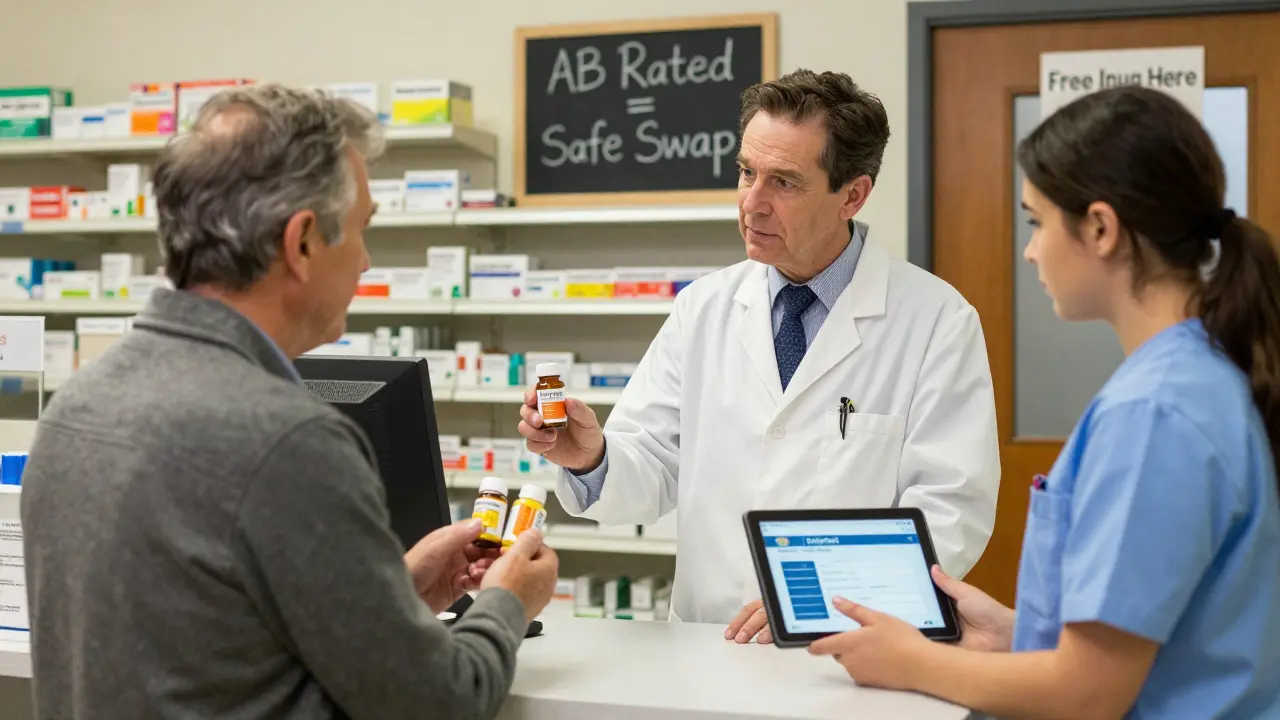
If you’re switching from one generic to another - especially for drugs like levothyroxine, warfarin, or seizure meds - you need the Orange Book. Officially called “Approved Drug Products with Therapeutic Equivalence Evaluations,” it tells you which generics are rated as AB (therapeutically equivalent) and which aren’t. Not all generics are created equal. Some have small differences in how they’re absorbed. For most drugs, that doesn’t matter. For others, it can be life-changing.
As of November 2023, the Orange Book listed over 20,000 approved generic products. It’s updated monthly. You can search it online or download the data for use in pharmacy systems. It’s not user-friendly for the average person. But if you’re a pharmacist, doctor, or someone managing a chronic condition with a narrow therapeutic index, this is the source that tells you whether swapping is safe.
What professionals actually use
Most healthcare workers don’t rely on just one source. They use a mix. A 2023 survey by the American Society of Health-System Pharmacists found that 92% of hospital pharmacists use at least two resources daily. The top three? DailyMed (used by 89%), Lexicomp (76%), and MedlinePlus (68%).
Community pharmacists - the ones at your local pharmacy - lean more on free tools. DailyMed (84%), MedlinePlus (61%), and Drugs.com (57%) are their go-tos. Why? Budgets. Many small pharmacies can’t afford Lexicomp or Clinical Pharmacology, which cost hundreds per year per user.
Doctors? They want speed. A 2022 JAMA survey showed 63% of physicians prefer Epocrates for quick lookups because it loads in under 30 seconds. But for detailed info, they turn to DailyMed. Patients? They need clarity. That’s where MedlinePlus wins.
What’s missing - and what you should know
Free resources have limits. DailyMed doesn’t have mobile apps that work well. MedlinePlus doesn’t give exact dosing. Drugs.com is full of ads. None of them track your personal meds or send alerts if a drug you’re taking gets recalled.
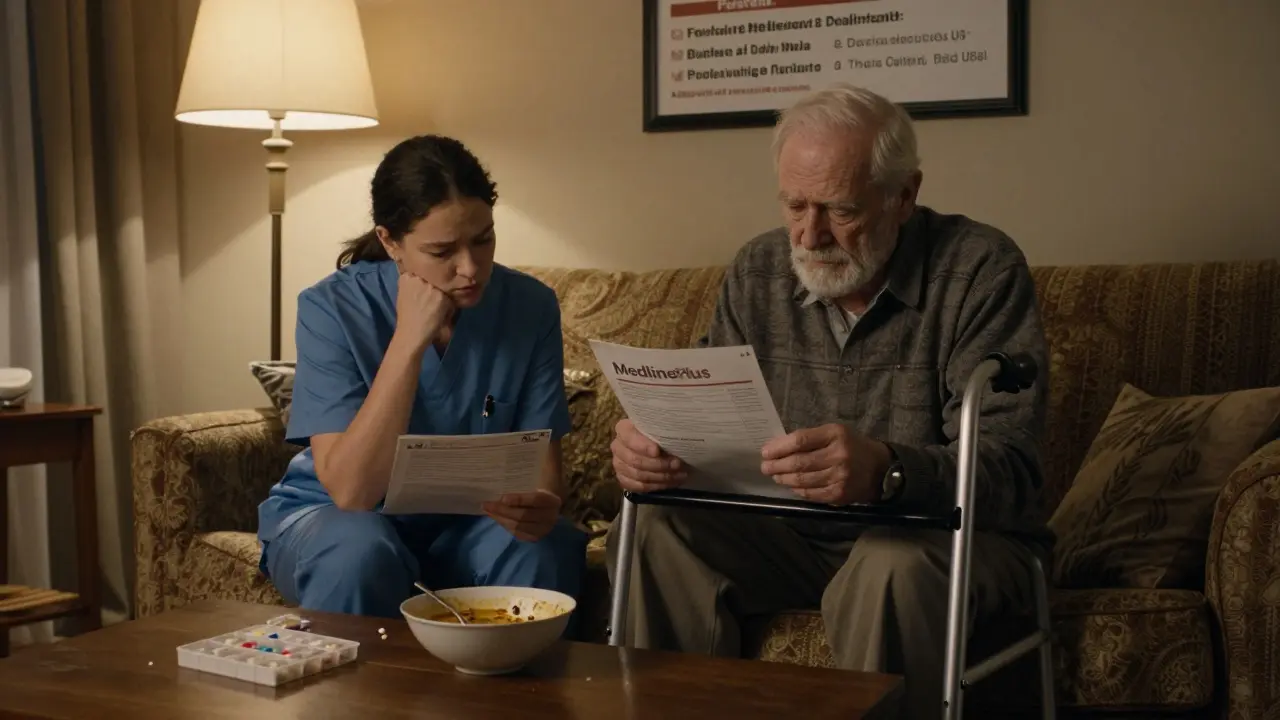
For complex cases - like someone on five medications, with kidney disease and a history of falls - you need more than free tools. Paid services like Lexicomp or Clinical Pharmacology update faster, offer drug interaction alerts, and include pharmacogenomic data. But for most people, free tools are enough.
One big warning: Don’t trust random apps or websites that say “FDA-approved” but aren’t DailyMed or MedlinePlus. The FDA’s BeSafeRx campaign has found hundreds of fake sites mimicking official ones. Always check the URL. DailyMed is dailymed.nlm.nih.gov. MedlinePlus is medlineplus.gov. If it looks different, it’s not real.
What’s coming next
The government is upgrading these tools. In 2024, the FDA plans to update the Orange Book with real-world data - not just lab results - to better judge if a generic really works the same. MedlinePlus is adding multilingual alerts in 15 languages by late 2024. DailyMed now has an API that connects to most electronic health records. That means your doctor’s system might soon auto-check for interactions or substitutions before prescribing.
But here’s the bottom line: The best tools are still free. And they’re still run by the government. No ads. No paywalls. No hype. Just facts.
What to do right now
- If you’re a patient: Bookmark medlineplus.gov. Use it to understand your new meds.
- If you’re switching generics: Check the FDA Orange Book to see if the new one is rated AB.
- If you need the full label: Go to dailymed.nlm.nih.gov.
- If you’re in a hurry: Use drugs.com for quick answers - but double-check with DailyMed if it’s something serious.
- If you’re a caregiver: Print out the MedlinePlus page for your loved one’s meds. Keep it in their wallet.
Generic drugs save billions. But they only work if you know which one to take. Stick to the official sources. They’re free. They’re accurate. And they’re built to keep you safe.
Can I trust generic drugs from online pharmacies?
Only if the pharmacy is verified. The FDA’s BeSafeRx campaign warns that many online pharmacies sell fake or unapproved generics. Always use pharmacies that are licensed in your state and display a VIPPS seal (Verified Internet Pharmacy Practice Sites). If a site offers drugs at prices that seem too good to be true, they probably are. Stick to known names like CVS, Walgreens, or your local pharmacy. For drug info, use DailyMed or MedlinePlus - not the website selling the pill.
Why does my doctor say my new generic isn’t the same as the last one?
Not all generics are rated as therapeutically equivalent. The FDA’s Orange Book lists which ones are (rated AB) and which aren’t. For drugs like levothyroxine, warfarin, or certain seizure meds, even small differences in absorption can matter. Your doctor may have switched you to a different manufacturer because your insurance changed - but if you notice new side effects or your condition isn’t stable, ask if the new generic is rated AB. You can check this yourself on the FDA’s Orange Book website.
Is MedlinePlus really reliable? I’ve seen conflicting info on other sites.
Yes. MedlinePlus is run by the U.S. National Library of Medicine, part of the National Institutes of Health. Every piece of information is reviewed by pharmacists and medical experts. It doesn’t accept ads or sponsorships. Other sites might copy data from MedlinePlus - but they might also pull from unreliable sources. If you see conflicting info, always check MedlinePlus first. It’s the most trusted consumer health site in the U.S., used by hospitals, clinics, and government agencies.
Can I use Drugs.com to check for interactions with my supplements?
Yes, but with caution. Drugs.com includes over 17,000 herbs and supplements in its interaction checker. It’s one of the few free tools that does. But supplement data isn’t as tightly regulated as prescription drugs. The interactions listed are based on case reports and limited studies - not large clinical trials. If you’re taking a supplement with a blood thinner, heart medication, or antidepressant, always talk to your doctor or pharmacist. Use Drugs.com as a starting point, not the final word.
Do I need to pay for a drug app like Lexicomp?
Only if you’re a healthcare professional managing complex cases. For patients, free tools like MedlinePlus, DailyMed, and Drugs.com cover 95% of needs. Lexicomp, Clinical Pharmacology, and Epocrates are expensive - often $500 to $1,200 per year. They’re designed for hospitals and clinics that need real-time alerts, pharmacogenomic data, and detailed dosing for critically ill patients. If you’re just trying to understand your own meds, you don’t need them. Stick with the free, government-backed sources.
Brian Anaz
January 6, 2026 AT 02:10Venkataramanan Viswanathan
January 6, 2026 AT 23:18Tiffany Adjei - Opong
January 8, 2026 AT 08:41Cam Jane
January 9, 2026 AT 11:19And if you’re worried about interactions? Ask your pharmacist. They’re not paid by ads. They’re paid to keep you alive.
Isaac Jules
January 11, 2026 AT 09:53Stuart Shield
January 11, 2026 AT 20:32Lily Lilyy
January 11, 2026 AT 22:30Ashley S
January 12, 2026 AT 13:13Leonard Shit
January 13, 2026 AT 10:22