
Clindamycin and C. difficile Risk: When to Seek Care
 Feb, 13 2026
C. diff Risk Timeline Calculator
Know Your Risk Period
Clindamycin disrupts gut bacteria, creating a window where C. diff infection can develop. Your risk remains for up to 12 weeks after your last dose.
Important: 68.3% of cases occur within 14 days after stopping clindamycin. Do not ignore symptoms during this period.
Your C. diff Risk Period
When you take clindamycin for a tooth infection, a skin abscess, or even as a preventive shot before surgery, you’re trusting it to kill the bad bacteria. But there’s a hidden risk you might not know about - one that can turn a simple course of antibiotics into a life-threatening situation. Clindamycin is one of the most dangerous antibiotics when it comes to triggering Clostridioides difficile (C. diff) infection. It’s not rare. It’s not rare. It happens more often than most people realize, and the symptoms can sneak up on you - even after you’ve finished your pills.
Why Clindamycin Is So Risky
Not all antibiotics are created equal when it comes to gut damage. Clindamycin doesn’t just target the infection you’re treating. It wipes out a huge chunk of your good gut bacteria - the ones that normally keep C. diff in check. Studies analyzing over 150,000 patients found clindamycin carries the highest risk of causing C. diff infection among all commonly used antibiotics. In fact, it’s 7 to 10 times more likely to trigger C. diff than many other drugs. Even a single dose can be enough in vulnerable people.Other antibiotics like doxycycline or minocycline barely touch your gut flora. But clindamycin? It leaves a trail of destruction. Its chemical structure lingers in your intestines longer than most, giving C. diff time to multiply and release toxins. These toxins attack the lining of your colon, causing inflammation, pain, and diarrhea. The CDC calls C. diff an "urgent threat," and clindamycin is one of the top culprits.
When Does C. diff Show Up?
You might think symptoms appear while you’re still taking the drug. But here’s the twist: most cases happen after you’ve stopped clindamycin. The median time from starting the antibiotic to symptoms is 5 to 10 days. But it can show up as early as 1 day - or as late as 12 weeks later. A study of 152,000 cases found:- 22.1% of cases happened while the patient was still on clindamycin
- 46.2% occurred within one week after stopping it
- 68.3% appeared within 14 days
This means if you feel off a week after finishing your prescription, don’t brush it off. That’s not "just a stomach bug." It could be C. diff.
What Symptoms Should You Watch For?
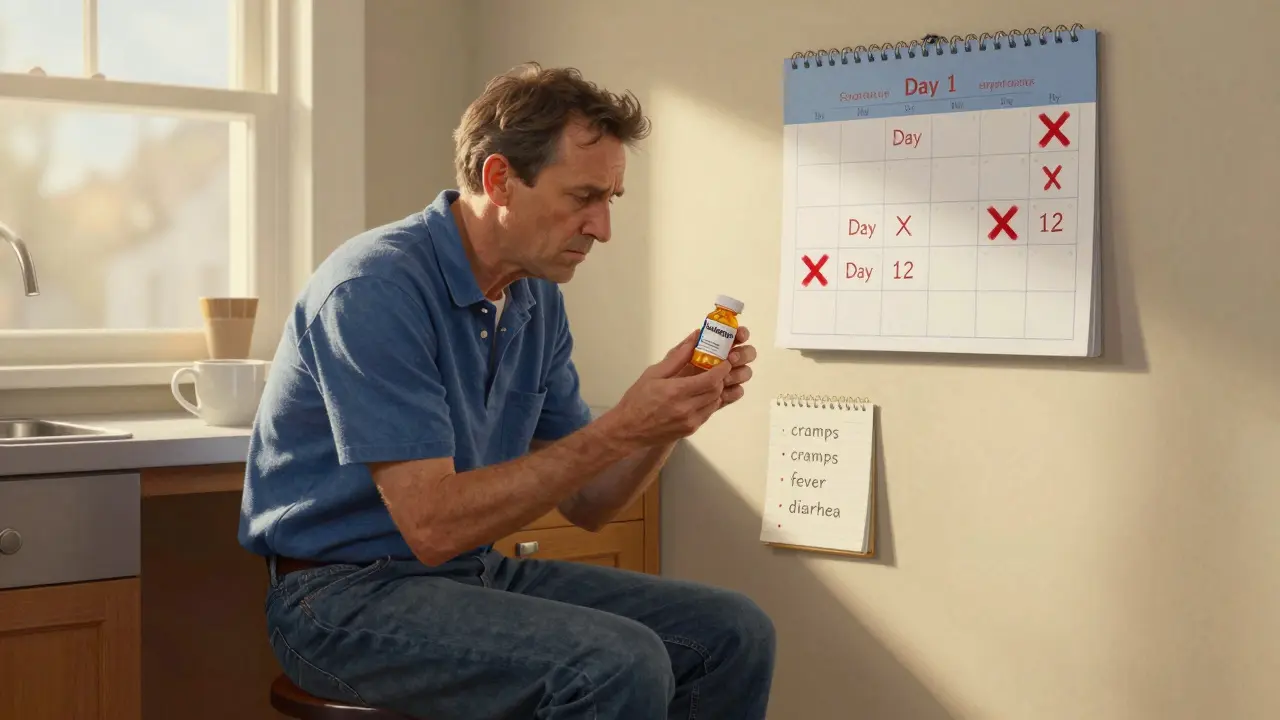
C. diff doesn’t always start with watery diarrhea. Early signs are subtle - and easily mistaken for something harmless. Here’s what to look for:- Three or more loose, unformed stools in a single day
- Abdominal cramping or pain that doesn’t go away
- Fever over 101.3°F (38.5°C)
- Blood or pus in stool
- Extreme fatigue or dizziness (signs of dehydration)
One key detail: don’t rely on how often you go to the bathroom. Some people with severe C. diff actually stop having diarrhea because their colon becomes paralyzed (ileus). That’s dangerous - it means toxins are building up inside you without any way out. If you feel bloated, swollen, or painfully full - especially after recent antibiotic use - get checked immediately.

Who’s Most at Risk?
Not everyone who takes clindamycin gets C. diff. But certain people are far more vulnerable:- People over 65
- Those with weakened immune systems (from chemo, steroids, HIV, etc.)
- Anyone who’s had C. diff before
- People with kidney disease
- Those in hospitals or long-term care facilities
Even if you’re young and healthy, don’t assume you’re safe. Community-associated C. diff is rising. About 20% of cases now come from outpatient settings - like your dentist’s office. Clindamycin is often prescribed for dental infections, especially in people allergic to penicillin. That’s why the CDC says dental antibiotic use is an emerging concern.
When to Go to the Doctor - Immediately
Waiting too long can be deadly. A 2022 study from the University of Michigan found patients who waited more than 72 hours after symptoms started had over twice the risk of needing surgery and four times the risk of dying. Don’t wait for "it to get worse." You need urgent care if you have:- Three or more unformed stools per day for two or more days and abdominal cramping
- Fever, blood in stool, or signs of dehydration (dark urine, dry mouth, no urination for 8+ hours)
- Severe belly pain, bloating, or vomiting
- Any of the above within 12 weeks of taking clindamycin - even if you took it months ago
If you’re over 65 or have other risk factors, call your doctor after just 24 hours of loose stools. Don’t wait 48. Early treatment cuts complications by over 60%.
What Happens If You Delay?
C. diff can turn from annoying to deadly fast. In severe cases, it causes toxic megacolon - where the colon swells and can rupture. Or it leads to sepsis, organ failure, or death. About 1 in 5 people who get C. diff have it come back. And each recurrence gets harder to treat.Doctors now use newer drugs like fidaxomicin or even fecal microbiota transplants (like the FDA-approved VOWST) to stop recurrent cases. But prevention is better than cure. If you’re prescribed clindamycin, ask: "Is there a safer alternative?" For many skin or dental infections, trimethoprim-sulfamethoxazole or amoxicillin are just as effective - with far less risk.
What You Can Do Now
If you’re currently taking clindamycin:- Keep track of your bowel movements. Note if stools are looser than normal.
- Stay hydrated. Water, broth, or oral rehydration solutions help.
- Don’t take anti-diarrhea meds like loperamide (Imodium). They can trap toxins in your gut.
- Call your doctor the moment you notice symptoms - don’t wait.
If you’ve already finished clindamycin:
- Stay alert for the next 12 weeks.
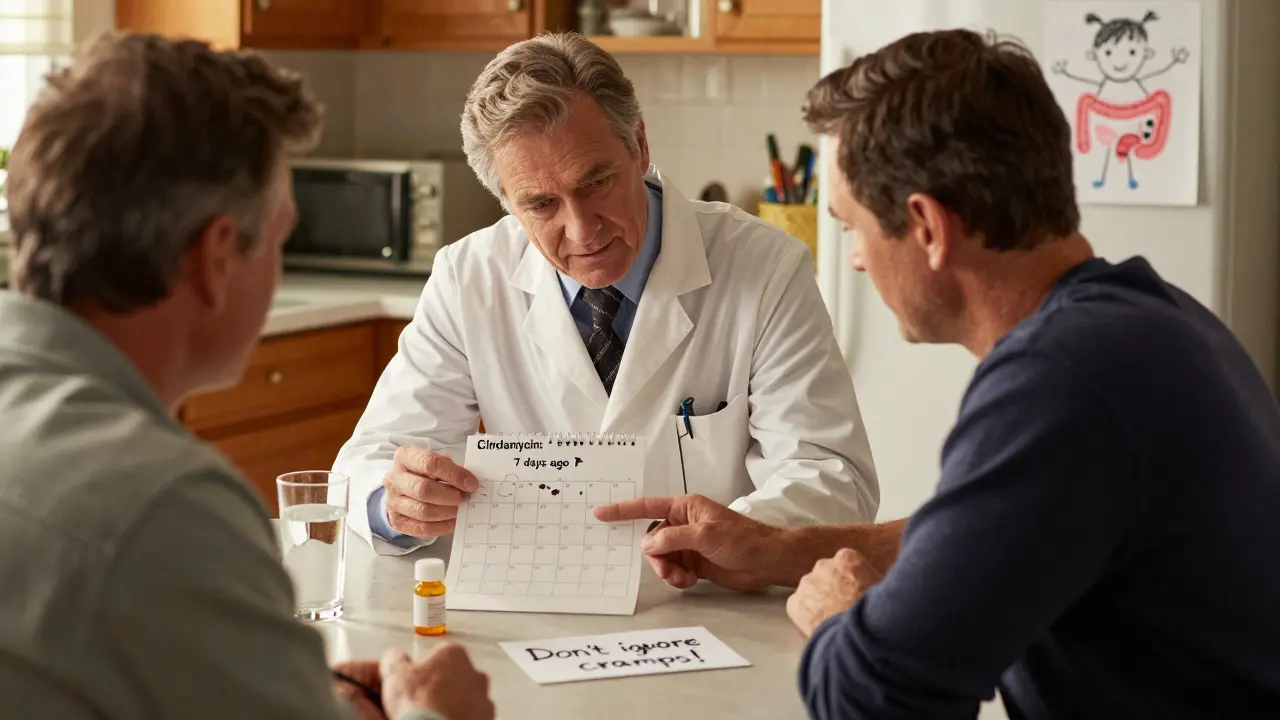
- Don’t ignore cramps, fever, or changes in bowel habits.
- Keep a note of when you took the antibiotic. You’ll need that info if you see a doctor.
The FDA now requires all antibiotic labels to list C. diff risk - and clindamycin’s label says "highest risk." That’s not a warning you can afford to ignore.
Can you get C. diff from just one dose of clindamycin?
Yes. Even a single dose - like a shot before surgery - has triggered C. diff infection in documented cases. The risk is low overall (around 1-2% of users), but it’s real. The CDC and experts agree: no amount of clindamycin is completely safe when it comes to gut microbiome disruption.
How is C. diff diagnosed?
Doctors test a stool sample for C. diff toxins using PCR or enzyme immunoassay. In severe cases, a colonoscopy may be done to look for pseudomembranes - yellowish plaques on the colon lining that are a hallmark of infection. Testing is only done if you have symptoms and recent antibiotic use - not for routine screening.
Is C. diff contagious?
Yes. C. diff spreads through spores in feces. These spores can survive on surfaces for months. If someone with C. diff doesn’t wash their hands properly, they can spread it to doorknobs, toilets, or medical equipment. That’s why hospitals use special cleaning protocols. At home, wash your hands with soap and water (not hand sanitizer) and clean surfaces with bleach-based cleaners.
Can probiotics prevent C. diff?
Some studies show certain probiotics (like Saccharomyces boulardii) may help reduce risk, but the evidence isn’t strong enough to recommend them as a standalone prevention. They’re not a substitute for avoiding high-risk antibiotics. Always talk to your doctor before taking probiotics with antibiotics.
What antibiotics are safer than clindamycin?
For skin or dental infections, alternatives like amoxicillin, ampicillin, or trimethoprim-sulfamethoxazole carry much lower C. diff risk. For acne or other conditions, doxycycline or minocycline are safer choices. Always ask: "Is there a lower-risk option that works just as well?" Many times, there is.
athmaja biju
February 13, 2026 AT 22:59Clindamycin is a joke. In India, we don’t even use it for tooth infections anymore. Too risky. We’ve got better options. This post is basically a warning to Western doctors who still think antibiotics are magic bullets. You’re not protecting patients-you’re gambling with their guts. And now the FDA has to slap a warning label? Took long enough. This isn’t science-it’s negligence dressed up as medicine.
Skilken Awe
February 14, 2026 AT 08:49Let me get this straight-you’re telling me a single dose of clindamycin can trigger a life-threatening infection? Wow. So basically, every time someone gets a dental shot, they’re playing Russian roulette with their colon? That’s not a side effect. That’s a feature. The pharmaceutical industry really knows how to sell death in pill form. Next up: ‘Aspirin: Now with 30% more internal bleeding!’
steve sunio
February 16, 2026 AT 08:28clindamycin bad. c diff bad. but like... why are we even surprised? doctors just throw antibiotics like confetti. i had a sinus infection last year and got amoxicillin. no issues. but my cousin? got clinda for a pimple. ended up in the hospital. 3 weeks. no joke. also... who even writes this much? too many words. too many caps. too many numbers. just say: dont take clinda unless u have no choice. done.
Neha Motiwala
February 18, 2026 AT 05:02Did you know that big pharma knew about this for decades? They buried the data. The CDC only started warning people because lawsuits piled up. And now they want you to believe this is just 'an unfortunate side effect'? No. This is corporate manslaughter. They profit from antibiotics. They profit from treating the damage. They profit from fecal transplants. It’s a three-layered money machine. And you’re still taking it without asking questions? Wake up.
Robert Petersen
February 19, 2026 AT 12:43This is actually one of the most important posts I’ve read in months. So many people don’t realize how fragile our gut microbiome is. I had a friend who got clindamycin for a wisdom tooth extraction and ended up in the ICU. She’s fine now, but it took months of recovery. If you’re prescribed this, ask for alternatives. Seriously. Your gut will thank you. And if you’re already on it? Stay hydrated, track your symptoms, and don’t be shy about calling your doctor. Better safe than sorry.
Craig Staszak
February 20, 2026 AT 18:43Clindamycin is overused. Period. I’ve seen it prescribed for minor skin infections that could’ve been treated with warm compresses. We’ve turned medicine into a checklist instead of a science. I’m not saying avoid antibiotics. I’m saying use them like scalpels-not sledgehammers. And if you’re worried about C. diff? Talk to your pharmacist. They know the risks better than most doctors.
alex clo
February 22, 2026 AT 17:26The data presented here is statistically significant and aligns with current clinical guidelines. The CDC’s classification of C. difficile as an urgent threat is well-supported by epidemiological evidence. Clindamycin’s broad-spectrum activity against anaerobic gut flora is well-documented in peer-reviewed literature, including the 2019 JAMA Internal Medicine meta-analysis. Clinicians must weigh risk-benefit ratios on a case-by-case basis, particularly in elderly or immunocompromised populations. Alternative regimens such as amoxicillin-clavulanate or metronidazole (for specific indications) should be considered where appropriate.
Alyssa Williams
February 22, 2026 AT 22:44I’m a nurse and I’ve seen this too many times. A patient comes in with diarrhea after clindamycin. We test. It’s C. diff. They’re 72. They’re on steroids. They’re alone. We start treatment. They improve. But here’s the thing-none of them knew the risk. No one told them. Not the dentist. Not the pharmacy. Not even the discharge nurse. This isn’t just about antibiotics. It’s about communication. If you’re getting clindamycin, ask for the risks in plain language. Write them down. Share them with someone. You might save your life.
Ernie Simsek
February 23, 2026 AT 22:05Bro. I took clindamycin for a pimple last year. One pill. Then 3 days later-boom. Diarrhea. Fever. Felt like my intestines were being eaten by spiders. Went to the ER. They said ‘classic C. diff.’ They gave me vancomycin. I had to quarantine for 2 weeks. My dog left the house. My roommate moved out. I lost 12 lbs. Don’t be that guy. Don’t be that girl. If your dentist prescribes this? Say ‘no thanks.’ There are other options. I’m not mad. I’m just… traumatized. 🤢
Joanne Tan
February 23, 2026 AT 22:06My mom got clindamycin for a dental infection. She was fine until 6 weeks later. Then she got super tired, fever, and couldn’t keep food down. We thought it was the flu. Took 4 days to get her tested. Turns out it was C. diff. She’s okay now, but she’s still on probiotics and eats like a rabbit. If you’re on this med, even if you feel fine-pay attention to your body. Don’t wait. And if you’re a doctor? Please stop prescribing this like it’s candy.