
Consumer Language Guides: Making Generic Drug Information Accessible
 Jan, 14 2026
Most people don’t realize that generic drugs are the same as brand-name drugs - but they cost way less. Yet, a lot of folks still refuse to take them. Why? Because they’re confused. They think generics are weaker, made in shoddy factories, or just cheap knockoffs. That’s not true. But the problem isn’t with the drugs. It’s with how the information is delivered.
Why Generic Drugs Are Just as Good
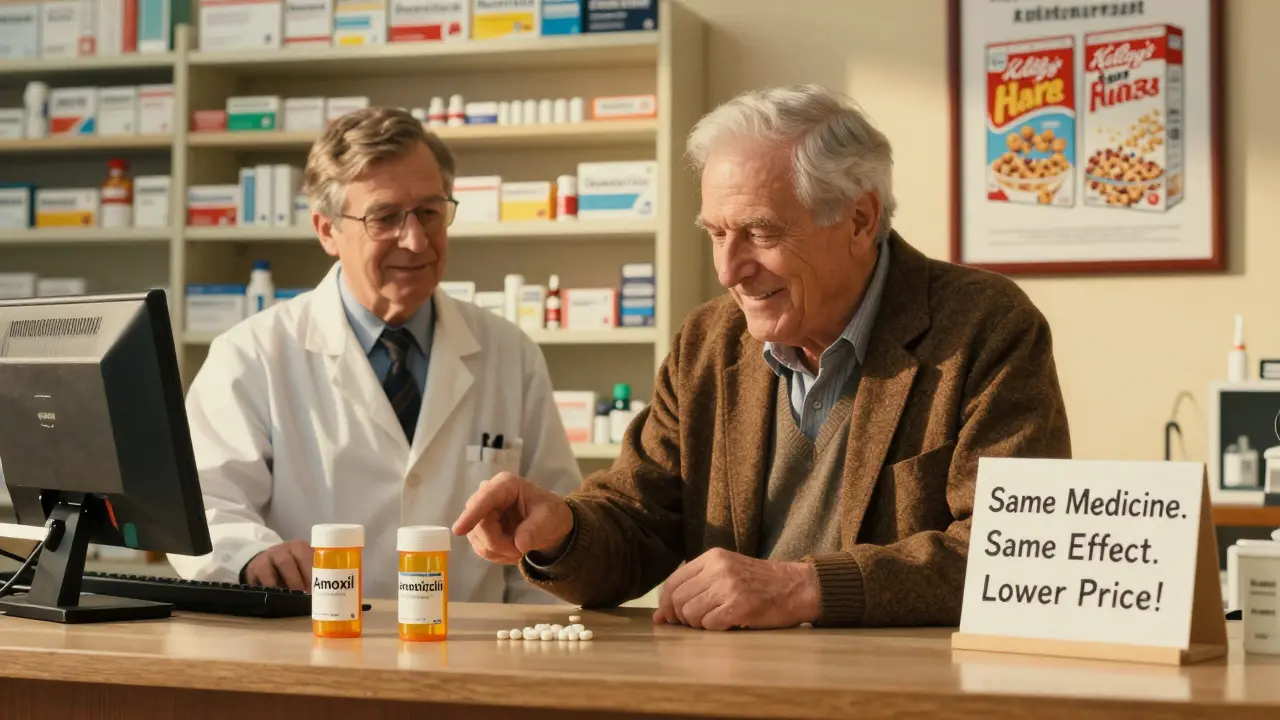
Every generic drug approved by the FDA has to contain the exact same active ingredient as the brand-name version. Same strength. Same shape. Same way it’s taken - whether it’s a pill, injection, or cream. The FDA doesn’t approve a generic unless it delivers the same amount of medicine into your bloodstream as the brand. That’s called bioequivalence. And it’s not a guess. It’s science. The drug must deliver between 80% and 125% of the blood concentration of the brand. That’s a tight range. It’s not ‘close enough.’ It’s medically identical.Take amoxicillin. The brand is Amoxil. The generic is just amoxicillin. Same molecule. Same effect. Same way your body uses it. Or take esomeprazole - the generic for Nexium. Same acid-blocking power. Same results in treating heartburn. The only differences? Color, shape, or the filler inside the pill - things like lactose or cornstarch. These don’t affect how the medicine works. They’re just there to hold the pill together or make it easier to swallow.
And here’s the kicker: 98.7% of all generic drugs approved between 2010 and 2020 met these strict standards. That’s not a fluke. That’s the rule.
The Real Cost Difference
Brand-name drugs cost a lot because the company paid to develop them, run clinical trials, and market them. Once the patent runs out, other companies can make the same drug. No need to repeat expensive studies. So they sell it for a fraction of the price.On average, a generic prescription saves you $387 a year compared to the brand. That’s not pocket change. That’s a month’s worth of groceries. For people on Medicare or Medicaid, that savings adds up fast. In 2022, generics made up 90.9% of all prescriptions filled in the U.S. - but only 22.3% of total drug spending. That’s how powerful they are.
Yet, 43% of Americans still believe generics are less effective. Why? Because no one ever explained it in a way they could understand.
What Consumer Language Guides Do
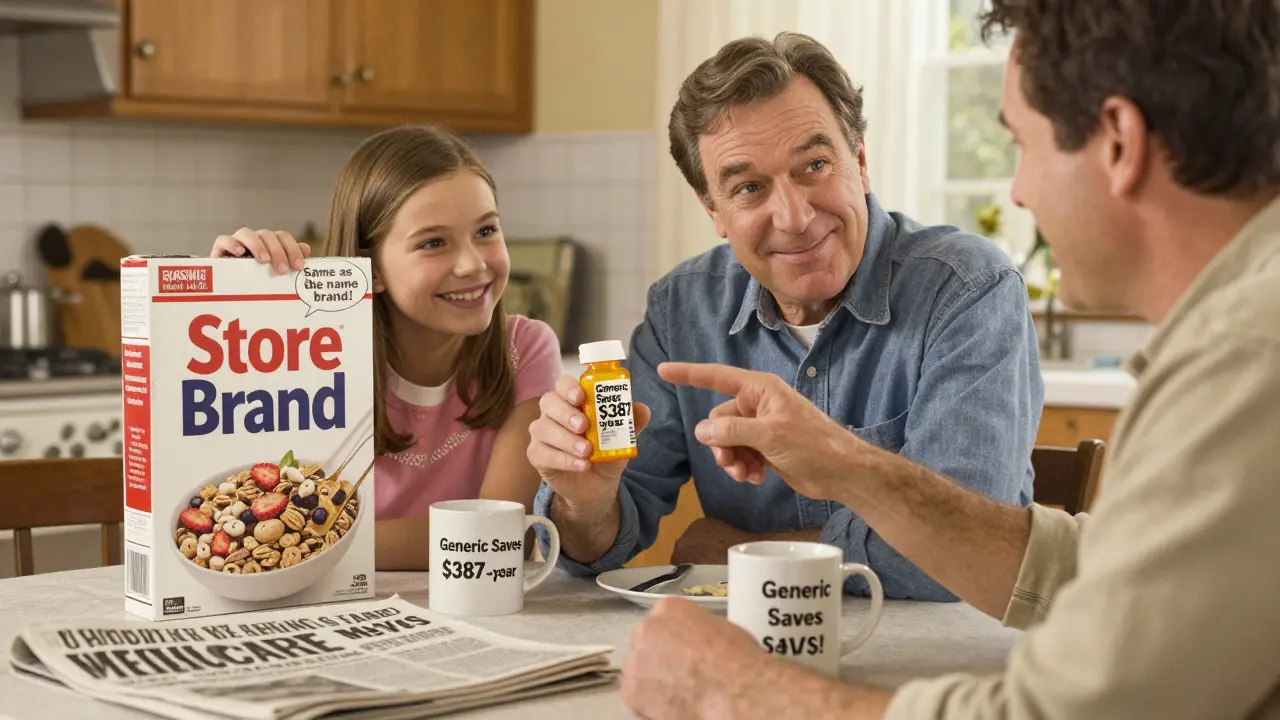
Consumer language guides are simple, plain-language tools made to fix that gap. They don’t use words like ‘bioequivalence’ or ‘pharmacokinetics.’ They use analogies people already get.Think of it like cereal. You’ve got Kellogg’s Corn Flakes. Then there’s the store brand - same flakes, same taste, same nutrition. Just cheaper. Same thing with drugs. Tylenol is to acetaminophen what Kleenex is to tissues. The brand name is familiar. The generic is the same thing, just without the marketing.
Good guides use visuals too. Side-by-side pictures of a brand pill and its generic version. Labels that show the active ingredient in bold. Simple charts that say: ‘Same medicine. Same effect. Lower price.’
The FDA’s ‘Generic Drug Facts’ page, updated every quarter, is one of the best. It breaks down how generics work in plain English. Pharmacy chains like CVS, Walgreens, and Walmart now use these guides in their waiting areas and on their apps. Pharmacists are trained to spend just 90 seconds explaining it: ‘Same active ingredient. Same results. Saves you hundreds.’
When Things Get Tricky
Not every drug is simple. Some medicines need extra care. These are called narrow therapeutic index drugs - meaning the difference between the right dose and a harmful one is tiny.Drugs like warfarin (a blood thinner), levothyroxine (for thyroid), and phenytoin (for seizures) fall into this category. Even small changes in how the body absorbs the drug can matter. That’s why some doctors still prefer brand-name versions for these.
But here’s the truth: it’s not because generics are bad. It’s because some older generic versions had inconsistent manufacturing. In 2012, the FDA pulled one generic version of Wellbutrin XL because it didn’t work the same. That’s why the FDA now requires stricter testing for these drugs. And why some guides now include special notes: ‘For levothyroxine, stick with the same brand or generic. Don’t switch often.’
Authorized generics are another twist. These are brand-name drugs made by the same company but sold under a generic label. They’re identical to the brand - down to the filler. And they have 28% fewer people switching back to the brand, according to CVS Caremark’s 2023 data.
What Doesn’t Work
Some guides go too far. Saying ‘generics are exactly the same as brands’ sounds reassuring - but it’s misleading when it comes to narrow therapeutic index drugs. That’s why 62% of pharmacy-developed materials now include a small disclaimer: ‘For most drugs, yes. For some, talk to your doctor.’And oversimplification backfires. A 2021 study found that 41% of patients stopped taking generic levothyroxine within six months because they felt it ‘wasn’t working.’ They weren’t wrong - they just didn’t know that switching between different generic brands could cause small changes in absorption. The guide didn’t warn them.
Good guides don’t just say ‘it’s the same.’ They say ‘here’s when it’s the same, and here’s when you need to be careful.’
How to Use These Guides
If you’re taking a generic drug, here’s what to do:- Check the label. Look for the active ingredient. That’s what matters.
- Compare the pill shape and color to your old prescription. If it looks different, ask why - but don’t assume it’s worse.
- Ask your pharmacist: ‘Is this the same as the brand?’ They’re trained to answer this in 30 seconds.
- For thyroid, seizure, or blood thinner meds, ask if you should stick with one brand or generic. Don’t switch unless your doctor says so.
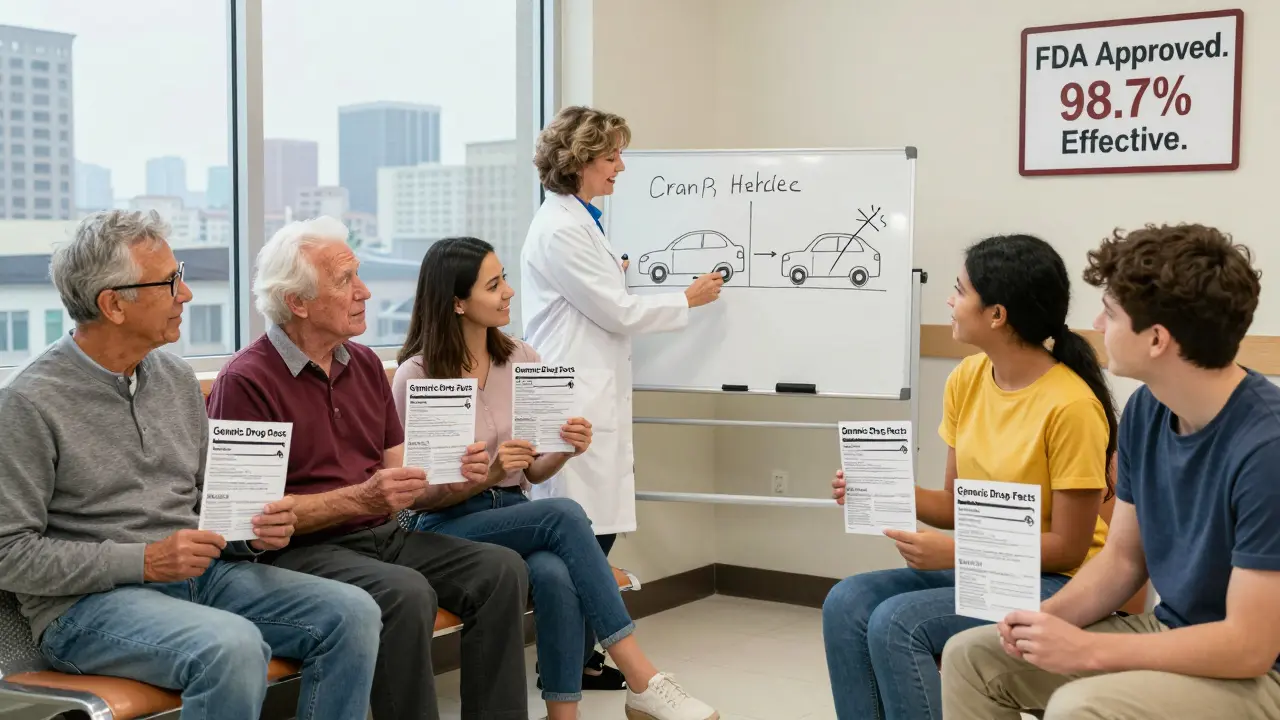
- Use the FDA’s ‘Generic Drug Facts’ page. It’s free, updated regularly, and written for people who aren’t doctors.
And if you’re a caregiver or family member helping someone manage meds - don’t assume they understand. Ask them to explain back what the drug does. That’s called ‘teach-back.’ It’s the single most effective way to make sure they really get it.
The Bigger Picture
The U.S. healthcare system saved $2 trillion from 2009 to 2019 because of generics. That’s money that went back into hospitals, research, and patient care. But that savings only works if people actually take the generics.Right now, $3.2 billion is wasted every year because people refuse generics out of fear or confusion. That’s money spent on brand-name drugs that do the exact same thing.
That’s why the FDA, Medicare, and major pharmacy chains are pushing harder than ever to improve these guides. In 2023, the FDA launched a $4.7 million initiative to create custom guides for high-risk drugs. By 2025, all Medicare Part D plans must provide education that meets federal health literacy standards.
And it’s working. Pharmacists who use plain-language guides report 22% higher patient adherence and 34% fewer people switching back to brand-name drugs. That’s not just about cost. It’s about health.
Generic drugs aren’t a compromise. They’re the smart choice. And the only thing standing in the way is a lack of clear, honest communication.
Are generic drugs really as effective as brand-name drugs?
Yes. The FDA requires generic drugs to have the same active ingredient, strength, dosage form, and route of administration as the brand-name version. They must also deliver the same amount of medicine into your bloodstream - within a tight 80% to 125% range. This is called bioequivalence. Over 98% of approved generics meet this standard. For most drugs, generics work just as well - and cost far less.
Why do generic pills look different from brand-name ones?
The law doesn’t allow generic manufacturers to copy the exact look of brand-name pills. So they change the color, shape, or markings. But the active ingredient - the part that makes the medicine work - is identical. The differences in appearance are just for legal reasons, not because the drug is different. Think of it like different packaging for the same cereal.
Can I switch between different generic brands?
For most medications, yes. But for drugs with a narrow therapeutic index - like levothyroxine, warfarin, or phenytoin - switching between generics can cause small changes in how your body absorbs the drug. That’s why your doctor may recommend sticking with one brand or generic. Always talk to your pharmacist or doctor before switching, especially if you’re on one of these medications.
What are authorized generics?
Authorized generics are brand-name drugs made by the original manufacturer but sold under a generic label. They’re identical to the brand - same ingredients, same factory, same packaging. The only difference? No brand name on the bottle. They’re often cheaper than the brand and have lower switch-back rates than regular generics because they’re truly the same.
Where can I find reliable information about generic drugs?
The FDA’s ‘Generic Drugs’ webpage is the most trusted source. It’s updated quarterly and written in plain language. You can also ask your pharmacist for the ‘Generic Drug Facts’ sheet - most pharmacies now have it. Avoid relying on marketing materials from drug companies or unverified websites. Stick to government or pharmacy-backed resources.
Next Steps
If you’re on a generic drug and feeling unsure, don’t guess. Ask. Walk into your pharmacy and say: ‘Can you show me how this generic compares to the brand?’ Most pharmacists will pull up a visual guide and explain it in under two minutes.If you’re helping an older relative or someone with low health literacy, sit with them. Point to the active ingredient on the label. Use the cereal analogy. Ask them to repeat it back. That’s how you turn confusion into confidence.
And if you’re a patient, remember: you’re not being cheap by choosing a generic. You’re being smart. And you’re helping the whole system work better.
Henry Sy
January 15, 2026 AT 23:10Bro, I took a generic version of my blood pressure med and felt like my heart was trying to escape through my ribs. Turns out it was just anxiety - but now I’m convinced the FDA is in bed with Big Pharma and the generics are just placebo pills with extra filler. I don’t care what the science says - my body knows.
Anna Hunger
January 16, 2026 AT 01:33While the post presents a compelling argument grounded in empirical evidence, it is imperative to acknowledge that patient perceptions are not solely dictated by scientific literacy. The psychological association between brand identity and efficacy remains a powerful heuristic in healthcare decision-making, even when logically unfounded.
Dylan Livingston
January 17, 2026 AT 17:10Oh wow, another feel-good article about how generics are ‘just as good.’ Let me grab my tin foil hat and my copy of the FDA’s ‘Generic Drug Facts’ pamphlet - I’ve been waiting for this moment since 2014, when my cousin’s thyroid med switched from Synthroid to the ‘equivalent’ generic and she started hallucinating her cat was whispering in Latin. Coincidence? I think not. The real conspiracy? They don’t want you to know that the same factory in India that makes your $2 generic also makes the ‘premium’ version - but with a different label and a 1200% markup. Wake up, sheeple.
says haze
January 18, 2026 AT 20:44There’s a deeper epistemological crisis here, and it’s not about pills - it’s about trust. We’ve been conditioned to equate price with quality, not because it’s rational, but because capitalism has weaponized scarcity. The generic pill isn’t inferior - it’s a mirror reflecting our collective surrender to branding as a proxy for meaning. We don’t distrust the chemistry; we distrust the absence of narrative. The brand-name drug tells a story: ‘You’re worth this.’ The generic? It just says ‘Here.’ And that silence is terrifying.
Alvin Bregman
January 18, 2026 AT 20:57Sarah -Jane Vincent
January 19, 2026 AT 03:38Let me guess - the FDA approved these generics after a 3-minute Zoom call with a lab in China. You know what happened in 2018? A batch of metformin was found to have NDMA - a carcinogen - and guess what? It was a generic. They covered it up. And now you’re telling me to trust the same system that let 40% of imported generics fail inspection? I’m not scared of cost - I’m scared of being a lab rat for a system that profits from my ignorance.
Jason Yan
January 19, 2026 AT 04:11It’s funny how we treat medicine like a luxury item - like if it doesn’t come in a fancy box with a jingle, it’s not real. But think about it: if you bought two identical pairs of sneakers, one branded and one not, you’d know they’re the same. Why does it feel different with pills? Maybe because we’ve been trained to believe that pain and illness need a story - and the brand gives us one. The generic just gives us relief. And sometimes, that’s enough. I’ve been on generics for years. My blood pressure’s stable. My wallet’s happy. And I didn’t need a billboard to tell me I’m doing the right thing.
shiv singh
January 20, 2026 AT 00:17My cousin in Delhi takes generics every day - no problem. But here in the States, people act like generics are some kind of government plot. You know what’s really dangerous? Paying $400 for a pill that does the same thing as the $4 one. That’s not smart - that’s financial suicide. And don’t even get me started on how pharmacies make you feel guilty for choosing the cheaper one. Like you’re stealing from your own health. Wake up. The system is rigged, and the only way to fight back is to take the damn generic and save your money.
Robert Way
January 21, 2026 AT 08:54