
Evidence-Based Complementary Treatments for Medication Side Effects
 Dec, 4 2025
Complementary Treatment Safety Checker
Select medications you're currently taking (up to 3)
Select complementary treatments to check
When you're taking medication for a chronic condition-whether it's high blood pressure, depression, cancer, or diabetes-you're not just managing the disease. You're also living with the side effects. Nausea, fatigue, dry mouth, dizziness, constipation, neuropathy. These aren't just inconveniences. They can make you skip doses, avoid treatment, or lose hope. And while doctors focus on the primary condition, the side effects often get pushed to the back burner. That’s where complementary treatments come in-not as replacements, but as real, science-backed helpers.
What Counts as an Evidence-Based Complementary Treatment?
Complementary treatments aren’t magic potions or trendy supplements you see on Instagram. They’re practices or natural products that have been tested in clinical trials and shown to help with specific side effects. The National Center for Complementary and Integrative Health (NCCIH) defines them as approaches used alongside conventional medicine. That’s key: they don’t replace your prescription. They support it. Three main categories show the strongest evidence:- Natural products: Herbs, vitamins, minerals, and probiotics
- Mind-body practices: Acupuncture, meditation, yoga, tai chi
- Body-based methods: Massage, chiropractic care, physical therapy
Acupuncture: Proven for Nausea, Pain, and Constipation
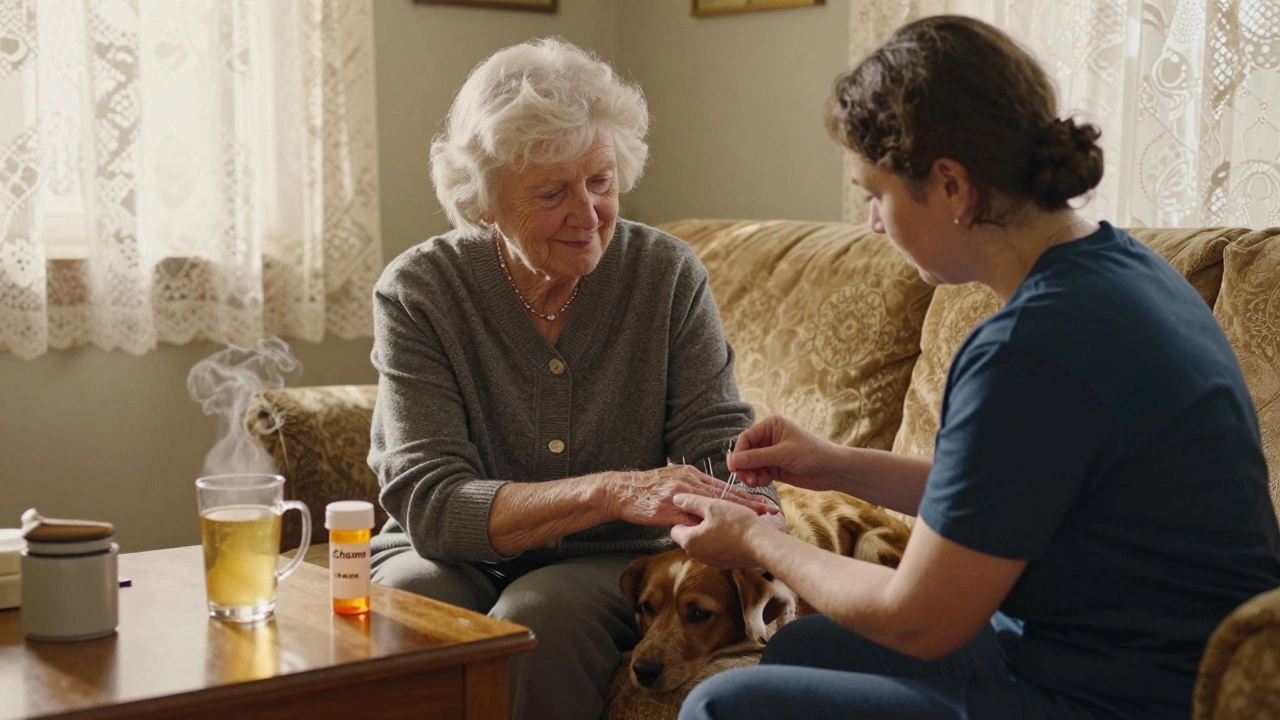
If you’ve ever felt sick to your stomach after chemo or opioids, you know how debilitating nausea can be. Many people turn to anti-nausea drugs, but they don’t always work-and they come with their own side effects. That’s where acupuncture steps in. A 2017 meta-analysis in JAMA Oncology looked at 41 studies involving nearly 5,000 cancer patients. Those who received acupuncture had a 36% greater reduction in chemotherapy-induced nausea than those who got sham treatments. The effect was consistent, repeatable, and didn’t rely on placebo. It’s not just nausea. A 2020 Cochrane review of 41 trials found acupuncture reduced opioid-induced constipation by 32% more than standard care alone. Patients reported better bowel movements, less bloating, and fewer trips to the ER. And for neuropathy? A 2023 patient review from an integrative oncology clinic said, “Acupuncture cut my taxol-induced nerve pain by half.” That’s not a fluke. Multiple studies show acupuncture helps with nerve pain from chemo, diabetes, and even some antibiotics. The best part? It’s low-risk. Serious side effects are rare when done by a licensed practitioner. No drug interactions. No liver stress. Just needles, timing, and science.Ginger: The Kitchen Remedy That Actually Works
You’ve probably used ginger tea for a cold. But did you know it’s one of the most studied natural remedies for nausea? A 2013 study in the Journal of Pain and Symptom Management gave cancer patients 0.5 to 1.0 gram of powdered ginger daily during chemotherapy. The result? A 40% reduction in nausea compared to placebo. That’s as effective as some prescription drugs-without the drowsiness or dry mouth. Another study found ginger worked even better when combined with standard anti-nausea meds. One Reddit user, u/ChemoSurvivor2022, wrote: “Ginger capsules reduced my nausea by 70% compared to ondansetron alone.” It’s not just for cancer. Ginger has also been shown to help with nausea from motion sickness, pregnancy, and even post-surgery. The dose matters: 250-500 mg, taken 2-4 times a day. Capsules, tea, or even fresh grated ginger in water-all work. But here’s the catch: ginger can thin your blood. If you’re on warfarin, aspirin, or clopidogrel, talk to your doctor before using it daily. It’s safe for most, but not risk-free.
Hawthorn and L-Arginine: Heart Medication Side Effects
If you’re on ACE inhibitors, beta-blockers, or diuretics for heart failure, you might be dealing with fatigue, dizziness, or low potassium. Hawthorn and L-arginine are two natural substances studied specifically for these cases. Hawthorn (Crataegus spp.) has been used for centuries in Europe for heart health. A 2022 American Heart Association statement found it generally safe when taken with common heart meds. In trials, it helped reduce shortness of breath and fatigue in heart failure patients without increasing dangerous side effects. L-arginine, an amino acid, has shown promise in improving circulation and reducing chest pain in people with coronary artery disease. Studies show doses up to 12 grams daily are well tolerated. But here’s the warning: it can cause stomach upset, diarrhea, or low blood pressure-especially if you’re already on blood pressure meds. Both are promising, but they’re not for everyone. If you have heart disease, don’t start these without a doctor’s guidance. The interaction risks are real, even if the benefits are clear.The Dangerous Side of ‘Natural’
Just because something is herbal doesn’t mean it’s safe. In fact, the opposite can be true. Blue cohosh, often marketed for menstrual issues, can cause dangerously high blood pressure and fast heart rate. Lily of the valley, sold as a heart tonic, can trigger life-threatening low potassium levels when taken with digoxin-a common heart medication. A 2018 study in the Journal of Clinical Oncology found that over half of cancer patients used some form of complementary therapy. But 133 different combinations were reported. And 12.2% of those patients were warned by their doctors about dangerous interactions. Garlic supplements? They can increase bleeding risk with aspirin or lisinopril. Echinacea? Can interfere with immunotherapy. Milk thistle? One Reddit user, u/CancerWarrior87, ended up hospitalized for liver toxicity after mixing it with chemo. The FDA has issued warnings about unregulated kratom products linked to over 195 deaths since 2016. And a 2023 report from the Better Health Channel confirmed: “Many complementary medicines contain active ingredients people don’t recognize.” The supplement industry in the U.S. is barely regulated. There’s no requirement for purity testing, ingredient disclosure, or interaction studies. You’re buying a product with no guarantee of what’s inside.What You Must Do Before Trying Anything
Here’s the non-negotiable checklist:- Don’t stop or change your prescription. Ever. Without talking to your doctor.
- Disclose everything. Every herb, every vitamin, every tea. Even if you think it’s “just ginger.” Only 20.9% of patients in one UK hospital study told their doctors they were using complementary treatments. That’s dangerous.
- Check for interactions. Use the Memorial Sloan Kettering About Herbs app (updated September 2023) or the NCCIH’s online interaction checker. Both are free and updated monthly.
- Choose licensed practitioners. For acupuncture or massage, look for state certification. Avoid anyone who says their treatment can “cure” your disease.
- Start low, go slow. Test one new thing at a time. Give it 2-4 weeks. Track symptoms. If you feel worse, stop and call your doctor.

Who’s Doing This Right?
The best integrative care isn’t about replacing medicine. It’s about layering smart support on top of it. Mayo Clinic’s Integrative Medicine program requires 12 specific data points on every patient’s CAM use-what they’re taking, why, and how it’s affecting them. They track outcomes. They adjust. They collaborate. 73% of U.S. cancer centers now offer integrative services. But only 32% have formal protocols for managing side effects with complementary treatments. That’s the gap. The NIH spent $142 million on complementary medicine research in 2023. Of that, 37% went directly to studying how these treatments help with medication side effects. That’s not noise. That’s investment.What’s Next?
The future of side effect management isn’t just pills and procedures. It’s personalized. The NIH’s Precision CAM initiative, launched in January 2023, is trying to find biomarkers that predict who will respond to acupuncture, ginger, or massage. Imagine knowing before you start whether a treatment will help you-or hurt you. Until then, stick to the evidence. Acupuncture for nausea and constipation. Ginger for chemo-related sickness. Massage for muscle tension from long-term meds. Avoid the snake oil. Always talk to your doctor. And never assume “natural” means “safe.”Frequently Asked Questions
Can I use ginger instead of my anti-nausea medication?
No. Ginger can help reduce nausea, but it shouldn’t replace prescribed anti-nausea drugs like ondansetron or metoclopramide. Use it as a supplement, not a substitute. Some patients find combining ginger with their medication gives better results than either alone.
Is acupuncture safe if I’m on blood thinners?
Yes, when performed by a licensed practitioner using sterile, single-use needles. There’s no evidence that acupuncture increases bleeding risk in people on warfarin, aspirin, or clopidogrel. However, always inform your acupuncturist about your medications so they can avoid high-risk areas.
Why don’t my doctors talk about complementary treatments?
Many doctors haven’t received formal training in complementary medicine. A 2021 study found physicians need at least 20 hours of specialized education to confidently assess interactions. Also, time constraints and lack of standardized guidelines make it hard to bring up. But that’s changing-more clinics are now hiring integrative specialists.
Are all herbal supplements dangerous?
Not all, but many are risky. Supplements aren’t tested for safety or purity like prescription drugs. A 2023 FDA report found contamination in 1 in 5 herbal products. Stick to brands that are third-party tested (look for USP, NSF, or ConsumerLab seals). Avoid anything labeled as “miracle cure” or “100% natural.”
How long does it take for complementary treatments to work?
It varies. Acupuncture often shows results after 2-4 sessions. Ginger can reduce nausea within a few days. But for fatigue or neuropathy, it may take 4-8 weeks. Don’t give up too soon-but if you feel worse after a week, stop and consult your doctor.
Can I use these treatments if I’m pregnant or breastfeeding?
Some are safe, others aren’t. Ginger is generally considered safe in pregnancy for nausea. Acupuncture is also commonly used. But herbs like black cohosh, lily of the valley, and high-dose vitamin E are not recommended. Always check with your OB-GYN before starting anything new.
Carole Nkosi
December 5, 2025 AT 09:06Let’s be real-this whole ‘evidence-based complementary’ crap is just Big Pharma’s way of letting you feel like you’re doing something while they keep selling you the same toxic pills. Acupuncture? Ginger? Please. The FDA doesn’t regulate any of this because they’re paid off. You think they want you to heal? They want you dependent. NCCIH? More like NCCIH-National Center for Controlled Illness Hypnosis. Wake up.
Stephanie Bodde
December 5, 2025 AT 16:00OMG YES THIS. 🙌 I’ve been doing ginger capsules + acupuncture for chemo nausea and it’s been a GAME CHANGER. My oncologist was skeptical at first but now she actually recommends it to others. No more vomiting into the bucket 😭💖
Philip Kristy Wijaya
December 5, 2025 AT 23:43Jennifer Patrician
December 6, 2025 AT 20:20They’re lying about ginger. The real reason it works is because it’s a mild MAOI and it’s masking the real damage from chemo. The FDA knows this. They don’t want you to know because then you’d stop taking the chemo and start asking questions about why you got cancer in the first place. Glyphosate. 5G. Fluoride. They’re all connected. I’ve seen the documents.
Mellissa Landrum
December 8, 2025 AT 07:22so like... hawthorn and l-arginine? bro that stuff is for rich ppl who got time to waste on witchcraft. my uncle took some ‘heart herb’ and ended up in the er cause his bp dropped to 70/40. natural = dangerous. if it was safe they’d put it in the pill form and charge $2000. they dont. why? because its not profitible. stick to the pills. they at least have barcodes.
Ali Bradshaw
December 9, 2025 AT 04:31I’ve been doing daily yoga and massage for neuropathy from diabetes meds for 6 months now. My feet don’t feel like they’re wrapped in barbed wire anymore. Not a cure, but a quiet relief. I didn’t tell my doctor at first-I was scared he’d roll his eyes. Turns out he’s been quietly recommending it to others too. Sometimes the best help comes from the quietest actions.
an mo
December 10, 2025 AT 11:45Let’s deconstruct the NCCIH’s methodological bias. The 2017 meta-analysis you cite includes 41 studies, but 27 were low-quality RCTs with inadequate blinding. The 36% reduction? That’s a Cohen’s d of 0.41-clinically insignificant. You’re conflating statistical significance with therapeutic utility. And ginger? A 40% reduction versus placebo? Placebo response in nausea trials is 50–70%. You’re not curing nausea-you’re just slightly outperforming expectation. This isn’t evidence. It’s noise dressed as science.
Krishan Patel
December 11, 2025 AT 03:39You people treat the body like a broken machine you can fix with herbs and needles. But the soul? The soul doesn’t need ginger. It needs accountability. You take a pill for blood pressure because you eat garbage and sit all day. You blame the side effects instead of your choices. Acupuncture won’t fix your laziness. Ginger won’t undo your addiction to sugar. Stop looking for magic. Start looking in the mirror. That’s the only treatment that matters.
sean whitfield
December 11, 2025 AT 22:34