
FDA Black Box Warnings: What You Need to Know About the Most Serious Drug Alerts
 Jan, 31 2026
Drug Interaction Checker
Check potential dangerous interactions between medications based on FDA black box warnings. Note: This tool is informational only and should not replace professional medical advice. Always consult your healthcare provider.
Check Your Medication Combination
Potential Interactions Found
Based on FDA black box warnings, this combination may increase risk of:
What Is a Black Box Warning?
A black box warning is the strongest safety alert the U.S. Food and Drug Administration (FDA) can require on a prescription drug. It’s called that because the warning appears in a prominent black border on the drug’s packaging and prescribing information, making it impossible to miss. This isn’t just a caution-it’s a red flag for risks that could lead to death or serious, life-altering harm.
These warnings don’t appear on every drug. As of 2022, over 400 medications carry one, and they’re reserved for situations where the danger is real, severe, and well-documented. The FDA requires these warnings to be placed near the front of the drug’s official prescribing guide, right after the key highlights. That way, doctors and pharmacists see it before they even get to the dosage instructions.
Why Do These Warnings Exist?
The FDA doesn’t slap a black box on a drug lightly. These warnings come after years of data collection-sometimes from clinical trials, but often from real-world use after the drug is already on the market. The agency monitors more than 1.3 million reports of side effects each year through its FAERS system, where doctors, patients, and drug companies report problems.
A black box warning is issued when:
- The drug can cause death or serious injury in some people
- The risk is avoidable with proper monitoring or patient selection
- There are specific groups who should never take the drug
For example, some antidepressants carry black box warnings about increased suicide risk in teens and young adults. Others warn about liver failure, heart problems, or dangerous interactions with other drugs. The goal isn’t to scare people away-it’s to make sure the right person gets the right drug, with the right precautions.
How Are These Warnings Decided?
The process starts long before a drug hits shelves. Before approval, companies run tests on cells, animals, and then hundreds or thousands of human volunteers. But even the biggest trials can miss rare side effects-especially those that show up after years of use or only in certain genetic groups.
That’s why most black box warnings come after a drug is approved. Take rosiglitazone (Avandia), a diabetes drug that was pulled from many formularies after post-market data showed it raised heart attack risk. The FDA added a black box warning in 2007, and prescriptions dropped by 70% within a year. But it didn’t disappear-doctors still prescribed it for patients with no other options, because the benefit outweighed the risk in those cases.
The FDA doesn’t act on a single report. They look for patterns. If dozens of patients on the same drug develop the same rare liver injury, or if a specific group (like pregnant women or elderly patients) shows consistently worse outcomes, that’s when the agency steps in.
What Does a Black Box Warning Actually Say?
These aren’t vague statements. They’re precise. A typical black box warning might say:
- “Increases risk of suicidal thoughts in children and adolescents under 25.”
- “Contraindicated in patients with severe heart failure.”
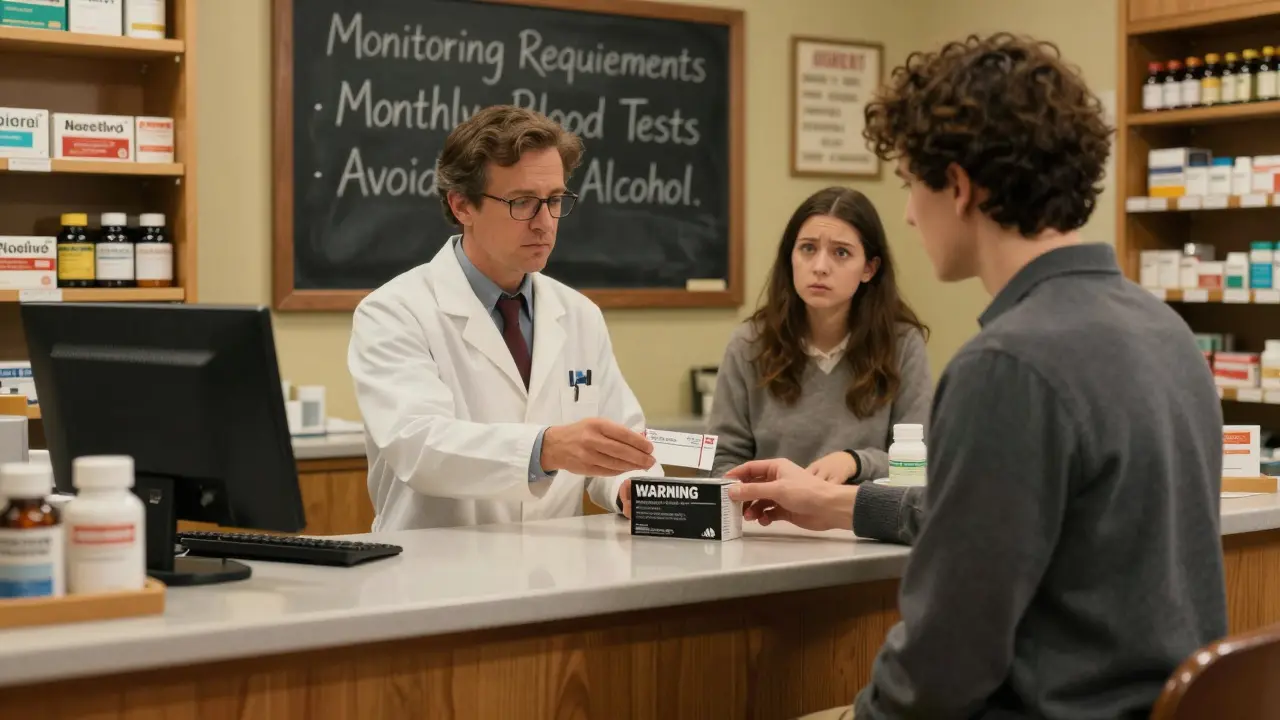
- “May cause life-threatening liver damage. Monitor liver enzymes monthly for the first 6 months.”
- “Avoid use with CYP3A4 inhibitors due to risk of sudden death.”
They also include instructions on what to do if the risk is present. For example, some drugs require blood tests before and during treatment. Others require patients to sign a form acknowledging they understand the risks. In extreme cases, like with the acne drug isotretinoin, the FDA added a full Risk Evaluation and Mitigation Strategy (REMS), which includes mandatory counseling, pregnancy tests, and restricted pharmacy access.
Does a Black Box Warning Mean You Can’t Take the Drug?
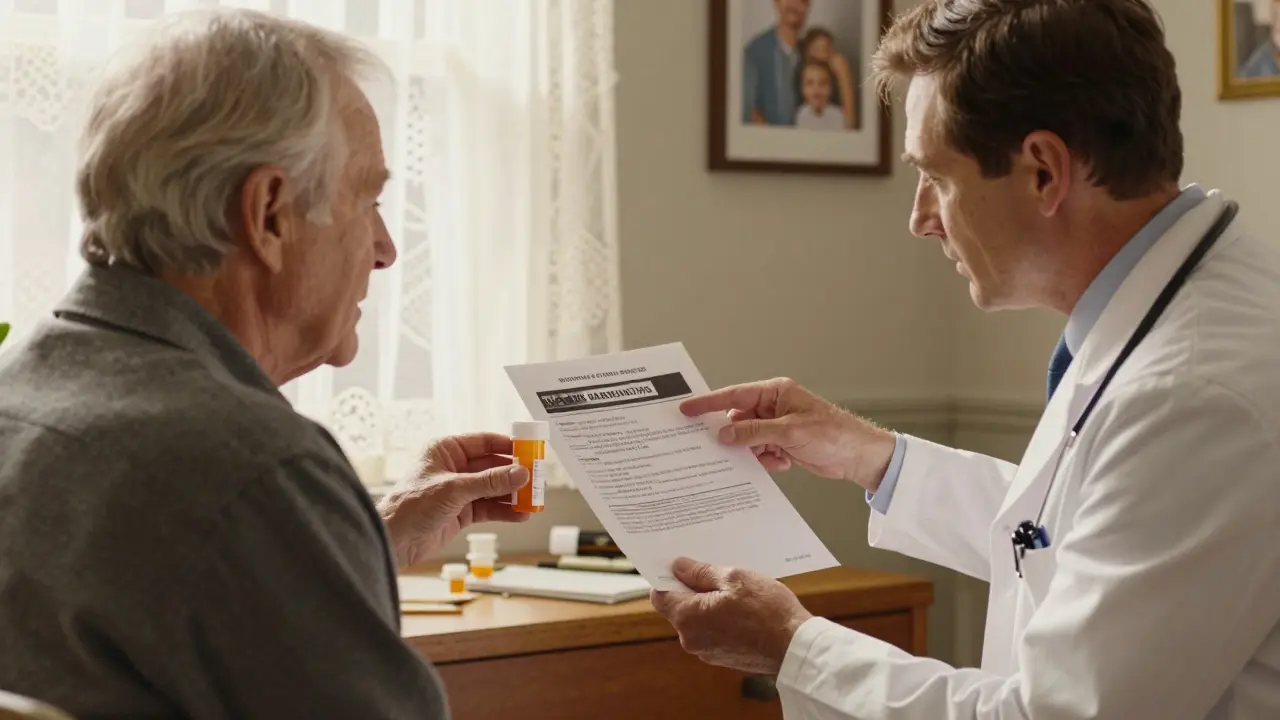
No. And this is where confusion happens. Many patients panic when they see the black box. But the warning doesn’t mean “never use.” It means “use with extreme caution.”
Take methotrexate, used for rheumatoid arthritis and some cancers. It carries a black box warning for bone marrow suppression and liver toxicity. But for many patients, it’s the only drug that controls their disease. The difference? Their doctor checks their blood counts every few weeks, avoids alcohol, and doesn’t prescribe it with other liver-toxic drugs.
Pharmacist Meghan Lehmann from the Cleveland Clinic puts it simply: “If a medication you’re taking carries a risk that warrants a black box warning, that doesn’t necessarily mean you shouldn’t take it.” The decision isn’t about the warning-it’s about your individual situation. Your age, other health conditions, what other drugs you’re on, your family history-all of that matters.
What Should You Do If Your Drug Has a Black Box Warning?
Don’t stop taking it without talking to your doctor. But do ask these questions:
- What specific risk does this warning cover?
- How likely is it to happen to me?
- What monitoring do I need? Blood tests? Scans? Frequency?
- Are there safer alternatives? What happens if I don’t take this drug?
- Do I need to avoid alcohol, other medications, or certain foods?
Keep a list of all your medications and share it with every provider you see. Many black box risks come from drug interactions-not the drug alone. For example, taking an antibiotic like clarithromycin with a cholesterol drug like simvastatin can cause deadly muscle damage. The warning on simvastatin says this-but only if your doctor knows you’re taking both.
If you notice symptoms like unusual fatigue, dark urine, rapid heartbeat, confusion, or severe skin reactions, call your doctor immediately. Don’t wait. These warnings exist because the consequences are fast and serious.

How Do These Warnings Affect Prescribing?
Doctors don’t ignore black box warnings-they weigh them. A 2011 study in Health Affairs showed that when rosiglitazone got its warning, prescriptions dropped sharply. But another diabetes drug, pioglitazone, which had a similar warning, didn’t see the same drop. Why? Less media attention. The warning itself was the same-but the public conversation wasn’t.
This shows that warnings only work if they’re understood. Some doctors still prescribe drugs with black boxes because they’ve seen the benefits outweigh the risks in their patients. Others avoid them entirely, even when no better option exists. That’s why the FDA encourages using the STEPS approach: Safety, Tolerability, Effectiveness, Price, Simplicity. A black box warning affects the “Safety” part-but not the others.
What’s Changing With Black Box Warnings?
The FDA is moving toward more personalized warnings. Right now, they’re broad: “All patients under 25.” But soon, they may say: “Patients with the CYP2D6 poor metabolizer gene variant.” That’s because we now know genetics can make some people far more likely to have bad reactions.
The agency’s 2023-2027 plan includes using pharmacogenomics to tailor warnings. Imagine getting a blood test before starting a drug, and your doctor says, “Your genes mean you’re at higher risk for this side effect-let’s pick something else.” That’s the future.
Also, digital labeling is improving. You can now search for black box warnings directly on the FDA’s Drugs@FDA website. No more digging through thick manuals. Just type the drug name, and the warning pops up.
Bottom Line: Respect, Don’t Fear
A black box warning is not a death sentence. It’s a tool. It tells you that this drug has serious risks-but also that those risks are known, studied, and can be managed. The goal isn’t to keep you off the drug. It’s to make sure you’re fully aware, monitored, and protected.
If your doctor prescribes a drug with a black box warning, don’t assume the worst. Ask the right questions. Do the monitoring. Report side effects. And remember: many life-saving drugs-like chemotherapy agents, epilepsy meds, and psychiatric treatments-carry these warnings. They work. They just need care.
The FDA didn’t create black box warnings to scare you. They created them so you can make an informed choice-with your eyes wide open.
Melissa Melville
February 1, 2026 AT 21:18Bryan Coleman
February 2, 2026 AT 21:11Sami Sahil
February 4, 2026 AT 00:09franklin hillary
February 5, 2026 AT 04:34Aditya Gupta
February 6, 2026 AT 09:04Nicki Aries
February 7, 2026 AT 10:57Ishmael brown
February 8, 2026 AT 10:29Bob Cohen
February 10, 2026 AT 10:17Lu Gao
February 10, 2026 AT 15:41Nancy Nino
February 11, 2026 AT 18:46June Richards
February 12, 2026 AT 10:56Naresh L
February 12, 2026 AT 21:43