
Generic Drug Savings: Real Numbers and National Statistics
 Jan, 10 2026
Every year, Americans spend over $700 billion on prescription drugs. But here’s the twist: 90% of those prescriptions are for generic drugs-and they cost just 12% of the total bill. That’s not a typo. You’re paying a fraction of what you’d pay for the brand-name version, even though the medicine works the same way.
How Much Are You Really Saving?
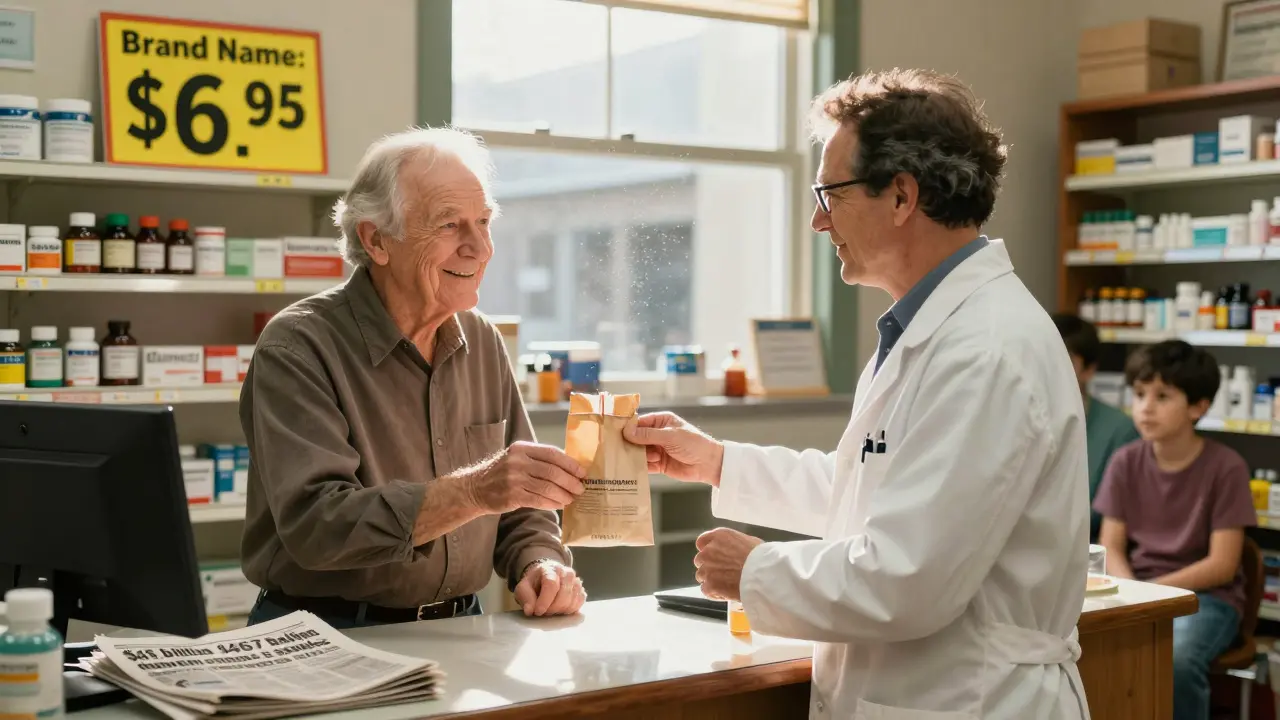
In 2024, generic and biosimilar drugs saved the U.S. healthcare system $467 billion. That’s more than the entire annual budget of the Department of Education. And over the last decade, those savings have added up to over $3.4 trillion. If you’re taking a generic pill instead of the brand name, you’re not just saving money-you’re helping lower costs for everyone else too. The numbers on your pharmacy receipt tell the story. In 2024, the average out-of-pocket cost for a generic prescription was $6.95. For a brand-name drug? $28.69. That’s more than four times as much. If you’re uninsured, the gap gets even wider. Brand-name drugs cost an average of $130.18 per prescription, up nearly 50% since 2019. Meanwhile, generic prices dropped by 6% over the same period.Why Do Generics Cost So Much Less?
Generic drugs aren’t cheaper because they’re lower quality. They’re cheaper because they don’t need to pay for research, marketing, or advertising. The original brand-name drug company spent years and hundreds of millions developing the drug and getting FDA approval. Once the patent expires, other companies can make the same medicine-no need to repeat expensive trials. They just prove it’s bioequivalent. That’s it. That’s why a 30-day supply of lisinopril (a blood pressure pill) costs $4 at Walmart with a generic. The brand version, Zestril, used to cost over $100. Today, it’s still around $80. But no one buys it anymore. Why would you? The same thing happened with statins, antidepressants, and even insulin. Generic versions hit the market, prices dropped overnight, and patients started saving hundreds-or even thousands-per year.Biosimilars: The New Wave of Savings
Biosimilars are the next big thing. They’re not exact copies like traditional generics-they’re highly similar versions of complex biologic drugs, like those used for rheumatoid arthritis, cancer, or Crohn’s disease. These used to cost $10,000 to $20,000 a year. Now, biosimilars are cutting those costs by 20-40%. In 2024 alone, biosimilars saved $20.2 billion. That’s nearly double what they saved the year before. Since they entered the market in 2015, they’ve saved the system over $56 billion. And they’re being used more than ever-nearly 3.3 billion patient days of therapy with zero new safety concerns reported. One example: Humira, a top-selling biologic for autoimmune diseases, had no competition for years. Now, multiple biosimilars are available. The price dropped from over $7,000 per month to under $4,000. And it’s still falling.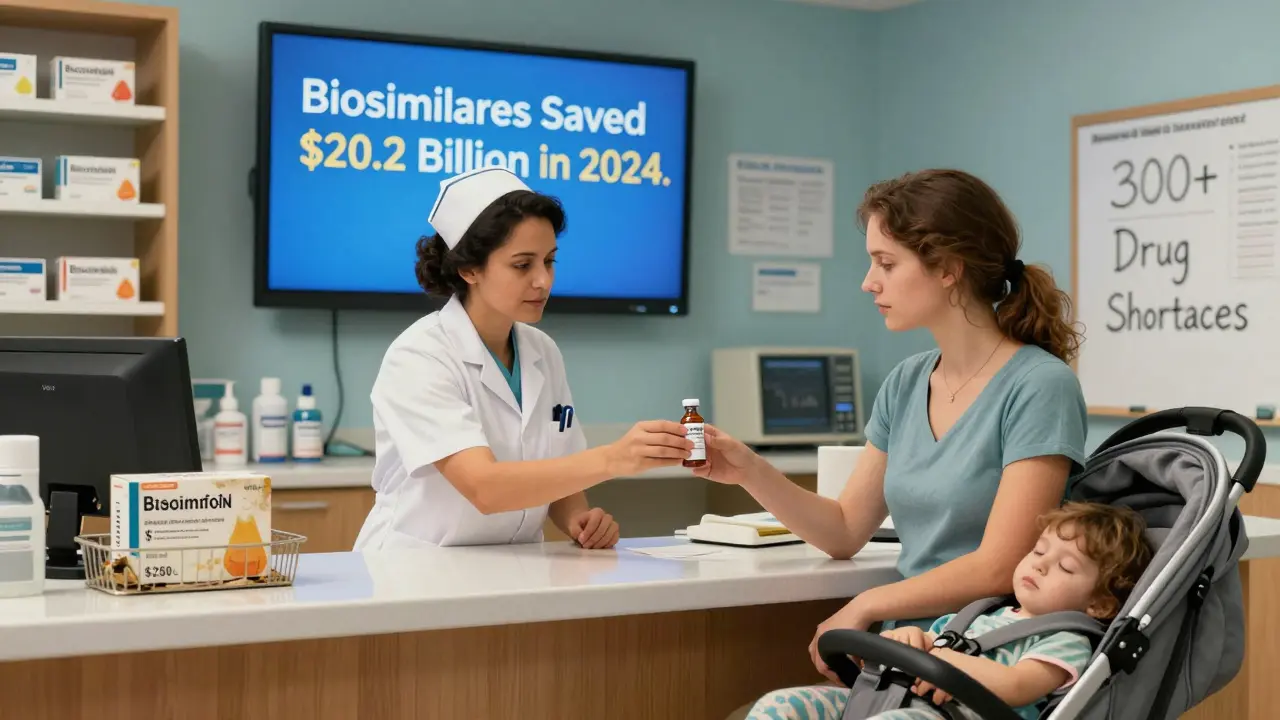
Generics Are Deflating-And That’s a Problem
Here’s the paradox: the more successful generics are, the harder it is for manufacturers to stay in business. Since 2019, the total amount spent on generic drugs in the U.S. has dropped by $6.4 billion-even though more people are using them, and more generics are being approved. Why? Because prices keep falling. A single pill that cost 50 cents in 2018 might cost 12 cents today. Manufacturers are squeezed. Some have shut down. Others have stopped making certain drugs entirely. That’s why shortages are rising. In 2024, the FDA reported over 300 drug shortages. Many were for old, cheap generics-like antibiotics, thyroid meds, or IV fluids. These aren’t fancy drugs. But when they disappear, hospitals scramble. Patients go without. The Biosimilars Council warns that the current pricing model is unsustainable. If manufacturers can’t make a living off $0.05 pills, they’ll stop making them. And then who pays?Brand-Name Prices Keep Rising
While generics get cheaper, brand-name drugs keep getting more expensive. In January 2025, major pharmaceutical companies raised prices on 250 drugs by an average of 4.5%. That’s nearly double the overall inflation rate. Some drugs jumped over 10%. One of the most extreme cases? Vasostrict, a vasopressor used in critical care. Its list price dropped 76% between April and July 2025 after a generic version entered the market. That’s the power of competition. But for drugs without generics? Prices climb. Insulin, for example, still costs over $250 per vial in many cases-even though the manufacturing cost is under $10. Why? Because no generic competitor has been able to break through yet.Who’s Blocking the Savings?
It’s not just drugmakers. Pharmacy benefit managers (PBMs), middlemen who negotiate drug prices for insurers, often take a cut of the savings. They’re supposed to lower costs-but sometimes they profit from high brand-name prices. They push patients toward expensive drugs because the rebates they get are bigger. Then there’s patent abuse. Some companies file dozens of minor patents on a single drug just to delay generics. This is called “patent thicketing.” The Congressional Budget Office estimates ending this practice would save $1.8 billion over 10 years. Another tactic? “Product hopping.” A company slightly changes a drug-say, switches from a pill to a capsule-and then pushes patients to the new version. The old one gets discontinued. The generic can’t enter until the new patent expires. This trick has delayed generics for years. And pay-for-delay deals? Big pharma pays generic companies to wait before launching their version. The Actuarial Research Corporation found these deals cost the system $12 billion a year. Banning them could save $45 billion over 10 years.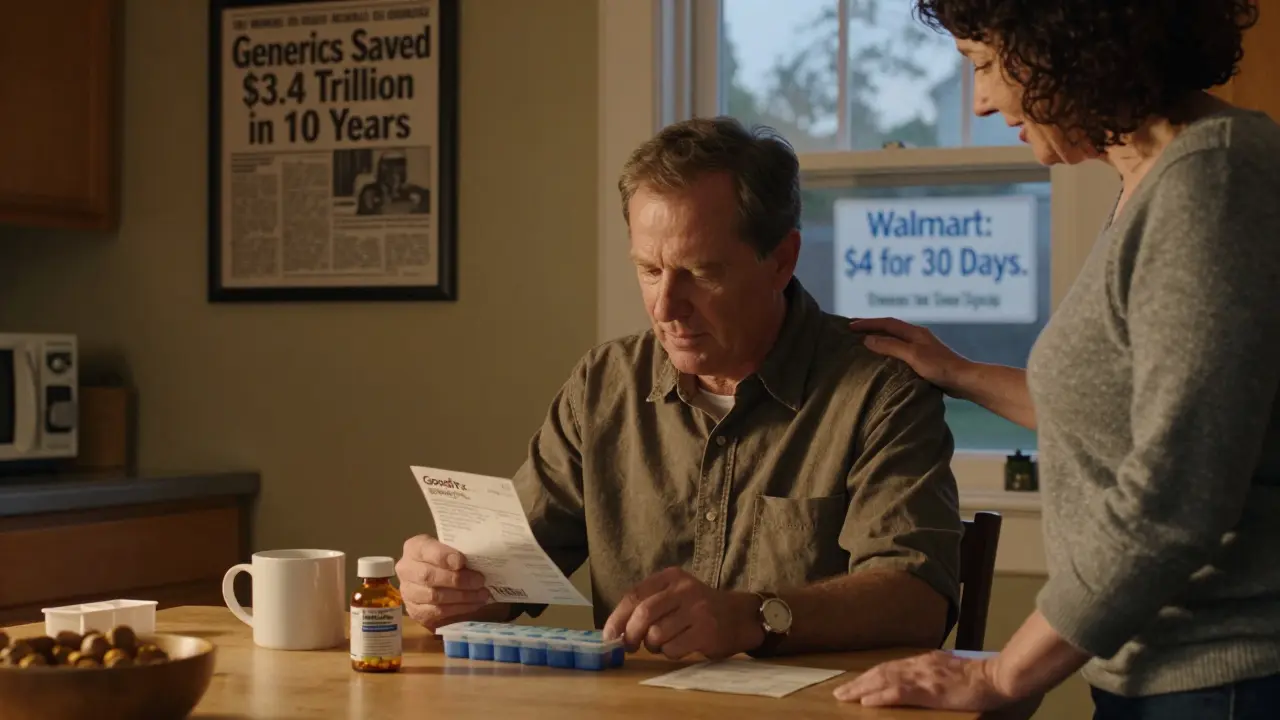
What This Means for You
If you’re on a long-term medication, always ask: “Is there a generic?” Even if your doctor didn’t prescribe one, it’s likely available. Ask your pharmacist. Check GoodRx. Compare prices. You could save $100, $500, or even $1,000 a year. Medicare saved $142 billion in 2024 just from generics-that’s $2,643 per beneficiary. That money comes directly out of your premiums and out-of-pocket costs. And if you’re uninsured? Generics are your lifeline. A generic statin costs $4 a month. The brand? $200. That’s not a choice. That’s survival.What’s Next?
The U.S. government is trying to fix this. The Inflation Reduction Act allows Medicare to negotiate prices on some high-cost drugs. The Most-Favored-Nation rule aims to bring U.S. drug prices down to match what other countries pay. So far, it’s mostly targeted at brand-name drugs-but if it expands, generics could benefit too. Biosimilars are expected to keep growing. By 2025, they could make up 15% of biologic prescriptions. That’s another $30-50 billion in savings on the horizon. But without policy changes-curbing patent abuse, stopping pay-for-delay, fixing PBM incentives-the system risks breaking. The savings are real. The numbers don’t lie. But if we don’t protect the companies making these cheap drugs, we’ll lose them.Bottom Line
Generic drugs aren’t a loophole. They’re the reason millions of Americans can afford their prescriptions. They’ve saved $3.4 trillion in 10 years. They cut your monthly bill by 80%. They keep hospitals stocked. They lower insurance premiums. But they’re under threat. And if you think your savings are safe, think again. The system is working-until it doesn’t.Ask for the generic. Check your pharmacy’s price list. Advocate for policies that keep generics alive. Because when generics disappear, everyone pays more.
Are generic drugs as safe and effective as brand-name drugs?
Yes. The FDA requires generic drugs to have the same active ingredient, strength, dosage form, and route of administration as the brand-name version. They must also prove they’re bioequivalent-meaning they work the same way in your body. Thousands of studies and decades of real-world use confirm generics are just as safe and effective.
Why do some generic drugs look different from the brand name?
By law, generics can’t look exactly like the brand name, including color, shape, or markings-because those are trademarked. But the active ingredient is identical. The differences are only in inactive ingredients like dyes or fillers, which don’t affect how the drug works.
Can I switch from a brand-name drug to a generic without talking to my doctor?
In most cases, yes. Pharmacists can substitute a generic unless your prescription says “Dispense as Written” or “Do Not Substitute.” Still, it’s a good idea to check with your doctor if you’re on a narrow-therapeutic-index drug like warfarin or thyroid meds, where tiny changes in dosage can matter.
Why are some generic drugs out of stock?
Many generic manufacturers operate on razor-thin margins. When prices drop too low, some companies stop making the drug because they can’t profit. Others face supply chain issues or FDA inspections. This leads to shortages-especially for older, low-cost drugs like antibiotics or blood pressure pills. The problem is growing as more companies exit the generic market.
Do biosimilars work the same as biologics?
Yes. Biosimilars are not exact copies, but they’re highly similar to the original biologic drug. They undergo rigorous testing to prove they have no clinically meaningful differences in safety, purity, or potency. Patients using biosimilars for conditions like rheumatoid arthritis or cancer have shown the same outcomes as those using the original biologic.
How can I find the cheapest generic version of my medication?
Use free tools like GoodRx, SingleCare, or Blink Health. These sites compare prices across pharmacies in your area. Many generics cost under $5 at Walmart, Costco, or CVS with a discount card-even without insurance. Always ask your pharmacist if a cheaper alternative exists-sometimes the same drug is sold under a different name or dosage form that’s less expensive.
Why don’t all drugs have generic versions?
Some drugs are too complex to copy easily-like biologics, which are made from living cells. These require biosimilars, which take longer and cost more to develop. Other drugs are still under patent, or the manufacturer has used legal tactics to delay generics. A few drugs have such small markets that no company finds it profitable to make a generic version.
Are generic drugs made in the U.S.?
Most generic drugs are made overseas, especially in India and China. But they’re still held to the same FDA standards as U.S.-made drugs. The FDA inspects foreign manufacturing plants regularly. While supply chain concerns exist, the safety and quality of generics are tightly regulated, regardless of where they’re made.
Sean Feng
January 11, 2026 AT 15:01Generics are fine until you get the one that makes you feel like a zombie. Then you remember you paid $6 and wonder if it's worth it.
Priya Patel
January 12, 2026 AT 07:53OMG I just switched my blood pressure med to generic and saved $180 this month!!! My mom in India says they use the same pills there but pay pennies. We’re so lucky here even with the drama.
Priscilla Kraft
January 14, 2026 AT 06:53Just want to say thank you for posting this 🙏 I’ve been telling my friends for years to check GoodRx - it’s wild how much you can save. My sister was paying $200 for insulin until she found the generic for $25. She cried. I cried. We all cried.
Michael Patterson
January 16, 2026 AT 05:10Look i know you think generics are great but you dont know how the supply chain works and honestly if you had any real experience in pharma youd realize that the cost savings are a myth because the quality control is a joke and the factories in india are basically running on fumes and i saw a guy on youtube who took a generic and his liver exploded so yeah maybe dont be so naive
Matthew Miller
January 17, 2026 AT 03:26Stop pretending this is a win. This isn't healthcare reform - it's corporate cannibalism. Manufacturers are going under because the system incentivizes them to produce pills at $0.03 each. When the next antibiotic shortage hits your grandma, you'll be the one screaming for brand names while the pharmacies are empty. This isn't saving money - it's engineering collapse.
Adewumi Gbotemi
January 18, 2026 AT 02:57Here in Nigeria we dont even have generics. We pay full price or go without. So i read this and i feel happy for you but also sad. You have choices. We dont.
Roshan Joy
January 18, 2026 AT 15:38Really appreciate this breakdown. I’ve been using generics for years and never knew biosimilars were saving that much. Just checked my statin - switched from brand to generic last year. Saved $300. Small win, but it adds up. Thanks for the clarity!
Christian Basel
January 19, 2026 AT 07:49It’s not about generics being bad - it’s about the PBM rent-seeking model. The rebate structure incentivizes formulary placement of higher-priced branded drugs even when generics exist. The consumer never sees the true cost because the rebate is captured by the middleman, not passed to the patient. This is structural market failure, not a pricing anomaly.
Alex Smith
January 21, 2026 AT 05:49So let me get this straight - we’ve got a system where the cheapest drugs are the ones getting pulled off shelves because nobody can profit off them… and the most expensive ones are the ones with zero competition? Wow. I didn’t know we were running a capitalist dystopia simulator. Congrats, America.
Madhav Malhotra
January 22, 2026 AT 06:37My cousin in Delhi takes the same lisinopril as you - same factory, same pill, just labeled differently. He pays $0.50 a month. You pay $4. We’re all on the same supply chain. The difference? Your system lets middlemen eat the savings. Not your fault - just weird.
Jennifer Littler
January 22, 2026 AT 11:08As a claims analyst, I can confirm the PBM rebate structures are designed to favor branded drugs. The pharmacy gets paid based on the list price, not the net cost. So if a generic’s list price is artificially inflated to match brand rebates? You get a $6 copay on a $100 drug that actually costs $0.12 to make. The math is rigged.
Jason Shriner
January 24, 2026 AT 09:05Generics are the reason we have a healthcare system that feels like a Walmart aisle with pills. You get what you pay for - and what you pay for is the illusion of choice. Meanwhile, the real winners? The guys who own the factories in China and the lawyers who write the patents. You’re not saving money - you’re just losing the right to be annoyed by the brand name.
Alfred Schmidt
January 24, 2026 AT 10:51STOP. JUST STOP. I’ve had three different generic versions of my antidepressant, and each one made me feel like I was being slowly drained by a vampire. The FDA says they’re ‘bioequivalent’ - but bioequivalent doesn’t mean ‘emotionally equivalent.’ I’m not a lab rat. I need consistency. You want savings? Fine. But don’t force me to gamble with my mental health.
Vincent Clarizio
January 25, 2026 AT 15:13Let’s be real - this whole system is a Ponzi scheme built on the back of the most vulnerable. We tell people to take generics because they’re cheaper, but we don’t fix the fact that the manufacturers can’t survive on $0.05 per pill. So they stop making them. Then we panic when the antibiotics vanish. Then we blame the doctors. Then we pay $200 for a brand-name version because we have no other choice. We’ve engineered a self-destructive loop where the solution becomes the problem. And the people who designed this? They’re on vacation in the Hamptons, laughing at how clever they were.
Sam Davies
January 26, 2026 AT 07:20Ah yes, the noble American quest to turn life-saving medicine into a discount bin special. We’ve mastered the art of turning compassion into a cost-benefit analysis. Generics? Brilliant. Until they vanish. Then suddenly, we’re all heroes again - waving our credit cards like torches, begging for the $130 version. The tragedy isn’t the price drop - it’s that we needed a crisis to remember these drugs matter at all.