
Generic Price Wars: How Consumers Save Money on Prescription Drugs
 Jan, 6 2026
When you walk into a pharmacy to pick up your monthly prescription, you might assume the price is fixed - set by the manufacturer, the doctor, or your insurance. But here’s the truth: the price of your generic medication isn’t set at all. It’s being fought over - in real time - by companies trying to undercut each other. This isn’t a sale or a promotion. It’s a price war. And if you know how to play it, you could be saving hundreds, even thousands, of dollars a year.
How Generic Drug Price Wars Actually Work
When a brand-name drug’s patent expires, other companies can legally make the same medicine. These are called generics. They have the same active ingredients, same effectiveness, same side effects - but cost a fraction of the price. The moment one generic hits the market, prices start falling. Add a second manufacturer? Prices drop again. By the time six or more companies are selling the same pill, the price can be over 95% lower than the original brand. The FDA tracked this across hundreds of drugs and found clear patterns:- With just one generic competitor: 15-30% cheaper than brand
- With four generic competitors: 80-85% cheaper
- With six or more: over 95% cheaper
Why You Might Still Be Paying Too Much
You’d think with so many companies competing, everyone wins. But the system has hidden middlemen. Pharmacy Benefit Managers (PBMs) - companies like CVS Caremark, Express Scripts, and Optum - act as brokers between insurers, pharmacies, and drug makers. They negotiate prices behind closed doors. And sometimes, they keep the savings for themselves. One sneaky trick is called “spread pricing.” Here’s how it works: your insurance pays $10 for a generic pill. The pharmacy buys it for $2. The PBM pockets the $8 difference. You pay your $10 copay, thinking you’re getting a deal. But if you’d paid cash, you’d have paid $2. That’s not a price war - that’s a shell game. Another issue: formularies. Insurance plans often push you toward certain generics - not because they’re cheaper, but because the PBM gets a kickback from that manufacturer. So even if a $1 version exists, your plan only covers the $5 version. You’re locked in.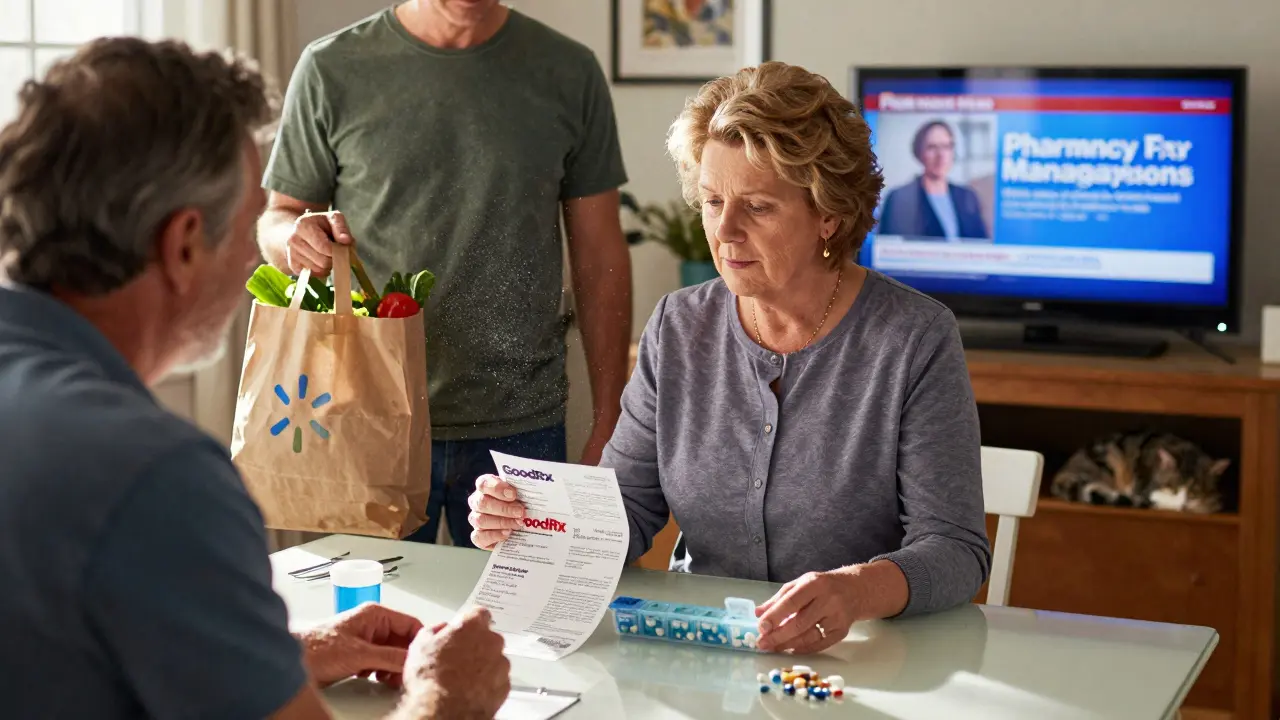
Real People, Real Savings (and Real Confusion)
People on Reddit’s r/healthcare thread in 2023 shared stories that show how uneven the system is. One user paid $0 for lisinopril, their blood pressure med, thanks to Walmart’s program. Another paid $300 for an EpiPen - even though a generic version existed for $15. Why? Because their insurance didn’t cover it, and they didn’t know to ask for the cash price. GoodRx data from early 2024 shows that, on average, people save 89% on generics compared to brand names. But the range? Wild. Insulin glargine biosimilars? Only 15% cheaper because only two companies make them. Apixaban? Price jumped 40% overnight when one manufacturer quit the market. That’s the dark side of price wars: when profits vanish, companies leave. And then you’re stuck with no options - and higher prices.How to Actually Save Money - Step by Step
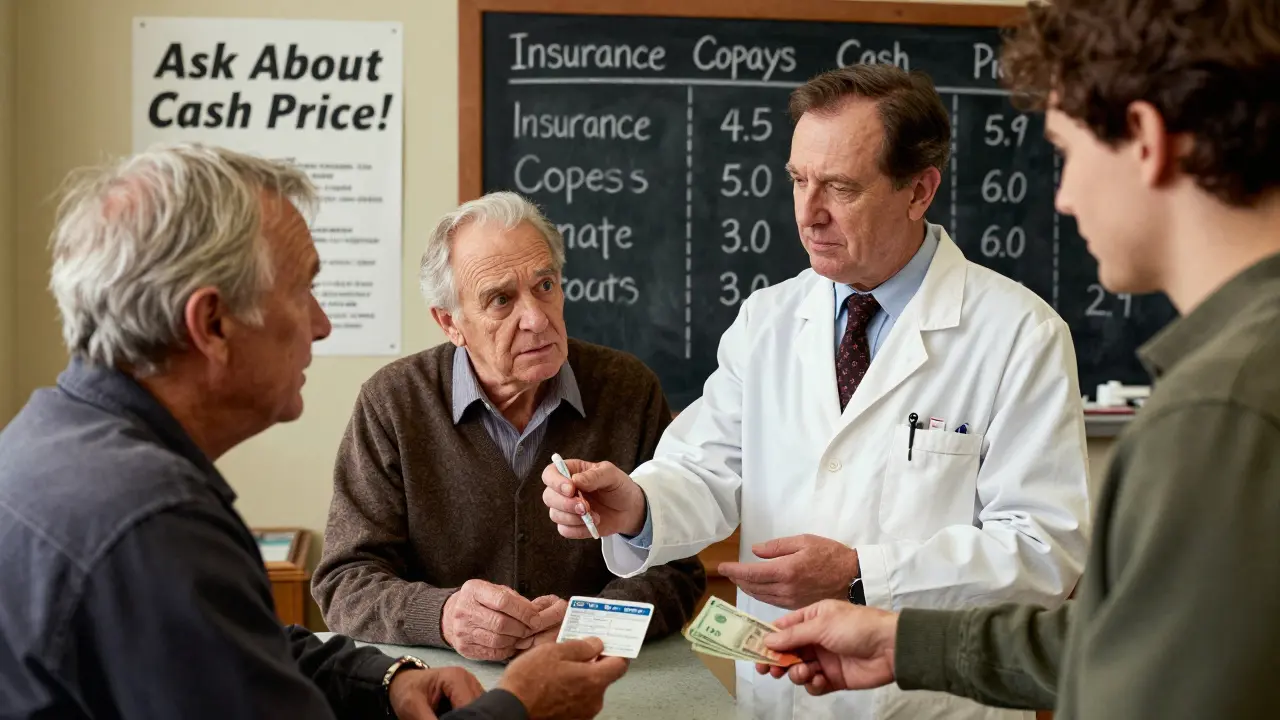
You can’t control the market. But you can control what you do at the pharmacy counter. Here’s how to win:- Always ask for the cash price. Even if you have insurance. In 28% of cases, the cash price is lower than your copay. That’s not a typo. It’s because PBMs inflate copays to pad their margins.
- Compare prices across pharmacies. The same generic pill can cost $3 at Costco, $12 at CVS, and $20 at Walgreens. Use GoodRx or SingleCare to check prices before you go.
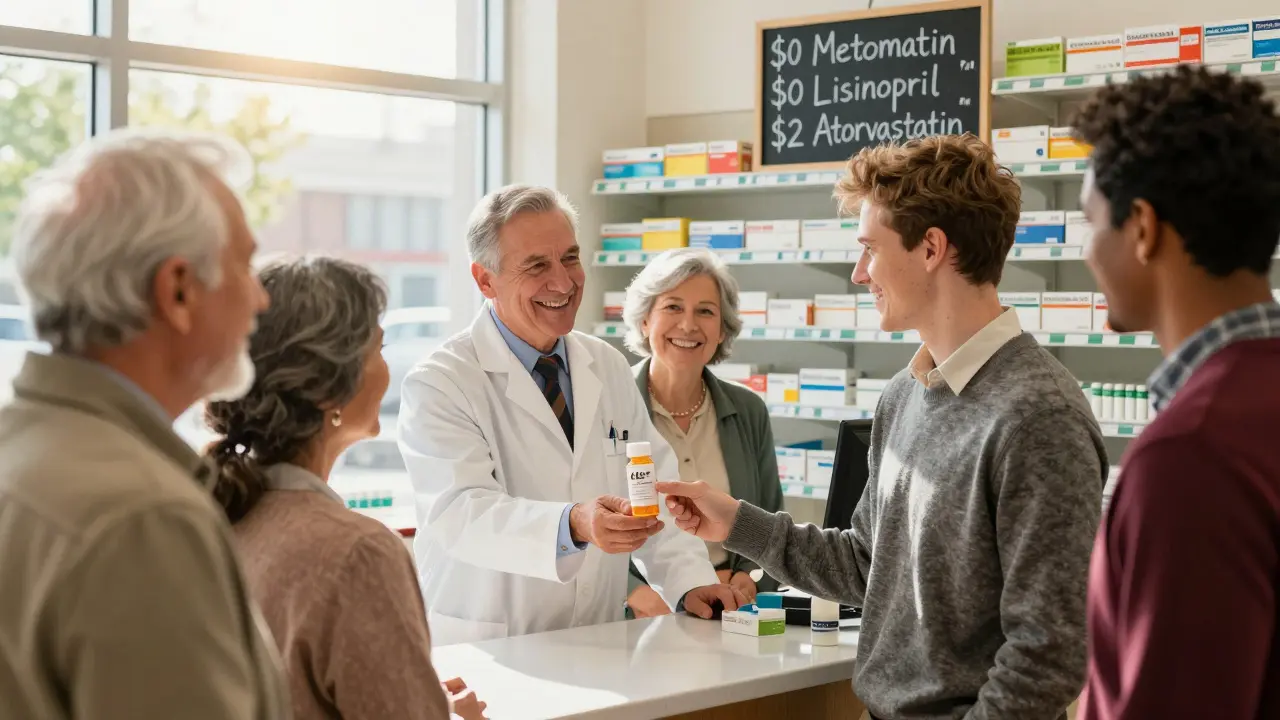
- Use discount programs. Walmart, Kroger, and Target have $4 lists for common generics. These aren’t sales - they’re permanent. You don’t need a membership.
- Check the AB rating. Not all generics are created equal. Look for “AB” on the label. That means it’s bioequivalent to the brand. Avoid “BX” rated drugs - they’re not proven to work the same.
- Focus on chronic meds. A $5 difference on a monthly pill adds up to $60 a year. On a $200 drug? That’s $2,400. That’s your vacation fund.
What’s Changing - And What’s Not
The government is starting to notice. The 2022 Inflation Reduction Act lets Medicare negotiate prices for some drugs. The 2023 Pharmacy Benefit Manager Transparency Act aims to ban spread pricing. The FDA approved over 1,000 generic drugs in 2023 - up from 748 the year before. More competition should mean lower prices. But the big players aren’t backing down. Five companies - Teva, Viatris, Sandoz, Amneal, and Aurobindo - control over 60% of the U.S. generic market. That’s not competition. That’s an oligopoly. And when only a few companies are left, they can quietly raise prices without fear of losing customers.The Bottom Line: Your Savings Are Hidden - But Accessible
Generic drug price wars are real. And they’re powerful. But they don’t work unless you know how to access them. The system is designed to confuse you. Insurance cards, copays, formularies, gag clauses - they’re all tools to keep you from seeing the real price. The fix isn’t complicated. It’s simple: always ask. Ask for cash. Ask for alternatives. Ask if there’s a cheaper version. Ask again. The pharmacy tech doesn’t get paid more if you pay more. They’re just following orders. If you’re on a chronic medication - blood pressure, cholesterol, diabetes, thyroid - spend 10 minutes once a quarter checking your prices. You could save $500. Or $2,000. Or more. That’s not a small thing. That’s a life change. The price war is happening. You just have to show up for it.Are generic drugs as effective as brand-name drugs?
Yes. The FDA requires generic drugs to have the same active ingredients, strength, dosage form, and route of administration as the brand-name version. They must also prove they’re absorbed into the body at the same rate and to the same extent. Over 97% of prescriptions filled in the U.S. are generics, and they’re used safely every day by millions.
Why is my generic drug more expensive than last month?
It’s likely due to reduced competition. If a manufacturer stops making the drug - because prices dropped too low to be profitable - the remaining companies can raise prices. This happens often in markets with only one or two suppliers. Check GoodRx or call other pharmacies to see if another source has a lower price.
Should I use my insurance for generics or pay cash?
Always check both. Many people assume insurance gives the best price, but that’s not true. PBMs often set copays higher than the actual cash price. Use GoodRx or ask the pharmacist for the cash price before you pay. In nearly one-third of cases, cash is cheaper - even if you have insurance.
What’s the $4 generic list, and does it really work?
Yes. Walmart, Kroger, Target, and other major chains offer a list of over 100 common generic medications for $4 (or $0) for a 30-day supply. These include drugs like metformin, lisinopril, atorvastatin, levothyroxine, and amoxicillin. You don’t need insurance or a membership. Just ask for the $4 list at the pharmacy counter.
Can I trust generics from online pharmacies?
Only if they’re verified. Stick to U.S.-based pharmacies that are licensed and accredited by the National Association of Boards of Pharmacy (NABP). Avoid websites that sell without a prescription or offer prices that seem too good to be true. Many fake generics are sold online - and they can be dangerous.
Why do some generics cost more than others?
It’s about competition. If only one company makes a generic, they can charge more. If five companies make it, prices drop. Also, some generics are made with different inactive ingredients or packaging - which doesn’t affect effectiveness but can affect cost. Always look for the AB rating to ensure it’s a true substitute.
Is there a limit to how low generic prices can go?
Yes. When prices fall below the cost of manufacturing, packaging, and distribution, companies stop making the drug. That’s why shortages happen - especially for older, low-margin drugs like antibiotics or thyroid meds. The market can’t sustain prices that are too low. That’s why competition needs to be balanced - not just aggressive.
Katrina Morris
January 7, 2026 AT 17:38Jessie Ann Lambrecht
January 8, 2026 AT 01:23Anastasia Novak
January 8, 2026 AT 04:39Jonathan Larson
January 8, 2026 AT 09:45Alex Danner
January 10, 2026 AT 03:30Elen Pihlap
January 11, 2026 AT 09:02Rachel Steward
January 12, 2026 AT 10:56Sai Ganesh
January 13, 2026 AT 20:05Aparna karwande
January 15, 2026 AT 09:52Vince Nairn
January 16, 2026 AT 23:06Ayodeji Williams
January 18, 2026 AT 13:30Mina Murray
January 19, 2026 AT 17:20steve rumsford
January 21, 2026 AT 16:48Andrew N
January 22, 2026 AT 04:32LALITA KUDIYA
January 22, 2026 AT 14:25