
How Patients Can Prevent Medication Errors and Stay Safe
 Jan, 28 2026
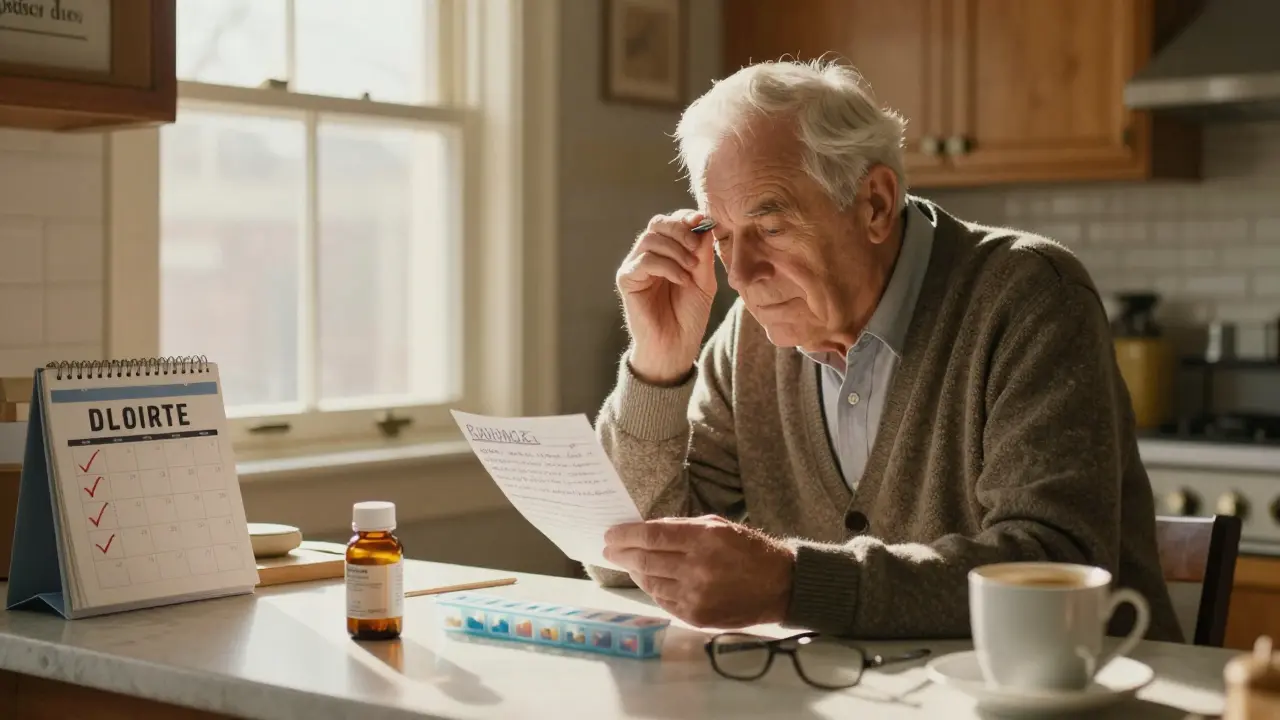
Every year, millions of people around the world take the wrong pill, at the wrong time, or in the wrong dose - not because of malice, but because of a system that assumes patients are passive observers. But here’s the truth: medication safety doesn’t just happen in hospitals or pharmacies. It happens in your kitchen, your bathroom, and in the quiet moments when you look at your pills and ask, "Does this look right?"
You’re not just a recipient of care. You’re the last line of defense.
Know Your Medications Like Your Own Name
Think about how many medications you take. Maybe it’s one. Maybe it’s five. Maybe it’s more. Do you know what each one is for? Not just the name on the bottle - but why your doctor prescribed it?
A 2022 study from the Agency for Healthcare Research and Quality found that patients who could clearly name each medication and its purpose had 35% fewer errors. That’s not a small number. That’s the difference between feeling okay and ending up in the ER.
Start simple. Keep a list - paper or phone, doesn’t matter - with the name, dose, time of day, and reason for each drug. Include vitamins, supplements, and over-the-counter pills. People forget these all the time. But ibuprofen, fish oil, or even a daily vitamin can interact with your prescription. One patient in Brisbane told me she ended up with dangerous bleeding after mixing her blood thinner with a new herbal supplement. She didn’t think it counted as a "medication."
Update your list every time your doctor changes something. Bring it to every appointment. Show it to the pharmacist. Don’t wait for them to ask.
Ask Questions - Even If You Feel Awkward
Doctors and pharmacists aren’t mind readers. They’re busy. But if you don’t speak up, no one else will.
Here are seven questions that save lives:
- What is this medicine for?
- How and when should I take it?
- What side effects should I watch for?
- What happens if I miss a dose?
- Does this interact with anything else I’m taking?
- Why is this different from what I took before?
- Can you show me what it’s supposed to look like?
That last one matters more than you think. A 2021 study showed that 19% of dispensing errors - like getting the wrong pill or wrong strength - were caught when patients noticed the pill looked different. One woman in Queensland spotted her new blood pressure pill was blue instead of white. She asked. It turned out the pharmacy had accidentally given her a completely different drug.
Don’t be afraid to say, "This doesn’t seem right." One nurse on Reddit said 70% of the near-misses she caught happened because a patient questioned something. That’s not being difficult. That’s being smart.
Use Medication Reconciliation - It’s Not Just a Hospital Form
Medication reconciliation sounds like a boring hospital procedure. But it’s really just making sure your list of medicines matches what’s actually being given to you.
Every time you’re admitted to the hospital, discharged, or see a new specialist, someone should compare your current list with what they’re prescribing. But here’s the catch: that only works if you bring your list.
The Joint Commission found that patients who actively participated in this process reduced medication discrepancies by 50%. That means fewer overdoses, fewer interactions, fewer surprises.
Don’t wait for them to ask you. Say: "I have a list of everything I take. Can we go over it together?" If they don’t have time, ask for a printed copy to take home. Keep it in your wallet or phone.

Watch for Changes - Especially After Hospital Discharge
One of the most dangerous times for medication errors is right after you leave the hospital. That’s when prescriptions change, new drugs are added, and old ones are stopped - often without clear communication.
Studies show that 30% of patients experience a medication error within 30 days of discharge. Many of these are caught by patients who double-checked.
After you get home, compare your discharge papers with your personal list. Did they take something off? Add something new? Change the dose? If something doesn’t match, call your doctor or pharmacist. Don’t assume it’s an accident. Assume it’s a mistake until proven otherwise.
One man in Melbourne thought his new diabetes pill was just a refill. He didn’t realize the dose had tripled. He started feeling dizzy. He called his pharmacist. They caught it before he had a seizure.
Use Tools - But Don’t Rely on Them Alone
Apps like MyMedSchedule, Medisafe, or even your phone’s calendar can help you remember when to take pills. Some even send alerts for refills or side effects.
But here’s the problem: only 44% of people over 65 use these tools regularly, according to Pew Research. And if you’re not comfortable with technology, you’re not alone.
Don’t feel like you have to go digital. A simple pill organizer with labeled compartments works just as well. Set alarms on a basic phone. Tape a schedule to your fridge.
What matters isn’t the tool - it’s the habit. If you take your meds at the same time every day, with the same routine, you’re less likely to mess up.
Understand the Barriers - And Push Through Them
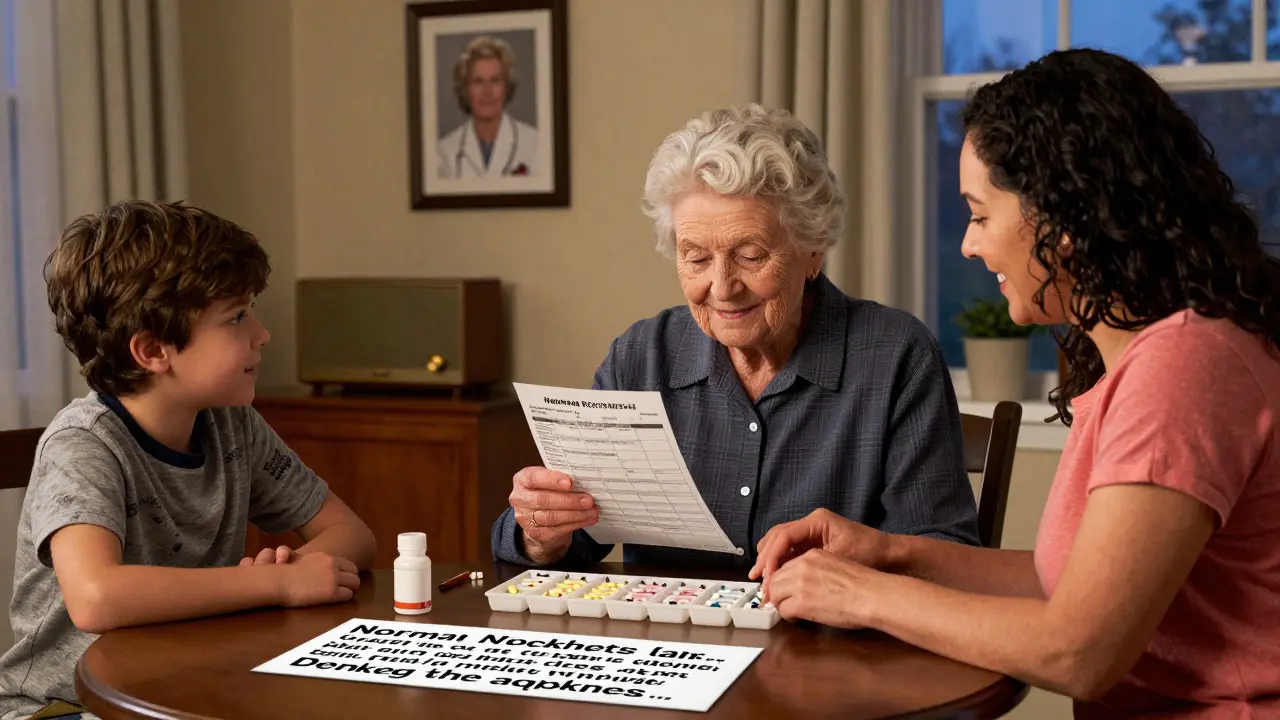
Not everyone can easily understand medical jargon. Not everyone has good eyesight, hearing, or memory. Not everyone has access to reliable internet or transportation to refill prescriptions.
That’s why the World Health Organization created the "Universal Medication Schedule" - a simple way to divide doses into four clear times: morning, afternoon, evening, and bedtime. No more "take twice daily" confusion. Just: "Take your blue pill with breakfast, your white pill with dinner."
Also, if you struggle with numbers - like calculating how many pills to take - ask for help. Many pharmacies now offer dose-packaging services. Your pills are sorted into daily or weekly pouches. No counting needed.
And if you feel dismissed when you ask questions? You’re not imagining it. A University of California study found that 62% of patients who caught errors were told they were "overreacting." That’s not okay. Your safety isn’t optional.
You’re Not Just a Patient - You’re a Safety Partner
Dr. Tejal Gandhi from the Institute for Healthcare Improvement says patients are the final safety checkpoint in 83% of near-miss events. That means most errors are stopped - not by a doctor, not by a nurse - but by you.
Think about it: you’re the only one who sees your pills every day. You know how you feel. You notice the dizziness, the rash, the nausea before anyone else does.
Healthcare systems are built on trust. But trust shouldn’t mean silence. It should mean partnership.
When you ask questions, you don’t make your doctor work harder. You make their job easier - because you’re catching mistakes before they become disasters.
Medication safety isn’t about being perfect. It’s about being alert. It’s about speaking up. It’s about knowing your body and your meds well enough to say, "This doesn’t feel right."
And if you do that - even just once - you might just save your own life.
What should I do if I think I’ve been given the wrong medication?
Stop taking it immediately. Call your pharmacist or doctor. Don’t wait to see if you feel sick. Bring the pill bottle and your personal medication list. Ask them to verify the name, strength, and purpose. If they dismiss your concern, ask for a second opinion or go to a different pharmacy. Your safety comes first.
Can I trust my pharmacist to catch all medication errors?
Pharmacists are trained to catch errors, but they’re not mind readers. They rely on the information you give them. If you don’t tell them about all your supplements or if your doctor’s prescription is unclear, they can’t help. Always share your full list of medications - even if you think it’s "not important."
What if I can’t read the label on my medicine bottle?
Ask your pharmacist for a large-print label or a verbal explanation. Many pharmacies offer audio labels or apps that read the label aloud. You can also ask a family member or friend to help you label your pill containers with clear, bold writing. Don’t guess - get help.
Why does my doctor keep changing my meds?
Your body changes. So do your conditions. Sometimes a drug stops working, causes side effects, or interacts with something new you’ve started. But if changes feel random or confusing, ask for a clear reason. Write down what was changed and why. If you’re not sure, bring your list to your next appointment and ask: "What’s the goal of this change?"
How can I help an elderly parent stay safe with their medications?
Start by making a complete list of everything they take - including vitamins and creams. Help them use a pill organizer. Set up phone reminders. Visit their pharmacy together and ask if they offer dose packaging. Don’t assume they understand the instructions - even if they say they do. Check their medicine cabinet every few weeks for expired or duplicate pills.
Are there free resources to help me learn about my medications?
Yes. The World Health Organization’s "Medication Safety: A Guide for Patients" is free and available online. Many public libraries offer health literacy workshops. Your local pharmacy may have free medication reviews. Ask your doctor for a referral to a patient educator - many hospitals have them. You don’t have to figure it out alone.
Jasneet Minhas
January 29, 2026 AT 18:13Eli In
January 31, 2026 AT 03:15Megan Brooks
January 31, 2026 AT 08:41Ryan Pagan
January 31, 2026 AT 17:04Paul Adler
February 2, 2026 AT 10:36Robin Keith
February 2, 2026 AT 18:05Sheryl Dhlamini
February 2, 2026 AT 19:23Doug Gray
February 3, 2026 AT 03:09Kristie Horst
February 3, 2026 AT 21:49Laura Arnal
February 3, 2026 AT 23:56ryan Sifontes
February 4, 2026 AT 18:20LOUIS YOUANES
February 6, 2026 AT 14:10