
How to Prevent and Treat Yeast Infections Caused by Antibiotics
 Feb, 2 2026
Yeast Infection Risk Calculator
Your Risk Factors
When you take antibiotics to fight a bacterial infection, you might not realize you’re also wiping out the good bacteria that keep your body in balance. One of the most common side effects? A yeast infection. It’s not rare - up to 30% of people with vaginas get one after a course of antibiotics. And it’s not just about discomfort. It’s about understanding why it happens, how to stop it before it starts, and what to do when it does.
Why Antibiotics Cause Yeast Infections
Your vagina isn’t a sterile environment. It’s home to billions of bacteria, mostly Lactobacillus, that keep things in check. These good bacteria make lactic acid and hydrogen peroxide, which keep the pH low - around 3.8 to 4.5. That acidic environment stops yeast, like Candida albicans, from taking over. Antibiotics don’t care about that balance. Broad-spectrum ones like amoxicillin, tetracycline, or ciprofloxacin kill off bacteria, good and bad. When the Lactobacillus disappear, the pH rises. Suddenly, yeast has room to grow. It’s not that the antibiotics cause yeast - they just remove the guards that were keeping it in line. It’s not just antibiotics either. Corticosteroids, birth control pills, pregnancy, and uncontrolled diabetes can all tip the scale. High blood sugar feeds yeast. Tight synthetic underwear traps heat and moisture. Douching washes away protective bacteria. All of it adds up.What a Yeast Infection Feels Like
If you’ve had one before, you know the signs. Intense itching that won’t quit. Burning when you pee or have sex. A thick, white discharge that looks like cottage cheese. Redness and swelling around the vulva. These aren’t subtle symptoms. They’re loud. And they come fast - often within a few days of starting antibiotics. But here’s the catch: not every itch or discharge is yeast. Studies show that 64% of people who think they have a yeast infection are wrong. It could be bacterial vaginosis, an STI, or even a skin irritation. Self-diagnosing leads to wrong treatments - and worse symptoms.How to Prevent It Before It Starts
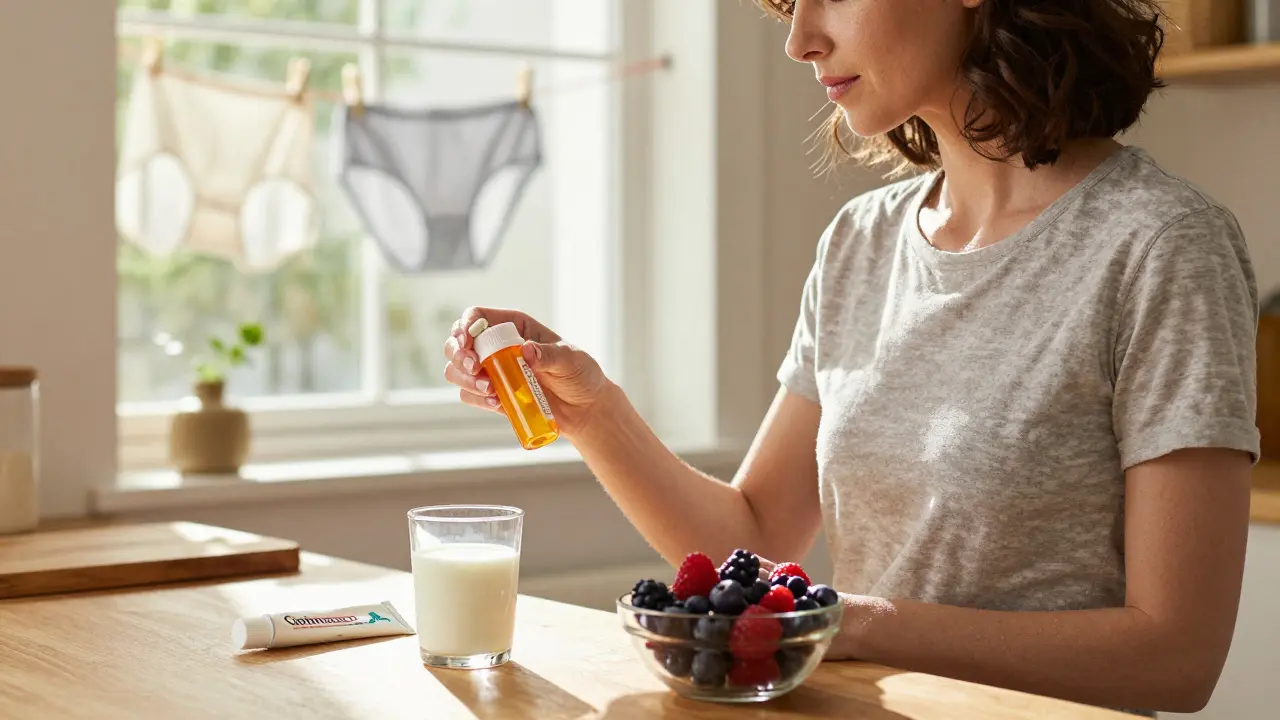
The best way to handle a yeast infection after antibiotics? Don’t let it happen in the first place. Start antifungals at the same time as your antibiotics. Over-the-counter treatments like clotrimazole (Gyne-Lotrimin) or miconazole (Monistat) work well. Use the 7-day cream or suppository, not the one-dose version. Studies show the longer course is 15% more effective. Begin on day one of your antibiotic course. You don’t need to wait for symptoms. Take the right probiotics. Not all probiotics are created equal. Look for strains that actually survive in the vagina: Lactobacillus rhamnosus GR-1 and Lactobacillus reuteri RC-14. These are found in products like Fem-Dophilus. Take 10 billion CFU daily, at least two hours before or after your antibiotic. This timing matters - antibiotics can kill the probiotics if they’re taken together. Watch what you eat. Sugar feeds yeast. That means cutting back on candy, soda, white bread, and pastries. It’s not a magic fix, but a 2021 review in JAMA Dermatology found that cutting simple carbs reduced recurrence by 15-20%. Focus on vegetables, lean proteins, nuts, and healthy fats. Yogurt with live cultures (at least 1 billion CFU per serving) can help too - but don’t rely on it alone. Ditch the douches and scented products. Douching removes up to 90% of your protective bacteria. Scented tampons, sprays, and wipes throw off your pH. Use plain water or unscented wipes. Your body doesn’t need cleaning - it needs balance. Wear cotton underwear. Synthetic fabrics trap heat and moisture, creating the perfect yeast habitat. Cotton lets air flow. Studies show it keeps vaginal temperature 2-4°C lower than synthetics, cutting yeast growth by half. Sleep without underwear when you can. It helps.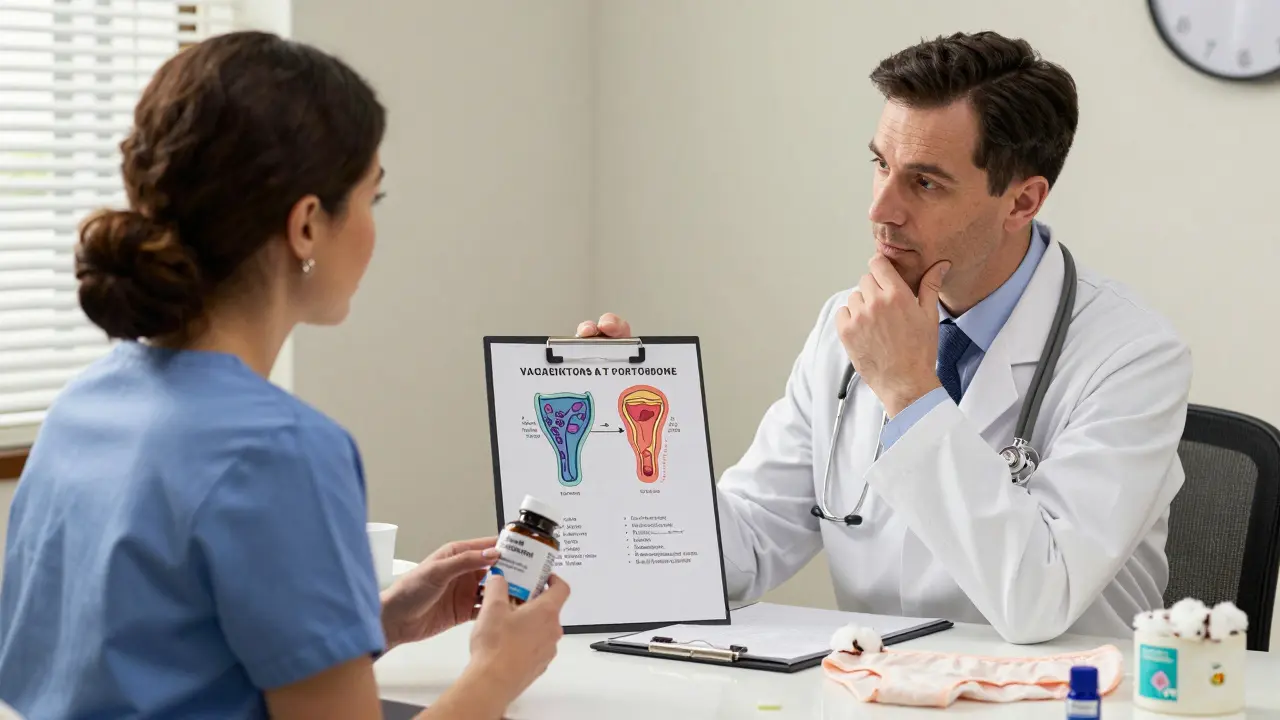
What to Do If You Already Have One
If you’re already itching and burning, don’t panic. Most yeast infections are easy to treat. For mild to moderate cases, OTC antifungals work just fine. Clotrimazole, miconazole, or butoconazole creams and suppositories cure 80-90% of infections within a week. Use the full 7-day course, even if the itching stops early. For stubborn or recurring infections, your doctor might prescribe fluconazole (Diflucan). One 150mg pill usually clears it up. If it comes back, they might give you three doses, spaced 72 hours apart. Success rate? Around 95%. But here’s the warning: Fluconazole isn’t safe in pregnancy, especially in the second and third trimesters. The FDA says it can increase the risk of birth defects by 4.5 times. If you’re pregnant, your doctor will likely recommend boric acid suppositories (600mg nightly for 14 days). They work well, even against resistant strains. Don’t take more antibiotics. This is a common mistake. People think, “I had an infection before, so I’ll just take another antibiotic.” But antibiotics don’t kill yeast. They make it worse. Around 22% of people do this - and end up with worse symptoms.Why So Many People Are Left in the Dark
Here’s the uncomfortable truth: vaginal health is under-researched. Despite affecting 1.4 billion people worldwide, vaginal health gets just 2.5% of the NIH’s $42.9 billion annual budget. That’s why there are no official guidelines on how to prevent yeast infections after antibiotics. Only 38% of OB-GYNs routinely talk about prevention when prescribing antibiotics. But 89% of patients say they want to know. That gap means you’re often left figuring it out on your own. And the products you buy? Many probiotic supplements don’t even contain the strains they claim. A 2021 study found 70% of vaginal probiotics on the market don’t match their labels. You’re paying for hope, not science.
What Works Best - Real-World Results
People who combine strategies have the best outcomes. A Mayo Clinic survey found that 78% of those who avoided yeast infections after antibiotics used both probiotics and antifungals. Only 45% who used just one method stayed infection-free. On Reddit, thousands shared their experiences. 68% said nightly Monistat-1 during antibiotics worked. But 42% had irritation from the suppositories. Others swore by Culturelle Women’s Healthy Balance - but noticed it took two weeks to feel the difference. Fluconazole gets mixed reviews. On Drugs.com, it has a 6.7/10 rating. Side effects? Headaches, nausea, and rare liver issues. Probiotics? Higher satisfaction. But they’re slow. You need patience.What’s Next
The future is promising, but slow. Researchers are testing vaginal microbiome transplants - basically, transplanting healthy bacteria from donors. Early trials at Mayo Clinic are showing promise. Intermountain Healthcare is developing pH-regulating tampons. But these innovations are stuck in the lab, not because they won’t work - but because they’re not funded. The real solution? Better education and more research. Until then, you have power. You can ask your doctor: “Should I take a probiotic or antifungal with this antibiotic?” You can choose cotton underwear. You can skip the douches. You can cut the sugar. You don’t need to wait for a guideline. You don’t need to suffer in silence. You already know what to do.Can antibiotics cause yeast infections in men?
Yes, though it’s less common. Men can get yeast infections on the penis, especially after antibiotics, if they have diabetes, are immunocompromised, or have unprotected sex with someone who has a yeast infection. Symptoms include redness, itching, and a white discharge under the foreskin. Treatment is the same - antifungal creams like clotrimazole. Preventive steps like probiotics and avoiding sugary foods help too.
How long after antibiotics can a yeast infection develop?
It can start as early as a few days after beginning antibiotics, but most cases appear within 5 to 10 days. The risk stays elevated for up to two weeks after finishing the course, since your microbiome takes time to recover. That’s why it’s smart to keep using antifungals and probiotics for a few days after your antibiotics end.
Can I use yogurt to treat a yeast infection?
Eating yogurt with live cultures may help prevent yeast infections by supporting gut bacteria, but applying it vaginally won’t cure an active infection. There’s no solid evidence that yogurt suppositories work. Stick to proven treatments like OTC antifungals or prescription fluconazole. Yogurt can be part of prevention, not treatment.
Are probiotics safe to take with antibiotics?
Yes, but timing matters. Take probiotics at least two hours before or after your antibiotic dose. This gives the good bacteria time to survive without being killed off. Look for strains specifically studied for vaginal health: Lactobacillus rhamnosus GR-1 and Lactobacillus reuteri RC-14. Avoid generic probiotics - they may not help.
What if my yeast infection doesn’t go away after treatment?
If symptoms persist after a full course of antifungals, see a doctor. You might have a resistant strain of Candida, like Candida glabrata, or something else entirely - bacterial vaginosis, an STI, or even a skin condition. Your doctor can do a swab test to confirm the cause. Don’t keep re-treating yourself. Misdiagnosis is common, and wrong treatment makes things worse.
Can I prevent yeast infections without taking medicine?
You can reduce your risk, but not always prevent it completely. Lifestyle changes like wearing cotton underwear, avoiding douches, cutting sugar, and taking probiotics help a lot. But if you’re on strong antibiotics, especially broad-spectrum ones, your risk is still high. Medicine - like antifungals - is the most reliable prevention. Think of lifestyle changes as support, not substitutes.
Amit Jain
February 3, 2026 AT 03:01Antibiotics wipe out good bacteria, yeast takes over. Simple. Take probiotics with L. rhamnosus GR-1 and L. reuteri RC-14. Use clotrimazole for 7 days, not one dose. No douching. Wear cotton. Cut sugar. That’s it.
Keith Harris
February 4, 2026 AT 18:54Oh wow, another ‘natural remedy’ cultist pushing yogurt and cotton underwear like it’s the 1970s. Let me guess - you also think fluoride is a government plot and vaccines cause autism? The real villain here is Big Pharma hiding the truth: yeast infections are caused by EMFs from cell phones and 5G towers. I’ve personally cured mine by sleeping in a Faraday cage and chanting mantras to the vaginal goddess. Try it. Or keep swallowing your poison pills.
Harriot Rockey
February 5, 2026 AT 08:48This is so important 🙌 I had a yeast infection after my last antibiotic and felt so alone. I didn’t know what to do - no one talks about this! The probiotic tip was a game-changer. I started Fem-Dophilus on day one and didn’t get a single itch. You’re not weird for needing this info - you’re smart for looking for it. 💪🌸
Demetria Morris
February 7, 2026 AT 00:23People still use douches? After everything we know? It’s like pouring gasoline on a fire and calling it ‘cleaning.’ And sugar? Of course it feeds yeast - you’re not a toddler, you’re an adult with access to Google. If you can’t control your cravings, maybe the problem isn’t your microbiome - it’s your discipline.
Geri Rogers
February 7, 2026 AT 14:36Y’all are overcomplicating this. If you’re on antibiotics, pop a probiotic and slap on Monistat. Done. No drama. No conspiracy. No judgment. I’ve done it 5 times. Zero infections. You don’t need a PhD to protect your vagina. Just common sense and 10 bucks at CVS. 💅
Nathan King
February 8, 2026 AT 06:38While the article presents a pragmatic framework for managing antibiotic-associated vulvovaginal candidiasis, one must acknowledge the profound epistemological lacunae in contemporary gynecological research. The paucity of longitudinal, double-blind, placebo-controlled trials on probiotic efficacy - particularly regarding strain-specific colonization dynamics - renders many of the recommendations anecdotal at best. One cannot reasonably extrapolate Mayo Clinic survey data as evidence-based protocol without addressing selection bias and self-reporting artifacts. The true solution lies not in consumer-grade suppositories, but in systemic investment in microbiome science.
rahulkumar maurya
February 9, 2026 AT 13:18Let me tell you something about these so-called ‘vaginal probiotics.’ Most are garbage. I’ve reviewed the lab reports. Companies label L. rhamnosus on the box but ship L. acidophilus from China. You’re paying $30 for a placebo with a fancy name. And don’t get me started on ‘natural’ diets - if you think cutting sugar prevents yeast, you’ve never met a Candida glabrata strain. They thrive on ketones, too. Real experts know: only fluconazole works. Everything else is spiritual cleansing with a receipt.
Alec Stewart Stewart
February 11, 2026 AT 07:00Been there. Done that. Took the antibiotic, got the itch. Tried the cream, felt better but not fixed. Started the probiotic - didn’t feel anything for a week. Then one day? Just… gone. No drama. No magic. Just patience. You don’t need to be a scientist. Just listen to your body and give it time. And wear cotton. Seriously. It’s not that hard.
Caleb Sutton
February 12, 2026 AT 01:16They don’t want you to know this, but yeast infections are a tool of the pharmaceutical-industrial complex to sell you antifungals and probiotics. The real cause? Fluoridated water. It weakens your immune system and makes yeast thrive. The FDA knows. Doctors know. But they won’t tell you because they get kickbacks from Bayer and Nature Made. I stopped drinking tap water and started using Himalayan salt. No infection in 18 months. Wake up.