
How to Protect Your Privacy When Disposing of Medications
 Jan, 17 2026
Throwing away old pills might seem like a simple chore, but if you don’t handle the packaging right, you’re putting your personal information at risk. Prescription bottles don’t just hold medicine-they hold your name, address, date of birth, doctor’s name, even your diagnosis. That’s enough for someone to steal your identity, fake prescriptions, or drain your insurance account. And it’s happening more than you think.
Why Your Prescription Bottle Is a Target
Every pill bottle you toss has sensitive data printed on the label. It’s not just your name-it’s your full address, the Rx number, the prescribing doctor, and sometimes even the condition being treated. A 2021 study found that 42% of prescription bottles thrown in the trash still had readable labels. That’s nearly half of all discarded bottles that could be used for fraud.
Real cases are out there. One woman in Ohio found $1,200 in fraudulent insurance charges after someone dug through her trash, found her oxycodone bottle, and used the details to get more pills. Another man in Florida had his credit cards drained after a thief used his name and pharmacy info to order painkillers online. These aren’t rare events. The DEA collected over 820,000 pounds of unused medications during their 2024 Take Back Day alone-most of it from people who knew to dispose of pills safely. But how many of those people also destroyed the labels?
What the Law Says About Privacy
Under HIPAA, healthcare providers and pharmacies are required to protect your health information-even after you leave the clinic. That includes making sure your prescription labels aren’t left readable when discarded. While you’re not a covered entity, the same rules apply to you as a patient: you’re responsible for safeguarding your own PHI (Protected Health Information).
The HHS Office for Civil Rights calls improper disposal of prescription labels one of the top 10 privacy risks in healthcare today. In 2023, 17 healthcare facilities were fined a total of $4.2 million for failing to properly dispose of patient records-including pill bottles. That’s not just a warning-it’s a sign that enforcement is ramping up. If you’re careless, you’re not just risking your privacy-you’re part of a larger problem.
The Best Way: Take-Back Programs
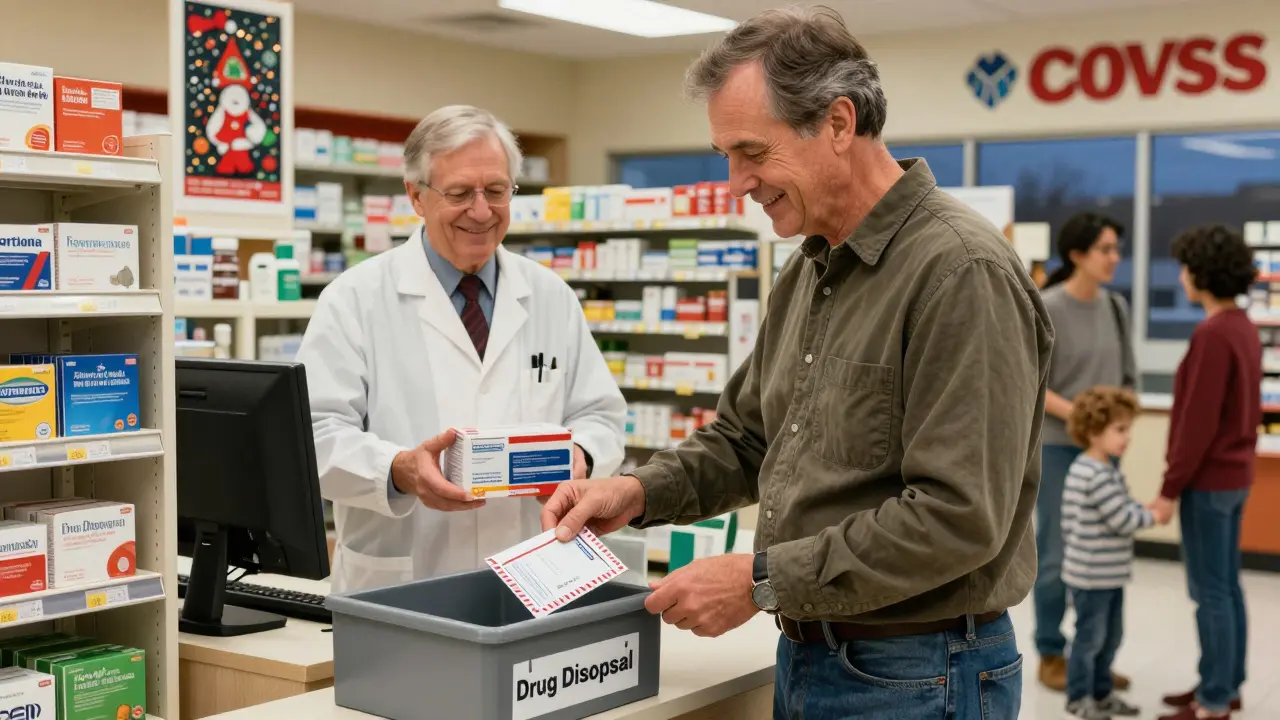
If you want the highest level of privacy protection, use a drug take-back program. These are run by law enforcement, pharmacies, or local health departments. The DEA hosts National Prescription Drug Take Back Days twice a year-the last one was April 27, 2024, with over 6,000 collection sites across the U.S. But you don’t have to wait for those days. Most chain pharmacies like Walgreens, CVS, and Rite Aid have year-round drop boxes.
Here’s why it’s the safest option: you hand over your entire bottle-label and all-and trained staff take it away. No one sees your name. No one touches your info. The drugs are incinerated under strict federal guidelines. According to a 2024 Pharmacy Times poll, 89% of people who used take-back programs felt “very confident” their privacy was protected. That’s compared to just 32% who used at-home methods.
Mail-Back Envelopes: A Convenient Alternative
If there’s no drop box nearby, mail-back envelopes are your next best option. Companies like Walgreens, CVS, and DisposeRx sell prepaid envelopes that let you send unused meds directly to a licensed disposal facility. They cost between $2.99 and $6.99, and you can buy them online or in-store.
Here’s how it works: remove the pills from the bottle, put them in the envelope, seal it, and drop it in the mailbox. The envelope is tamper-proof and has no return address. The facility destroys the meds and incinerates the packaging. Your label never leaves your hands. You don’t need to scratch anything off-just toss the bottle separately after you’ve emptied it.
At-Home Disposal: Do It Right
Not everyone has easy access to take-back programs. If you’re stuck doing it yourself, follow the FDA’s 5-step method exactly. Skip any step, and you’re leaving yourself exposed.
- Take pills out of the bottle. Don’t just pour them into a bag. Remove them completely.
- Mix them with something gross. Used coffee grounds, cat litter, or dirt work best. This makes them unappealing to kids, pets, or anyone digging through your trash.
- Put the mix in a sealed container. A jar with a lid, a plastic tub, even a ziplock bag-just make sure it won’t leak.
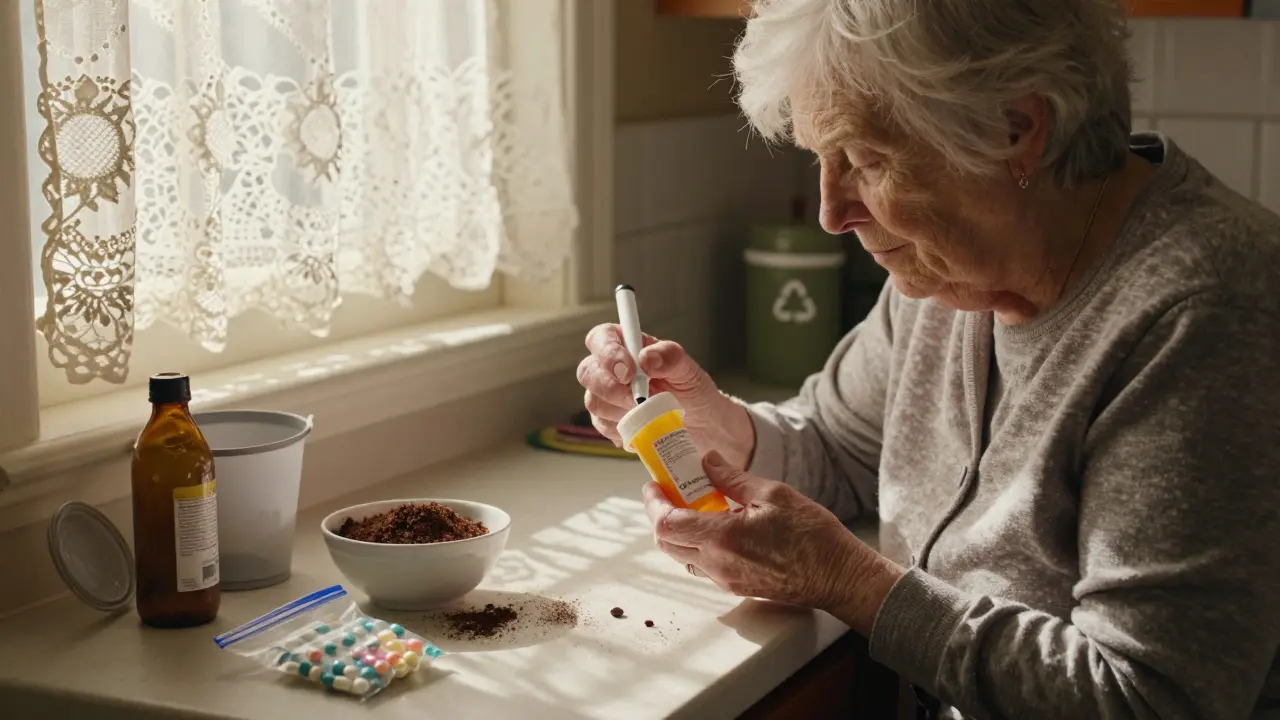
- Destroy the label. This is the step most people mess up. Use a permanent marker (Sharpie Industrial works best) to black out your name, address, Rx number, and any other info. Or, peel the label off and soak it in hot water until the ink runs. Don’t just tear it-use scissors to cut it into pieces.
- Throw both in the trash. The sealed container with the meds goes in the garbage. The empty bottle goes in recycling-if the label is gone.
Pro tip: If you’re using a pill bottle with a sticky label that won’t come off, cover it with duct tape. Write over the tape with a marker. That’s enough to make it unreadable. The EPA says this is an acceptable method.
What Not to Do
Don’t flush pills unless they’re on the FDA’s Flush List. That list includes powerful opioids like fentanyl patches, certain painkillers, and a few others that are dangerous if accidentally ingested. As of May 2024, there are 15 drugs on this list. If your pill isn’t on it, flushing is unnecessary-and harmful to the environment.
Don’t just toss the bottle in the recycling bin with the label still on. Recycling centers don’t scrub labels. Someone could find your info there too.
Don’t rely on “scratching off” with a fingernail. Studies show 68% of people who try this still leave readable info behind. Use a marker, tape, or solvent-not your nails.
Special Cases: Deactivation Pouches
Products like DisposeRx pouches are growing in popularity. You pour your pills into the pouch, add water, shake it, and the activated carbon inside neutralizes the drugs. The pouch becomes a solid, non-retrievable mass. You can then throw the whole pouch in the trash.
But here’s the catch: you still need to destroy the label. The pouch doesn’t touch the bottle. So you still have to black out your name. Some pouches come with a built-in label cover, but most don’t. Check the packaging. If it says “privacy-safe,” it might have a tamper-proof label section. If not, treat it like any other disposal method.
Who’s at Risk?
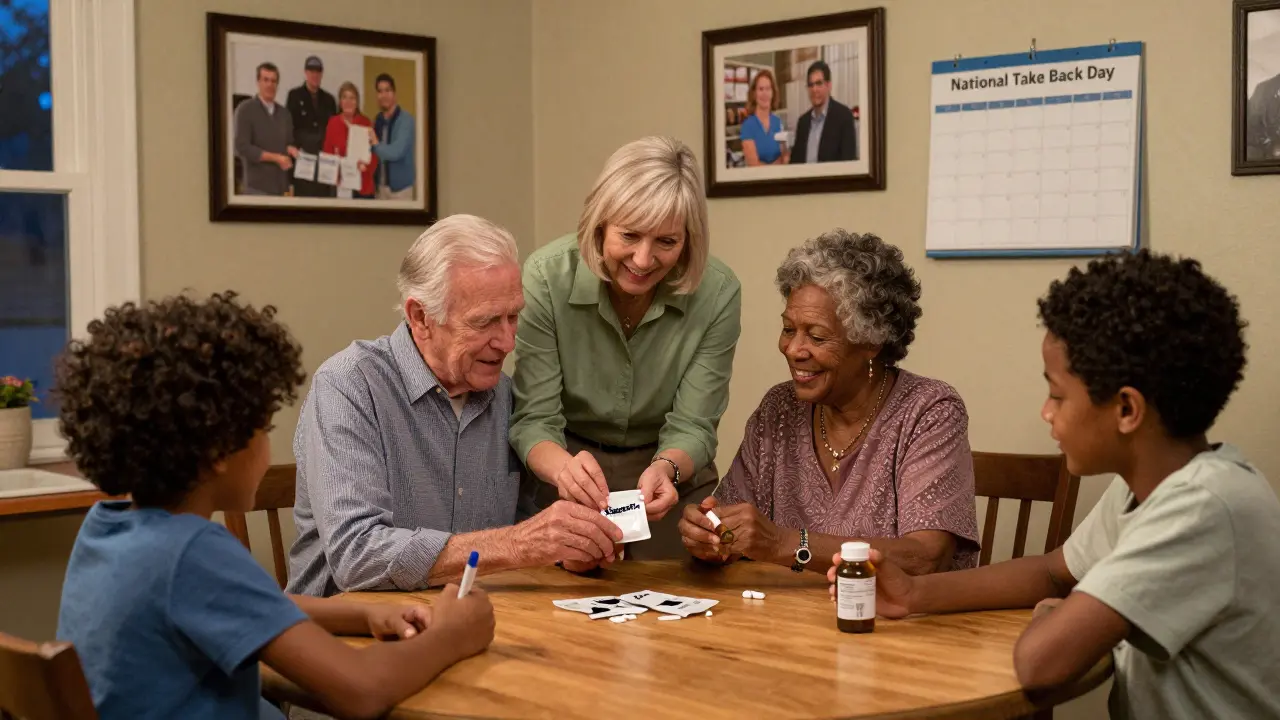
Older adults are the most vulnerable. A 2022 Kaiser Family Foundation survey found that 37% of people over 65 were confused about how to properly remove personal info from pill bottles. Many don’t know what HIPAA is. Some think “throwing it away” is enough. That’s dangerous.
People on long-term medications-like those with diabetes, heart disease, or mental health conditions-are also at higher risk. Their bottles often contain detailed medical history. A thief doesn’t need to know you have high blood pressure-they just need your name and pharmacy to order more pills. And those pills can be sold on the black market.
What’s Changing in 2026?
Privacy-focused disposal is becoming standard. By 2027, 40% of major pharmacies plan to install smart kiosks that automatically destroy labels when you drop off meds. New federal bills like the Safe Drug Disposal Act of 2024 could fund free disposal kits in every community. And the next update to HIPAA guidelines, expected in 2025, will likely require all pharmacies to provide clear, step-by-step privacy instructions with every prescription.
For now, the tools are already here. Take-back programs. Mailers. Markers. Pouches. You don’t need to wait for change. You can act today.
Final Checklist
Before you toss that bottle, run through this quick list:
- ✅ Did I remove all pills from the bottle?
- ✅ Did I mix them with coffee grounds or cat litter?
- ✅ Did I seal the mixture in a container?
- ✅ Did I completely black out my name, address, and Rx number with a permanent marker?
- ✅ Did I cut or tear the label into pieces if I removed it?
- ✅ Did I recycle the empty bottle only after the label is gone?
If you answered yes to all five, you’ve protected your privacy. If you skipped even one, you’re still at risk.
Do I need to remove the label from every pill bottle?
Yes. Every bottle-even ones for vitamins or over-the-counter meds-has your name and pharmacy info on it. If it came from a pharmacy, treat it like prescription medication. Scrub, cover, or cut off the label before recycling or tossing.
Can I just throw the bottle in the recycling without doing anything?
No. Recycling centers don’t remove labels. Someone could find your name, address, or medical condition on that bottle. Even if you think it’s harmless, your info could be used to target you for scams or fraud. Always destroy the label first.
What if I can’t find a take-back drop box near me?
Order a mail-back envelope from Walgreens, CVS, or DisposeRx. They cost less than a coffee and give you the same privacy as a drop box. You can also check your local pharmacy’s website-they often list nearby collection sites. If all else fails, follow the FDA’s 5-step trash method and be extra careful with the label.
Is it safe to flush medications?
Only if they’re on the FDA’s Flush List. That’s only 15 medications, mostly strong opioids like fentanyl patches and certain painkillers. Flushing anything else harms the environment and is unnecessary. Check the FDA’s website or ask your pharmacist if you’re unsure.
Why do some people say scratching off the label is enough?
Because they don’t know how hard it is to actually remove ink from plastic. Studies show 68% of people who try scratching still leave readable info behind. A permanent marker or duct tape is far more reliable. Don’t trust your fingernail-use tools designed for the job.
Joni O
January 18, 2026 AT 01:10i literally just threw away my grandma’s pill bottles last week without thinking… now i’m terrified. thanks for the wake-up call!! i’m going back to the trash right now with a sharpie and duct tape 😅
Ryan Otto
January 19, 2026 AT 19:11Let us not ignore the broader context: this is a manufactured crisis by pharmaceutical conglomerates to push their proprietary disposal systems. The DEA’s ‘Take Back’ program? A controlled distribution channel disguised as public safety. Labels are not the real threat-your pharmacy’s database is. You think destroying a label stops identity theft? Try hacking the insurer’s server. That’s where the real data lives.
Max Sinclair
January 21, 2026 AT 10:22This is such a helpful, clear guide. I’ve always just tossed bottles in recycling without a second thought-now I know better. The 5-step FDA method makes total sense, and I love that you included the duct tape tip. Simple, effective, and doesn’t require buying anything. Thanks for sharing this.
Praseetha Pn
January 22, 2026 AT 16:22Okay but have you considered that the government is using these pill bottles to track your medication use and link it to your social security number? They’re already profiling you through your prescriptions-this is just the tip of the iceberg. The FDA’s ‘Flush List’? A distraction. They want you to think you’re safe if you follow their steps, but your data is already in the cloud. And don’t get me started on how CVS and Walgreens are selling your info to data brokers. The label is the least of your worries. You’re being watched. Always.
Andrew McLarren
January 23, 2026 AT 10:09It is imperative to underscore the legal and ethical obligations incumbent upon individuals regarding the disposal of Protected Health Information. While the onus is often placed upon healthcare institutions, the patient, as custodian of the physical medium, bears a commensurate responsibility under the spirit of HIPAA. Failure to obfuscate identifying data constitutes a material breach of privacy norms, irrespective of intent.
Andrew Short
January 25, 2026 AT 01:11People who don’t destroy their labels are just asking for trouble. You’re not just risking yourself-you’re putting everyone else at risk. If I find your bottle in the recycling, I’m not just stealing your identity, I’m getting your pain meds. And then I’m selling them. You’re literally enabling the opioid crisis. Stop being lazy. This isn’t hard.
christian Espinola
January 26, 2026 AT 22:06Why are we still talking about this? The real problem is that pharmacies don’t offer label-removal services. If they printed labels on removable paper or used QR codes instead of printed info, we wouldn’t be having this conversation. But nope. They make you do all the work. Lazy system. Lazy regulation. Lazy us.
Chuck Dickson
January 28, 2026 AT 10:54Just wanted to say thank you for this. I’m a nurse and I see this all the time-older folks just tossing bottles in the trash. I always give them the 5-step rundown, but now I can just send them this. Also, the mail-back envelopes? Total game-changer. Got one for my mom last month. She’s 78 and she said it felt like magic. Seriously, this is the kind of post that saves people.
kenneth pillet
January 29, 2026 AT 00:39Been doing the marker + duct tape thing for years. Works. No need to overcomplicate it. Just make it unreadable. Done.
Wendy Claughton
January 30, 2026 AT 13:42This gave me chills… 🥺 I just realized I’ve been recycling my dad’s blood pressure bottles with the label still on… I’m so sorry, Dad. 😭 I’m going to dig through the recycling bin right now. Thank you for this. You’re a real one. 💙
Stacey Marsengill
February 1, 2026 AT 05:30Wow. So you’re telling me I’ve been a careless, irresponsible idiot for years? That’s great. Now I feel like trash. Thanks for the guilt trip, Captain Privacy. I guess I should’ve known that my 72-year-old mother’s arthritis meds were a goldmine for identity thieves. Whoops. My bad. 🙃