
Insomnia in Older Adults: Safer Medication Choices
 Jan, 1 2026
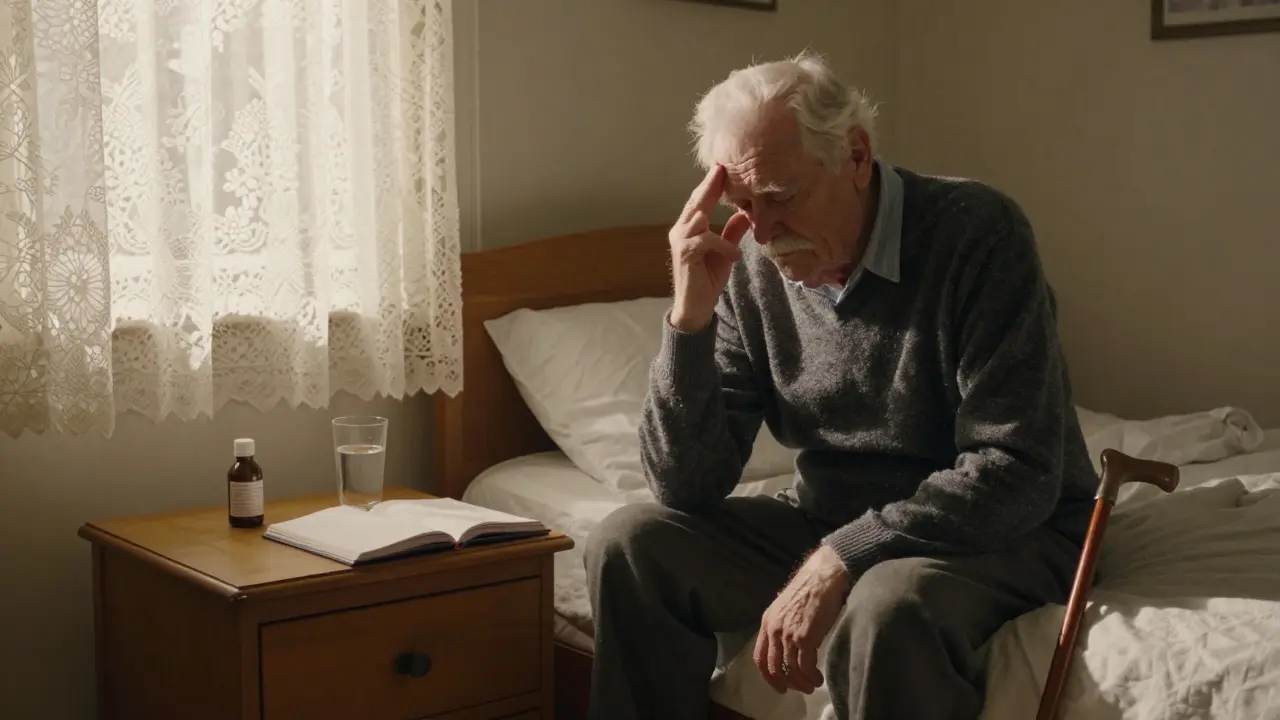
More than one in three adults over 65 struggle with insomnia. It’s not just trouble falling asleep-it’s waking up too early, lying awake for hours, or feeling exhausted all day. For older adults, the stakes are higher. A bad night’s sleep doesn’t just leave you tired; it increases the risk of falls, memory problems, and even long-term disability. And while many turn to sleep meds, not all are created equal. Some are outdated, dangerous, and still widely prescribed. The good news? Safer, smarter options exist.
Why Older Adults Need Different Sleep Medications
As we age, our bodies change. The liver and kidneys don’t process drugs as quickly. This means medications stick around longer, increasing the chance of side effects like dizziness, confusion, or next-day grogginess. Older adults often take multiple medications for heart issues, diabetes, or arthritis. Mixing these with sleep drugs can be risky. A 2018 study found that combining sleep meds with other central nervous system depressants-like painkillers or anxiety meds-raises fall risk by 70%. The old go-to drugs for insomnia-benzodiazepines like lorazepam or triazolam, and the so-called "z-drugs" like zolpidem (Ambien)-were never meant for long-term use in seniors. The American Geriatrics Society warned back in 2012: avoid these. They increase the chance of hip fractures by up to 50% and double the risk of confusion. Even a single dose can leave someone unsteady on their feet the next morning.The Newer, Safer Options
Thankfully, newer medications have been developed with older adults in mind. These aren’t just "newer"-they’re designed to work differently and with fewer risks. Lemborexant (brand name Dayvigo) is one of the most promising. It works by blocking orexin, a brain chemical that keeps you awake. Unlike older drugs that shut down brain activity broadly, lemborexant gently nudges the brain toward sleep. In clinical trials with adults over 65, it reduced the time to fall asleep by 15 minutes and added over 40 minutes of total sleep-without the grogginess. A 2025 study showed users had 18% less disability progression over a year compared to those on benzodiazepines. Side effects? A small number felt dizzy at first, but it usually faded within two weeks. Suvorexant (Belsomra) works the same way but has a shorter half-life. It’s effective for sleep onset and maintenance, with less next-day impairment than z-drugs. It’s a solid option if lemborexant isn’t covered by insurance. Ramelteon (Rozerem) is another low-risk choice. It mimics melatonin, helping reset the body’s internal clock. It’s especially helpful for seniors who wake too early or have trouble falling asleep at the right time. It doesn’t cause dependence, doesn’t affect balance, and has almost no risk of memory issues. The downside? It doesn’t add huge amounts of sleep-just 20-25 minutes on average. But for someone who’s been sleeping only 4 hours a night, that’s meaningful. Low-dose doxepin (Silenor) is perhaps the most overlooked gem. At 3 to 6 mg-just 1/20th the dose used for depression-it blocks histamine receptors that keep you awake. It’s FDA-approved specifically for sleep maintenance insomnia. In real-world use, 58% of seniors report moderate improvement in staying asleep, and only 12% feel groggy the next day. It costs about $15 a month as a generic, making it one of the most affordable safe options.What to Avoid
Some medications still get prescribed out of habit-even though guidelines say not to. Zolpidem (Ambien), eszopiclone (Lunesta), and zaleplon (Sonata) are still widely used. But data shows they cause next-day drowsiness in over a third of older adults. Worse, 8% of users report sleep-related behaviors: sleepwalking, making phone calls, or even driving while not fully awake. These aren’t myths-they’re documented risks. Benzodiazepines like diazepam, lorazepam, and temazepam are even riskier. They’re linked to higher rates of falls, fractures, and dementia. A 2024 Medicare analysis found that 7.2 million older adults still got benzodiazepines for sleep-despite clear warnings from experts. These drugs should be avoided unless absolutely necessary and only for a few days.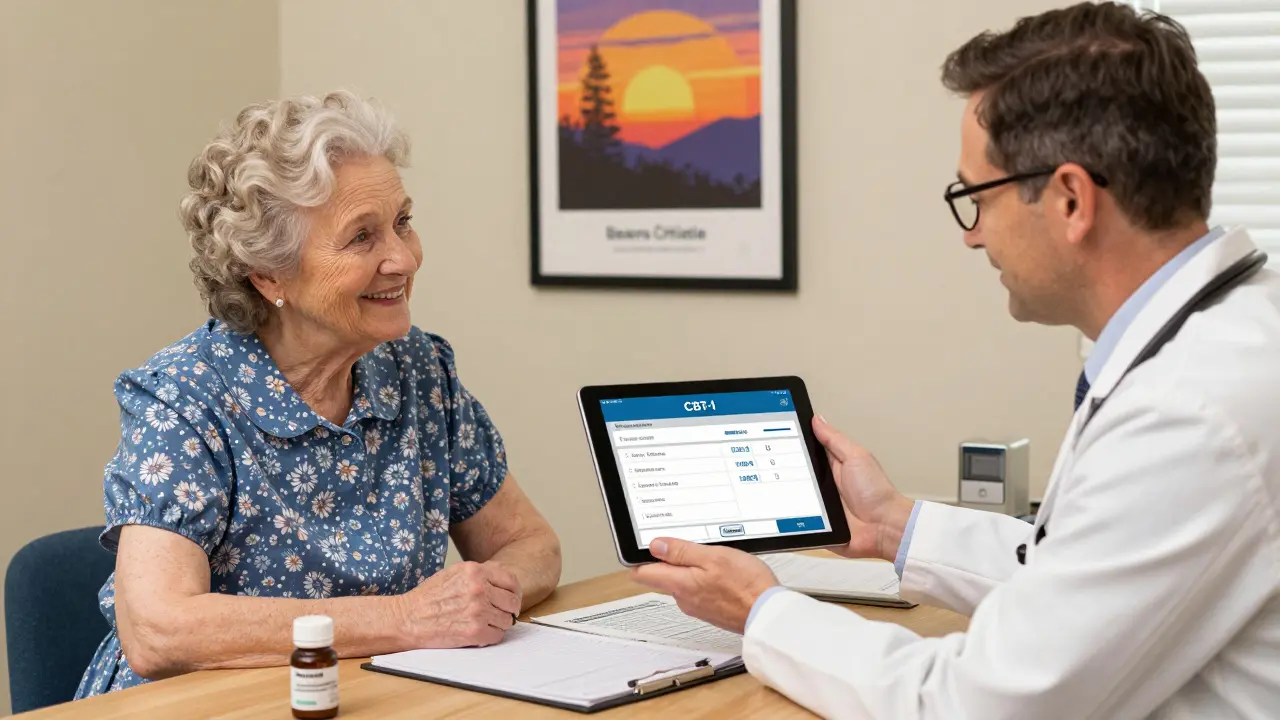
What Works Best? A Quick Comparison
| Medication | Typical Dose | Best For | Side Effects | Cost (Monthly) |
|---|---|---|---|---|
| Lemborexant (Dayvigo) | 5-10 mg | Falling asleep and staying asleep | Dizziness (temporary), headache | $750+ |
| Suvorexant (Belsomra) | 10-20 mg | Staying asleep | Drowsiness, dry mouth | $600+ |
| Ramelteon (Rozerem) | 8 mg | Falling asleep | Minimal-rare dizziness | $100-$150 |
| Low-dose Doxepin (Silenor) | 3-6 mg | Staying asleep | Very low-12% report mild drowsiness | $15 |
| Zolpidem (Ambien) | 5 mg | Falling asleep | Drowsiness (34%), sleepwalking, confusion | $20-$40 |
| Benzodiazepines (e.g., Temazepam) | 7.5-15 mg | Falling asleep | Falls, fractures, memory loss | $10-$30 |
Non-Medication First: CBT-I
Before any pill, experts agree: try Cognitive Behavioral Therapy for Insomnia (CBT-I). It’s not just a "therapy"-it’s a structured program that teaches you how to fix sleep habits. Studies show it works better than pills for long-term results. It helps people fall asleep faster, stay asleep longer, and feel more rested-even without drugs. But here’s the problem: only 12% of older adults are ever offered CBT-I. Most doctors don’t have time, or insurance doesn’t cover it. Digital CBT-I apps like reSET-O (FDA-cleared in 2023) are changing that. They’re accessible, affordable, and proven effective. If you’re considering a sleep med, ask your doctor: "Can I try CBT-I first?"
How to Talk to Your Doctor
If you’re on a sleep med right now, don’t stop cold turkey. Talk to your doctor about switching. Here’s what to say:- "I’ve been having trouble sleeping, and I’m worried about falling or feeling foggy in the morning."
- "I’d like to explore safer options like low-dose doxepin or ramelteon."
- "Can we try CBT-I before adding or changing meds?"
- "Can we set a plan to reduce or stop this medication?"
Real Stories, Real Results
One 72-year-old man in Ohio switched from zolpidem to low-dose doxepin after a fall. "I used to wake up feeling like I’d been hit by a truck," he said. "Now I sleep through the night and get up without help." A woman in Florida tried lemborexant after years of bad sleep. "It didn’t make me feel drugged," she wrote. "I just felt like I finally got the rest I needed." But cost is a barrier. Lemborexant and suvorexant are expensive without insurance. Doxepin and melatonin are cheap and effective. If you’re on a fixed income, ask your pharmacist about generic alternatives. Many pharmacies offer $4 monthly generics.What’s Next?
New drugs are coming. Danavorexton, a selective orexin 2 receptor agonist, is in late-stage trials and could offer even better safety for seniors by 2026. But the real shift isn’t in new pills-it’s in how we think about sleep. We’re moving away from "quick fix" drugs and toward sustainable, safe, and personalized care. The goal isn’t to sleep 8 hours. It’s to wake up feeling safe, clear-headed, and ready for the day. That’s possible-with the right choices.What’s the safest sleep medication for older adults?
The safest options are low-dose doxepin (3-6 mg), ramelteon (8 mg), and lemborexant (5-10 mg). These have minimal risk of falls, confusion, or next-day drowsiness. Doxepin is especially good for staying asleep and costs under $20 a month as a generic.
Is Ambien safe for seniors?
No. Ambien (zolpidem) is not recommended for older adults. It increases the risk of falls, confusion, and even sleepwalking or driving while asleep. Studies show over a third of seniors on Ambien feel groggy the next day, and 8% report dangerous sleep behaviors.
Can I stop my sleep medicine cold turkey?
No. Stopping suddenly can cause rebound insomnia or withdrawal symptoms. Always work with your doctor to taper off safely. For benzodiazepines and z-drugs, a slow reduction over weeks is needed. Doxepin and ramelteon are less likely to cause withdrawal.
What’s CBT-I and how does it help?
CBT-I stands for Cognitive Behavioral Therapy for Insomnia. It’s a structured program that helps you change habits that keep you awake-like spending too much time in bed awake, worrying about sleep, or napping too much. Studies show it works better than pills for long-term sleep improvement and has no side effects.
Why are benzodiazepines still prescribed if they’re dangerous?
Many doctors still prescribe them out of habit, or because patients ask for something "stronger." Insurance coverage and lack of access to CBT-I also play a role. A 2024 study found 46% of older adults on sleep meds were never told about safer alternatives. It’s a gap between guidelines and practice.
How can I tell if my sleep med is working too well-or too poorly?
If you feel groggy, dizzy, or confused in the morning, the dose is too high or the drug isn’t right for you. If you’re falling more often, forgetting things, or feeling like you’re "in a fog," it’s time to talk to your doctor. Keep a simple sleep diary: note bedtime, wake time, how rested you feel, and any falls or memory lapses. Bring it to your next appointment.
Sarah Little
January 2, 2026 AT 23:40Given the pharmacokinetic shifts in hepatic metabolism and renal clearance in geriatric populations, the CYP450 enzyme system's diminished activity necessitates a reevaluation of sedative-hypnotic prescribing paradigms. Lemborexant's orexin receptor antagonism offers a mechanistically superior profile compared to GABAergic agonists, which induce non-physiological CNS depression.
The 2012 Beers Criteria remains underutilized in primary care, despite robust Level 1 evidence linking benzodiazepines to increased fracture risk and cognitive decline. Doxepin at 3-6mg is a particularly underappreciated option due to its H1 antagonism without significant anticholinergic burden.
Haley Parizo
January 3, 2026 AT 19:49Let’s be honest-sleep isn’t a problem to be pharmacologically solved. It’s a symptom of a culture that worships productivity over rest. We’ve turned the human body into a machine that needs a reset button. But no pill fixes existential exhaustion. No drug cures the loneliness of aging in a society that sidelines its elders. The real treatment? Community. Presence. A quiet room where someone remembers your name at 3 a.m.
We don’t need safer drugs. We need a safer world for old people.
Ian Detrick
January 5, 2026 AT 05:25Man, this is the kind of post that makes you feel like maybe we’re not all doomed. I’ve seen so many seniors on Ambien or Xanax like it’s candy-just because it’s easy. But this? This is real medicine. Real science. And low-dose doxepin for $15? That’s justice.
CBT-I should be the first thing offered. Not the last resort. We’ve got apps now that can deliver it in your living room. Why are we still treating sleep like a broken pipe you just need to slap?
Angela Fisher
January 6, 2026 AT 15:25Okay but… what if this is all a pharmaceutical scam? 😳
They made us afraid to sleep naturally so they could sell us $700 pills that ‘don’t cause drowsiness’-but what if that’s just a lie? What if lemborexant is secretly suppressing REM to make you ‘feel better’ while your brain rots? And why is doxepin so cheap? Because it’s an old antidepressant repackaged! They’re just recycling old drugs and slapping new labels on them. The FDA is in bed with Big Pharma. I know someone whose uncle died after taking ‘safe’ sleep meds. They said it was ‘natural causes.’ 😔
They don’t want you to sleep naturally. They want you dependent. And CBT-I? That’s not therapy-that’s a cover for cutting costs. You think a $4 app is going to fix what decades of neglect did? No. It’s all a trap.
Neela Sharma
January 6, 2026 AT 23:47So many of us in India wake up at 4am and just… wait for morning
no pills
no apps
just tea and silence
and still we live
maybe sleep isn’t about fixing
but about listening
to what your body already knows
you don’t need a new drug
you need to stop running
and sit still
even if it’s just for five minutes
before bed
❤️
Shruti Badhwar
January 8, 2026 AT 18:52The data presented here is methodologically sound and aligns with current geriatric guidelines. However, the implementation gap remains substantial. Primary care providers often lack the time, training, or reimbursement incentives to initiate CBT-I or switch from benzodiazepines. Systemic barriers-including insurance formularies favoring high-cost branded agents and inadequate provider education-are the true obstacles, not patient preference. A multidisciplinary approach integrating pharmacists, behavioral health specialists, and primary care is essential for scalable change.
Brittany Wallace
January 8, 2026 AT 21:56I love how this post doesn’t just list drugs-it talks about dignity. 🫶
It’s not about how long you sleep. It’s about how you wake up.
And if you wake up scared of falling, or confused, or like you’re not even yourself… no amount of sleep is worth that.
Thank you for writing this. My grandma switched from lorazepam to doxepin last year. She started watering her plants again. That’s the real win.
Michael Burgess
January 9, 2026 AT 10:26Low-dose doxepin is the unsung hero here. 🙌
My dad’s been on it for 8 months. No grogginess. No weird dreams. Just… sleep. Like he used to have in his 40s. And at $15/month? That’s not a drug-that’s a gift.
Also, CBT-I apps are legit. I tried one with my mom. We did the sleep restriction thing-hard at first-but now she’s sleeping 6.5 hours straight. No pills. Just habits.
Doctors need to stop treating sleep like a broken lightbulb you swap out. It’s a rhythm. You gotta relearn it.
Liam Tanner
January 10, 2026 AT 22:13As someone who works with seniors daily, I see the same cycle: panic about sleep → doctor prescribes Ambien → side effects → fall → hospital → more meds. It’s a trap.
But when we introduce CBT-I early-even just 4 sessions-it changes everything. People stop fearing the night. They stop checking the clock. That’s the real win.
And yes, doxepin at 3mg? Magic. Cheap magic.
Palesa Makuru
January 12, 2026 AT 11:16How quaint. You all talk about ‘safer’ medications like this is some kind of medical breakthrough. In my country, elders just… sleep less. They don’t have access to $700 pills or fancy apps. They drink chamomile tea and sit in the dark. And yet-they’re not falling, not confused, not medicated. Maybe the problem isn’t sleep. Maybe it’s the expectation that you must be ‘rested’ like some corporate drone. You’ve turned rest into a product to be optimized. Pathetic.
Hank Pannell
January 14, 2026 AT 10:30Interesting that lemborexant’s mechanism-orexin antagonism-mirrors the natural sleep-wake regulation that declines with age. The orexin system is like the brain’s ‘wakefulness engine.’ As we age, it overfires. Blocking it selectively? Brilliant. But here’s the deeper question: why are we still using GABAergic drugs as first-line? Because they’re fast. Because doctors are overworked. Because the system rewards speed over sustainability.
And doxepin? The fact that a 60-year-old antidepressant, diluted to 1/20th the dose, outperforms branded sleep meds… that’s the definition of medical irony. We’ve been overcomplicating sleep for decades.
Wren Hamley
January 16, 2026 AT 07:45My uncle took zolpidem for 7 years. One morning he drove to the grocery store at 2 a.m. and bought 12 loaves of bread. He didn’t remember it. The cops called us.
That’s not a side effect. That’s a tragedy.
And now he’s on doxepin. No bread. No confusion. Just sleep.
Stop prescribing Ambien like it’s Advil.
innocent massawe
January 17, 2026 AT 06:59Here in Nigeria, many older people use kola nut or herbal teas. No pills. No side effects. Just tradition.
But when they come to the city, doctors give them Ambien. Why? Because it’s easier.
Maybe the answer isn’t new drugs.
Maybe it’s remembering what we knew before.
Peace. 🙏
Kerry Howarth
January 19, 2026 AT 02:14Low-dose doxepin is the gold standard for sleep maintenance insomnia in older adults. FDA-approved, low risk, affordable. CBT-I should precede all pharmacotherapy. Benzodiazepines and z-drugs are contraindicated. The evidence is unequivocal.