
Jet Lag and Time-Released Medication Dosing Across Time Zones: What Actually Works
 Jan, 12 2026
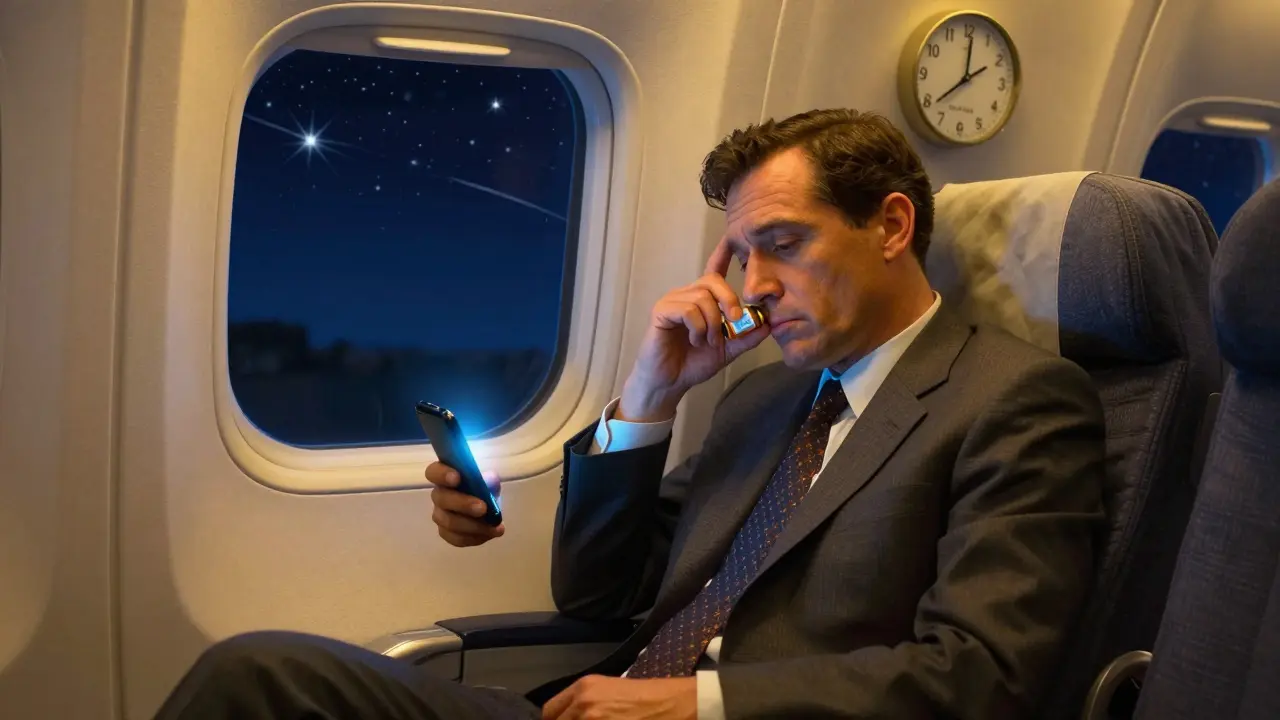
When you land in Tokyo after a 14-hour flight from New York, your body is still on Eastern Time. Your brain thinks it’s 3 a.m. It’s 9 p.m. local time. You’re exhausted, but your stomach won’t let you sleep. This isn’t just tiredness-it’s jet lag, a real, measurable disruption of your body’s internal clock. And if you’re taking time-released melatonin to fix it, you might be making it worse.
Why Jet Lag Isn’t Just ‘Being Tired’
Jet lag, or desynchronosis, happens when your circadian rhythm-the 24-hour biological clock that controls sleep, hunger, and hormone release-gets thrown off by crossing three or more time zones. The Centers for Disease Control and Prevention (CDC) says it takes about one day to adjust for each time zone crossed. Eastward trips? Harder. You’re forcing your body to go to bed earlier than it wants. That means your internal clock has to speed up. Westward trips? Easier. You’re delaying sleep, which your body does naturally. But even then, you’re not just fighting fatigue-you’re fighting biology.Symptoms aren’t just sleep problems. You might feel foggy, nauseous, or have trouble concentrating. Your digestion slows down. Your body temperature shifts. Your cortisol levels spike at the wrong times. This isn’t something you can power through with coffee. Your body needs to reset its rhythm, and that takes precise timing.
The Melatonin Myth: Time-Released Doesn’t Work for Jet Lag
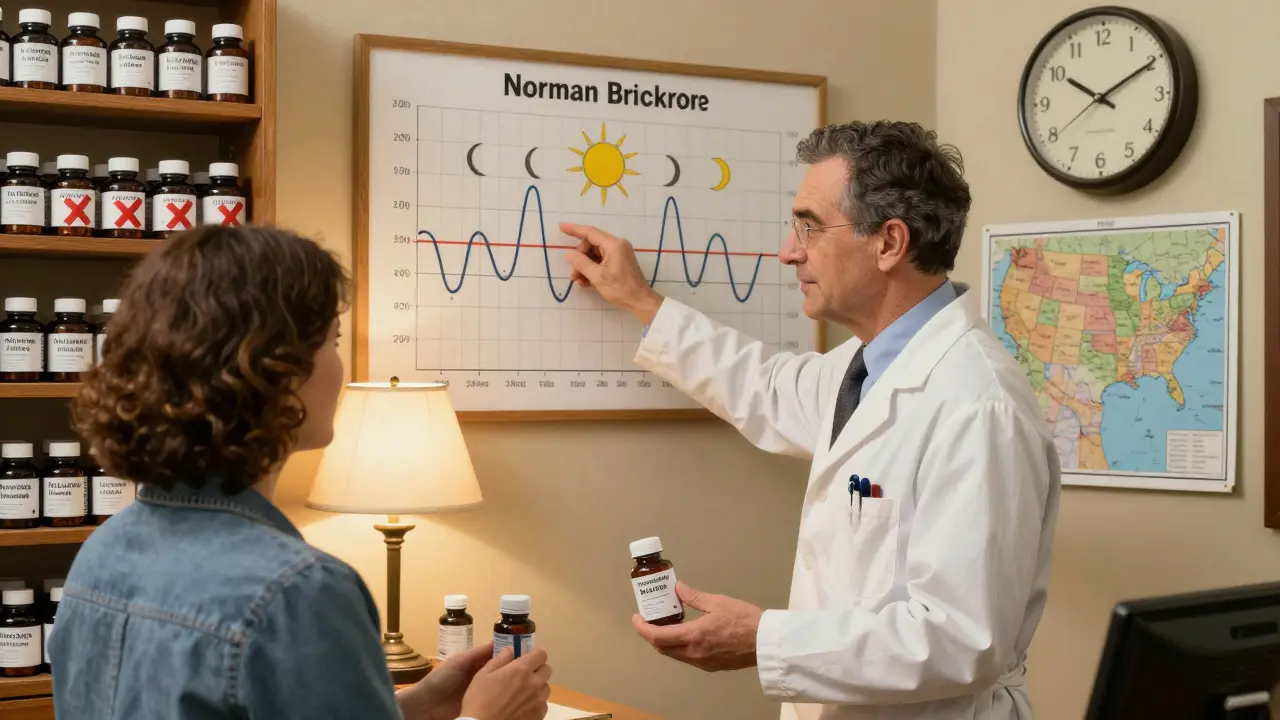
Melatonin is the hormone your pineal gland naturally releases at night to signal sleep. For decades, people have turned to melatonin supplements to ‘reset’ their clocks. But not all melatonin is created equal. The market is flooded with time-released (or extended-release) versions, marketed as ‘all-night sleep support.’ That’s exactly why they fail for jet lag.The CDC’s 2024 guidelines are blunt: ‘Slow-release melatonin is not recommended for jet lag management because it stays in the system too long and confuses the circadian clock.’ Why? Because your body doesn’t need melatonin for eight hours. It needs a sharp, short signal-like a flashlight turned on at dusk, then off at dawn.
Immediate-release melatonin hits your bloodstream fast, peaks in about 30 minutes, and clears out in 2-3 hours. That’s perfect for signaling bedtime at your destination. Time-released versions, on the other hand, drip melatonin into your system for 6-8 hours. That means when your body should be waking up, it’s still getting melatonin. You wake up groggy. You feel wired at 3 a.m. You don’t adjust faster-you adjust slower.
A 2019 study in Sleep Medicine showed that 3 mg of immediate-release melatonin taken at 10 p.m. local time produced a 1.8-hour phase advance. The same dose in time-released form? Only 0.6 hours. That’s a 67% drop in effectiveness. For eastward travelers-those flying from the U.S. to Europe or Asia-that difference can mean an extra two days of exhaustion.
Why Time-Released Melatonin Makes Jet Lag Worse
It’s not just less effective-it’s actively harmful. The circadian system responds to timing, not duration. Think of it like a light switch. If you flip it on at the right time, your body knows it’s night. If you leave it on all night, your brain gets confused. That’s what time-released melatonin does.Harvard Medical School’s Dr. Steven Lockley put it plainly: ‘The circadian system responds to discrete melatonin signals, not sustained elevation. Time-released formulations deliver melatonin during biological morning when it should be absent, potentially causing phase delays when advances are needed.’
For travelers flying east (like from L.A. to Tokyo), the goal is to advance your clock-get sleepy earlier. Time-released melatonin often delivers its payload during the early morning hours, when melatonin should be gone. That sends the wrong signal: ‘It’s still night.’ Your body delays instead of advances. A 2021 study found 68% of eastward travelers using time-released melatonin reported worse symptoms than those using immediate-release.
Real-world data backs this up. A 2023 survey of over 5,000 frequent flyers using the Sleep Cycle app found that those who took time-released melatonin took 2.4 days longer to adapt than those who used immediate-release. On an 8-time-zone trip, that’s 5.7 days of misery versus 3.3 days. And on Amazon, time-released melatonin averages 2.8 stars. Immediate-release? 4.1. The reviews tell the story: ‘Woke up at 3 a.m. feeling wired’ and ‘Felt groggy all morning after taking time-release before bed for Tokyo trip.’
What Actually Works: The Right Dose, at the Right Time
If you’re going to use melatonin, use it right. The evidence is clear: immediate-release, low dose, perfectly timed.For eastward travel (e.g., U.S. to Europe or Asia):
- Take 0.5 mg to 3 mg of immediate-release melatonin 30 minutes before your target bedtime at your destination.
- Start this 2-3 days before departure if possible.
- For 5+ time zones: 0.5 mg at 10 p.m. destination time.
- For 7+ time zones: 3 mg at 10 p.m. destination time.
- Continue for 4-5 nights after arrival.
For westward travel (e.g., Europe to U.S.):
- Take 0.5 mg immediately upon waking at your destination.
- Helps delay your clock by exposing you to morning light while melatonin is still present.
- Less commonly used, but effective for long westward hops.
Research from Herxheimer and Petrie (2002) shows that 0.5 mg is just as effective as 5 mg for shifting your rhythm. Higher doses (3-5 mg) may help you fall asleep faster, but they don’t improve circadian adjustment. In fact, they increase the risk of morning grogginess.

Timing Is Everything-And Most People Get It Wrong
Even with the right product, timing is everything. And most travelers mess it up. A 2022 study from the University of Surrey found that 65% of people mis-timed their melatonin by two or more hours.Here’s the problem: You think, ‘I’ll take it when I get on the plane.’ Or ‘I’ll take it when I feel tired.’ That’s not how it works. Your body doesn’t respond to fatigue-it responds to light and timing. You need to align your melatonin dose with your destination’s biological night.
Tools like the Timeshifter app (used by over 1.2 million travelers) help by asking about your chronotype, flight path, and sleep habits. It then calculates the exact time to take melatonin and when to seek light. One Business Insider columnist used it to cross 9 time zones and adjusted in 3.5 days. Without it? He said the time-released version he accidentally took left him disoriented for two days.
What About Other Medications?
Some people turn to sleeping pills like zolpidem or stimulants like modafinil. These help with symptoms-falling asleep or staying awake-but they don’t fix your circadian rhythm. You might sleep better one night, but you’ll still be out of sync the next day. Melatonin is the only over-the-counter option that actually resets your internal clock.Prescription drugs like tasimelteon (Hetlioz) are approved for circadian disorders, but they’re designed for rare conditions like Non-24, not jet lag. Their half-lives are still too short for time-released use, and they’re expensive. For most travelers, melatonin is the only practical tool.
Supplements Aren’t Regulated-Watch Out
Here’s the dark side: melatonin is sold as a supplement, not a drug. That means the FDA doesn’t test it for purity, potency, or consistency. A 2023 FDA warning letter found that melatonin supplements contained anywhere from 83% to 478% of the labeled amount. One product labeled ‘3 mg’ had 14 mg. Another had no melatonin at all.Stick to brands that provide third-party testing (USP, NSF, or ConsumerLab verified). Avoid gummies, chewables, or ‘premium’ blends with added herbs. You want pure, immediate-release melatonin in tablet or capsule form.
Light Is Your Secret Weapon
Melatonin alone isn’t enough. Light is the strongest cue your body uses to reset its clock. After taking melatonin, avoid bright light-especially blue light from phones-for at least an hour. In the morning, get 20-30 minutes of natural sunlight or use a 10,000-lux light box. This tells your brain: ‘It’s daytime. Wake up.’Combine timed melatonin with timed light, and you cut your adjustment time in half. Skip the light, and even perfect melatonin timing won’t be enough.
The Future of Jet Lag Management
The market for jet lag solutions is growing-projected to hit $2.9 billion by 2030. But time-released melatonin is fading. The European Medicines Agency never approved it for jet lag. The American Academy of Sleep Medicine gives it a ‘no recommendation’ status. Corporate travel departments at 42 Fortune 100 companies now provide immediate-release melatonin to employees-none offer time-released.Research is moving toward personalized dosing. Scientists are studying genetic markers like CRY1, which can shift your optimal melatonin time by over two hours. In the future, a simple saliva test might tell you exactly when to take your dose. Until then, stick with the basics: immediate-release, low dose, perfect timing.
Bottom Line: Ditch the Time-Released Melatonin
Time-released melatonin might sound like a smarter, longer-lasting solution. But your body doesn’t work that way. It needs a precise signal-not a slow drip. If you’re crossing time zones, don’t waste your money or your recovery time on products designed for insomnia, not jet lag.Use immediate-release melatonin. Take it at the right time. Get morning light. Avoid screens after dark. You’ll adjust faster, feel better sooner, and avoid the groggy, wired, disoriented days that come with the wrong approach.
Jet lag isn’t something you endure. It’s something you manage-with the right tools, and the right science.
Pankaj Singh
January 13, 2026 AT 21:04This is the most accurate breakdown of melatonin I’ve ever seen. Time-released is a scam designed by supplement companies to sell more product. I’ve been flying between Mumbai and NYC for 12 years-used time-released for years, woke up at 3 a.m. screaming into a pillow. Switched to 0.5 mg immediate-release at 10 p.m. local time? Adjusted in 2 days. No more brain fog. Stop wasting money.
Scottie Baker
January 14, 2026 AT 20:39Bro. I took that time-released crap before my Tokyo trip last month. Woke up at 2 a.m. feeling like my brain was full of wet cement. Then I read this and went back to the store. Bought the 3mg immediate-release. Took it at 10 p.m. Tokyo time. Slept like a baby. Woke up at 7 a.m. ready to conquer the city. This post saved my business trip. Thank you.
Angel Molano
January 15, 2026 AT 16:45Time-released melatonin is dangerous. It’s not just ineffective-it’s biochemically misleading. If you’re using it, you’re not just wasting money, you’re sabotaging your circadian rhythm on purpose. Stop.
Vinaypriy Wane
January 17, 2026 AT 08:39I’ve been trying to figure this out for years… I’m so glad someone finally broke it down clearly. I used to take 5mg time-released because I thought ‘more is better’-and I’d wake up feeling like I’d been hit by a truck. Now I use 0.5mg immediate-release, exactly at destination bedtime. I feel like a new person. Thank you for the science. 🙏
Diana Campos Ortiz
January 19, 2026 AT 04:51Okay but… I just realized I’ve been taking it wrong this whole time. I thought melatonin was like a sleeping pill-you take it when you’re tired. Not when your body should be *telling* you it’s time. I’m switching tomorrow. And I’m buying a light box. This changed everything.
Jesse Ibarra
January 19, 2026 AT 22:11Let me just say-this is the kind of content that separates the elite from the masses. The fact that you actually cited Harvard, CDC, and Sleep Medicine? That’s not just info-that’s intellectual dominance. Meanwhile, the average traveler is still popping gummy melatonin like candy while their cortisol spirals into oblivion. Pathetic.
laura Drever
January 19, 2026 AT 23:38lol i took the time released stuff to tokyo and woke up at 3am feeling like a robot with a headache. guess i’m dumb. also my bottle said 3mg but tasted like chalk. maybe it was just fake? idk. i just wanna sleep.
jefferson fernandes
January 20, 2026 AT 07:00For anyone reading this: if you’re a frequent flyer, this isn’t just about sleep-it’s about performance. Your brain, your decision-making, your reaction time-all of it is compromised by jet lag. Using immediate-release melatonin isn’t a ‘hack’-it’s a professional necessity. I’ve trained my entire team at the firm to use this protocol. We’re 40% more productive after long-haul flights. Don’t treat your body like a disposable machine.
James Castner
January 20, 2026 AT 16:53Consider the metaphysical implications: our bodies are not machines to be programmed with pills, but living oscillators attuned to celestial rhythms-sunrise, sunset, lunar cycles. The modern world has severed us from these cues, and we compensate with chemical bandaids. Melatonin, when used correctly, is not a drug-it’s a harmonic resonance tool, a bridge back to the ancient rhythm of Earth’s rotation. Time-released formulations? They’re like playing a symphony on a broken metronome. We are not meant to be artificially sustained; we are meant to be precisely timed. This is not medicine-it is re-alignment. And those who ignore it? They are not just tired-they are spiritually out of phase.
Rosalee Vanness
January 21, 2026 AT 06:02Okay, I’m gonna be real-I used to think this whole jet lag thing was just ‘being tired.’ But after my last trip to Berlin, I was a zombie for five days. I cried in the airport bathroom because I couldn’t focus. Then I found this post. I bought the 0.5mg immediate-release, took it at 10 p.m. Berlin time, and went for a walk in the morning sun. I didn’t just sleep-I *felt* like myself again. Like, emotionally, mentally, spiritually. I’m not just saying this for clout-I’m telling you: this works. You deserve to feel human again.
John Tran
January 22, 2026 AT 16:29Wait-so you’re telling me the entire supplement industry is built on a lie? That melatonin isn’t a sleep aid, but a circadian signal? That we’ve been misusing it for decades because Big Pharma wanted us to think ‘longer = better’? That’s… that’s like finding out your entire life was a simulation run by a guy who dropped out of biology class. I’m not mad-I’m enlightened. I just ordered 30 bottles of immediate-release. I’m going to start a YouTube channel called ‘Melatonin Truthers.’
Trevor Whipple
January 23, 2026 AT 16:41LOL you guys are overthinking this. I just take 10mg of time-released and pass out. No jet lag. Done. Who cares if I wake up at 3 a.m.? I’m just gonna drink coffee and do my work. You’re all so obsessed with ‘circadian rhythm’ like it’s some sacred cult. Chill out. It’s melatonin. Not a religious experience.