
Manufacturing Changes and Generic Approval: What Triggers FDA Re-Evaluation
 Dec, 11 2025
When a generic drug hits the market, it’s not a one-and-done deal. The FDA doesn’t just approve it and walk away. If the manufacturer makes even a small change to how it’s made - the equipment, the process, the supplier, even the factory floor - the FDA might demand a full re-evaluation. And that’s not just bureaucracy. It’s the system keeping your medicine safe, effective, and exactly the same as the brand-name version.
Why Any Change Matters
Generic drugs work because they’re bioequivalent to the brand-name drug. That means they deliver the same amount of active ingredient into your bloodstream at the same rate. But that equivalence isn’t magic. It’s built on a precise set of manufacturing conditions. Change those conditions, and you risk altering how the drug behaves in your body - even if the ingredients look identical on paper.The FDA calls this the Chemistry, Manufacturing, and Controls (CMC) part of the drug’s profile. It’s not just about what’s in the pill. It’s about how it’s made. A change in the mixing speed, a new tablet press, switching from one chemical supplier to another, or moving production from one country to another - all of these can trigger a regulatory review.
Think of it like baking a cake. You can swap one brand of flour for another, but if the protein content is different, the texture changes. The FDA doesn’t want that kind of surprise in your medicine.
Three Types of Changes, Three Levels of Scrutiny
The FDA doesn’t treat every change the same. They’ve built a risk-based system with three categories:- Prior Approval Supplements (PAS): These are the big ones. You can’t make the change until the FDA says yes. This applies to major process changes, new manufacturing sites, new synthetic routes for the active ingredient, or changes that could affect how the drug is absorbed. Between 2018 and 2022, PAS submissions jumped 27.3%. Why? More companies are upgrading equipment, but also, more supply chain problems are forcing unplanned changes.
- Changes Being Effected (CBE): These are medium-risk changes. You can make them immediately, but you must notify the FDA within 30 days. Examples include minor adjustments to in-process controls or updates to stability testing protocols. The FDA might still ask for more data later.
- Annual Reports (AR): These are the smallest changes - like updating packaging labels or minor cleaning procedure tweaks. You just report them once a year. No waiting. No approval needed.
Getting the category wrong is a common mistake. A 2023 survey of 127 generic manufacturers found that 78.4% struggled to classify complex changes. One company upgraded a tablet press and thought it was a CBE. The FDA flagged it as a PAS. They had to halt production for 14 months while they resubmitted.
What Actually Triggers a Full Re-Evaluation?
Not every change needs a PAS. But here’s what almost always does:- Changing the manufacturing site: Moving production from a plant in India to one in Ohio? That’s a PAS. Even if the same machines and formulas are used, the FDA wants to inspect the new facility and confirm the product hasn’t changed.
- Scaling up or down: Making 10,000 tablets a day? Fine. Now you want to make 100,000? That’s a major change. Mixing times, heat transfer, drying rates - they all shift with scale. You need new validation data.
- New equipment or technology: Switching from batch mixing to continuous manufacturing? That’s a game-changer. It’s more efficient, but the FDA treats it like a new drug. Teva’s switch to continuous manufacturing for amlodipine took 8 months to approve - faster than average, thanks to early FDA meetings.
- Changing the drug substance supplier: Even if the chemical is the same, different suppliers use different purification methods. That can leave behind new impurities. For peptide drugs, any new impurity must be under 0.5% and proven harmless.
- Modifying specifications: Tightening or loosening the acceptable range for purity, potency, or dissolution? That’s a PAS. The FDA needs to prove the drug still meets the same performance standard as the original.
And here’s the kicker: sometimes the change isn’t even your fault. If your chemical supplier has an out-of-spec batch, and you have to switch vendors mid-production, you still have to notify the FDA. Supply chain disruptions are now one of the top reasons for unexpected PAS submissions.
The Cost and Time of Re-Evaluation
A PAS isn’t cheap. The average cost per submission is around $287,500, according to 2023 industry data. That’s not just the filing fee. It’s the internal work: running stability tests, validating new processes, writing hundreds of pages of documentation, hiring consultants, and preparing for inspections.And the timeline? Don’t expect quick answers. The FDA’s average review time for a PAS is 10 months. Complex changes - like facility transfers - can take 14 to 18 months. One company spent 18 months getting approval for a tablet press upgrade, even though their product quality didn’t change. Why? The FDA needed more data on how the new machine affected particle size distribution.
Small manufacturers feel this the hardest. Companies with fewer than five generic products see review times 43% longer than big players. Why? They lack dedicated regulatory teams and can’t afford pre-submission meetings with the FDA. One Reddit user in r/pharmaceuticals described it as “regulatory paralysis” - companies avoid improvements because the cost and delay aren’t worth it for low-margin drugs.
How to Avoid the Bottleneck
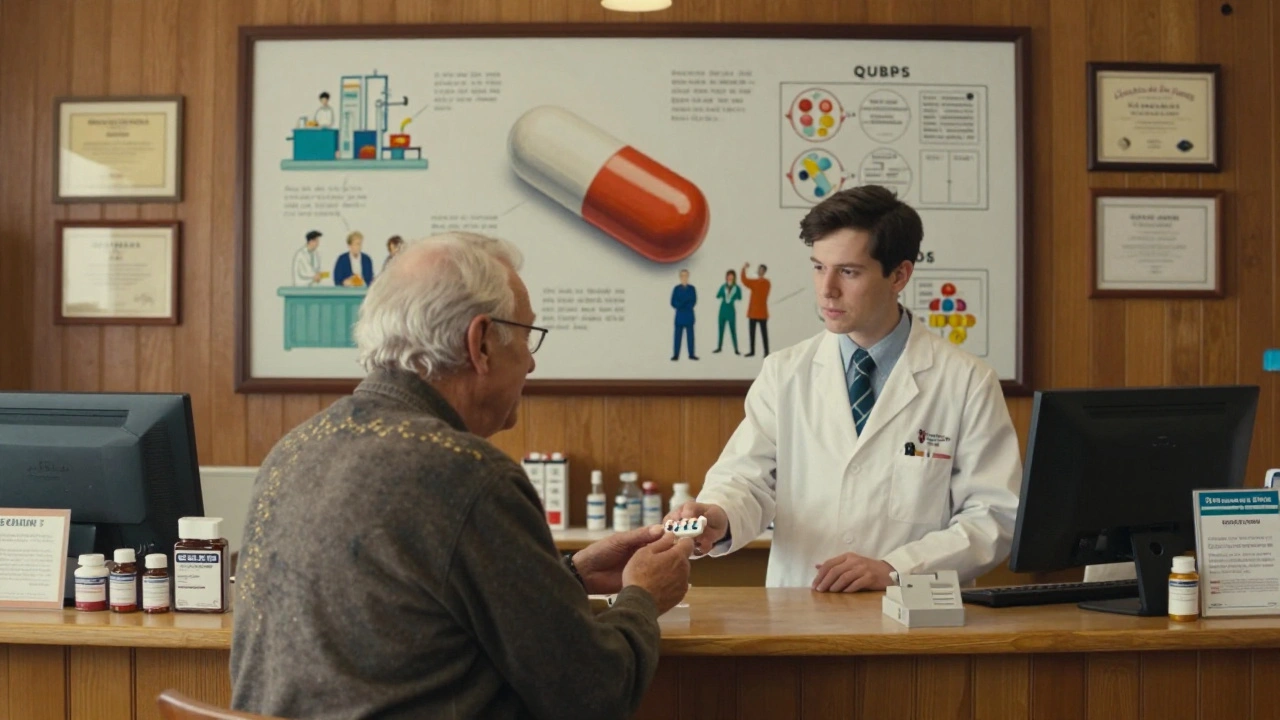
The smartest manufacturers don’t wait until something breaks. They plan ahead.- Use Quality by Design (QbD): Build flexibility into your original ANDA. If you understand how your process affects the final product, you can define a “design space” - a range of acceptable variables. Changes within that space don’t require a PAS. Companies using QbD during development cut post-approval changes by up to 40%, according to former FDA director Dr. Jane Smith.
- Use Process Analytical Technology (PAT): Real-time sensors that monitor temperature, pressure, moisture, and particle size during production. One study showed companies using PAT had 32.6% fewer PAS submissions over five years. Why? They catch issues early and can prove consistency.
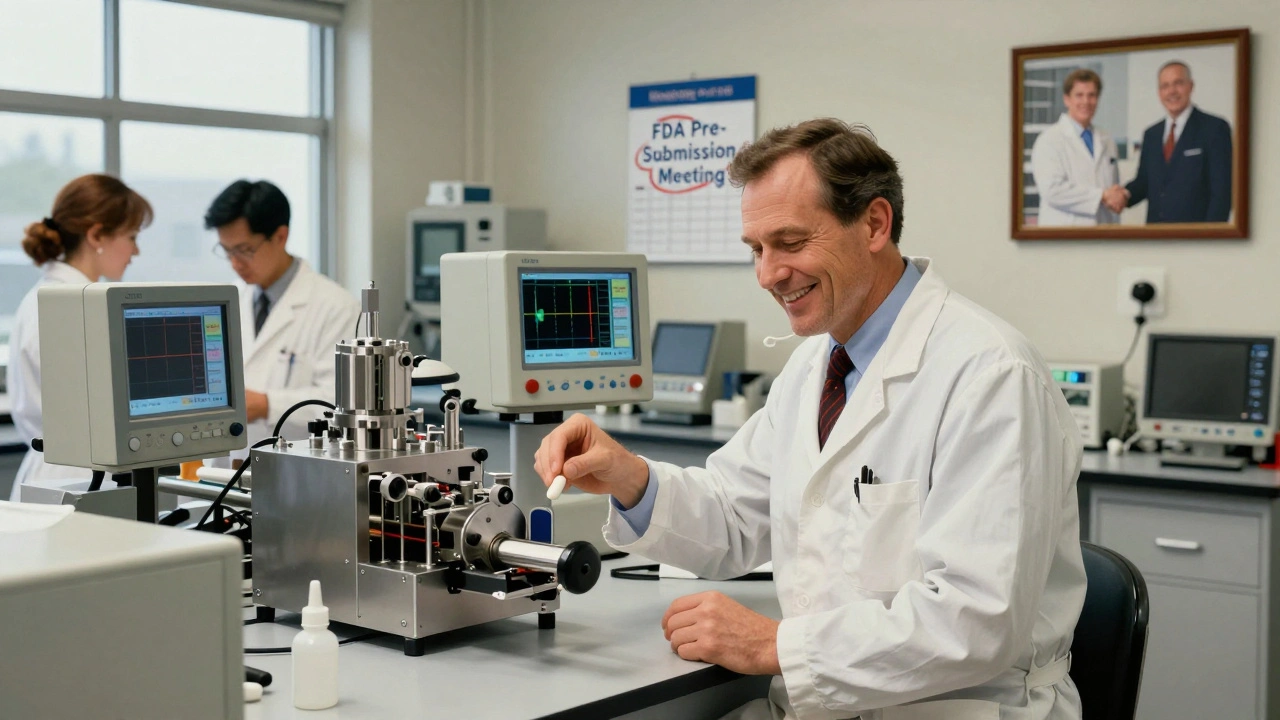
- Do pre-submission meetings: The FDA encourages them. For complex changes, schedule 3 to 5 meetings before you submit. Tell them what you’re planning. Ask: “Is this a PAS or CBE?” Get their feedback in writing. It saves months.
- Keep your documentation tight: Under GDUFA III, the FDA asks for more data than ever. A 2023 inspection report showed a 22.8% increase in document requests. If your batch records are messy, your approval will stall.
The Bigger Picture: Why This Matters
The generic drug market is worth over $113 billion in the U.S. alone. But it’s under pressure. Prices are dropping. Margins are thin. Many companies avoid upgrading equipment because the regulatory cost is too high.That’s changing. In September 2023, the FDA launched the ANDA Prioritization Pilot Program. If you make your drug in the U.S. - from the active ingredient to the final pill - your review time drops from 30 months to just 8 months. The goal? To bring manufacturing back home and reduce supply chain risks.
And in January 2024, the FDA released draft guidance for complex generics, proposing a new tiered system that could reduce PAS submissions by up to 35% for minor changes. They’re also testing a “PreCheck” program to speed up facility inspections.
This isn’t just about paperwork. It’s about access. If manufacturers can’t afford to improve their processes, they’ll stick with outdated, inefficient methods. That leads to shortages. That leads to higher prices. That hurts patients.
What’s Next?
The next big shift will come with GDUFA IV, the next round of funding and rule updates, expected in 2025. Industry groups are pushing for standardized definitions of change categories. Right now, one FDA reviewer might call a change a PAS, while another in a different office calls it a CBE. That inconsistency wastes time and money.Manufacturers who invest in understanding the system - not just fighting it - will win. They’ll get faster approvals. They’ll reduce supply disruptions. They’ll keep their products on the shelf.
For patients, that means one thing: consistent, affordable, safe medicine - no matter who made it or where.
What manufacturing changes require FDA approval before implementation?
Changes classified as Prior Approval Supplements (PAS) require FDA approval before you can implement them. These include moving production to a new facility, changing the synthetic route of the active ingredient, scaling up or down production significantly, switching to a new supplier of the active pharmaceutical ingredient (API), or altering critical quality attributes like dissolution or particle size. Any change that could impact the drug’s safety, effectiveness, or identity falls into this category.
Can I make a manufacturing change and report it later?
Yes - but only for certain changes. Changes classified as Changes Being Effected (CBE) allow you to implement the change immediately, as long as you notify the FDA within 30 days. Examples include updating in-process controls, modifying packaging materials, or changing the stability testing protocol. But if you’re unsure whether your change is a CBE or PAS, it’s safer to submit a PAS. The FDA can later reclassify it, but you risk violating regulations if you misclassify a PAS as a CBE.
How long does FDA approval take for a manufacturing change?
Review times vary by type. A Prior Approval Supplement (PAS) takes an average of 10 months, but complex changes like facility transfers can take 14 to 18 months. CBE-30 changes (notified 30 days before implementation) are reviewed in about 3 months. CBE-0 changes (implemented immediately) are reviewed within 9 months. The FDA’s new Prioritization Pilot Program can reduce PAS review times to 8 months for U.S.-based manufacturers.
Why do some companies avoid making manufacturing improvements?
The cost and delay are major barriers. A single PAS submission can cost over $287,500 and take over a year to approve. For low-margin generic drugs, that investment often doesn’t make financial sense. Many small manufacturers report “regulatory paralysis” - they know upgrading equipment would improve quality or efficiency, but fear the approval process will disrupt supply and cost more than the upgrade saves.
How can manufacturers reduce the chance of a PAS submission?
The best strategy is to build flexibility into the original drug application. Using Quality by Design (QbD) principles helps define a safe operating range for process variables. If a change stays within that range, it may not require a PAS. Companies using Process Analytical Technology (PAT) for real-time monitoring also report 32.6% fewer PAS submissions. Early and frequent communication with the FDA through pre-submission meetings is another proven way to avoid surprises.
Does the FDA inspect facilities after a manufacturing change?
Yes - especially for PAS submissions involving new facilities or major process changes. The FDA may conduct an inspection before approving the change. Under the new PreCheck program, facilities with a strong compliance history can enter a fast-track inspection pathway, reducing inspection timelines from 18 months to as little as 9 months. However, unexpected inspections still occur and are cited by 41.7% of manufacturers as a major challenge.
Emily Haworth
December 12, 2025 AT 11:58Tom Zerkoff
December 13, 2025 AT 17:24Yatendra S
December 14, 2025 AT 22:41Himmat Singh
December 15, 2025 AT 11:07kevin moranga
December 15, 2025 AT 16:12Lara Tobin
December 16, 2025 AT 08:19Scott Butler
December 17, 2025 AT 17:15Emma Sbarge
December 17, 2025 AT 18:39Deborah Andrich
December 19, 2025 AT 15:17Donna Hammond
December 20, 2025 AT 10:48Richard Ayres
December 21, 2025 AT 17:46Sheldon Bird
December 22, 2025 AT 07:53Michael Gardner
December 22, 2025 AT 08:43Willie Onst
December 23, 2025 AT 19:55Hamza Laassili
December 24, 2025 AT 15:13