
Medications That Change Your Sense of Smell: What You Need to Know About Dysosmia
 Jan, 7 2026
Medication Risk Checker for Dysosmia
This tool helps you determine if your medication may cause smell distortion (dysosmia). Dysosmia is when your sense of smell gets twisted, making familiar scents unpleasant or causing phantom smells.
Medication Risk Assessment
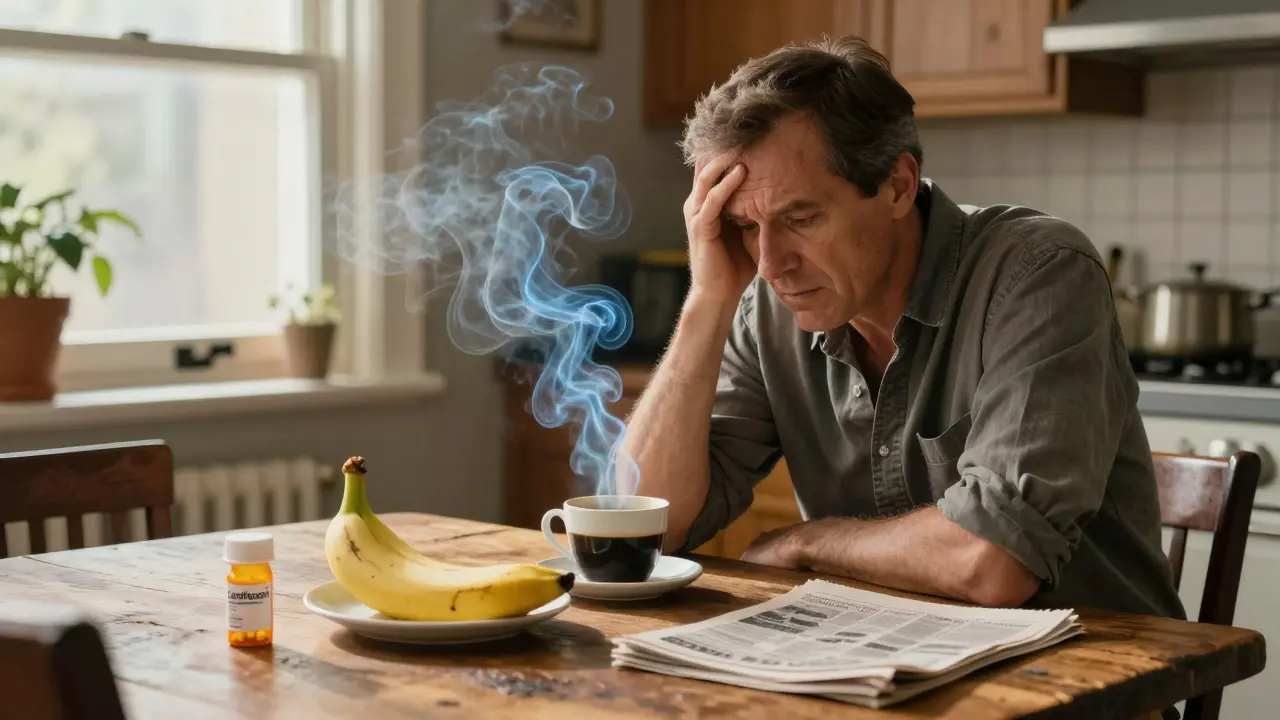
Ever taken a pill and suddenly your coffee tastes like metal, or your favorite food smells like rotten eggs? You’re not imagining it. This isn’t just a weird fluke-it’s a real, documented side effect called dysosmia. It’s when your sense of smell gets twisted. Familiar scents turn unpleasant. You smell things that aren’t there. Or worse-you lose the ability to smell danger, like smoke or gas. And it’s happening more often than doctors realize.
What Exactly Is Dysosmia?
Dysosmia isn’t just losing your sense of smell-that’s anosmia. Dysosmia is when your nose sends the wrong signals to your brain. A banana might smell like burning plastic. Bread could smell like urine. Even air itself might carry the scent of cigarette smoke when no one’s smoking. It’s not just annoying-it’s terrifying. People report feeling isolated, anxious, and even depressed because they can’t enjoy meals, detect spoiled food, or feel safe in their own homes.
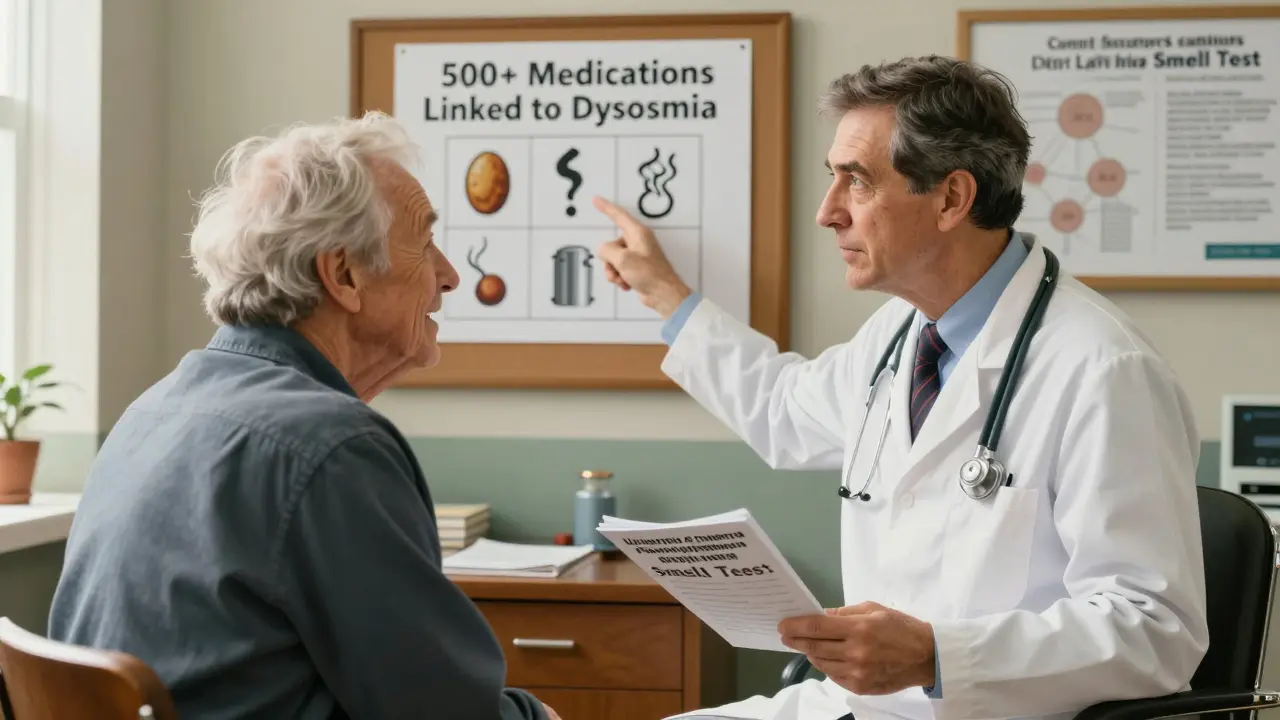
This isn’t rare. Over 500 medications are known to cause it. That’s more than most people think. And it’s not just antibiotics or painkillers-it’s heart meds, antidepressants, seizure drugs, even supplements. The problem? Doctors rarely ask about smell changes during checkups. Patients don’t connect the dots. So it goes unreported, untreated, and misunderstood.
Which Medications Cause Smell Changes?
Some drugs are far more likely to mess with your nose than others. The biggest culprits fall into four categories:
- Antibiotics-especially fluoroquinolones like levofloxacin and moxifloxacin, and macrolides like azithromycin and clarithromycin. These interfere with zinc and magnesium in your nasal cells, which are critical for smell signal processing. In one study, people taking levofloxacin developed a metallic taste within days. Some never fully recovered.
- Heart medications-midodrine, used for low blood pressure, has been linked to persistent smell distortion. The exact mechanism isn’t clear, but it’s strong enough that doctors now list it as a known side effect.
- Neurological drugs-carbamazepine (for seizures) and baclofen (for muscle spasms) can cause complete loss of taste along with smell distortion. One case study described a patient who couldn’t recognize any food flavor for over a year after starting carbamazepine.
- Other offenders-doxycycline, tolbutamide (for diabetes), and even some IV drugs like iron infusions or lidocaine can trigger sudden metallic tastes within minutes of administration.
Here’s the kicker: it’s not about dosage. Even standard doses can trigger this. And it doesn’t matter if you’ve taken the drug before. You can use azithromycin for years without issue-and then, out of nowhere, your world smells wrong.
Why Does This Happen?
Your nose doesn’t just detect smells-it processes them like a computer. Odor molecules bind to receptors in your nasal lining, which send signals through nerves to your brain. Drugs can mess with this system in multiple ways:
- They block the receptors so they can’t respond to smells.
- They jam the signals so they don’t turn off properly, creating phantom smells.
- They interfere with zinc, calcium, or magnesium-minerals your smell cells need to reset after detecting an odor.
- They disrupt G-proteins and TRPM5 channels, which are essential for turning chemical signals into nerve impulses.
For example, fluoroquinolone antibiotics bind to zinc ions in your olfactory cells. Zinc is needed for receptor repair. When it’s pulled away, the cells can’t recover. That’s why smell changes from these drugs often last weeks or months-even after you stop taking them.
It’s not just the nose. Some drugs reach the brain and alter how smell signals are interpreted. That’s why some people smell smoke even when there’s none-it’s not their nose. It’s their brain misfiring.

How Long Does It Last?
There’s no one-size-fits-all answer. For most people, symptoms improve within 3 months of stopping the drug. Studies show about 78% recover fully. But 22% don’t. And for some, the changes stick around for years.
Reddit forums are full of stories like this: one person took azithromycin for a sinus infection and spent 22 months smelling everything like rotten eggs. They lost 15% of their body weight because they couldn’t eat. Another person on doxycycline described food tasting like bile. They dropped 8 pounds in three weeks.
Recovery isn’t guaranteed. The longer the distortion lasts, the harder it is to reverse. That’s why early recognition matters. If you notice a change within 7-14 days of starting a new medication, it’s likely linked.
What Can You Do?
First: don’t panic. But also don’t ignore it.
Step 1: Track your symptoms. Write down when the smell change started, what smells changed, and what meds you’re taking. Bring this to your doctor.
Step 2: Don’t stop meds on your own. Some of these drugs are critical-like blood pressure or seizure meds. Talk to your doctor about alternatives. For example, if you’re on levofloxacin, there are other antibiotics that don’t carry the same smell risk.
Step 3: Ask for a smell test. The University of Pennsylvania Smell Identification Test (UPSIT) is a simple 40-item test that measures your ability to recognize common odors. It’s used in clinics to confirm dysfunction. Most primary care doctors don’t offer it-but otolaryngologists (ear, nose, and throat specialists) do.
Step 4: Avoid unproven fixes. You’ll see online claims that zinc supplements fix everything. But that’s misleading. Zinc deficiency can cause smell loss-but most people with medication-induced dysosmia aren’t deficient. Taking extra zinc won’t help and could hurt you. Too much zinc causes copper deficiency, which leads to nerve damage.
There’s one promising exception: mirtazapine, an antidepressant, has helped some patients recover taste and smell within days. But it’s not a cure-all. It’s only been used in small case studies.
Why Isn’t This More Widely Known?
Because the system doesn’t track it. In most countries, there’s no requirement for drug manufacturers or doctors to report smell or taste changes as side effects. Unlike nausea or dizziness, these aren’t listed as mandatory adverse events. So they vanish into the noise.
Only 37% of primary care doctors routinely ask patients about smell changes during medication reviews, according to a 2022 JAMA study. Meanwhile, 78% of ear, nose, and throat specialists do. That gap means most patients suffer in silence.
Even pharmaceutical companies are waking up. AstraZeneca filed a patent in 2022 for treatments targeting drug-induced smell disorders. The FDA now encourages drug labels to include smell and taste changes as potential side effects. And in 2024, the European Medicines Agency will require smell tests in all new clinical trials for antibiotics and heart drugs.
When to See a Specialist
See an otolaryngologist if:
- Your smell or taste changed within two weeks of starting a new drug.
- The distortion lasts longer than 3 months after stopping the medication.
- You can’t smell smoke, gas, or spoiled food-this is a safety risk.
- You’ve lost weight or stopped eating because food tastes awful.
- You’re experiencing phantom smells (like smoke or chemicals) constantly.
Specialists can run tests to rule out other causes-like head trauma, Parkinson’s, or COVID-19-which can mimic medication-induced dysosmia. But if your symptoms line up with a recent drug change, the odds are high it’s the medication.
Support and Resources
You’re not alone. Over 1,200 people have joined the Global Chemosensory Research Consortium’s registry since 2023. The nonprofit Fifth Sense runs monthly virtual support groups for people with medication-induced smell disorders. There are over 150 participants.
UpToDate and MedLink Neurology publish updated lists of drugs linked to dysosmia. These aren’t just random blogs-they’re clinical references used by doctors worldwide.
And if you’re struggling emotionally-because this condition can be deeply isolating-reach out. Many people feel ashamed. They think they’re crazy. But your nose isn’t broken. Your brain isn’t failing. A drug changed how your body works. And that’s something we can fix-if we talk about it.
What’s Next for Treatment?
Scientists are now testing drugs that target specific receptors involved in smell distortion. One Phase II trial (NCT05214345) is studying TRPM5 channel modulators-molecules that could reset the faulty signals in your nose. Early results are promising.
The NIH invested $4.7 million in 2023 just to study this issue. That’s a sign things are changing. But progress depends on patients speaking up. If you’ve experienced this, tell your doctor. Report it to your country’s pharmacovigilance system. Share your story. The more data we collect, the faster we’ll find better treatments-and the sooner we’ll stop letting these side effects slip through the cracks.
Joanna Brancewicz
January 8, 2026 AT 16:19Fluoroquinolones wreck olfactory zinc transporters. That’s the mechanistic core. It’s not just anecdotal-there’s peer-reviewed electrophysiology data showing reduced receptor regeneration in nasal epithelium post-exposure. This isn’t ‘weird side effect’ territory. It’s a documented ion channel disruption. Document it. Report it. Don’t let pharma bury this.
Kristina Felixita
January 9, 2026 AT 22:10OMG I thought I was going crazy!! I took azithromycin for a cold last year and everything smelled like burnt plastic and old socks?? I stopped eating because my pizza tasted like sewage?? I cried every time I tried to cook… I told my doc and they just shrugged. Like… I’m not hallucinating??
Dave Old-Wolf
January 10, 2026 AT 12:13I had this happen after doxycycline. Tasted like metal all day. Couldn’t smell coffee. Took three months to get back to normal. My wife said I was just being dramatic. Turns out I wasn’t. Glad someone’s talking about this. Doctors need to ask.
Prakash Sharma
January 11, 2026 AT 12:58This is why Western medicine is broken. You take some pill from America, your nose breaks, and no one cares? In India, we use herbs, we listen to the body. This is the cost of overmedicating. You think a pill fixes everything? No. It breaks your senses. You are not a machine.
Manish Kumar
January 12, 2026 AT 20:52Think about it-smell is the most primal sense. It’s tied to memory, survival, emotion. When a drug hijacks that, it doesn’t just alter perception-it fractures identity. You lose the ability to smell rain, your mother’s perfume, fresh bread… and suddenly you’re not just sick-you’re disconnected from the world. Is that not a spiritual wound? Or just another side effect on a 12-point checklist?
Donny Airlangga
January 14, 2026 AT 11:16I’m a nurse. I’ve had patients describe this and I didn’t know what to say. Now I do. I ask every patient on new meds: ‘Has anything smelled weird lately?’ It’s changed how I practice. This info needs to be in every med sheet.
Molly Silvernale
January 14, 2026 AT 18:21It’s not just smell-it’s the ghost of flavor. The echo of joy. The phantom of childhood dinners. You don’t just lose a sense-you lose the poetry of being alive. And we treat it like a glitch in the software? No. This is the body screaming in Morse code. And we’re too busy scrolling to hear it.
Ken Porter
January 16, 2026 AT 03:30So what? People get side effects. Stop whining. If you can’t handle a little weird smell, maybe don’t take medicine. This isn’t a crisis-it’s biology. Grow up.
swati Thounaojam
January 16, 2026 AT 16:23My aunt had this after heart meds. She stopped eating. Lost weight. No one listened. Please tell doctors to ask. Thank you.
Annette Robinson
January 18, 2026 AT 15:43Thank you for writing this with such clarity and compassion. This is the kind of patient-centered information that should be shared in every clinic. I’ve printed it out for my doctor’s office. We need more of this.
Luke Crump
January 19, 2026 AT 20:39Oh please. This is just Big Pharma’s latest scam to make people feel guilty for taking meds. Next they’ll say your dreams are being hacked by statins. Wake up. Your brain is overactive. You’re projecting. Stop blaming pills for your existential crisis.
Aubrey Mallory
January 21, 2026 AT 17:54To everyone who’s experienced this: you’re not alone. I’ve been there. I’m still healing. This isn’t weakness. It’s biology. And we’re building a community to fight for recognition. Join the registry. Tell your story. They can’t ignore us if we speak together.
Evan Smith
January 23, 2026 AT 15:47So… if I stop the drug and it doesn’t go away… am I just stuck like this forever? I’m 32. I don’t want to live smelling like a trash can.
Lois Li
January 24, 2026 AT 23:58My mom took carbamazepine for seizures. She stopped recognizing her own cooking. She cried at Thanksgiving because the turkey smelled like wet dog. We didn’t know why. Now I know. This needs to be common knowledge.
christy lianto
January 25, 2026 AT 13:09It’s not just the physical-it’s the loneliness. I stopped inviting people over. I didn’t want them to know I couldn’t smell their perfume or their candles or their fresh laundry. I felt broken. But I’m speaking up now. Because if I don’t, who will?