
Methadone and QT-Prolonging Drugs: What You Need to Know About the Additive Arrhythmia Risk
 Jan, 8 2026
QT Prolongation Risk Calculator
Risk Assessment Tool
This tool estimates your additive cardiac risk when taking methadone with other QT-prolonging medications. Based on medical guidelines, QTc > 500ms significantly increases the risk of dangerous arrhythmias.
Your Risk Assessment
Key Risk Indicators:
When someone starts methadone for opioid dependence or chronic pain, the focus is usually on managing cravings, reducing withdrawal, or controlling pain. But there’s a quiet, dangerous side effect that doesn’t get talked about enough: methadone can mess with your heart’s electrical rhythm - and when it’s mixed with other common drugs, the risk spikes dramatically.
How Methadone Changes Your Heart’s Timing
Methadone doesn’t just bind to opioid receptors. It also blocks two key potassium channels in heart cells: IKr and IK1. These channels help the heart reset after each beat. When they’re blocked, the heart takes longer to recharge between beats. That delay shows up on an ECG as a longer QT interval - the time between the start of the Q wave and the end of the T wave.
A normal QTc (corrected for heart rate) is under 430 ms for men and 450 ms for women. Anything above 500 ms is a red flag. Studies show that after 16 weeks of methadone therapy, nearly 70% of men and over 70% of women see their QTc climb past 450 ms. About 1 in 10 patients end up with QTc over 500 ms - a threshold linked to a real risk of torsades de pointes, a chaotic, life-threatening heart rhythm that can turn into sudden cardiac arrest.
What’s scary is that this isn’t just about high doses. Even at 60-80 mg/day, some people see significant QT prolongation. And unlike other opioids like buprenorphine, which barely touches these channels, methadone is 100 times more potent at blocking IKr. That’s why it’s the opioid with the highest cardiac risk.
Why Combining Drugs Is a Recipe for Trouble
Methadone alone is risky. But add another drug that also prolongs the QT interval, and you’re stacking the deck. It’s not just additive - it’s multiplicative.
Think of your heart’s repolarization like a battery. Methadone drains it slowly. Now add a macrolide antibiotic like clarithromycin or an antifungal like fluconazole - both also drain the battery. The result? The battery hits zero faster, and the heart can’t reset properly. That’s when the electrical chaos of torsades de pointes starts.
Common offenders include:
- Antibiotics: erythromycin, clarithromycin, moxifloxacin
- Antifungals: fluconazole, ketoconazole
- Psych meds: haloperidol, citalopram, escitalopram, venlafaxine
- HIV drugs: ritonavir (which also slows methadone breakdown, making levels spike even higher)
One case from New Zealand involved a patient on 120 mg/day methadone who developed torsades de pointes. The fix? Cut the dose in half - to 60 mg/day - and the dangerous rhythm disappeared. That’s how powerful the interaction is.
Who’s at Highest Risk?
Not everyone on methadone will have this problem. But some people are sitting on a ticking clock:
- Women (higher baseline QTc than men)
- People over 60
- Those with existing heart disease, heart failure, or bradycardia
- Anyone with a family history of long QT syndrome or sudden cardiac death
- Patients with low potassium or magnesium - even mild electrolyte imbalances make QT prolongation worse
- People on multiple QT-prolonging drugs at once
And here’s something many don’t realize: even short-term use of a QT-prolonging drug can trigger trouble. A case report from 2006 described a patient who developed torsades after taking cocaine - a drug with a short half-life - while on methadone. Cocaine’s effect lasted hours, but the damage lasted days.
What Doctors Should Do - and What Patients Should Ask For
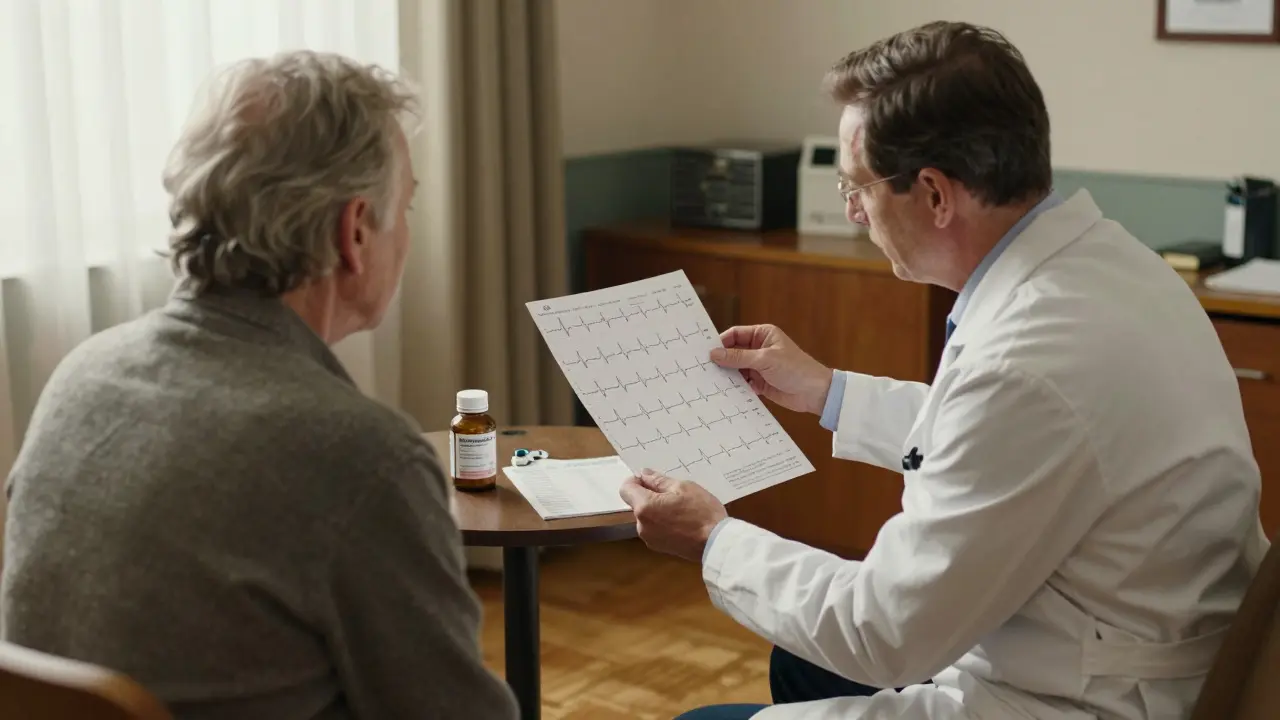
Before starting methadone, a baseline ECG is non-negotiable. So is checking electrolytes. If your QTc is already borderline (430-450 ms for men, 450-470 ms for women), you need extra caution.
After starting, ECGs should be repeated at 2-4 weeks, then again at 12 weeks. If your dose goes above 100 mg/day, monitor even more closely. The risk doesn’t just increase with dose - it accelerates.
Patients should ask:
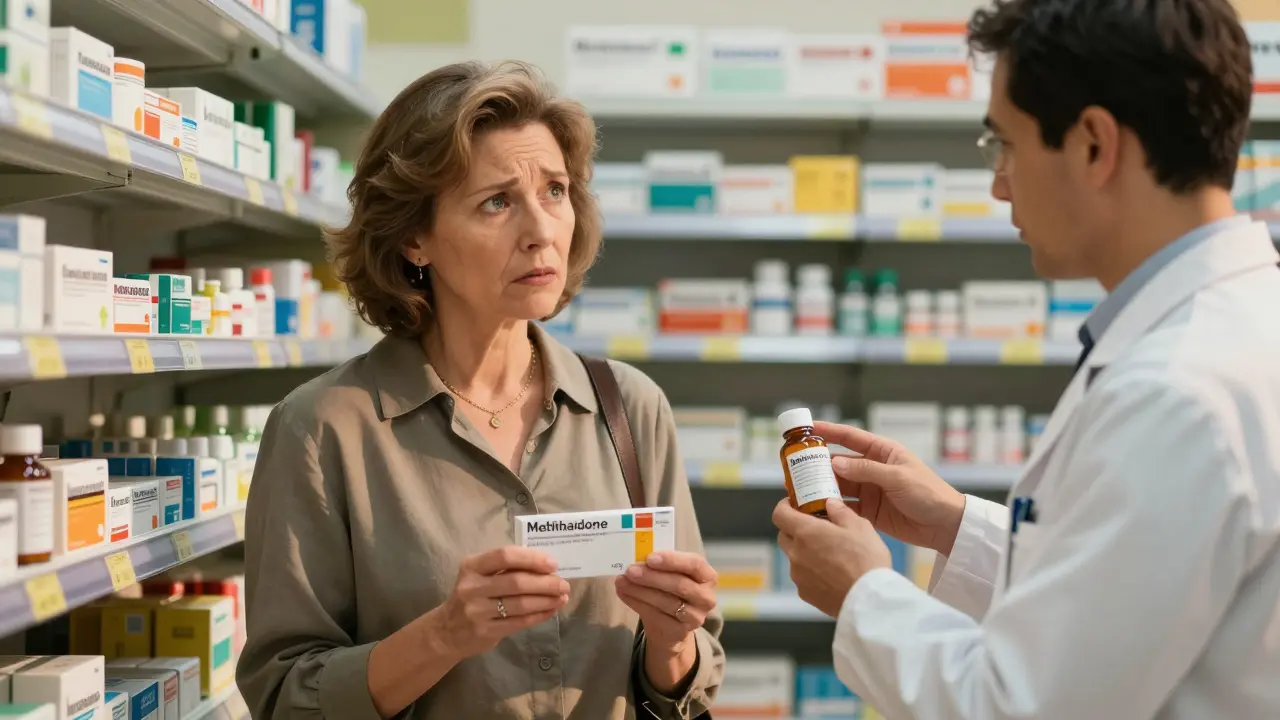
- “Is my current medication list safe with methadone?”
- “Can you check my QTc before I start?”
- “Should I get my potassium and magnesium levels checked?”
- “If I get sick and need an antibiotic, which ones are safe?”
Many primary care doctors and even addiction specialists don’t think about cardiac risks unless a patient faints or has a cardiac event. But the data is clear: this is a preventable cause of death.

Alternatives That Are Safer for the Heart
If you’re on methadone and have multiple risk factors - or if you’re already seeing QT prolongation - switching to buprenorphine might be the smartest move you make.
Buprenorphine has almost no effect on IKr or IK1. It’s just as effective as methadone for reducing opioid use and overdose deaths, but it doesn’t carry the same cardiac burden. Studies show buprenorphine users have QTc values close to normal, even at high doses.
That doesn’t mean methadone should be avoided. For many, it’s life-saving. But when the cardiac risk is high, the balance shifts. If you’re on 150 mg/day, have diabetes, take citalopram, and your QTc is 490 ms - you’re playing Russian roulette with your heart.
The Bottom Line
Methadone saves lives. But it can also end them - especially when paired with other drugs that slow the heart’s electrical reset. The risk isn’t theoretical. It’s documented in case reports, FDA warnings, and peer-reviewed studies spanning two decades.
There’s no magic bullet. But here’s what works:
- Always get a baseline ECG before starting methadone
- Check electrolytes - potassium and magnesium matter
- Review every medication you take - even over-the-counter ones
- Don’t ignore dizziness, fainting, or palpitations
- Ask about switching to buprenorphine if your risk profile is high
The goal isn’t to scare people off methadone. It’s to make sure no one dies from something that could’ve been caught with a simple ECG and a few questions.
Darren McGuff
January 10, 2026 AT 05:46Methadone’s QT prolongation is one of those silent killers that flies under the radar. I’ve seen it in clinic - patients on 80mg for years, no symptoms, then boom - faints during a routine flu shot because they got azithromycin. No one asked about their med list. No one checked the ECG. It’s not paranoia, it’s protocol. And yeah, buprenorphine is the smarter play for high-risk folks. Why gamble with your heart when you don’t have to?
Ashley Kronenwetter
January 10, 2026 AT 22:10While the clinical data presented is compelling, it is imperative that patient autonomy and provider discretion remain central to treatment decisions. The assertion that buprenorphine is universally preferable overlooks individual pharmacokinetic variability and psychosocial factors that influence adherence and outcomes. A one-size-fits-all recommendation may inadvertently undermine patient-centered care.
Heather Wilson
January 12, 2026 AT 00:22So let me get this straight - you’re telling me that a drug that’s been used for decades to save lives is now being vilified because some people take antibiotics? Wow. Groundbreaking. I’m sure the 100,000 people who avoided overdose because of methadone are just thrilled to hear they’re all walking time bombs. Meanwhile, the real issue is that doctors don’t monitor anything anymore. It’s not the drug. It’s the lack of follow-up. Also, ‘QTc over 500’? That’s like saying ‘water is dangerous because people drown.’ Yes, but only if you’re stupid enough to swim in a hurricane.
Jeffrey Hu
January 13, 2026 AT 02:21Actually, the IKr blockade isn’t the only mechanism - methadone also inhibits sodium channels and has active metabolites like EDDP that prolong QT further. And fluconazole? It’s not just a CYP3A4 inhibitor - it’s a CYP2B6 inhibitor too, which means it reduces methadone clearance by up to 40%. That’s why the combo with 120mg methadone is so dangerous. Also, potassium levels below 3.5 mmol/L? That’s not ‘mild’ - that’s a cardiac emergency waiting to happen. You want to know who’s at risk? Anyone who thinks ‘I feel fine’ means ‘I’m safe.’
Matthew Maxwell
January 13, 2026 AT 21:19It’s pathetic. People on methadone are supposed to be rebuilding their lives, not playing Russian roulette with their heart because some doctor didn’t bother to check an ECG. This isn’t about ‘risk’ - it’s about negligence. If you’re prescribing this, you have a duty. And if you don’t know the cardiac risks, you shouldn’t be prescribing it at all. Stop treating addiction like it’s a hobby. People die because of laziness.
Angela Stanton
January 14, 2026 AT 10:03OMG I just got diagnosed with long QT and I’m on methadone AND escitalopram 😭 I didn’t even know they could do this to you. My PCP said ‘it’s fine’ and I believed them. Now I’m scared to even take ibuprofen. Anyone know if melatonin is safe?? 🤯 #cardiacnightmare #methadonemess
Kiruthiga Udayakumar
January 15, 2026 AT 15:35Why do we even allow this? Methadone is a poison wrapped in a safety blanket. People say it saves lives - sure, but at what cost? If your heart stops because you took a flu medicine, that’s not an accident - that’s a failure of the system. And if you’re a woman over 50? You’re basically a walking ECG alert. Someone needs to pull this drug off the market before more people die.
Patty Walters
January 16, 2026 AT 16:20just wanted to say - i got my ekg before starting methadone and they found my qt was already 448. doc switched me to buprenorphine right away. best decision ever. no more dizziness, no more panic. also, magnesium supplements helped a ton. just ask for it. it’s easy. you got this 💪
Phil Kemling
January 16, 2026 AT 22:08There’s a deeper irony here. We treat addiction as a moral failing, then prescribe a drug that can kill you if you breathe wrong. We demand sobriety, but ignore the body’s rebellion against the very thing meant to save you. Is healing supposed to be this fragile? Or are we just trying to fix the symptom while the system quietly murders the soul through unintended consequences?
Diana Stoyanova
January 18, 2026 AT 03:37THIS. THIS IS WHY WE NEED TO TALK ABOUT THIS. I’m a nurse in an opioid treatment program and I’ve seen three patients nearly die from QT prolongation - all because they got a Z-pack or a flu shot with a med they didn’t know was risky. One guy was 32, ran marathons, thought he was fine. Then he collapsed in the parking lot after taking clarithromycin. He’s alive now because his roommate called 911. But he’ll never run again. We need mandatory ECGs. We need pharmacist flags. We need education that doesn’t wait for someone to die. This isn’t scary - it’s preventable. And we’re failing people every day by staying silent.
Elisha Muwanga
January 18, 2026 AT 12:05Why is the US letting this happen? In Germany, they don’t even prescribe methadone without a cardiologist’s clearance. We’re letting amateurs run this show. And don’t get me started on how we let Big Pharma push this stuff like it’s candy. This isn’t freedom - it’s negligence dressed up as compassion. Fix the system or stop pretending you care.
Gregory Clayton
January 19, 2026 AT 04:37bro i was on 100mg methadone and got prescribed citalopram for anxiety. one day i felt like my heart was gonna explode outta my chest. went to er, qt was 512. doc looked at me like i was lying. turned out i was one of the lucky ones. switched to buprenorphine. life changed. don’t be stupid. check your meds.
Catherine Scutt
January 19, 2026 AT 18:27People who take methadone shouldn’t be allowed to take anything else. It’s too dangerous. Why are we even letting them have other prescriptions? Just isolate them. Keep them on one drug and monitor them like lab rats. That’s the only safe way.
Alicia Hasö
January 20, 2026 AT 06:03To everyone who’s scared - you’re not alone. And to the providers reading this: please, for the love of everything holy, don’t wait for someone to collapse before you act. Baseline ECG. Check electrolytes. Review every med - even the ‘harmless’ ones. Buprenorphine isn’t a cop-out. It’s a lifeline. And if your patient is a woman over 60 with diabetes and on fluconazole? You’re not being cautious - you’re being reckless. We can do better. We owe it to them.