
NSAID Safety: GI Risks, Kidney Effects, and Monitoring Protocols
 Dec, 1 2025
Every year, millions of people reach for ibuprofen or naproxen to ease a headache, back pain, or arthritis flare-up. These drugs work fast, they’re cheap, and they’re everywhere - from pharmacy shelves to kitchen cabinets. But behind the convenience lies a quiet danger: NSAIDs aren’t as safe as most people think. For many, the first sign of trouble isn’t a warning sign - it’s internal bleeding, kidney failure, or a hospital stay. The truth? NSAIDs are one of the most dangerous drugs you can take regularly - and almost no one is monitoring for it.
How NSAIDs Damage Your Gut - Even When You Feel Fine
NSAIDs like ibuprofen, naproxen, and diclofenac don’t just block pain signals. They shut down protective chemicals in your stomach lining called prostaglandins. These chemicals keep mucus flowing, blood circulating, and cells repairing. Without them, your stomach lining starts to break down - slowly, silently, often without symptoms. Here’s what that looks like in real life: A 68-year-old woman takes naproxen daily for osteoarthritis. She has no stomach pain. No heartburn. No nausea. Then one morning, she feels dizzy. Her stool is black. She ends up in the ER with a bleeding ulcer. This isn’t rare. In fact, half of all NSAID-related stomach damage shows up without warning. That’s not an accident. It’s how the drug works. Studies show 10% to 50% of people who take NSAIDs long-term develop visible damage to their stomach or intestinal lining. About 15% will get a peptic ulcer. And 16,500 Americans die each year from NSAID-induced bleeding - more than from opioid overdoses. The damage doesn’t stop at the stomach. NSAIDs also attack the small intestine, causing inflammation, ulcers, and leaks that are harder to detect than stomach ulcers. There’s no reliable test to catch this early. No easy fix. And no way to fully reverse it once it’s started.Kidney Damage: The Silent Killer No One Talks About
Your kidneys rely on prostaglandins to keep blood flowing through them, especially when you’re dehydrated, sick, or older. NSAIDs block those signals. The result? Your kidneys start to struggle. Blood pressure drops inside the kidneys. Waste builds up. Function slows. Acute kidney injury from NSAIDs happens in 1% to 5% of users - and it’s often reversible if caught early. But for people over 65, those with high blood pressure, diabetes, or heart failure, the risk jumps. One study found that older adults taking NSAIDs had a 2.5 times higher chance of sudden kidney failure than those who didn’t. And it doesn’t always show up in blood tests right away. Many patients feel fine until their creatinine levels spike - sometimes after months of daily use. Chronic use can lead to interstitial nephritis (inflammation of kidney tissue), fluid retention, swelling in the legs, and even papillary necrosis - a condition where parts of the kidney tissue die. The American College of Cardiology now says: Don’t use NSAIDs at all if you have stage 3 or worse kidney disease. That’s eGFR under 60. Yet, many doctors still prescribe them.Who’s at Highest Risk - And Why Most Doctors Miss It
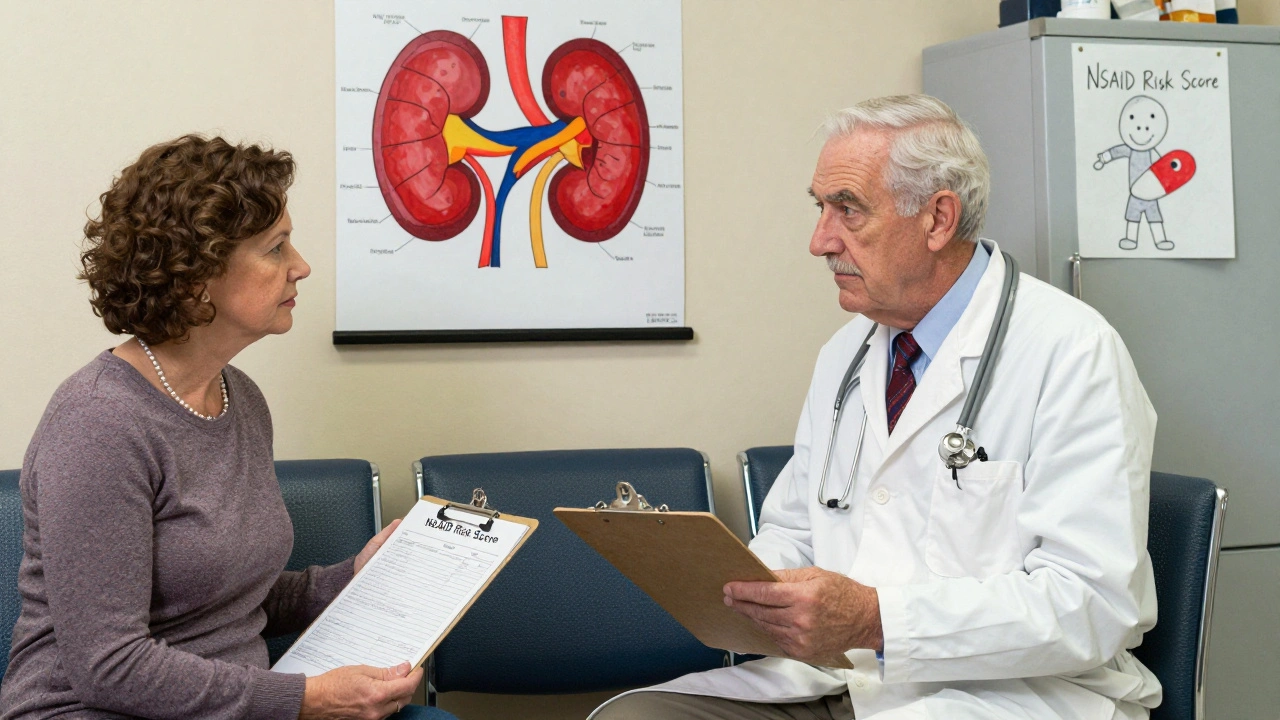
Not everyone who takes NSAIDs gets hurt. But some people are walking into danger without knowing it. The American College of Gastroenterology has a simple risk calculator:- Age over 65: +2 points
- History of stomach ulcer or bleeding: +3 points
- Taking blood thinners (like warfarin or aspirin): +2 points
- Using corticosteroids (like prednisone): +1 point
Monitoring: What You Need to Check - And When
If you’re on NSAIDs for more than a few weeks, you need monitoring. Not optional. Not “if you feel bad.” Regular checks save lives.- Serum creatinine and BUN: Check within 30 days of starting, then every 3-6 months if you’re on long-term therapy. A rise of 0.3 mg/dL or more in creatinine means your kidneys are under stress.
- Complete blood count (CBC): Look for low hemoglobin - that’s a sign of slow, hidden bleeding. Many patients are anemic for months before anyone notices.
- Fecal occult blood test (FOBT): Recommended every 6 months for high-risk patients. Newer tests (like FIT) are 92% accurate at catching hidden blood in stool - and they’re now available at clinics.
- Endoscopy: Only for very high-risk patients (age 75+, past ulcer, multiple risk factors). It’s invasive, but it’s the only way to see early damage before it bleeds.
Which NSAID Is Safest? The Real Answer
People ask: “Is ibuprofen safer than naproxen? What about celecoxib?” The answer isn’t simple.- Naproxen: Highest risk of GI bleeding - 4.2 times higher than non-users. But lower heart risk than others.
- Ibuprofen: 2.7 times more likely than celecoxib to cause stomach ulcers. Also linked to higher blood pressure.
- Celecoxib (Celebrex): Half the GI risk of naproxen. But it’s not safe for kidneys. And it’s not safe for hearts if you’ve had a heart attack.

What About PPIs? Are They the Answer?
Doctors often prescribe PPIs like omeprazole with NSAIDs to protect the stomach. And yes - they cut ulcer risk by 70% to 90%. But here’s what no one tells you: PPIs come with their own dangers. A 2022 study found that using NSAIDs and PPIs together for 4 to 12 months increases your risk of microscopic colitis - a chronic inflammatory bowel disease - by over six times. That means ongoing diarrhea, weight loss, and sometimes lifelong treatment. And PPIs don’t protect your intestines or kidneys at all. So you’re trading a stomach ulcer for a leaky gut. And you’re still at risk for kidney damage. It’s not a solution. It’s a band-aid on a broken bone.What Should You Do? A Practical Guide
If you’re taking NSAIDs regularly - here’s what to do right now:- Ask yourself: Do I really need this? Can you use ice, stretching, physical therapy, or acetaminophen instead?
- If you must take it, use the lowest dose for the shortest time. Each extra week increases complication risk by 3% to 5%.
- Know your risk score. Add up your age, past ulcers, other meds. If you’re high risk, talk to your doctor about alternatives.
- Get tested. Ask for creatinine, CBC, and a fecal occult blood test. Don’t wait for symptoms.
- Avoid combining NSAIDs with blood thinners, SSRIs, or steroids. The combo is deadly.
- Don’t assume PPIs make you safe. They help the stomach - not your kidneys or lower gut.
What’s Next? New Options and Real Hope
There’s progress. In 2023, the FDA approved naproxcinod - a new NSAID that releases nitric oxide to protect blood vessels and reduce ulcers by 58% compared to regular naproxen. In 2024, a new point-of-care stool test became available that detects hidden bleeding with 92% accuracy. AI tools are being tested to spot early intestinal damage during endoscopy. But these aren’t magic bullets. Until we stop treating NSAIDs like harmless pain relievers - and start treating them like high-risk medications - the numbers won’t change. The real solution isn’t a new drug. It’s better prescribing. Better monitoring. Better patient education. The next time you reach for that bottle of ibuprofen, ask yourself: Is this helping me - or slowly harming me? The answer might save your life.Can NSAIDs cause kidney damage even if I don’t have kidney disease?
Yes. NSAIDs reduce blood flow to the kidneys by blocking prostaglandins. Even people with normal kidney function can develop acute kidney injury - especially if they’re dehydrated, older, or taking diuretics. The risk is higher in people over 65, but it can happen to anyone. A rise in creatinine levels within 30 days of starting NSAIDs is a red flag.
Is it safe to take ibuprofen once a week?
Occasional use - like once or twice a week for a headache - is generally low risk for healthy adults under 60. But even short-term use can cause stomach irritation or raise blood pressure. If you have any risk factors - high blood pressure, kidney issues, or a history of ulcers - even occasional use isn’t risk-free. Always use the lowest dose possible.
Why do some people get stomach pain and others don’t?
It’s not about tolerance - it’s about biology. Some people naturally produce more protective mucus in their stomach. Others have genetic differences in how they metabolize NSAIDs. Age, prior ulcers, and other medications (like blood thinners) also play a big role. But the biggest factor? You can’t predict who will bleed. That’s why 50% of serious NSAID complications happen without warning symptoms.
Can I take NSAIDs if I have high blood pressure?
NSAIDs can raise blood pressure and interfere with hypertension medications like ACE inhibitors and diuretics. Studies show people with high blood pressure who take NSAIDs regularly have a 20% to 30% higher risk of heart attack or stroke. If you have high blood pressure, avoid NSAIDs unless absolutely necessary - and always monitor your BP closely while taking them.
What are the signs of NSAID-induced kidney damage?
Early signs are often silent. As damage progresses, you may notice swelling in your ankles or legs, reduced urine output, fatigue, nausea, or confusion. But by then, the damage may already be significant. The only reliable way to catch it early is through blood tests - creatinine and eGFR. Don’t wait for symptoms.
Are over-the-counter NSAIDs safer than prescription ones?
No. The active ingredients in OTC and prescription NSAIDs are the same - ibuprofen, naproxen, etc. The only difference is the dose. Taking 800 mg of ibuprofen three times a day (prescription strength) is more dangerous than 200 mg once a day (OTC). But even OTC doses, taken daily for weeks or months, can cause serious GI and kidney damage. Many people don’t realize they’re taking too much because they combine OTC NSAIDs with prescription painkillers.
Can NSAIDs cause long-term digestive problems even after stopping them?
Yes. NSAID-induced damage to the small intestine can lead to chronic inflammation, malabsorption, and ongoing diarrhea - even after you stop taking the drug. Some patients develop microscopic colitis or persistent gut permeability. Recovery can take months or years, and in some cases, the damage is permanent. That’s why limiting duration of use is the most effective prevention strategy.
Gene Linetsky
December 3, 2025 AT 01:22Archie singh
December 3, 2025 AT 22:17Gavin Boyne
December 5, 2025 AT 11:37Rashi Taliyan
December 6, 2025 AT 22:06Kara Bysterbusch
December 8, 2025 AT 09:27Rashmin Patel
December 8, 2025 AT 20:52sagar bhute
December 10, 2025 AT 18:27Cindy Lopez
December 11, 2025 AT 05:16James Kerr
December 11, 2025 AT 10:39shalini vaishnav
December 12, 2025 AT 22:42vinoth kumar
December 13, 2025 AT 09:16bobby chandra
December 14, 2025 AT 08:35