
Oral Thrush from Medications: How to Treat and Prevent Antifungal Side Effects
 Dec, 24 2025
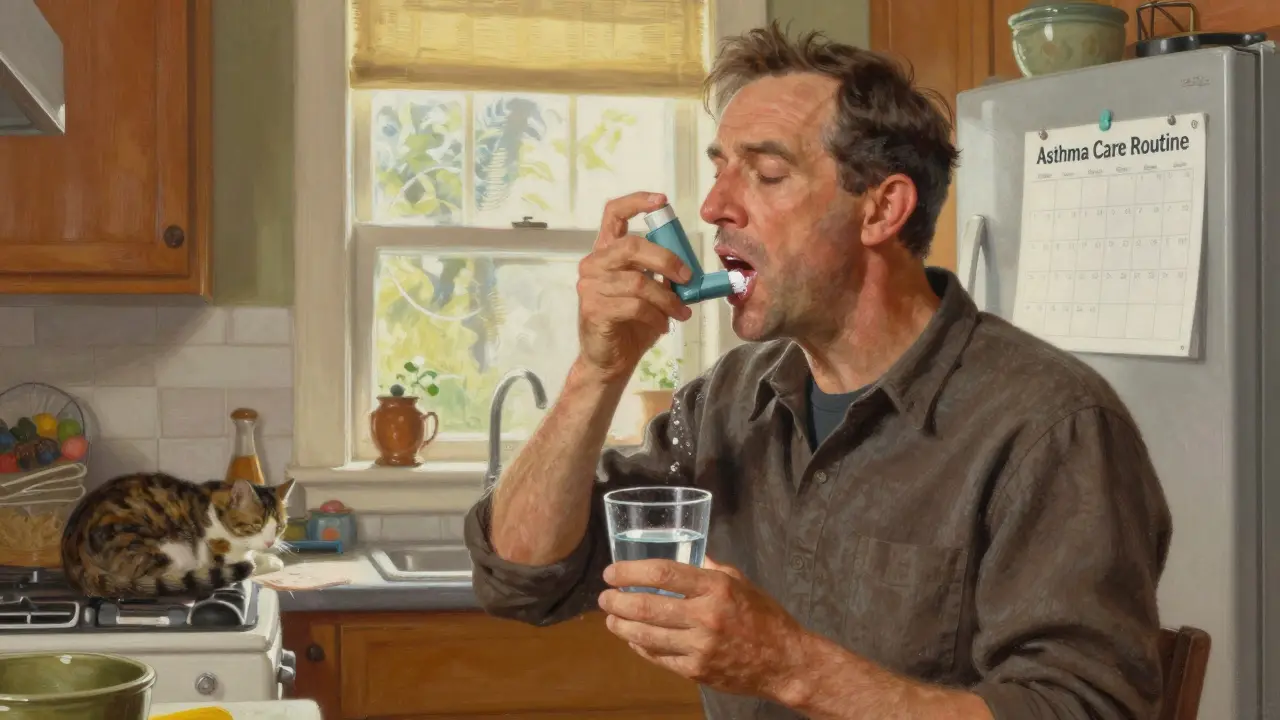
Many people don’t realize that the very medications meant to help them can also cause oral thrush - a frustrating, sometimes painful fungal infection in the mouth. If you’re on inhaled steroids for asthma, antibiotics for an infection, or immunosuppressants after a transplant, you’re at higher risk. The white patches, soreness, and trouble swallowing aren’t just annoying - they’re a sign your mouth’s natural balance has been thrown off. The good news? It’s treatable, preventable, and often avoidable with simple changes.
Why Medications Cause Oral Thrush
Oral thrush is caused by an overgrowth of Candida albicans, a fungus that normally lives harmlessly in your mouth. But when medications disrupt the balance of bacteria and fungi, Candida takes over. The most common culprits are:- Inhaled corticosteroids (like Advair, Flovent, Symbicort): These reduce inflammation in your lungs but leave a residue in your mouth that feeds Candida. About 20% of people using them develop thrush, according to NHS 2023 guidelines.
- Broad-spectrum antibiotics (like amoxicillin, doxycycline): These kill off good bacteria that keep fungi in check. A single course can be enough to trigger an outbreak.
- Immunosuppressants (like cyclosporine, prednisone): Used after organ transplants or for autoimmune diseases, these weaken your body’s ability to fight off fungi.
- Cancer treatments (chemotherapy, radiation): These damage the lining of your mouth and lower your immune defenses.
It’s not about being ‘dirty’ - it’s about chemistry. Your mouth is a delicate ecosystem. When antibiotics wipe out protective bacteria, Candida fills the vacuum. When steroids coat your mouth, they create a sugary environment Candida loves.
How Nystatin Works - and How to Use It Right
Nystatin (brand names Mycostatin, Nilstat) is the go-to first-line treatment for most people. It’s a topical antifungal that’s been around since the 1950s and still works because it targets fungal cells directly without affecting your body’s system.Here’s how it actually works: nystatin binds to ergosterol, a key component of fungal cell walls. This creates holes in the fungus, causing it to leak and die. It doesn’t get absorbed into your bloodstream - less than 5% - so it’s safe for kids, pregnant women, and people on multiple medications.
But here’s the catch: most people use it wrong.
The prescription comes as a liquid suspension. You’re told to swish 4-6 mL four times a day. But according to Dr. Michael Chen’s 2021 review, 42% of treatment failures happen because patients swallow it right away. That’s like pouring shampoo on your scalp and rinsing it off in 10 seconds - it won’t work.
Here’s the correct method:
- Measure the dose with the provided dropper.
- Pour it into your mouth.
- Swish it around for at least 2 minutes. Move it over your tongue, cheeks, roof of mouth - everywhere it looks white or sore.
- Spit it out. Do NOT swallow.
- Wait 30 minutes before eating or drinking.
Do this after meals, when your mouth is still moist. Studies from Memorial Sloan Kettering show this method leads to a 92% cure rate in mild to moderate cases. The downside? The taste is chalky and unpleasant. That’s why many quit before day 5. But if you stick with it, it works.
When Fluconazole Is Needed - and the Risks
If nystatin doesn’t clear up the infection after 10-14 days, or if the thrush has spread to your throat or esophagus, your doctor will likely switch you to fluconazole (Diflucan). This is a pill - one dose a day for 7-14 days. It’s absorbed into your bloodstream and travels everywhere, including deep fungal infections.Fluconazole is more effective - 95% success rate compared to nystatin’s 89% - and much easier to take. But it’s not without risks.
- Drug interactions: Fluconazole affects how your liver processes 32 common medications. If you take warfarin (blood thinner), phenytoin (seizure medicine), or sulfonylureas (diabetes pills), fluconazole can make them too strong - leading to bleeding, seizures, or low blood sugar.
- Liver toxicity: Rare, but serious. The FDA has issued black box warnings. One case on PatientsLikeMe involved hospitalization after liver damage from fluconazole.
- Resistance: Candida strains resistant to fluconazole have risen from 3% in 2010 to 12% in 2022, according to the European Society of Clinical Microbiology.
That’s why fluconazole isn’t the first choice for healthy people. It’s reserved for those who are immunocompromised, have severe symptoms, or failed topical treatment. As Dr. Susan Whitley at Johns Hopkins says: "Use nystatin first. Save fluconazole for when you really need it."
Cost, Accessibility, and What’s New
Cost matters - especially if you’re paying out of pocket. Here’s what you’re likely to pay for a 30-day supply (based on GoodRx data from September 2023):| Medication | Form | Generic Price | Brand Price | Key Advantage | Key Limitation |
|---|---|---|---|---|---|
| Nystatin | Oral suspension | $15.79 | $89.50 | Safe for pregnancy, kids, and complex med regimens | Unpleasant taste; must swish 2 minutes, 4x/day |
| Fluconazole | Oral tablet | $23.49 | $347.88 | One pill daily; works for deep infections | Drug interactions, liver risk, resistance |
There’s also a new option: Mycolog-II, a mucoadhesive nystatin tablet approved by the FDA in March 2023. It sticks to your mouth lining and releases medication for up to 4 hours - no swishing, no spitting. Early trials show 94% effectiveness. It’s not widely available yet, but it’s the future of treatment.
Prevention: The Real Game-Changer
The best way to avoid oral thrush? Don’t let it start.- Rinse after inhalers: If you use an asthma inhaler, rinse your mouth with water and spit it out immediately after each puff. The NHS found this cuts thrush risk by 65%.
- Brush twice daily: Use a soft toothbrush and fluoride toothpaste. Don’t skip flossing - Candida hides in plaque.
- Use xylitol: Chewing gum or mints with xylitol (a natural sugar alcohol) reduces Candida colonization by 40%, according to a 2022 study in the Journal of Dental Research.
- Watch your sugar: Candida thrives on sugar. Cut back on sweets, sodas, and even fruit juices if you’re prone to thrush.
- Control blood sugar: If you have diabetes, keep your HbA1c under 7.0%. High blood sugar = fuel for Candida, says the American Dental Association.
- Consider probiotics: A 2023 study in Nature Microbiology found that Lactobacillus reuteri probiotics reduced recurrence by 57% when taken alongside antifungals.
Regular dental checkups every 6 months are non-negotiable. Dentists spot early signs of thrush before you even feel symptoms.

What If It Comes Back?
Recurrent thrush isn’t normal. If it keeps coming back after treatment, it’s a red flag. Possible causes:- Not finishing your antifungal course
- Still using inhalers without rinsing
- Undiagnosed diabetes or HIV
- Antifungal resistance
Your doctor should order a culture test - swabbing your mouth to identify the exact Candida strain. This tells them if it’s resistant to fluconazole or if you need a different drug. The CDC’s Antifungal Resistance Laboratory Network is tracking rising threats like Candida auris, a drug-resistant strain that’s becoming more common in hospitals.
Don’t ignore recurring thrush. It’s not just a mouth problem - it’s a sign your body’s defenses are struggling.
Real Stories, Real Lessons
User "AsthmaWarrior42" on Reddit spent weeks ignoring their thrush until it hurt to swallow. They tried rinsing with salt water - nothing. Then they started nystatin, swishing for 2 minutes every time. After 10 days, it was gone. "The taste was awful," they wrote. "But I’d rather taste chalk than live with that pain." On HealthUnlocked, 79% of users who stuck with nystatin said it worked. The ones who quit early? They came back with worse thrush.One man on PatientsLikeMe took fluconazole for thrush after a lung transplant. He got better - but then his liver enzymes spiked. He spent 5 days in the hospital. His doctor now avoids fluconazole unless absolutely necessary.
The lesson? Follow the instructions. Don’t guess. Don’t skip doses. And don’t assume a pill is always better than a swish.
sagar patel
December 25, 2025 AT 09:04Stop swallowing nystatin. That's why it doesn't work for most people.
Harbans Singh
December 26, 2025 AT 19:28I've been on Flovent for 8 years and never got thrush until I stopped rinsing after my puff. Now I rinse like my life depends on it. Literally. It's the only thing that's kept me clean since. Also xylitol gum changed my life. No more chalky taste, no more pain.
Linda B.
December 27, 2025 AT 11:07They don't want you to know this but nystatin is a placebo. The real cure is ozone therapy. The FDA banned it because Big Pharma makes more money off fluconazole. Also your inhaler is probably laced with glyphosate. That's why your mouth is dying.
Christopher King
December 28, 2025 AT 00:10Let me ask you this - if your body is a temple, and medications are the invaders, then isn't thrush just your soul screaming for balance? We've forgotten that healing isn't about killing fungi - it's about listening to the whispers of your microbiome. Fluconazole? That's not medicine. That's colonialism in pill form. And nystatin? A quiet revolution in a dropper bottle.
Carlos Narvaez
December 29, 2025 AT 22:42Swishing for two minutes? That's not treatment. That's performance art. You're better off just taking fluconazole and dealing with the liver risks. At least you get to sleep through it.
Oluwatosin Ayodele
December 30, 2025 AT 10:46You people think this is complicated? In Nigeria, we use neem leaves boiled in water. Swish. Spit. Done. No pharmacy. No prescription. No nonsense. Your Western medicine is overengineered and overpriced. Candida doesn't care about your FDA approvals.
Bailey Adkison
January 1, 2026 AT 00:36Anyone who uses xylitol is a sugar addict trying to feel better about their addiction. Candida thrives on sugar? So does your ego. Cut the gum. Cut the carbs. Cut the excuses. Just stop being weak.
Gary Hartung
January 2, 2026 AT 09:25Did you know? The WHO quietly classified Candida albicans as a 'Class 2 biological weapon' in 2021. That's why they're pushing nystatin - it's a distraction. The real threat is the glyphosate-laced inhalers being sprayed from drones above your neighborhood. They want you dependent. They want you swallowing. They want you silent.
Ben Harris
January 4, 2026 AT 04:48I tried nystatin. The taste? Like licking a chalkboard dipped in regret. I quit on day 3. Then I got thrush again. Then I got anxiety. Then I got a new therapist. Now I'm on fluconazole. And yes, my liver is a little angry. But my soul? It's finally quiet.
Justin James
January 5, 2026 AT 00:46Think about it - every time you use an inhaler, you're basically giving your mouth a sugar-coated invitation to a fungal party. And then you wonder why it's full of white trash? The real problem isn't the fungus - it's the medical-industrial complex that sells you the inhaler, then sells you the nystatin, then sells you the fluconazole, then sells you the liver test, then sells you the probiotic, then sells you the xylitol gum, then sells you the guilt for not doing it right. You're not sick. You're being monetized.
Rick Kimberly
January 6, 2026 AT 05:52Thank you for this comprehensive breakdown. The data on nystatin adherence rates and the 92% efficacy with proper technique is particularly compelling. I've shared this with my immunocompromised patients and emphasized the 2-minute swish protocol. The new mucoadhesive tablet is indeed promising - I've requested samples from the manufacturer. Prevention remains paramount, and the xylitol and probiotic data aligns with recent clinical guidelines from the Infectious Diseases Society of America.
Terry Free
January 7, 2026 AT 02:56So you're telling me the answer to thrush is... chewing gum? And rinsing? That's it? No magic pill? No secret supplement? No 10-step protocol with essential oils and crystals? Jesus. I thought medicine was supposed to be hard. Now I feel cheated.
Zabihullah Saleh
January 8, 2026 AT 12:05My cousin in India got thrush after antibiotics. He didn't use nystatin. He didn't use fluconazole. He just ate yogurt every day. For a month. And it cleared up. Maybe the real cure isn't in the pharmacy. Maybe it's in the fridge.