
Patient-Reported Outcomes: How Your Daily Feedback Improves Drug Safety
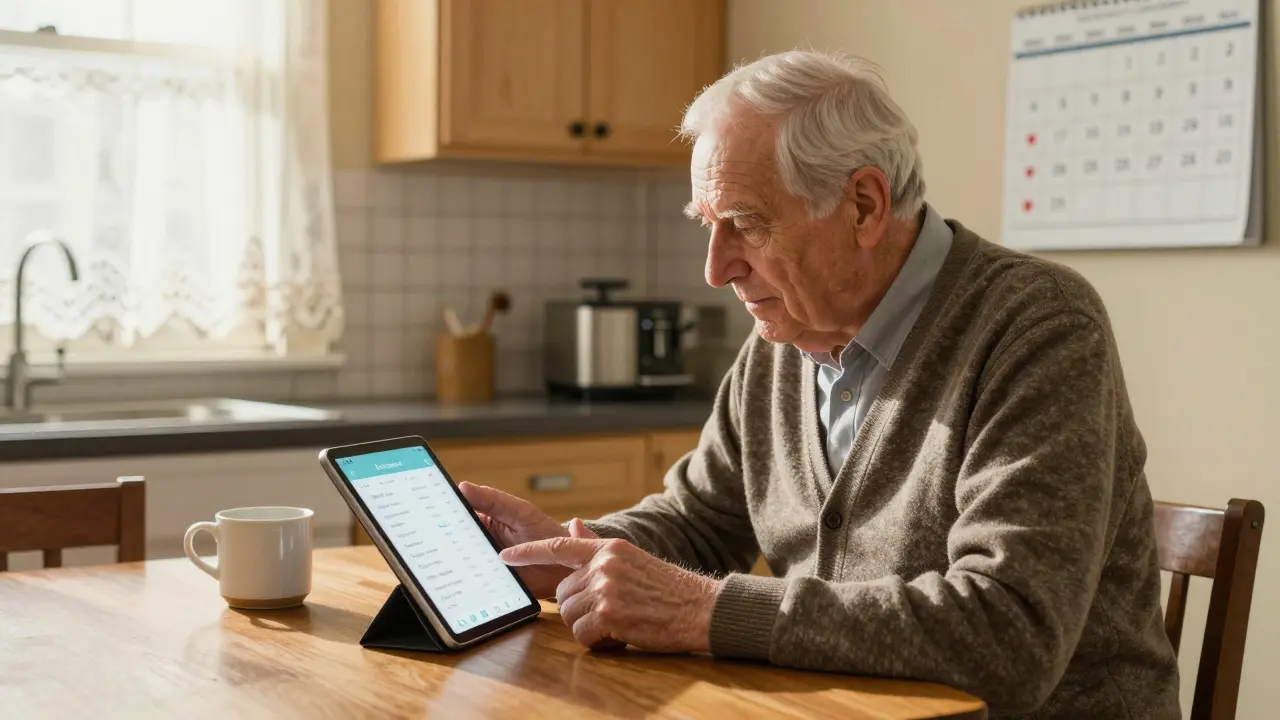 Feb, 23 2026
Symptom Reporting Optimizer
This tool helps you determine the optimal frequency for reporting symptoms to maximize data accuracy while minimizing survey fatigue. Based on FDA guidance and clinical evidence, consistent reporting is crucial for identifying subtle patterns that might indicate serious side effects.
Results
Optimal Reporting Frequency: Calculate your schedule
Why this matters: Based on FDA data, consistent reporting patterns help detect trends that might indicate serious side effects before they become critical.
Data accuracy decreases significantly beyond 7-day reporting windows. The FDA reports that patients report 4-5x more adverse events than clinicians for symptoms like cognitive issues.
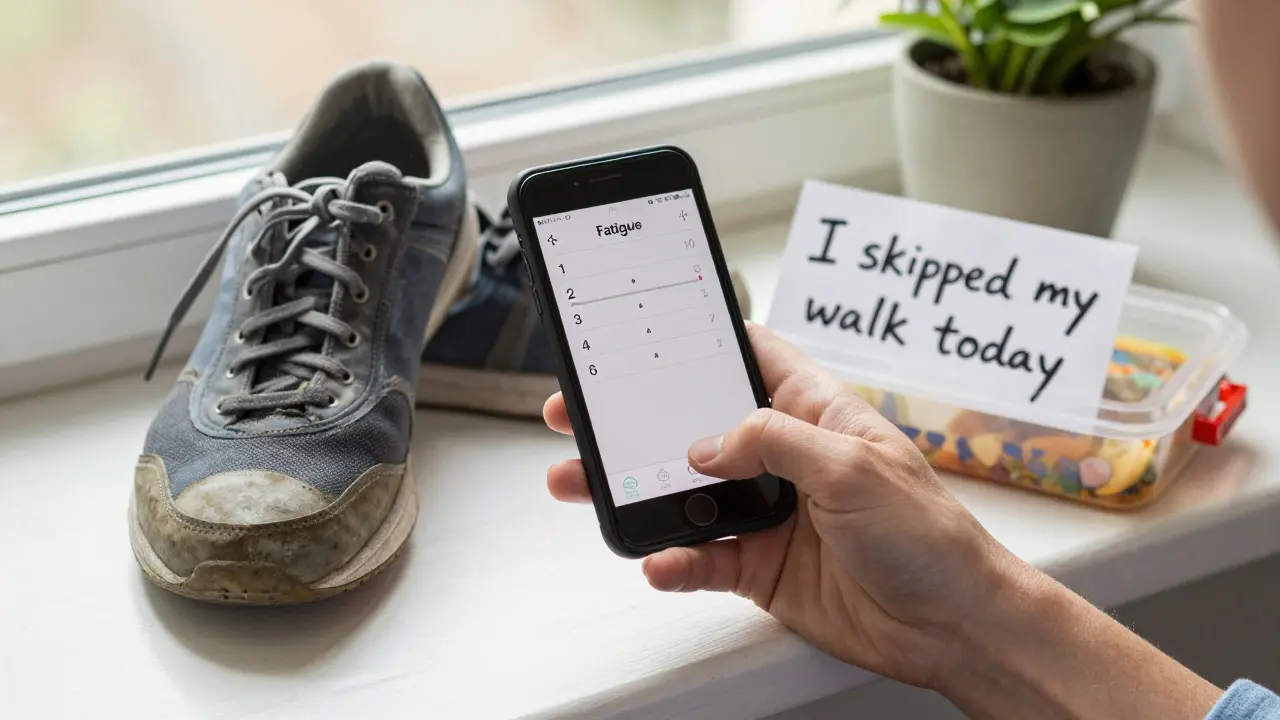
When you take a new medication, your doctor doesn’t know everything you’re feeling. Not the quiet fatigue that makes you skip your morning walk. Not the tingling in your fingers that you brush off as "just nerves." Not the brain fog that makes you miss appointments because you can’t remember why you walked into the kitchen. These are the details that slip through the cracks of traditional drug safety systems. But what if you could report them - directly, honestly, and regularly - and actually change how drugs are monitored? That’s where patient-reported outcomes (PROs) come in.
What Patient-Reported Outcomes Really Mean
A patient-reported outcome isn’t a doctor’s note. It’s not a lab result. It’s you, in your own words or by checking boxes on a simple form, telling the truth about how you feel. The U.S. Food and Drug Administration (FDA) defines it clearly: a report that comes directly from the patient, with no filtering, interpretation, or rewriting by anyone else. This isn’t new thinking - it’s rooted in research from the 1980s - but it’s only recently become a standard part of drug safety.
Before PROs, safety data came mostly from doctors and nurses. They recorded what they saw: vomiting, rash, dizziness. But many of the most common side effects - fatigue, anxiety, sleep problems, memory lapses - are invisible to clinicians. Patients often don’t mention them because they assume it’s "normal" or don’t want to seem like they’re complaining. PROs change that. They give you a structured way to speak up.
How PROs Catch What Doctors Miss
Here’s the hard truth: clinicians miss a lot. A 2019 FDA study found patients reported 30-40% more adverse events than doctors did. The biggest gaps? Fatigue was reported 4.2 times more often by patients. Neuropathy? 3.8 times. Cognitive issues? A staggering 5.1 times more. That’s not noise - that’s critical safety data.
Imagine a new cancer drug. In clinical trials, doctors see patients every two weeks. Between visits, side effects build up. A patient might feel increasingly tired, skip meals, lose weight, and struggle to focus. By the next appointment, they’ve adapted. They say, "I’m fine." But the PRO system asks them every Monday and Thursday: "On a scale of 0 to 10, how tired have you felt this week?" That pattern - a steady climb from 2 to 8 - triggers an alert. The team calls. The dose gets adjusted. A hospital visit is avoided.
This isn’t hypothetical. In one real trial, a patient using an ePRO app reported worsening neuropathy three weeks before her oncologist noticed anything. She adjusted her walking routine, avoided cold exposure, and avoided nerve-damaging medications. She stayed out of the ER.
The Technology Behind the Data
Most PROs today are digital. Over 87% of global clinical trials now use electronic PROs (ePROs) - apps on your phone, web portals, or automated voice calls. These systems aren’t just convenient. They’re more accurate. Paper surveys? Response rates hover around 65-75%. ePROs? 85-92%. Why? Because they’re built to remind you. They’re designed to take less than five minutes. They let you report symptoms the moment you feel them - not when you remember them two days later.
Modern tools use validated questionnaires like the PRO-CTCAE (for cancer side effects), PROMIS (for physical function), and EORTC QLQ-C30 (for overall quality of life). These aren’t random surveys. They’ve been tested for years. Each one had to prove it measures what it claims to measure - and does so consistently across thousands of people. Development takes 18-24 months. Costs range from half a million to over a million dollars per instrument. That’s how seriously regulators take this.
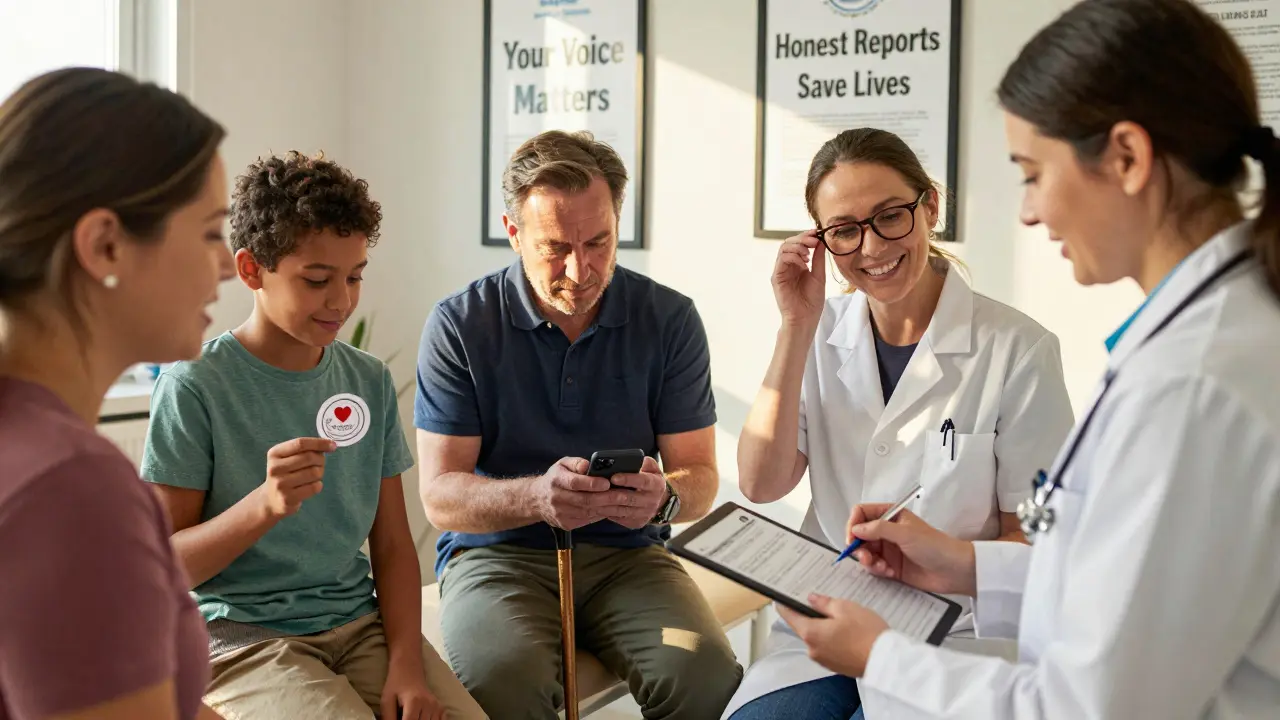
What You’re Asked to Report
Not every symptom matters equally. The FDA’s 2022 guidance on cancer trials sets a clear standard: three core areas must be tracked:
- Symptomatic adverse events - nausea, pain, itching, cough, diarrhea - rated for frequency and severity.
- Physical function - can you climb stairs? Dress yourself? Walk a block?
- Disease-related symptoms - for cancer, that might mean weight loss, appetite changes, or fever.
For other conditions, the tools change. A patient with sickle cell disease might use ASCQ-Me to report pain episodes. Someone with depression might answer questions about mood swings or sleep disruption. The goal isn’t to overwhelm you - it’s to ask the right questions at the right time.
Why This Matters for You
You’re not just a data point. You’re part of a safety net. A 2022 survey of 1,247 patients across 12 trials found 78% felt more involved in their care when they reported outcomes. 65% said they felt heard. That’s powerful. But it’s not perfect.
Some patients report feeling "surveyed to death." One Reddit user described having to fill out three different questionnaires three times a week. "It became a job," they said. That’s a real problem. Too many surveys, too often, lead to burnout - and worse data. The best systems adapt. They learn your rhythm. They don’t ask for fatigue on a day you had a good night’s sleep. They ask when it matters.
Another issue? Feedback. 68% of patients said they never saw how their reports influenced treatment. If you report worsening pain and nothing changes - no call, no adjustment, no explanation - you stop responding. That’s why the next step isn’t just collecting data. It’s closing the loop. Tell patients: "Your report helped us lower your dose. Here’s what we changed."
Challenges and Limitations
PROs aren’t magic. They have limits. Recall bias is real. If you forget to report a symptom for five days, your data loses accuracy - studies show a 25% drop in reliability beyond a 7-day window. Language and literacy matter too. A survey written in complex medical terms won’t work for everyone. That’s why translation and cultural adaptation are critical - and expensive. Each new language costs about $25,000 to validate properly.
Then there’s access. Not everyone has a smartphone. Not everyone has reliable Wi-Fi. Older adults, low-income communities, rural populations - they’re at risk of being left out. If PROs become mandatory, we can’t let technology widen the gap in healthcare equity. Solutions like phone-based systems, community kiosks, and paper backups aren’t optional - they’re essential.
And let’s not forget validation. The FDA’s Dr. Janet Woodcock warned: "Unvalidated PRO instruments can introduce measurement error." A poorly designed survey can lead to false alarms or missed signals. That’s why every tool used in regulatory submissions must meet strict psychometric standards - Cronbach’s alpha above 0.70, proven validity, responsiveness to change. It’s not about convenience. It’s about trust.
What’s Changing Now
The rules are tightening. The FDA’s final guidance on cancer PROs is expected by late 2024. The European Medicines Agency plans to require PRO data for all new drug approvals by 2026. This isn’t a trend. It’s the new baseline.
Technology is catching up. Roche is using AI to scan patient messages for hidden symptoms - with 82% accuracy in identifying adverse events from free-text entries. Pfizer linked wearable sensors to patient reports: when a patient said they were itchy, the wearable confirmed 73% of those reports matched actual scratching patterns. Novartis is using blockchain to keep PRO data secure and tamper-proof.
And the numbers tell the story. The global PRO market is growing at nearly 13% per year. Oncology leads the way - 89% of late-stage trials now use PROs. Rare diseases? 76%. Mental health? 68%. Even surgical trials are catching up. This isn’t niche anymore. It’s mainstream.
Your Role in the System
If you’re in a clinical trial or taking a new drug, your voice matters. You’re not passive. You’re a sensor. You’re a watchdog. You’re the first line of defense against hidden side effects.
Here’s what you can do:
- Report consistently - even if you feel fine. Patterns matter more than single data points.
- Be honest - don’t downplay symptoms because you think they’re "not bad enough."
- Ask for feedback - if your reports aren’t acknowledged, ask how they’re being used.
- Speak up about burden - if surveys are too long or too frequent, tell the research team. They need to hear it.
PROs don’t replace doctors. They empower them. They turn safety monitoring from a reactive system - waiting for a crisis - into a proactive one. You’re not just taking a pill. You’re helping shape how drugs are made safer for everyone.
What Comes Next
The future of drug safety isn’t just in labs and clinics. It’s in your pocket, on your phone, in your daily routine. As AI, wearables, and blockchain evolve, PROs will become even more precise - linking your reported fatigue to your sleep patterns, your pain levels to your movement, your mood to your social activity.
But the core will always be the same: your truth. No filter. No interpretation. Just you, speaking up.