
Predictable vs Unpredictable Side Effects: Understanding Drug Safety
 Jan, 3 2026
Side Effect Risk Checker
How This Tool Works
This tool helps you understand whether your medication side effects might be predictable (Type A) or unpredictable (Type B) based on key factors. Remember: This is for educational purposes only and is not medical advice. Always consult your doctor for personal health decisions.
Medication Information
Personal Factors
When you take a pill, you expect it to help-not hurt. But sometimes, even perfectly normal doses can cause unexpected problems. Not all side effects are the same. Some are common, predictable, and tied directly to how the drug works. Others strike out of nowhere, even in healthy people who’ve taken the medicine before without issue. Understanding the difference between predictable and unpredictable side effects isn’t just academic-it can save your life.
What Are Predictable Side Effects?
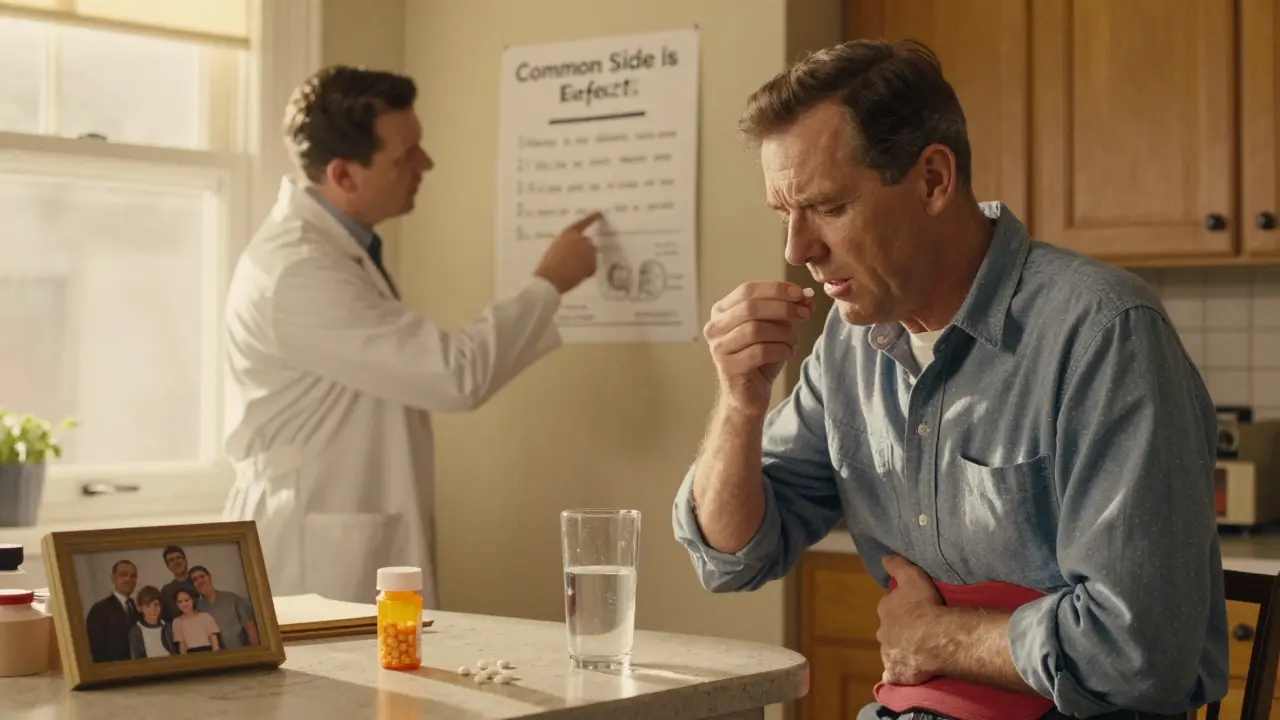
Predictable side effects, also called Type A reactions, make up about 75 to 80% of all adverse drug reactions. They happen because the drug does exactly what it’s supposed to do-just too much, or in the wrong place. Think of them as extensions of the drug’s intended effect, turned up too loud.Take NSAIDs like ibuprofen or naproxen. They reduce pain and inflammation by blocking enzymes that cause swelling. But those same enzymes also help protect your stomach lining. So when you take them regularly, you might get an ulcer or bleed. It’s not a mistake-it’s a known side effect. And the higher the dose, the worse it gets. Studies show stomach bleeding risk jumps from 1-2% at normal doses to 10-15% at high doses.
Other common predictable reactions include:
- Sedation from opioids or benzodiazepines
- Low blood pressure from blood pressure meds
- Low blood sugar from metformin or insulin
- Diarrhea from antibiotics that kill good gut bacteria
These reactions are usually mild, reversible, and often avoidable. If your blood pressure drops too low after starting a new med, your doctor can lower the dose. If you’re too drowsy on a sleep aid, they might switch you to something else. That’s why doctors monitor kidney function with NSAIDs, check blood sugar with diabetes drugs, and watch for dizziness with blood pressure meds. These aren’t random checks-they’re standard safeguards built into the system.
What Are Unpredictable Side Effects?
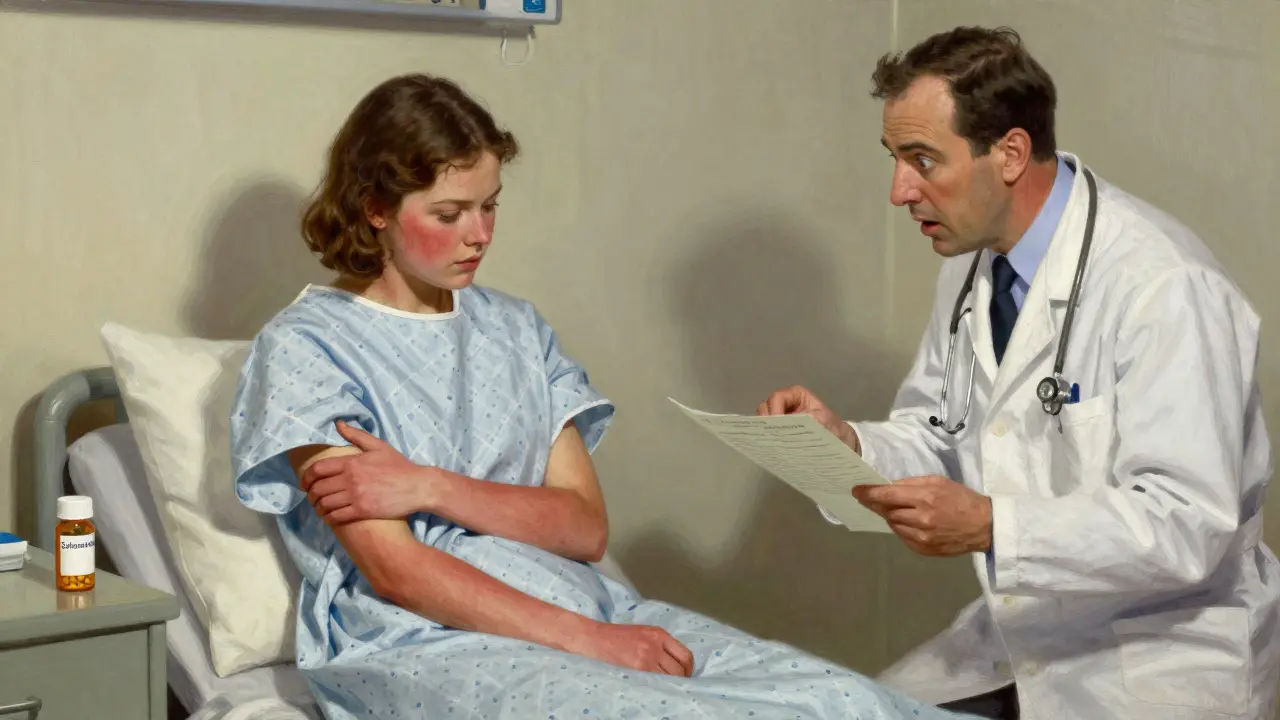
Unpredictable side effects, or Type B reactions, are the opposite. They’re rare-only 20 to 25% of all reactions-but they’re the ones that make headlines. These aren’t caused by the drug’s normal action. They’re not dose-dependent. And they can happen to anyone, even someone who’s taken the same medicine for years.Take sulfamethoxazole, a common antibiotic. Most people take it without issue. But for about 1 in 10,000, it triggers Stevens-Johnson syndrome-a life-threatening skin condition where the top layer of skin peels off. No matter the dose. No matter how many times they’ve taken it before. It’s not an overdose. It’s not misuse. It’s a biological accident.
Other examples include:
- Anaphylaxis from penicillin
- Severe hemolysis in people with G6PD deficiency after taking sulfa drugs or aspirin
- Drug-induced liver failure from acetaminophen in rare genetic cases
- Stevens-Johnson syndrome from carbamazepine in people with the HLA-B*1502 gene
These reactions are terrifying because they’re impossible to predict without genetic testing. And even then, we only know how to screen for a handful of them. For example, doctors test for HLA-B*5701 before giving abacavir (an HIV drug) because people with that gene have a 50% chance of a deadly allergic reaction. But for most drugs, we have no such test. That’s why a 24-year-old with no history of allergies can die after their first dose of a common painkiller.
Why the Difference Matters
The distinction isn’t just about labels-it changes how doctors treat you.Predictable reactions are manageable. They’re why we have dosing guidelines, monitoring schedules, and patient education. If you’re on a blood thinner and start bleeding easily, your doctor checks your INR and adjusts your dose. Simple.
Unpredictable reactions? They’re not manageable. They’re preventable-or not. And that’s the problem.
Consider this: Type B reactions make up less than 10% of all adverse drug reactions, but they’re responsible for 15 to 20% of serious hospitalizations. Why? Because they’re sudden, severe, and often fatal. A single dose of a drug can trigger multi-organ failure. There’s no gradual warning. No dose-response curve. Just a person who wakes up with a rash-and within hours, their skin is falling off.
That’s why drug withdrawals happen. Between 2009 and 2019, 15 out of 24 drugs pulled from the U.S. market were pulled because of unpredictable reactions. Not because they didn’t work. Not because they were misused. But because they killed people in ways we couldn’t foresee.
Who’s at Risk?
For predictable reactions, risk is mostly about dosage, age, kidney or liver function, and other medications. An 80-year-old on multiple drugs is more likely to have a bad reaction to a sedative. A diabetic on metformin who skips meals is more likely to crash their blood sugar.For unpredictable reactions, risk is genetic. And we’re only starting to understand it.
HLA-B*1502 is a gene variant found in about 15% of Han Chinese, 10% of Thai, and 5% of Malaysian populations. People with this variant have a 100-fold higher risk of Stevens-Johnson syndrome from carbamazepine. That’s why in these populations, doctors test for it before prescribing the drug.
But that’s the exception. For most drugs, we don’t know the genetic markers. We don’t know who’s at risk. That’s why a 2022 JAMA study found that current genetic tests only cover about 30% of severe Type B reactions. The rest? Still invisible.
And it’s not just genes. Environment, gut bacteria, infections, and even stress can play a role. One patient developed a deadly skin reaction after taking acetaminophen-no prior allergies, no known gene risk, no overdose. The only thing different? They’d had the flu two weeks earlier. That’s the kind of complexity we’re still trying to untangle.

What Can You Do?
You can’t predict a Type B reaction. But you can be prepared.- Know your meds. Ask your doctor or pharmacist: “What are the common side effects? What are the rare but dangerous ones?”
- Track changes. If you develop a rash, fever, swelling, blistering, or unexplained fatigue after starting a new drug, don’t wait. Call your doctor immediately.
- Know your family history. If someone in your family had a severe reaction to a drug, tell your doctor. It might not mean you’ll have it too-but it’s a red flag.
- Ask about testing. If you’re being prescribed abacavir, carbamazepine, or allopurinol, ask if genetic screening is recommended. It’s becoming standard for these drugs.
- Use one pharmacy. That way, your pharmacist can check for dangerous interactions across all your meds.
And if you’ve ever had a bad reaction to a drug-even a mild one-document it. Write it down. Tell every new doctor. That information could prevent a future disaster.
The Future of Drug Safety
Science is catching up. In 2023, the FDA approved the first AI tool that uses electronic health records to predict Type A reactions with 89% accuracy. That’s huge. But for Type B? Only 47% accurate. Why? Because they’re not about dosage or metabolism. They’re about biology we don’t fully understand.The NIH’s All of Us program has found 17 new gene-drug links in the last two years. That includes HLA-B*15:02 and phenytoin in non-Asian populations-something we never knew before. Hospitals are slowly adopting genetic testing. In 2015, only 5% of U.S. hospitals did it. By 2023, it was 38%. Progress, but far from enough.
The goal? Reduce severe unpredictable reactions by 50% by 2030. That’s ambitious. But it’s possible-if we invest in research, expand testing, and make patient history part of the medical record.
For now, the best defense is awareness. Understand that not all side effects are created equal. Some are warnings you can act on. Others are silent bombs. Know the difference. Speak up. And never assume a drug is safe just because it’s been on the market for years.
Are all side effects dangerous?
No. Many side effects are mild and temporary-like dry mouth from antihistamines or nausea from antibiotics. These are often predictable and go away as your body adjusts. Dangerous side effects are usually either severe (like liver failure) or unpredictable (like anaphylaxis). The key is knowing which ones require immediate medical attention.
Can I prevent unpredictable side effects?
Not always. But for some drugs, genetic testing can help. For example, testing for HLA-B*5701 before taking abacavir prevents a deadly reaction in those who carry the gene. For most drugs, however, we don’t have tests yet. The best prevention is reporting any unusual reaction to your doctor and keeping a personal drug reaction log.
Why do some people react badly to drugs others take fine?
It’s usually genetics. Small differences in how your body breaks down drugs, how your immune system responds, or how your cells react can make you uniquely sensitive. For example, some people have a gene variant that makes them metabolize codeine too quickly, turning it into dangerous levels of morphine. Others have immune systems that mistake a drug for a virus and attack their own skin. These aren’t mistakes-they’re biological variations.
If I’ve taken a drug before without issues, am I safe?
Not necessarily. Unpredictable reactions can happen the first time-or the tenth. Your body changes. Your immune system changes. Even your gut bacteria can shift after an infection or antibiotic. A reaction that never happened before can appear suddenly. Never assume past safety means future safety.
How do doctors know if a reaction is predictable or not?
They look at timing, dose, symptoms, and medical history. If the reaction matches the drug’s known mechanism and gets worse with higher doses, it’s likely Type A. If it’s sudden, severe, unrelated to dose, and involves skin, liver, or immune symptoms, it’s likely Type B. Labs and genetic tests can help confirm. But sometimes, it’s still a mystery-especially in the first few hours.
Vicki Yuan
January 4, 2026 AT 04:29Wow, this is one of the clearest breakdowns of drug reactions I’ve ever read. I’ve had my share of side effects, and I never realized how much of it was about predictable vs. unpredictable. The part about NSAIDs and stomach lining? That clicked for me-my dad had a bleed on ibuprofen and no one ever explained why. Thanks for making this so accessible.
Uzoamaka Nwankpa
January 4, 2026 AT 15:48People treat medicine like candy. They pop pills like they’re Skittles and then act shocked when something goes wrong. This article is a wake-up call. If you don’t know what you’re taking, you shouldn’t be taking it. Period.
Dee Humprey
January 6, 2026 AT 13:29I’m a nurse and I see this every day. Type A reactions? We catch them early. Type B? That’s when the ER lights up. One patient came in with a rash, said she’d taken amoxicillin five times before. On the sixth? Her face swelled like a balloon. No warning. No history. Just… gone. This isn’t theoretical. It’s real. Please, if you’ve ever had a weird reaction-document it. Tell every provider. It could save your life next time.
John Wilmerding
January 8, 2026 AT 03:18It is imperative to underscore the clinical significance of distinguishing between Type A and Type B adverse drug reactions. The former are pharmacologically predictable and dose-dependent, whereas the latter are idiosyncratic, immune-mediated, and often catastrophic. The absence of reliable biomarkers for Type B reactions remains a critical gap in pharmacovigilance. I would encourage the integration of pharmacogenomic screening into primary care protocols where feasible, particularly for high-risk medications such as carbamazepine and abacavir.
Siobhan Goggin
January 9, 2026 AT 08:55I love how this article doesn’t scare you-it empowers you. Knowledge is power, and this gives you real tools to protect yourself. I’m going to start keeping a drug journal. Even if I’ve taken something before, I’m not assuming safety anymore. Small steps, big impact.
Vikram Sujay
January 10, 2026 AT 14:18The human body is not a machine with predictable outputs. It is a living system shaped by evolution, environment, and chance. To assume that a drug’s safety is guaranteed by its longevity on the market is to confuse familiarity with wisdom. The unpredictability of Type B reactions is not a failure of medicine-it is a reminder of the limits of our control. Perhaps true safety lies not in eliminating risk, but in accepting its presence with humility.
Shanna Sung
January 12, 2026 AT 09:48They’re hiding the real danger. Big Pharma knows which genes cause these reactions. They’ve known for years. Why don’t they test everyone? Because it costs money. They’d rather you die quietly than pay for genetic screening. Look at the stats-15 drugs pulled in 10 years. All because of hidden genetic bombs. This isn’t science. It’s profit.
Ashley Viñas
January 12, 2026 AT 17:32It’s almost embarrassing how little people know about their own bodies. You take a pill like it’s a magic bean, then blame the doctor when you break out in blisters. Honestly, if you can’t read the label or ask a simple question, maybe you shouldn’t be on medication at all. This article should be mandatory reading-before you even get your first prescription.
Doreen Pachificus
January 14, 2026 AT 01:56My mom had a reaction to penicillin in the 70s. They told her it was ‘just an allergy.’ But now I wonder-was it Type B? She never told anyone again. I just found out last year. I’m going to get tested for HLA variants now. Maybe I’m at risk too.
Cassie Tynan
January 14, 2026 AT 05:02So what you’re saying is… the body is a mystery box and drugs are grenades? Cool. I’ll just keep popping them. 🤷♀️
Jack Wernet
January 15, 2026 AT 10:52As someone raised in a household where Western medicine was viewed with skepticism, I appreciate the nuance here. There is a cultural divide in how we perceive drug safety. In some communities, side effects are seen as divine punishment or spiritual imbalance. This article bridges that gap without condescension. Thank you.
Charlotte N
January 16, 2026 AT 12:19I’ve been on 12 different meds in the last 5 years… I think I had 3 side effects that were predictable… the rest? Like, random. One time I got hives from a Z-pack… never had them before… then again 2 years later from a different antibiotic… I just thought I was allergic to ‘antibiotics’… but now I’m wondering if it’s something deeper. I need to ask my doctor about genetic testing… but I’m scared to.
Chris Cantey
January 18, 2026 AT 09:29They tell you to ‘trust the science’ but then they pull drugs because the science didn’t see it coming. The system is built on averages. But what about the outliers? The ones who don’t fit the curve? We’re not data points. We’re people. And we’re being treated like statistical noise.
Oluwapelumi Yakubu
January 20, 2026 AT 09:01My cousin in Lagos took a common malaria drug and lost his skin. They said it was ‘rare.’ But in our village, three others had the same thing. We didn’t have genetic tests. We just stopped using the drug. Why should rich countries get the luxury of screening while the rest of us pray? This isn’t just science-it’s justice.
Terri Gladden
January 21, 2026 AT 15:22OMG I JUST REALIZED I’VE TAKEN CARBAMAZEPINE AND NEVER GOT TESTED 😭 I’M GONNA DIE RIGHT??