
PSA Screening Controversies: Understanding Shared Decision-Making for Prostate Cancer Detection
 Feb, 6 2026
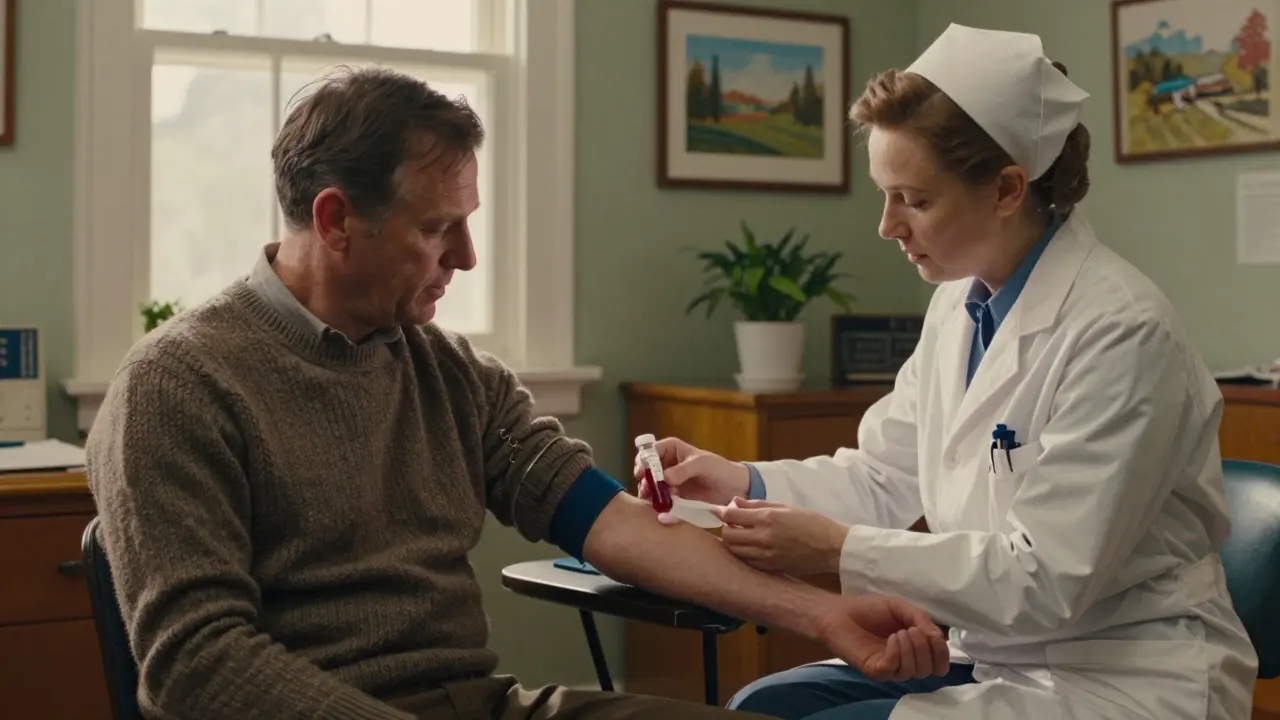
Every year, thousands of men face a tough choice about PSA screening, a blood test that measures prostate-specific antigen (PSA), a protein produced by the prostate gland for prostate cancer. But what if the test that's supposed to save lives could also harm you? Let's unpack why this screening tool is so controversial and why talking through your options with your doctor matters.
What is PSA screening, and why is it controversial?
PSA screening measures blood levels of prostate-specific antigen. It became popular in the 1990s after the FDA approved it for screening in 1994. But here's the problem: the test isn't perfect. About 75% of men with PSA levels between 4.0 and 10.0 ng/mL who get a biopsy don't actually have prostate cancer. This leads to unnecessary anxiety, more tests, and treatments that can cause serious side effects like incontinence or erectile dysfunction. Two major studies shaped the current debate. The European Randomized Study of Screening for Prostate Cancer (ERSPC) a large trial involving over 160,000 men across Europe found a 21% reduction in prostate cancer deaths with screening. Meanwhile, the Prostate, Lung, Colorectal and Ovarian (PLCO) Cancer Screening Trial a U.S. study with over 76,000 participants found no significant mortality benefit. These conflicting results highlight why shared decision-making is so important.
The harm of overdiagnosis and overtreatment
Overdiagnosis happens when PSA screening finds cancers that would never cause symptoms or harm during a man's lifetime. According to the Cochrane Collaboration, 17% to 50% of prostate cancers detected through PSA screening fall into this category. When these cancers are treated-usually with surgery or radiation-men face risks they didn't need to take. A 2020 study in Patient Education and Counseling documented a 62-year-old man who had his prostate removed after a PSA of 4.7 ng/mL. His cancer was low-risk and could have been managed with active surveillance a strategy where low-risk cancers are monitored instead of immediately treated. Instead, he ended up with permanent urinary incontinence and erectile dysfunction. The U.S. Preventive Services Task Force estimates that for every 1,000 men aged 55-69 screened annually for 10 years, 1-2 deaths from prostate cancer would be prevented, but approximately 100-120 men would experience false-positive results requiring biopsy, and 80-100 men would be diagnosed with prostate cancer that might never have caused symptoms.

What shared decision-making really means
Shared decision-making isn't just a buzzword-it's a process where you and your doctor work together to choose the best path for you. This means discussing both the potential benefits and harms of PSA screening. For instance, your doctor should explain that while PSA screening might reduce prostate cancer deaths by about 20% in some studies, it also leads to false positives and unnecessary treatments. The U.S. Preventive Services Task Force (USPSTF) a panel of experts that reviews medical evidence and makes recommendations for preventive care now recommends this conversation for men aged 55-69. But here's the reality: a 2022 study in Cancer found that primary care doctors spend only 3.7 minutes discussing PSA screening on average. That's far less than the 15-20 minutes experts recommend. So, if your doctor doesn't bring it up, ask. Questions like 'What are the risks of this test?' or 'What would happen if I choose not to screen?' can start the conversation.
Current guidelines from major health organizations
Current guidelines emphasize individualized decisions. The USPSTF gives a Grade C recommendation for men aged 55-69, meaning screening should happen only after a discussion of risks and benefits. The American Cancer Society (ACS) says PSA screening should occur only after a doctor explains the pros and cons. The American Urological Association (AUA) recommends starting discussions at age 55 for average-risk men, but earlier for those with higher risk factors like African American heritage or family history. For men over 70, the risks usually outweigh the benefits. The key takeaway? Screening isn't automatic-it's a personal choice based on your specific situation.

Alternatives to traditional PSA screening
| Test | How it works | Pros | Cons |
|---|---|---|---|
| Traditional PSA blood test | Measures PSA protein levels in blood | Low cost ($20-$50), widely available | High false positives (75% of biopsies for PSA 4-10 ng/mL show no cancer) |
| Multiparametric MRI (mpMRI) | Imaging scan of prostate | Reduces unnecessary biopsies by 27% (PRECISION trial) | Costs $400-$600; not always covered by insurance |
| 4Kscore test | Combines four blood biomarkers with clinical data | Identifies 95% of men at low risk for aggressive cancer | More expensive ($400-$600); limited availability |
| Genomic tests (e.g., Oncotype DX) | Analyzes tumor genetics | Helps distinguish aggressive vs. slow-growing cancers | Very high cost ($3,800-$4,000); used after diagnosis |
These tools aren't perfect, but they help reduce unnecessary procedures. For example, the PRECISION trial showed using mpMRI before biopsy reduced unnecessary biopsies by 27% while still catching aggressive cancers. The 4Kscore test combines four blood biomarkers to give a clearer picture-identifying 95% of men at low risk for high-grade cancer. Genomic tests like Oncotype DX analyze tumor genetics to determine if a cancer is aggressive or slow-growing. But these tests aren't cheap. PSA remains the most accessible starting point at $20-$50 per test, compared to $400-$600 for 4Kscore and $3,800-$4,000 for genomic tests.
How to talk to your doctor about PSA screening
Start by asking your doctor to explain the pros and cons of PSA screening for your specific situation. Use decision aids like the Ottawa Personal Decision Guide or Mayo Clinic's tool. These visual aids show real numbers-like 'For every 1,000 men screened, 1-2 deaths are prevented but 100-120 get false positives.' Knowing this helps you weigh your options. If your doctor seems rushed, ask to schedule a separate appointment just for this discussion. Remember, your choice matters. Some men prefer to avoid screening altogether; others want the peace of mind. There's no one-size-fits-all answer.
Is PSA screening still recommended?
Yes, but not for everyone. Current guidelines from the U.S. Preventive Services Task Force (USPSTF), American Cancer Society, and American Urological Association say PSA screening should only happen after a discussion between you and your doctor. This is especially true for men aged 55-69. For men over 70, the risks usually outweigh the benefits. The key is that screening isn't automatic-it's a personal choice based on your individual risk factors and preferences.
What are the main risks of PSA screening?
The biggest risks are false positives leading to unnecessary biopsies and treatments, and overdiagnosis of slow-growing cancers that would never cause harm. About 75% of men with PSA levels between 4.0-10.0 ng/mL who get a biopsy don't have cancer. Treatments like surgery or radiation can cause permanent side effects like incontinence or erectile dysfunction. The U.S. Preventive Services Task Force estimates that for every 1,000 men screened for 10 years, 1-2 deaths are prevented but 100-120 experience false positives requiring biopsies.
How does shared decision-making work in practice?
Shared decision-making means you and your doctor discuss the pros and cons of PSA screening together. Your doctor should explain the risks (like false positives and overtreatment) and benefits (like potential early detection). They should also cover alternatives like active surveillance or newer tests. Decision aids like the Mayo Clinic's tool use visual risk displays showing that 1 in 1,000 screened men avoids death from prostate cancer while 240 undergo unnecessary biopsies. This helps you make an informed choice based on your values and health situation.
Are there alternatives to PSA testing?
Yes. Multiparametric MRI (mpMRI) can be used before biopsy to reduce unnecessary procedures-studies show it cuts unnecessary biopsies by 27%. Blood tests like the 4Kscore combine multiple biomarkers to identify men at low risk for aggressive cancer (95% accuracy). Genomic tests like Oncotype DX analyze tumor genetics after diagnosis to determine if a cancer is aggressive or slow-growing. However, these alternatives are more expensive and not always covered by insurance. PSA remains the most accessible starting point due to its low cost and widespread availability.
Should I get screened if I have a family history of prostate cancer?
Family history increases your risk, so screening discussions should start earlier-typically at age 40-45. The American Urological Association recommends men with a first-degree relative (father or brother) diagnosed with prostate cancer before age 65 begin conversations about screening earlier than average-risk men. However, shared decision-making is still key. Your doctor will consider your family history, race (African American men have higher risk), and baseline PSA levels to personalize recommendations. Always ask: 'What's my specific risk, and how does screening fit into my overall health plan?'
Joey Gianvincenzi
February 6, 2026 AT 21:46PSA screening's controversies stem from a blatant disregard for cultural and socioeconomic factors. The medical community's insistence on universal application is not only irresponsible but dangerous. False positives and overtreatment disproportionately affect marginalized communities. This isn't a medical issue-it's a systemic failure. We must demand better, evidence-based approaches that prioritize patient well-being over profit.
Amit Jain
February 8, 2026 AT 00:47PSA screening is a total scam! Doctors push it for money. I know a guy who got a false positive and ended up with impotence. It's all about the profit margins. Stop pushing this nonsense!
Jesse Lord
February 8, 2026 AT 22:36It's really important to talk about PSA screening with your doctor everyone's situation is different. Some men benefit others don't. The key is making an informed choice don't feel pressured your health is personal
AMIT JINDAL
February 9, 2026 AT 23:42Okay so like PSA screening is a big deal right? I mean like the whole thing is so complex. You know what I mean? Like the prostate is this gland that produces this protein called PSA. But like when you test it, it's not always accurate. Like 75% of the time when PSA is between 4 and 10, there's no cancer. That's wild! 😳 So many men get unnecessary biopsies and treatments. It's crazy. Like why do they even do this? I mean, it's like the medical industry is just trying to make money. But like, maybe there's better ways. Like the 4Kscore test or MRI. But those cost a lot. Anyway, you should totally talk to your doctor about it. But like, don't just trust them. Do your own research. #MedicalScam 😂
Catherine Wybourne
February 10, 2026 AT 11:33PSA screening: the gift that keeps on giving (to urologists). Seriously, it's fascinating how a simple blood test can lead to so much unnecessary panic and procedures. But hey, at least we're talking about it, right? Shared decision-making is key. Let's not forget that patients should be part of the conversation. After all, it's their body and their life.
Ashley Hutchins
February 11, 2026 AT 07:13Men who get PSA tests without thinking are idiots they dont realize how many false positives there are. Its their fault for not doing enough research. I know people who got unnecessary surgery because of this. They should have known better. This is why we need better education
Lakisha Sarbah
February 11, 2026 AT 13:49PSA screening has its place but its not perfect. Its important to weigh risks and benefits. For some men its helpful others not. Talking to your doctor is key. Everyone's situation is different
Ariel Edmisten
February 12, 2026 AT 01:33PSA screening isn't for everyone
Niel Amstrong Stein
February 13, 2026 AT 13:18PSA screening is a double-edged sword 🌐. On one hand, it can catch cancer early. On the other, it leads to unnecessary procedures. It's all about balance. We need to think deeper about what 'early detection' really means. Maybe the real issue is how we frame health decisions. 🤔 Let's have the conversation, not just the test.
Paula Sa
February 14, 2026 AT 07:41I agree that PSA screening has issues. It's just that sometimes people don't realize how common overdiagnosis is. Maybe if we all just took a moment to think about it, we'd see things differently. But hey, whatever works for you, right?
Mary Carroll Allen
February 15, 2026 AT 16:23PSA screening is such a mess! The numbers are all over the place. 75% false positives? That's insane. I mean, how can we trust this? It's like the medical system is just throwing darts at a board. We need better tests. Like, seriously, what's the point?
Sarah B
February 16, 2026 AT 00:57PSA screening is harmful