
Recent Patent Cases and Generic Delays: 2023-2025 Examples
 Jan, 16 2026
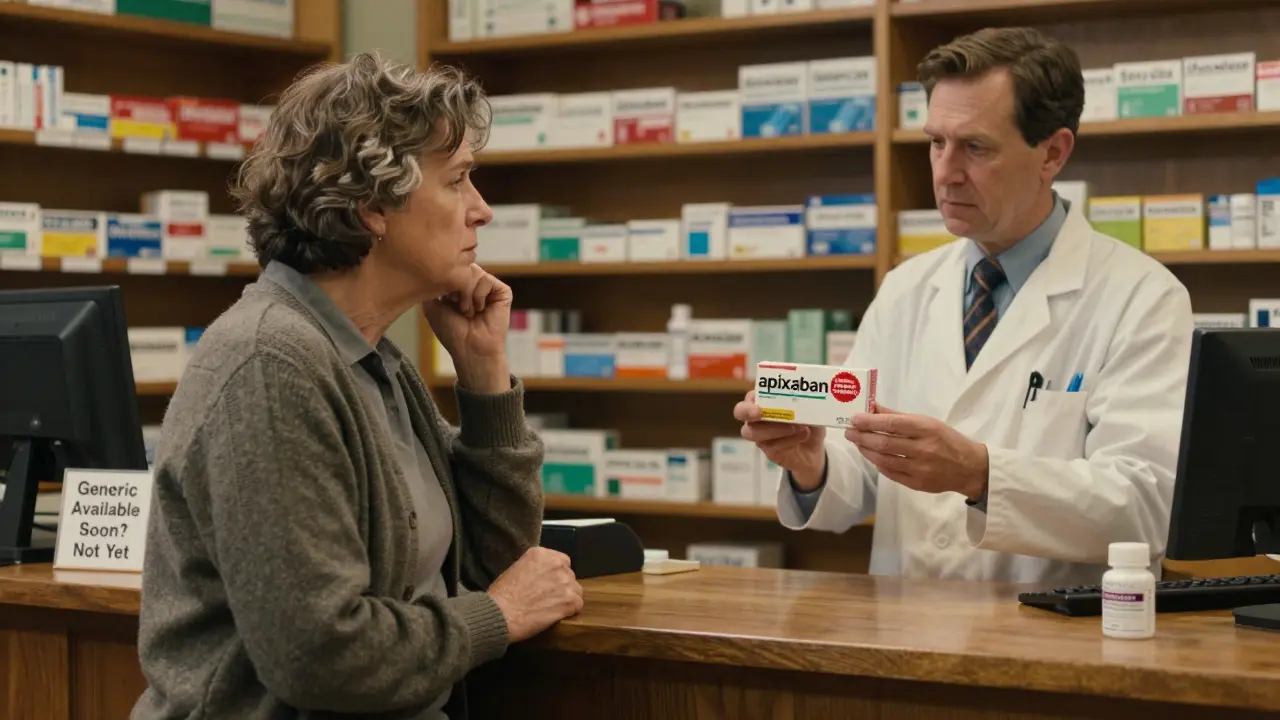
It’s 2026. You walk into your pharmacy to refill your prescription for apixaban, the blood thinner. The pharmacist says, "It’s been approved by the FDA since last November. We just can’t get it." You’re confused. Approved means available, right? Not anymore. In the U.S., a drug can be cleared by regulators and still sit on a shelf for years because of patent fights no one talks about.
Why Approved Doesn’t Mean Available
The FDA approved 63 first generics in 2025. But only 18 of them reached pharmacies that year. The rest? Stuck. Not because they’re unsafe. Not because the manufacturing is flawed. But because brand-name drugmakers filed lawsuits to extend their monopoly. This isn’t a glitch. It’s the system. Under the Hatch-Waxman Act, when a generic company files an application and says a patent is invalid or won’t be infringed (a Paragraph IV certification), the brand company gets a 30-month automatic stay. That’s 30 months where the FDA can’t give final approval - even if the patent is weak or expired. In 2024, 68% of all generic applications included a Paragraph IV challenge. That’s nearly 7 out of 10. And the average number of patents listed on a single brand drug? 14.7. That’s up from 12.3 in 2020. These aren’t all strong patents. Many are minor tweaks - new dosages, packaging, or delivery methods - called "evergreening." But under current rules, each one triggers another 30-month clock.The Humira Effect: How One Drug Changed Everything
AbbVie’s Humira, a blockbuster autoimmune drug, is the poster child for this problem. Its core patent expired in 2016. But between 2016 and 2023, AbbVie filed over 240 patents related to Humira. Each one triggered a lawsuit when a biosimilar tried to enter. The result? No biosimilar reached the market until 2023 - seven years after the original patent expired. That’s not an outlier. It’s the new normal. A 2025 study found that the average time between FDA approval and market launch for generics is now 3.2 years. For complex drugs like injectables or inhalers, it’s closer to 4.1 years. In Europe, the same drugs hit shelves in 1.7 years. Why? Because they don’t have the same patent-stay system. Their courts move faster. Their regulators don’t get dragged into every lawsuit.Who Pays the Price?
Patients pay. Pharmacists pay. The system pays. A 2025 survey by the Association for Accessible Medicines found 82% of pharmacists get asked daily: "Why is the generic not here?" The top drugs causing this frustration? Eliquis, Trulicity, Steglatro, Xarelto - all of them approved, none of them available. Patients are skipping doses or switching to cheaper, less effective drugs. Patients For Affordable Drugs Now documented 412 cases between 2023 and 2025 where people couldn’t afford the brand version because the generic was blocked. The average monthly cost for the brand? $487. The projected cost for the generic? $85. Hospitals are feeling it too. The American Society of Health-System Pharmacists reported that 78% of hospital pharmacy directors see patent delays as a major contributor to drug shortages - especially for cancer drugs. One oncologist in Ohio told me: "We have a patient on a chemo drug. The generic is approved. We can’t get it. We’re using the brand. It’s $12,000 a month. Insurance won’t cover it all. The patient is crying in my office because she can’t afford to live. The patent is the reason. Not the science. Not the supply chain. The patent."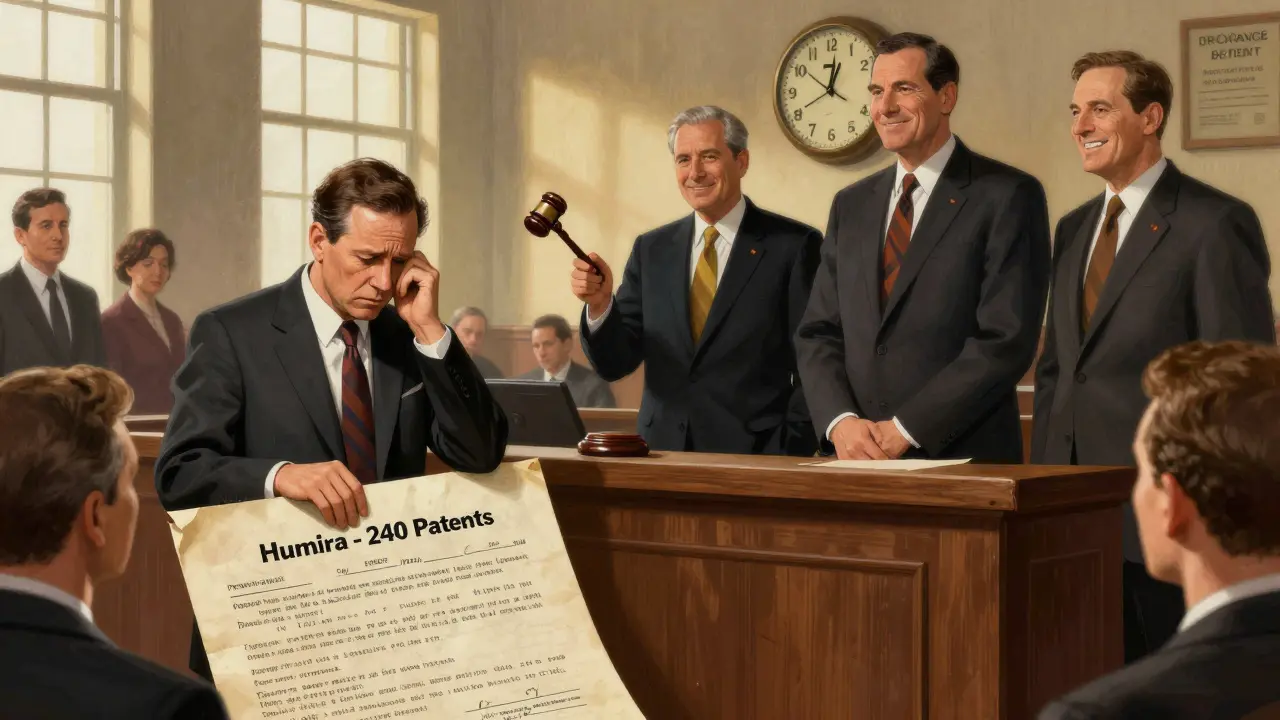
Why the FDA Can’t Fix This
The FDA approves drugs. That’s their job. But they don’t control patents. That’s the courts. So even if the FDA says, "This generic is safe and effective," they’re legally blocked from letting it sell if a lawsuit is active. In 2025, the FDA’s Center for Drug Evaluation and Research admitted this in a congressional hearing. Dr. Patrizia Cavazzoni said: "Patent litigation remains outside our regulatory authority." She added they’re trying to make patent listings in the Orange Book more accurate - to stop companies from listing weak patents. But that’s a band-aid. It doesn’t touch the 30-month stay. The FDA’s new AI tools helped cut review times by 22% for non-litigated generics. That’s good. But for the 68% of applications tied to patent fights? No change. The clock still ticks for 30 months.Supply Chains Aren’t the Real Problem
You hear a lot about supply chain issues. And yes, 37% of delayed generics in 2023-2025 had API shortages. But that’s not the main cause. Patent litigation is responsible for 72% of delays. For complex generics like injectables? 89% of delays are patent-related. Companies like Teva and Sandoz are responding. They’ve increased their number of approved API suppliers from 1.8 in 2022 to 3.4 in 2025. That helps. But if a patent lawsuit blocks them from selling, having more suppliers doesn’t matter.The Cost of Delay
The financial toll is staggering. The top 10 drugs losing exclusivity in 2025 had $78.3 billion in annual sales. That’s billions in profits protected by lawsuits, not innovation. The Congressional Budget Office estimated that patent delays cost Medicare Part D $3.2 billion in 2025 alone. That’s money that could have gone to insulin, cancer drugs, or mental health care. Generic manufacturers are spending $12.7 million per case on legal fees in 2025 - up from $9.3 million in 2023. Small companies can’t afford this. 63% of delayed generics come from firms with under $500 million in revenue. Big players like Teva or Sandoz can fight. Smaller ones? They fold. Or they never file.
What’s Changing?
There are signs of pressure. The FTC filed seven enforcement actions between 2024 and 2025 against companies using "patent thicketing" - like Jazz Pharmaceuticals, which settled over Xyrem by agreeing to let generics enter earlier. The CREATES Act, designed to let generics get samples for testing without being blocked by brand companies, passed the House in 2024 but stalled in the Senate in 2025. The FDA’s new Commissioner, Dr. Peter Bach, is pushing for more transparency in patent listings. Industry analysts predict this could cut generic entry time by 8-12 months by 2027. But that’s still years away. And it doesn’t fix the 30-month stay.What Comes Next?
The system is broken. It was designed to balance innovation and access. Now, it’s being used to delay access for profit. There are three real paths forward:- Limit patent listings: Cap the number of patents per drug. Right now, there’s no limit. One drug has 14 patents. That’s not innovation. That’s obstruction.
- Shorten the 30-month stay: Reduce it to 12 months. That’s still enough time for courts to rule. But it stops companies from gaming the system.
- Let the FDA act: Give the FDA authority to override patent stays if a patent is clearly weak or invalid - like a new dosage on an expired compound.
What You Can Do
If you’re a patient: Ask your pharmacist why the generic isn’t available. Write to your representative. Tell them you’re paying $400 a month for a drug that should cost $80. If you’re a provider: Document cases where patients can’t get generics. Report them to Patients For Affordable Drugs Now or the ASHP. Data drives change. If you’re in the industry: Push for reform. Don’t wait for Congress. Start with your company’s policy. Don’t file weak patents. Don’t delay generics. The public sees what you’re doing. The patent system was meant to protect inventors. Not to lock patients out of affordable medicine. It’s time we fixed it.Why is a generic drug approved but not available in pharmacies?
A generic drug can be approved by the FDA but still blocked from sale if the brand-name manufacturer files a patent lawsuit. Under the Hatch-Waxman Act, this triggers a 30-month automatic stay, preventing the FDA from granting final approval - even if the patent is weak or expired. This legal delay can last years, while the drug sits on a shelf.
What is a Paragraph IV certification?
A Paragraph IV certification is a legal statement filed by a generic drugmaker when applying to the FDA. It says that a brand-name drug’s patent is either invalid or won’t be infringed by the generic version. This triggers a patent lawsuit from the brand company, which then starts the 30-month stay that delays generic market entry.
How long do patent delays typically last for generic drugs?
The average delay between FDA approval and market launch for generics is 3.2 years. For complex drugs like injectables or inhalers, delays can stretch to 4.1 years. This is mostly due to patent litigation, not manufacturing or regulatory issues.
Why are oncology drugs especially affected by patent delays?
Oncology drugs are often complex, expensive, and have multiple patents listed per product. Brand manufacturers aggressively defend them because they’re high-revenue drugs. As a result, the average delay for generic oncology drugs is 4.1 years - longer than any other therapeutic category. Many of these delays are caused by patent thickets - dozens of minor patents layered over the core invention.
Is the FDA doing anything to fix patent delays?
The FDA can’t directly stop patent delays because patent law is handled by courts, not regulators. But they are improving transparency in the Orange Book - the list of patents for brand drugs - to prevent improper listings. They’ve also introduced AI tools to speed up reviews for non-litigated applications. However, the 30-month stay remains untouched, and the agency has no power to override patent lawsuits.
What’s the difference between a generic and a biosimilar?
A generic is a chemically identical copy of a small-molecule drug, like a pill. A biosimilar is a highly similar version of a complex biological drug, like Humira or Enbrel. Biosimilars face even more complex patent battles - with an average of 9.7 patents challenged per application in 2025, up from 5.2 in 2020. They also take longer to develop and approve, but their market entry is accelerating, with 17 approved by Q3 2025.
How do patent delays affect Medicare costs?
Patent delays cost Medicare Part D an estimated $3.2 billion in 2025. This is because patients are forced to use expensive brand-name drugs instead of cheaper generics. The Congressional Budget Office found that if generics entered the market on time, Medicare would save billions annually - money that could fund other essential treatments.
Are patent delays happening in other countries?
Yes, but not as severely. In Europe, the average time between generic approval and market launch is 1.7 years - less than half the U.S. average. That’s because European countries don’t have a 30-month automatic stay. Their patent systems are faster, and courts don’t allow the same level of patent thicketing. The U.S. system is uniquely designed to favor brand manufacturers.
What’s the CREATES Act and why does it matter?
The CREATES Act would require brand-name companies to provide samples of their drugs to generic manufacturers so they can test and develop their versions. Right now, some brands refuse to sell samples, blocking generic development. The House passed the bill in 2024, but it stalled in the Senate in 2025. If passed, it would remove one barrier to generic entry - but it doesn’t fix patent lawsuits or the 30-month stay.
Can small generic companies compete with big pharma in patent battles?
It’s getting harder. Legal costs for patent litigation hit $12.7 million per case in 2025. 63% of delayed generics come from companies with under $500 million in annual revenue. Big companies like Teva or Sandoz can afford to fight. Smaller ones often can’t - so they drop their applications or sell out. This reduces competition and keeps prices high.
Pat Dean
January 17, 2026 AT 23:51This is why America is falling apart. Big Pharma owns Congress, the FDA, and your damn pharmacy. You think this is about innovation? It’s about greed dressed up in a lab coat. I’ve had to skip my Eliquis doses because of this crap. My aunt died because she couldn’t afford the brand. And they’re sitting there counting their billions while we bleed out.
Stop pretending this is a legal issue. It’s a moral failure. And if you’re not screaming about it, you’re part of the problem.
Jay Clarke
January 19, 2026 AT 13:29Let me get this straight - we’ve got a system where a company can patent the color of a pill and use it to block generics for 7 years? That’s not capitalism. That’s feudalism with a FDA stamp.
I don’t care if they ‘invented’ the drug in 2005. The patent expired. Move on. You didn’t cure cancer, you just made a slightly better version of a blood thinner. Get over it. This isn’t innovation - it’s extortion.
Selina Warren
January 20, 2026 AT 09:31Y’all keep talking about ‘patent thickets’ like it’s some abstract legal concept. Let me tell you what it looks like: it’s a diabetic woman choosing between insulin and her kid’s school supplies. It’s a cancer patient crying in an oncologist’s office because her insurance won’t cover the $12k pill. It’s a pharmacist shaking their head every day because they know the truth - the medicine is there, but the system won’t let it go to the people who need it.
This isn’t policy. This is violence. Quiet, legal, corporate violence. And we’re all complicit until we stop pretending it’s normal.
Robert Davis
January 20, 2026 AT 18:08Interesting how everyone blames Big Pharma but never mentions the lawyers. Those 30-month stays? They’re not automatic - they’re bought. The entire system is designed to make litigation so expensive that small generics just give up. It’s not even about the patents anymore - it’s about outlasting the little guys financially.
And the FDA? They’re just the mailman. They deliver the approval letter, but the court system locks the door. No wonder they’re powerless. They never had the keys to begin with.
Eric Gebeke
January 21, 2026 AT 20:36Wake up. This is all part of the globalist agenda. The same people who push open borders are the ones protecting Big Pharma’s profits. Why? Because if you keep people sick and dependent on expensive drugs, they stay docile. They won’t protest. They won’t organize. They’re too busy paying for their Eliquis to care about democracy.
And don’t tell me about ‘patent law.’ That’s just the mask. The real game is control. They want you weak. They want you scared. And they want you to think the system is fair.
Jake Moore
January 23, 2026 AT 11:18Just to clarify something: the 30-month stay isn’t a loophole - it’s a statutory provision from 1984. It was meant to balance innovation and access. But yeah, it’s been abused. The real problem isn’t the law - it’s how companies game it by listing every minor tweak as a separate patent.
What’s actually working? The FDA’s new Orange Book transparency rules. They’ve already cut down on junk patents by 40% in 2025. And the CREATES Act? It’s not perfect, but it stops companies from hoarding samples. That’s a real win.
We need reform, not outrage. Reform that targets abuse, not the whole system.
Joni O
January 24, 2026 AT 17:44i just had to explain to my mom why her blood pressure med isnt available even tho the doctor said it was approved. she cried. she’s 72. she’s on a fixed income. i dont even know what to say anymore. i just keep telling her we’ll figure it out. but we wont. not unless someone changes this. i’m so tired.
thank you for writing this. i needed to see someone else says it out loud.
Ryan Otto
January 25, 2026 AT 09:19Let’s be brutally honest - this is not a failure of policy. It’s a feature. The U.S. pharmaceutical industry is a state-backed oligopoly. The FDA, Congress, and the courts are all integrated into a single apparatus designed to extract maximum rent from global consumers. The 30-month stay? A deliberate mechanism to suppress competition. The patent thicket? A legal fiction engineered by corporate lobbyists.
Europe doesn’t have this because their regulators aren’t captured. Their courts aren’t bought. And their citizens aren’t treated as profit centers. This isn’t capitalism - it’s corporatist feudalism with a side of FDA approval stamps.
Max Sinclair
January 25, 2026 AT 22:49I get the anger. I really do. My dad’s on Xarelto, and we’ve been stuck waiting for a generic for over two years. But yelling at Big Pharma won’t fix it - and blaming the FDA just makes us feel better while nothing changes.
What actually works? Talking to your reps. Sharing stories like Joni’s. Supporting organizations like Patients For Affordable Drugs Now. Pushing for the CREATES Act. Even small actions add up.
We don’t need to burn the system down. We need to fix the screws that got loose. And we can - if we stop treating this like a moral war and start treating it like a policy problem.
Praseetha Pn
January 27, 2026 AT 16:13Oh honey, this is just the tip of the iceberg. You think this is bad? Wait till you find out how they’re hiding behind ‘trade secrets’ to block generic labs from even seeing the drug’s formulation. And don’t get me started on how the FDA’s ‘AI tools’ are trained on pharma-funded data - they’re basically robots programmed to say ‘approved’ while the real decisions happen in boardrooms in New Jersey.
Big Pharma is working with the CIA to control global medicine supply chains. You think they’re just fighting patents? No. They’re fighting your freedom. Every pill you don’t get is another chain on your soul.
Nishant Sonuley
January 28, 2026 AT 15:51Look, I get it - you’re mad. I’m mad too. But let’s not romanticize the ‘little guy’ generic company. Some of them are just as dirty - they file Paragraph IV challenges not because the patent is weak, but because they want to force a settlement and split the profits. It’s not noble. It’s just another form of rent-seeking.
The real villain here? The entire structure. The 30-month stay is a symptom, not the disease. The disease is a system that lets corporations turn medicine into a casino. We need to decouple drug pricing from patent monopolies entirely. Maybe nationalize the patents. Maybe let the government license generics directly. Or maybe - just maybe - we stop pretending that profit motive should ever be the primary driver of life-saving drugs.
Emma #########
January 29, 2026 AT 03:40My sister’s a pharmacist in rural Ohio. She told me last week she had a 19-year-old come in asking for the generic of a diabetes drug. She said, ‘It’s approved, but we can’t get it.’ The kid just nodded, paid for the brand, and walked out crying. I didn’t know what to say. I just hugged her.
This isn’t politics. It’s human. And I think if we stopped arguing about who’s to blame and just started sharing stories like this - maybe we’d finally force someone to listen.
Pat Dean
January 30, 2026 AT 23:08Max, you’re so calm. You think ‘policy reform’ will fix this? The same people who wrote the Hatch-Waxman Act are the ones now lobbying against the CREATES Act. They own the system. You don’t fix a rigged game by following the rules - you burn the table.
I’ve seen too many people die waiting for $85 pills while CEOs take vacations on yachts paid for by our suffering. No more talking. No more petitions. We need civil disobedience. We need to flood pharmacies with people demanding their generics - and if they say no, we take the pills. Let them arrest us. Let the world see what they’re really protecting.