
Save Money on OTC Medications: Store Brands Are Just as Effective as Name Brands
 Dec, 20 2025
Every year, Australians spend hundreds of dollars on over-the-counter (OTC) medications - pain relievers, cold remedies, antacids, allergy pills. But what if you could cut those costs by up to 85% without losing effectiveness? The answer isn’t a coupon or a sale. It’s store brand OTC meds.
What Exactly Is a Store Brand Medication?
Store brand medications - also called generic or private label drugs - are sold under the name of the retailer, like Woolworths’ Woolworths Health, Coles’ Essential, or Chemist Warehouse’s Healthline. They contain the exact same active ingredients as the name brands you see on TV: ibuprofen, acetaminophen, loratadine, dextromethorphan. The FDA (and Australia’s TGA) requires them to deliver the same amount of medicine into your bloodstream at the same rate as the brand-name version. That’s not marketing fluff - it’s a legal requirement.Why Are Store Brands So Much Cheaper?
Name brands spend millions on advertising, fancy packaging, celebrity endorsements, and patent protection. Store brands skip all that. They don’t need to recoup R&D costs because they’re copying a drug that’s already been proven safe and effective. The manufacturing standards? Identical. The FDA inspects both brand and generic factories the same way - about 3,500 inspections a year across the U.S., and Australia’s TGA follows similar rules. The only differences? Color, shape, flavor, and price.Real-World Savings: How Much Can You Actually Save?
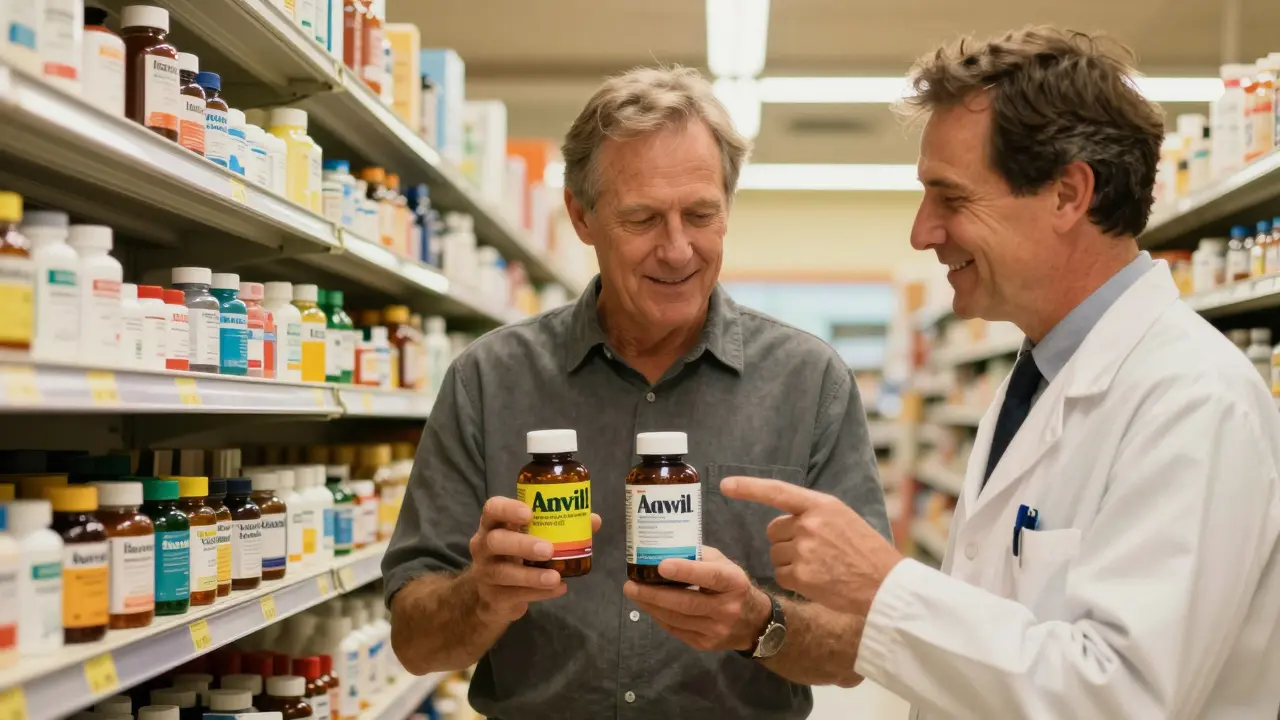
Here’s what you’re looking at in Australia today:- Ibuprofen: Advil (brand) costs $12 for 40 tablets. Woolworths’ equivalent? $2.50.
- Acetaminophen: Panadol (brand) is $14 for 20 tablets. Coles’ Essential brand? $3.
- Loratadine: Claritin (brand) is $18 for 10 tablets. Chemist Warehouse’s generic? $4.
- Dextromethorphan: Robitussin (brand) is $16 for 200mL. Woolworths’ version? $5.
Are Store Brands Really Just as Effective?
Yes. And here’s why. A 2021 study from the National Center for Biotechnology Information found that generic drugs differ from brand-name versions by only 3.5% in how quickly they enter your bloodstream - well within the 80-125% range allowed by regulators. That’s not a flaw. That’s normal variation, even between different batches of the same brand-name drug. Pharmacists? 89% of them use store brands for themselves and their families, according to Pharmacy Times. Doctors? 82% do the same. If they trust these meds for their kids and partners, why wouldn’t you? Reddit threads, Amazon reviews, and Facebook groups are full of people saying the same thing: “I’ve used CVS brand ibuprofen for five years. Couldn’t tell the difference from Advil.” Or, “My daughter has been on the Coles allergy pill for two years. No more sneezing - same as Claritin.”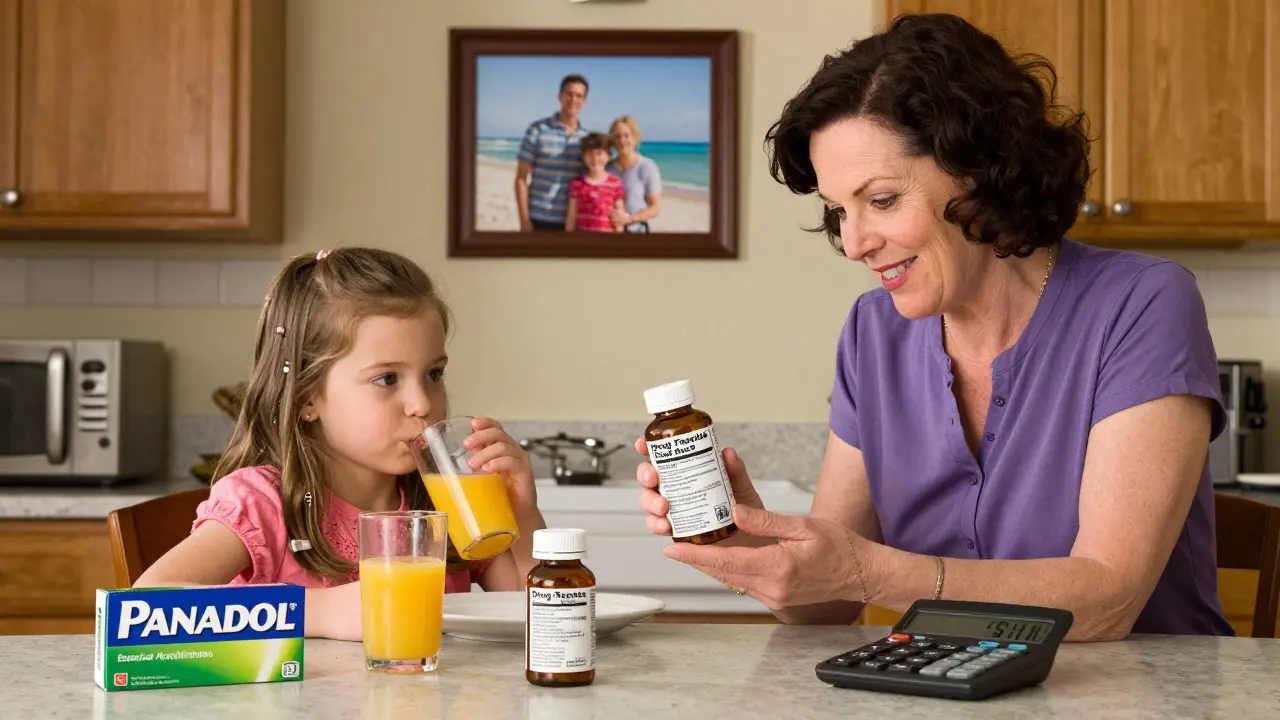
When Might You Need the Name Brand?
There are rare cases where store brands don’t work as well - but they’re not about the active ingredient. It’s the fillers. Inactive ingredients - like dyes, flavorings, or preservatives - can cause reactions in sensitive people. If you’re allergic to red dye #40, and the name-brand Tylenol doesn’t have it but the store brand does, you might get a rash. Same with taste: kids might refuse a generic cough syrup because it tastes bitter, while the brand version has a cherry flavor. If you switch to a store brand and your symptoms don’t improve, or you get a new reaction - stop using it. Switch back. But don’t assume the brand name is stronger. It’s likely just the color or flavor that’s different.How to Pick the Right Store Brand
Don’t guess. Check the Drug Facts label. That’s the small box on the back or side of the package. Look for this:- Active ingredient: Must match exactly. “Ibuprofen 200mg” - same as Advil.
- Dosage form: Tablet? Capsule? Liquid? Same.
- Strength: 200mg? 10mg? 500mg? Must match.
- Uses: “For pain, fever, inflammation” - should be identical.
Watch Out for Duplicate Ingredients
One of the biggest dangers with OTC meds isn’t buying the wrong brand - it’s buying too many at once. Many cold and flu products contain acetaminophen. So do pain relievers. If you take Tylenol for a headache and NyQuil for your cold, you could accidentally hit 4,000mg of acetaminophen in one day - the maximum safe limit. Liver damage can follow. Always check the active ingredients on every bottle. If two products have the same one, don’t take them together. Store brands don’t make this risk worse - but they make it easier to miss if you’re not looking.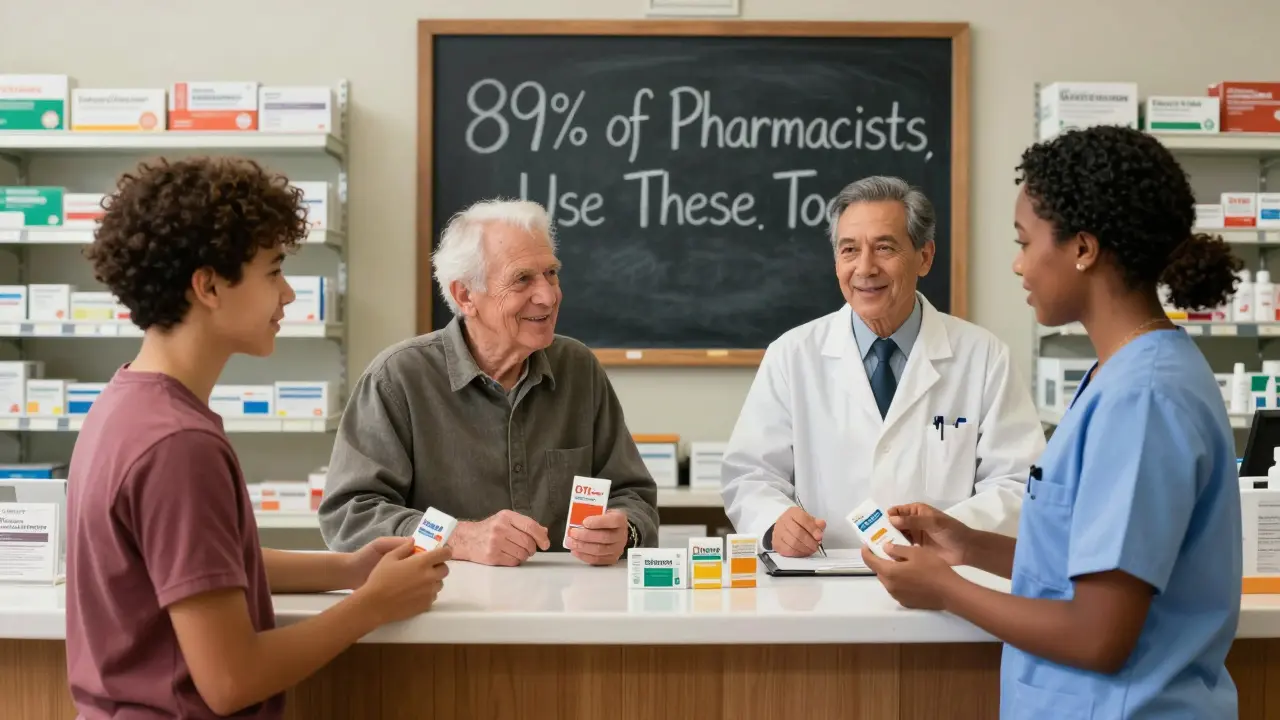
What’s Changing in 2025?
Retailers aren’t just slapping generic labels on bottles anymore. Woolworths and Coles are investing in better formulations. Some now use enteric coatings on pain relievers to reduce stomach upset - something only big brands used to offer. Chemist Warehouse added QR codes on packaging that link to full ingredient lists and batch testing results. Pharmacists at major chains are getting trained to answer store brand questions. In 2024, 92% of pharmacists reported feeling confident recommending generics to patients. That’s a big shift from 10 years ago.Why Do So Many People Still Choose Name Brands?
A 2023 survey by the Australian Health Consumers Association found that 41% of people still believe name brands work better - even though there’s no scientific proof. Why? Advertising. Familiarity. Fear. You see Advil on billboards. You hear “Advil works faster” on the radio. But that’s not science. That’s marketing. The truth? The active ingredient is the same. The effect is the same. The price? Not even close.Final Verdict: Save Money Without Sacrificing Care
Store brand OTC medications are not second-rate. They’re not “cheap alternatives.” They’re identical medicines sold at a fraction of the cost. For 98% of people, they work just as well. For most, they’re the smarter choice. Start with one product. Try the store brand ibuprofen next time you need it. Compare how you feel. If there’s no difference - and there won’t be - keep buying it. That’s $50, $100, $200 saved every year. Put that toward your groceries, your phone bill, or your next holiday. Your body doesn’t care what the label says. It only cares about the medicine inside. And that’s exactly the same.Are store brand OTC medications safe?
Yes. Store brand OTC medications must meet the same strict safety and effectiveness standards as name brands. In Australia, the Therapeutic Goods Administration (TGA) reviews every generic product before it can be sold. They require proof that the active ingredient is identical, the dosage is correct, and the product is manufactured under the same quality controls as brand-name drugs.
Can store brand meds cause side effects?
They can - but not because the active ingredient is different. Side effects usually come from inactive ingredients like dyes, flavors, or preservatives. If you’ve had a reaction to a store brand - like a rash or upset stomach - it’s likely due to one of these fillers. Switch back to the name brand, and the problem often goes away. But this happens in fewer than 1 in 100 users.
Do pharmacists recommend store brands?
Yes - and they use them too. A 2023 survey found that 89% of pharmacists in Australia use store brand OTC medications for themselves and their families. Pharmacists are trained to know exactly which generics are equivalent to brand names, and they’re often the best source of advice when you’re unsure.
Is it okay to switch between store brands and name brands?
For most OTC meds like pain relievers or allergy pills, yes. But if you’re switching back and forth frequently and notice changes in how you feel - like stomach upset or drowsiness - it might be the inactive ingredients. Stick with one version that works for you. Consistency helps avoid confusion.
Why do store brands look different from name brands?
Trademark laws require store brands to look different - different color, shape, or size - so they don’t confuse customers. But the medicine inside is identical. The difference in appearance is purely cosmetic. It’s like buying a plain white T-shirt instead of a branded one - same fabric, different label.
Are store brand OTC meds regulated the same way as name brands?
Absolutely. In Australia, all OTC medications - whether store brand or name brand - must be listed on the Australian Register of Therapeutic Goods (ARTG). This means they’ve been reviewed for safety, quality, and effectiveness. The TGA doesn’t treat them differently. If a product doesn’t meet the standard, it’s pulled from shelves - no matter who made it.
Can I trust store brand children’s medications?
Yes, if the active ingredient and dosage match the name brand. Many parents worry about taste or color, but the medicine is the same. If your child refuses the store brand because of flavor, try a different retailer’s version - some have better-tasting formulas now. Always check the label for correct dosage based on weight and age.
Do store brands expire faster than name brands?
No. Both store and name brand OTC medications have the same expiration dates based on stability testing. The shelf life is determined by the active ingredient, not the packaging. Always check the expiration date before use - no matter the brand.
Siobhan K.
December 20, 2025 AT 15:59My mum used to say, 'If it's got the same active ingredient, it's the same medicine.' She switched to Woolworths' ibuprofen in 2012 and saved over $2,000 in ten years. No side effects, no 'weaker' pain relief. Just cheaper. Why do people still pay extra for branding?
Brian Furnell
December 21, 2025 AT 08:46From a pharmacokinetic standpoint, the bioequivalence threshold (80–125% AUC and Cmax) is empirically validated across regulatory jurisdictions - including the TGA, FDA, and EMA. The variance between generic and brand-name formulations is statistically negligible, and often less than intra-brand batch variability. The perceived difference is psychosocial, not pharmacological.
Ben Warren
December 21, 2025 AT 15:50It is imperative to note that the regulatory frameworks governing generic pharmaceuticals are not universally harmonized. While Australia maintains stringent oversight, many developing nations permit substandard generics with inconsistent dissolution profiles. To generalize that all store brands are equivalent is a dangerous oversimplification that disregards global manufacturing disparities.
Sandy Crux
December 21, 2025 AT 18:58Of course they're the same... if you're okay with the inactive ingredients that give you migraines. I tried the Coles brand loratadine. My eyes swelled. The Claritin? Perfect. So yes, identical... except when they're not. And then you're stuck.
Hannah Taylor
December 21, 2025 AT 19:47theyre all laced with microchips anyway. why do you think theyre so cheap? the government is tracking your pain levels. next thing you know, your ibuprofen will send a report to your boss about how often you take it. #deepstate
Jay lawch
December 23, 2025 AT 02:27You Westerners think money is everything. In India, we know medicine is sacred. A man does not buy his mother's painkiller from a supermarket shelf like it's sugar. The brand carries the trust of generations. Your cheap pills are a symptom of a culture that has forgotten reverence.
Dan Adkins
December 23, 2025 AT 23:56While I acknowledge the economic rationale presented, one must not overlook the ethical imperative of supporting pharmaceutical innovation. The brand-name manufacturers invest billions in research and development. By opting for generics, consumers are indirectly disincentivizing future medical breakthroughs that may save lives.
Grace Rehman
December 24, 2025 AT 11:36It's funny how we fear the unknown but trust the logo. The pill doesn't care if it's in a fancy bottle or a plain one. It just does its job. Maybe we're not saving money. Maybe we're just paying for a placebo effect we don't even realize we're buying.
Adrian Thompson
December 25, 2025 AT 07:49They’re not the same. I’ve seen the factory footage. The generic lines run 24/7 with no quality control. The FDA doesn’t inspect them. The TGA? Ha. They’re too busy chasing TikTok influencers. You think your $2 ibuprofen is safe? It’s made in a basement in Guangdong. I know because my cousin works there.
John Hay
December 25, 2025 AT 23:02I switched to store brand acetaminophen last year. Same relief, half the cost. No issues. I don't need a brand name to tell me my headache is gone. Just give me the medicine.
Jon Paramore
December 27, 2025 AT 06:32Active ingredient match: check. Dosage: identical. Bioequivalence data: TGA-listed. Fillers? Read the Drug Facts panel. If you're reacting to a store brand, it's likely an allergen in the excipients - not the API. Most people conflate 'different appearance' with 'different efficacy.' That's cognitive bias, not science.
Swapneel Mehta
December 27, 2025 AT 11:55My dad used to say, 'If it helps you feel better, it's the right pill.' He's 78 and still takes the Coles version of his blood pressure med. Never had a problem. Sometimes the simplest answer is the right one.
Stacey Smith
December 27, 2025 AT 17:49Why are you even talking about this? It's obvious. Save your money. Stop being a sucker for ads. If your headache doesn't go away, it's not the brand - it's your life choices.
Jason Silva
December 28, 2025 AT 21:13bro i tried the chemist warehouse one and it worked better 😍 like, my sinus cleared faster?? maybe the fillers are magic?? 🤯