
Sexual Side Effects from Antidepressants: Proven Solutions and Alternatives
 Jan, 13 2026
Antidepressant Sexual Side Effects Comparison Tool
This tool compares common antidepressants based on their sexual side effect profiles. Select your current medication or browse options to see how different treatments compare. Note: Always consult your doctor before making any changes to your medication regimen.
| Medication | Sexual Side Effect Risk | Effectiveness for Depression | Cost (Generic/Month) | Notes |
|---|---|---|---|---|
| Paroxetine (Paxil) | High Risk | High | $15.23 | Orgasm problems in 1 out of every 2-4 people |
| Sertraline (Zoloft) | High Risk | High | $15.85 | Reduced sex drive (64%), erectile problems (58%) |
| Fluoxetine (Prozac) | Moderate Risk | High | $12.19 | Longer half-life, side effects build slowly |
| Citalopram (Celexa) | Moderate Risk | High | $10.35 | Similar to sertraline but slightly better profile |
| Bupropion (Wellbutrin) | Low Risk | High | $15.72 | 68% improvement in sexual function when switching from SSRI |
| Mirtazapine (Remeron) | Low Risk | High | $24.99 | Often improves desire, used for sleep and appetite |
| Agomelatine (Valdoxan) | Low Risk | High | $35.50 | Works on melatonin receptors, minimal sexual impact |
| Nefazodone (Serzone) | Moderate Risk | High | $31.25 | Rarely used due to liver toxicity risks |
Key Findings
Low-risk options: Bupropion (Wellbutrin), Mirtazapine (Remeron), Agomelatine (Valdoxan)
These medications have significantly lower sexual side effect rates than SSRIs. Bupropion is particularly effective for improving sexual function when switching from an SSRI.
High-risk options: Paroxetine (Paxil), Sertraline (Zoloft)
These commonly prescribed SSRIs have the highest rates of sexual dysfunction. Paroxetine is particularly problematic with orgasm issues in 25-50% of users.
Note: This comparison is based on clinical studies and patient reports. Your experience may vary. Always discuss any changes to your medication with your doctor.
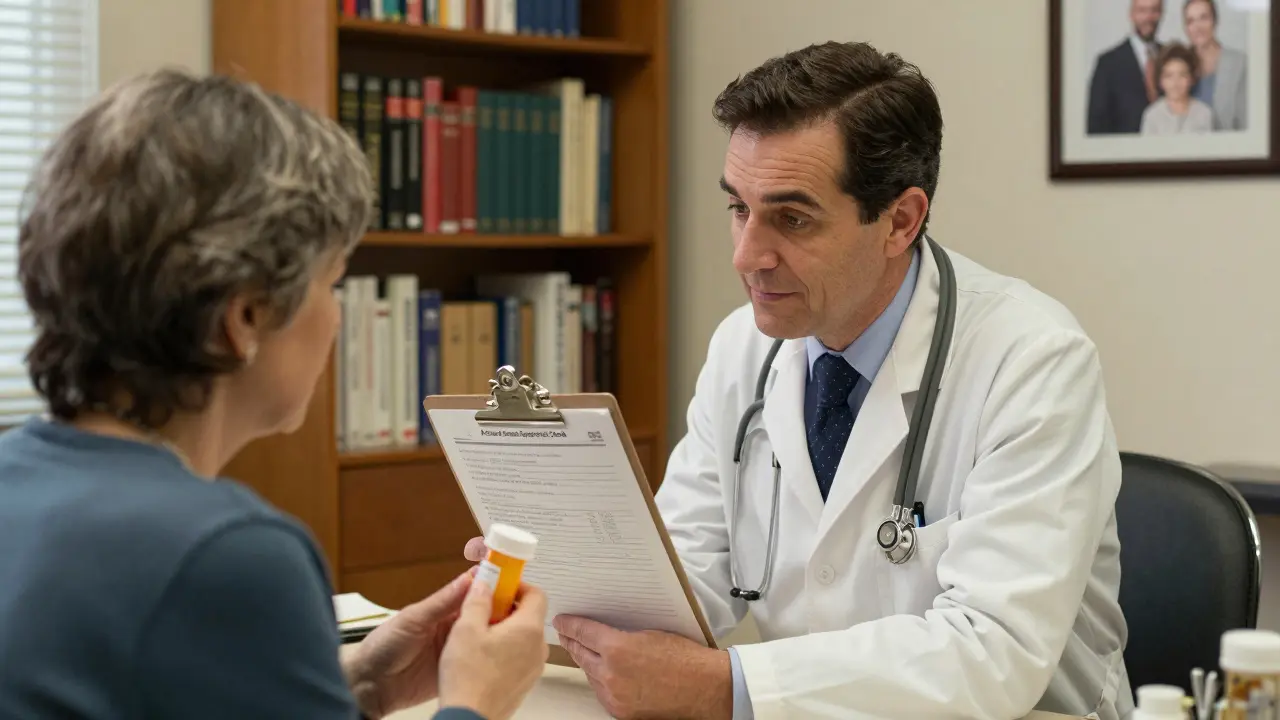
It’s not rare to hear someone say, ‘I started feeling better emotionally, but I lost interest in sex - and it’s wrecking my relationship.’ This isn’t just a side effect. For many people, sexual problems from antidepressants are the reason they quit taking medication - sometimes without telling their doctor.
Studies show between 35% and 70% of people taking SSRIs like sertraline, fluoxetine, or paroxetine experience sexual side effects. Some reports go as high as 80% when patients are directly asked using detailed questionnaires. That’s not a small number. That’s nearly every other person on these meds. And yet, most doctors don’t bring it up unless the patient does. Why? Because it’s uncomfortable. But ignoring it doesn’t make it go away.
What’s Actually Happening in Your Body?
Antidepressants like SSRIs work by boosting serotonin - a chemical that helps stabilize mood. But serotonin doesn’t just affect your brain’s emotional centers. It also shuts down the pathways that control sexual desire, arousal, and orgasm. Think of it like turning down the volume on your entire sexual response system. Dopamine and norepinephrine, two other key chemicals needed for libido and performance, get suppressed in the process.
This isn’t just about feeling less horny. For men, the most common issues are:
- Reduced sex drive (64%)
- Erectile problems (58%)
- Delayed or absent ejaculation (53%)
For women, the biggest complaints are:
- Low desire (61%)
- Difficulty reaching orgasm (49%)
- Insufficient lubrication (52%)
Here’s the catch: depression itself can cause these same problems. About 35-50% of people with untreated major depression already have low libido or trouble with arousal. So it’s not always the drug. But when you start feeling better emotionally - and your sex life gets worse - that’s a clear sign the medication is the culprit.
Not All Antidepressants Are Created Equal
Some antidepressants are far worse than others when it comes to sexual side effects. Paroxetine (Paxil) is the worst offender. It’s known to cause orgasm problems in 1 out of every 2-4 people who take it. Sertraline (Zoloft) and citalopram (Celexa) aren’t much better. Fluoxetine (Prozac) has a longer half-life, so side effects may build up slowly, but they’re still common.
On the flip side, there are antidepressants with significantly lower sexual side effect rates:
- Bupropion (Wellbutrin): This one stands out. Multiple studies show it causes far fewer sexual problems than SSRIs. In fact, in head-to-head trials, patients switching from sertraline to bupropion saw sexual function improve in 68% of cases. It doesn’t boost serotonin - it targets dopamine and norepinephrine instead, which helps preserve libido.
- Mirtazapine (Remeron): Often used for sleep and appetite, this one has a low risk of sexual side effects. Some patients even report improved desire.
- Agomelatine (Valdoxan): Used in Europe and Australia, this works on melatonin receptors, not serotonin. It’s been shown to have minimal impact on sexual function.
- Nefazodone (Serzone): Effective for depression with low sexual side effects - but rarely used now because of rare liver toxicity risks.
Switching isn’t always easy. You can’t just stop one and start another. It takes a careful cross-taper over 2-4 weeks to avoid withdrawal symptoms - especially with paroxetine, which leaves your system fast. Fluoxetine, on the other hand, sticks around for days, making the transition smoother.
Can You Fix It Without Stopping the Med?
Yes - and you don’t have to suffer through it.
1. Lower the dose
Some people find relief by reducing their SSRI dose - even by 25%. This works in 20-30% of cases. But there’s a risk: your depression might come back. Only try this under your doctor’s supervision.
2. Add bupropion
This is one of the most proven strategies. Adding 150mg of bupropion daily to an SSRI has been shown to improve sexual function in 58% of women and 62% of men in clinical trials. It doesn’t interfere with the antidepressant’s mood benefits - it just boosts the sexual side.
3. Use sildenafil (Viagra) or tadalafil (Cialis)
For men with erectile problems, sildenafil improves function in 65-70% of cases on SSRIs. That’s way better than placebo (25%). It doesn’t fix low desire, but it helps with performance anxiety that often follows sexual dysfunction.
4. Try cyproheptadine
This older antihistamine blocks serotonin receptors. A 2021 study found that 4mg taken nightly helped 52% of women with SSRI-induced anorgasmia - compared to only 18% on placebo. It’s not FDA-approved for this use, but it’s been used off-label for years with good results.
5. Take a drug holiday
Some people skip their antidepressant on weekends - especially if they’re on a short-acting SSRI like paroxetine. This can help restore sexual function temporarily. But this carries a risk: mood crashes, anxiety spikes, or even seizures in rare cases. Only do this if your doctor agrees and you’re stable.
What About the Long-Term Risk?
Most people assume that once they stop the antidepressant, their sex life returns to normal. But that’s not always true.
There’s a rare but serious condition called post-SSRI sexual dysfunction (PSSD). It’s when sexual problems persist for months - even years - after stopping the medication. Since 2010, over 28 peer-reviewed case reports have documented it. Studies estimate 0.5-1.2% of users may experience it. It’s rare, but it’s real. And it’s often dismissed by doctors who don’t know about it.
One woman in Brisbane, 34, stopped sertraline after 18 months. Her depression improved. But six months later, she still couldn’t feel arousal or orgasm. She saw six specialists. Two told her it was “in her head.” She finally found a psychiatrist familiar with PSSD. She’s still waiting for recovery - two years later.
This is why you need to be proactive. Don’t wait until it’s too late.
What Should You Do Next?
Here’s your action plan:
- Track your symptoms. Use the Arizona Sexual Experience Scale (ASEX). It’s a simple 5-question tool doctors use to measure sexual dysfunction. You can find it online - print it out and fill it out before and after any change.
- Ask your doctor. Say: “I’ve noticed my sex drive and function have dropped since starting [medication]. Is this common? What are my options?” Don’t let them brush you off.
- Request a switch. If you’re on paroxetine or sertraline, ask about bupropion or mirtazapine. These are proven alternatives with better sexual profiles.
- Consider augmentation. If you want to stay on your current SSRI, ask about adding bupropion or using sildenafil (for men) or cyproheptadine (for women).
- Don’t quit cold turkey. Stopping abruptly can cause withdrawal symptoms - dizziness, brain zaps, nausea. Always taper under medical supervision.
Cost shouldn’t be a barrier. Generic bupropion XL 150mg costs about $15.72 a month. Brand-name Zoloft? Around $58. That’s a huge difference - and bupropion might fix your sex life while keeping your mood stable.

What’s New on the Horizon?
There’s promising research coming. Esketamine nasal spray (Spravato), approved in 2019 for treatment-resistant depression, has only a 3.2% rate of sexual side effects - far lower than SSRIs. But it’s expensive ($880 per dose) and requires clinic visits.
There’s also a new drug in Phase II trials called SEP-227162. Early results show it causes 87% fewer sexual side effects than sertraline. It targets serotonin receptors differently - without shutting down the sexual pathways.
And in Europe, doctors are starting to use genetic testing. People with a CYP2D6 poor metabolizer gene break down paroxetine slower - meaning they get higher doses in their blood and more side effects. Testing for this could prevent problems before they start.
Final Thought: Your Sex Life Matters
Depression is hard. But living without intimacy, without connection, without pleasure - that’s another kind of suffering. You deserve to feel better emotionally and physically.
Sexual side effects aren’t a normal part of treatment. They’re a signal - a red flag that your current plan might not be the best fit. There are solutions. They’re not always easy. But they’re real. And they work.
Don’t suffer in silence. Talk to your doctor. Ask for options. Your mental health shouldn’t cost you your sex life.
Do all antidepressants cause sexual side effects?
No. While SSRIs and SNRIs like sertraline, paroxetine, and venlafaxine carry high risks (35-80% of users), other antidepressants like bupropion, mirtazapine, and agomelatine have much lower rates. Bupropion, in particular, is known for causing fewer sexual problems - and sometimes even improving libido.
How long do sexual side effects last after stopping antidepressants?
For most people, sexual function returns within a few weeks to months after stopping. But for a small percentage (0.5-1.2%), symptoms can persist for months or even years - a condition called post-SSRI sexual dysfunction (PSSD). If your symptoms don’t improve after 3-6 months off the medication, see a specialist familiar with PSSD.
Can I take Viagra with SSRIs?
Yes. Sildenafil (Viagra) and tadalafil (Cialis) are safe to use with SSRIs and can significantly improve erectile function in men. Studies show 65-70% of men on SSRIs see improvement with sildenafil, compared to only 25% on placebo. It doesn’t fix low desire, but it helps with performance issues.
Is switching to bupropion effective?
Yes. Multiple clinical trials show that switching from an SSRI to bupropion leads to sexual improvement in about 68% of patients. It’s one of the most reliable strategies. Bupropion doesn’t raise serotonin - it boosts dopamine and norepinephrine, which helps maintain libido and arousal without compromising mood stability.
Why don’t doctors talk about this more?
Many doctors assume patients won’t bring it up, so they don’t either. Others think it’s a minor issue compared to depression. But research shows sexual side effects are a leading reason people stop taking antidepressants - often without telling their provider. Proactive screening with tools like the ASEX scale can catch this early and prevent treatment failure.
Are there natural remedies that help?
There’s no strong evidence that herbs or supplements reliably reverse antidepressant-induced sexual dysfunction. While some people report benefits from ginseng, maca, or L-arginine, these aren’t backed by controlled trials. The most effective solutions are medical: switching meds, adding bupropion, or using sildenafil. Don’t rely on unproven remedies - talk to your doctor instead.
Can I still have a healthy relationship while on antidepressants?
Absolutely - but communication is key. Many couples find that openly discussing the issue reduces shame and builds intimacy. Some partners report feeling closer after learning how the medication affects their loved one. Therapy, even non-sexual counseling, can help both partners navigate this challenge without blame or resentment.
Gregory Parschauer
January 15, 2026 AT 09:17Let me just say this: if you're taking SSRIs and not talking about your sex life with your doctor, you're not just being polite-you're complicit in your own suffering. This isn't 'normal side effects,' it's medical negligence dressed up as empathy. Bupropion isn't a 'maybe,' it's the baseline standard. If your prescriber hasn't mentioned it, they're either lazy, ignorant, or actively harming you. Stop accepting mediocrity. Your libido isn't optional-it's biological sovereignty.
John Tran
January 15, 2026 AT 20:40okay so like… i’ve been on zoloft for 4 years and i swear my brain just… stopped caring about everything. not just sex. like i used to love cooking, now i stare at spices like they’re hieroglyphics. and i don’t even miss sex? weird right? but then i read about dopamine and norepinephrine and it’s like… ohhhh. so it’s not me. it’s the chemistry. and then i started reading about bupropion and i’m like… wait, this drug doesn’t even touch serotonin? it just… boosts the good stuff? and i’m like… why isn’t this the first line? why is paroxetine the default? is it because it’s cheaper? or because doctors are scared to switch things up? i feel like the whole system is designed to keep you medicated, not healed. like we’re all just… lab rats with insurance cards.
Damario Brown
January 16, 2026 AT 12:34lol so you're telling me i'm not broken? i thought i was just a lazy loser who couldn't get it up. turns out my brain is just flooded with serotonin like a broken sprinkler system. and now you're saying i can fix it by adding wellbutrin? no magic pills? no herbs? just science? mind blown. also why is viagra cheaper than my antidepressant? this system is rigged. also my wife thinks i'm cheating. she doesn't know i'm just chemically neutered. thanks for the clarity.
sam abas
January 17, 2026 AT 10:06everyone's acting like this is some groundbreaking revelation. newsflash: antidepressants kill libido. we've known this since the 90s. the real issue is why doctors still prescribe paroxetine like it's candy. also, 'drug holidays'? that's not a solution, that's a liability. and PSSD? yeah, it's rare, but if it happens to you, you're stuck. and no one's researching it because pharma doesn't make money off people who can't have sex after quitting. so we're all just… collateral damage. congrats, you're the 1% who got the bad lottery ticket.
John Pope
January 19, 2026 AT 04:04there’s a metaphysical layer here we’re ignoring. depression isn’t just a chemical imbalance-it’s a collapse of meaning. and when you suppress serotonin to fix it, you’re not just dampening desire-you’re dampening the capacity to feel alive. sex isn’t just biology. it’s intimacy. it’s vulnerability. it’s the body saying ‘i trust you.’ and when the meds shut that down… you’re not just losing function. you’re losing connection. and that’s why people quit. not because of erectile dysfunction. because they feel like ghosts in their own skin. bupropion doesn’t just fix libido-it restores the sense that you’re still human.
Angel Tiestos lopez
January 20, 2026 AT 19:21bro. i switched from citalopram to wellbutrin. 3 weeks later i kissed my girlfriend for the first time in 18 months. she cried. i cried. we ordered tacos. 🌮😭. this isn’t just medical. it’s spiritual. serotonin isn’t the only path to peace. dopamine can be gentle too. also, cyproheptadine? sounds like a dragon from a fantasy novel. but if it works? i’m all in. 🐉💊
Pankaj Singh
January 21, 2026 AT 22:22you people are overcomplicating this. SSRIs cause sexual dysfunction. Bupropion doesn't. End of story. If your doctor doesn't know this, fire them. No more debates. No more 'natural remedies.' No more 'drug holidays.' This is basic pharmacology. If you're on paroxetine and having problems, switch. Now. Stop wasting time reading Reddit. Go to your pharmacy. Get bupropion. Take it. Fix your life. Stop making it a philosophy project.
Randall Little
January 23, 2026 AT 12:23Interesting how everyone’s focused on the pharmacology and none of you are asking why the FDA approved paroxetine as a first-line SSRI with such a high sexual side effect profile. Was it efficacy? Safety? Or was it the fact that GlaxoSmithKline paid for the most aggressive marketing campaign? And why is PSSD still not recognized as a formal diagnosis? Because if it were, drug manufacturers would be liable for lifelong harm. So we call it ‘rare’ and move on. This isn’t medical negligence-it’s institutionalized gaslighting.
jefferson fernandes
January 25, 2026 AT 10:39Let me just say this, clearly and with emphasis: If you're on an SSRI and experiencing sexual dysfunction, you are not broken. You are not weak. You are not failing. You are a human being whose neurochemistry has been disrupted by a drug that was never meant to be a lifelong, one-size-fits-all solution. And you deserve better. You deserve to be heard. You deserve options. You deserve to feel pleasure again. And you are not alone. There are solutions. They exist. They work. And you have the right to demand them. Don't let shame silence you. Talk to your doctor. Bring this post. Print it out. Highlight it. Make them see you. You're worth more than a side effect.
Acacia Hendrix
January 27, 2026 AT 00:42It's fascinating how the discourse around antidepressant-induced sexual dysfunction has been co-opted by a performative wellness culture that reduces neuropharmacology to a boutique lifestyle choice. The real issue isn't bupropion versus sertraline-it's the commodification of mental health care, where efficacy is secondary to marketability. The fact that cyproheptadine-a 1950s antihistamine-is a viable off-label solution speaks volumes about the stagnation of psychopharmacological innovation. And yet, we celebrate 'drug holidays' as if they're yoga poses. The systemic failure here isn't clinical-it's epistemological. We've lost the language to discuss biological reality without turning it into a self-help manifesto.