
Spicy Foods and GI-Irritating Medications: How to Reduce Heartburn Risk
 Jan, 19 2026
Heartburn Medication Timing Calculator
Calculate Safe Meal Timing
Enter your medication type and meal details to get personalized timing recommendations.
Recommended Timing
Note: This is a general guideline. Always consult your doctor for personalized advice.
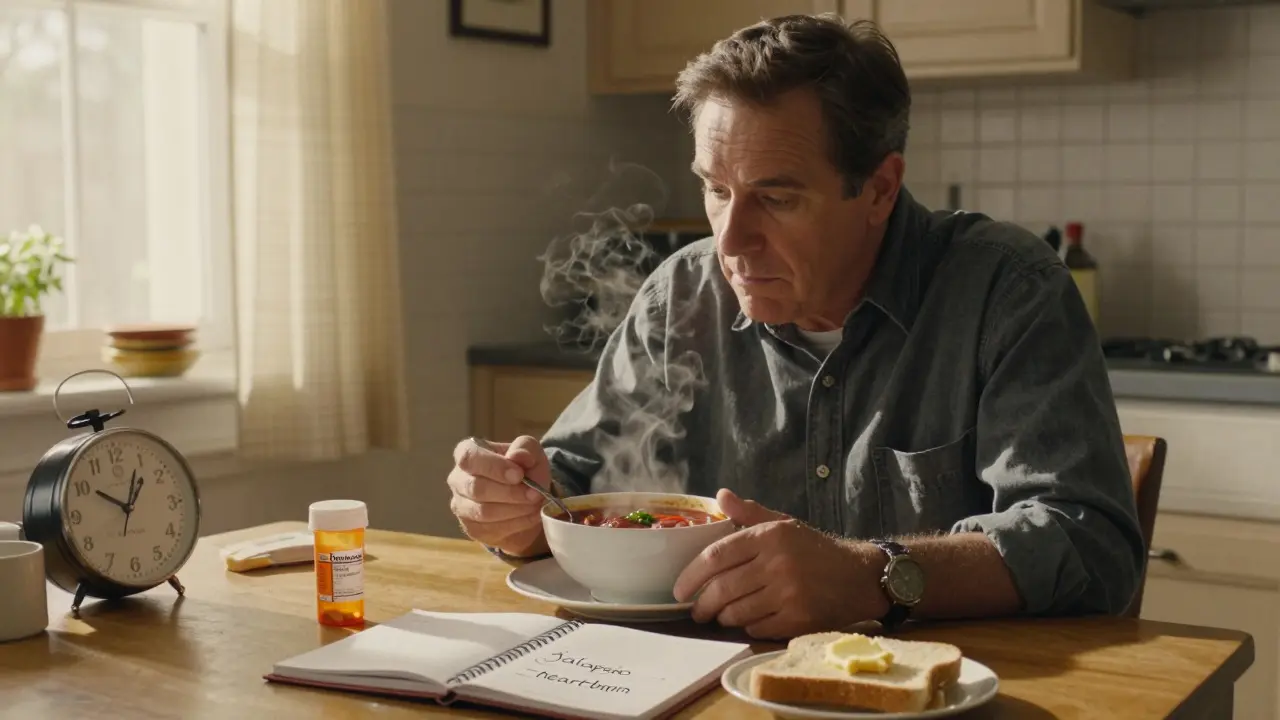
Heartburn isn’t just a mild discomfort after a spicy meal-it’s a signal your body is struggling with acid reflux. If you’re taking medications that irritate your GI tract and also love chili, curry, or hot salsa, you’re stacking two risk factors on top of each other. The good news? You don’t have to give up flavor or your meds. You just need to understand how they work together-and how to break the cycle.
Why Spicy Food Triggers Heartburn
Capsaicin, the compound that makes chili peppers burn, doesn’t just sting your tongue. It relaxes the lower esophageal sphincter (LES), the muscle that normally keeps stomach acid locked down. When that muscle loosens, acid creeps up into your esophagus. Studies show LES pressure can drop by 30-40% in sensitive people within 30 minutes of eating spicy food. That’s why you feel that burning sensation even if you didn’t eat anything fatty or acidic.
But here’s the twist: not everyone reacts the same way. The NIH found no strong evidence to say spicy food should be banned for all GERD patients. Some people can eat hot wings with no issue. Others get heartburn from a single jalapeño. This isn’t about being weak-it’s about biology. Your sensitivity to capsaicin can range from 10 mg to over 100 mg per meal. That’s like comparing someone who can handle ghost peppers to someone who gets a flare-up from paprika.
Medications That Make Heartburn Worse
It’s not just food. Many common drugs make heartburn worse by either relaxing the LES or irritating the stomach lining. Aspirin and ibuprofen? They can cause erosive esophagitis in 15-30% of regular users. Beta blockers for high blood pressure? They increase GERD risk by 22%. Anticholinergics-used for motion sickness or overactive bladder-drop LES pressure by 25% in nearly 70% of users.
Even medications meant to help can backfire. Pantoprazole, a proton pump inhibitor (PPI), reduces stomach acid-but only if it’s absorbed properly. If you take it right after a spicy, fatty, or acidic meal, absorption drops by 18-23%. That means you’re not getting the full dose. Same goes for coffee, chocolate, alcohol, and mint. These aren’t just triggers-they’re PPI killers.
Antacids: Quick Fix or Long-Term Trap?
When heartburn hits, most people reach for Tums or Rolaids. They work fast-2 to 5 minutes-and that’s why they’re popular. But they don’t fix the problem. They just cover it up. The relief lasts 30 to 60 minutes. After that, acid returns, often worse than before.
Worse, relying on antacids too often can cause real harm. Aluminum-based ones can cut absorption of antibiotics like tetracycline by 50%. Taking them too close to other meds can mess with how your body processes everything from iron to thyroid pills. The Cleveland Clinic recommends spacing antacids at least one hour before or four hours after other medications. Most people don’t know this.
And then there’s rebound acid hypersecretion. If you use antacids daily for weeks, your stomach starts pumping out more acid to compensate. When you stop, you get worse heartburn than before. It’s like your stomach forgot how to turn off the faucet.
How to Take Your Heartburn Meds Right
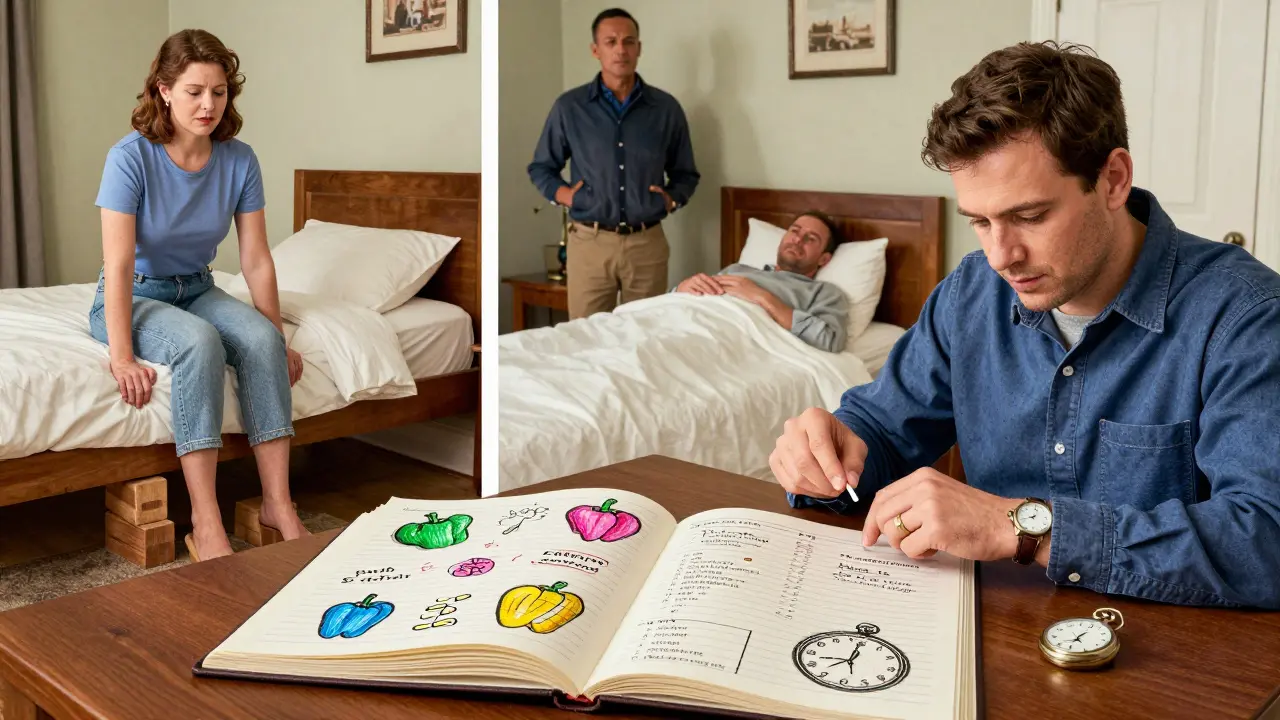
Timing matters more than you think. Pantoprazole and other PPIs need to be taken 30 to 60 minutes before your first meal. That’s because they work by blocking acid production before it starts. If you take them after eating-especially after spicy food-they’re less effective.
H2 blockers like famotidine (Pepcid) take longer to kick in-30 to 60 minutes-but last up to 12 hours. They’re good for planned spicy meals. Take them an hour before dinner if you know you’re eating something hot.
Don’t mix PPIs and antacids without spacing them out. If you need quick relief after a meal, wait at least two hours after your PPI. If you’re on a PPI and still getting symptoms after spicy food, it’s not the med failing-it’s the timing or the trigger.
Find Your Personal Triggers
Forget blanket rules. The American Gastroenterological Association now recommends a personalized approach. Try this: cut out all spicy foods for 3 to 7 days. Keep a food-symptom diary. Note what you ate, when, and how bad the heartburn was. Then slowly reintroduce one type of spice at a time. Was it the cayenne? The chili powder? The hot sauce with vinegar? Track it.
Reddit’s r/GERD community has over 28,000 members. In one popular thread, a user named u/SpicyFoodLover89 eliminated all spice for three weeks while staying on pantoprazole. Symptoms vanished. Then they slowly added back mild spices, using antacids as backup. Within a month, they were eating moderately spicy food without daily heartburn. That’s the power of personal testing.
Some people find they tolerate roasted red peppers but not raw jalapeños. Others handle curry just fine but can’t touch chipotle. There’s no universal list. Only your body knows.
Lifestyle Tweaks That Actually Work
Medication and diet aren’t the whole story. Simple habits make a huge difference:
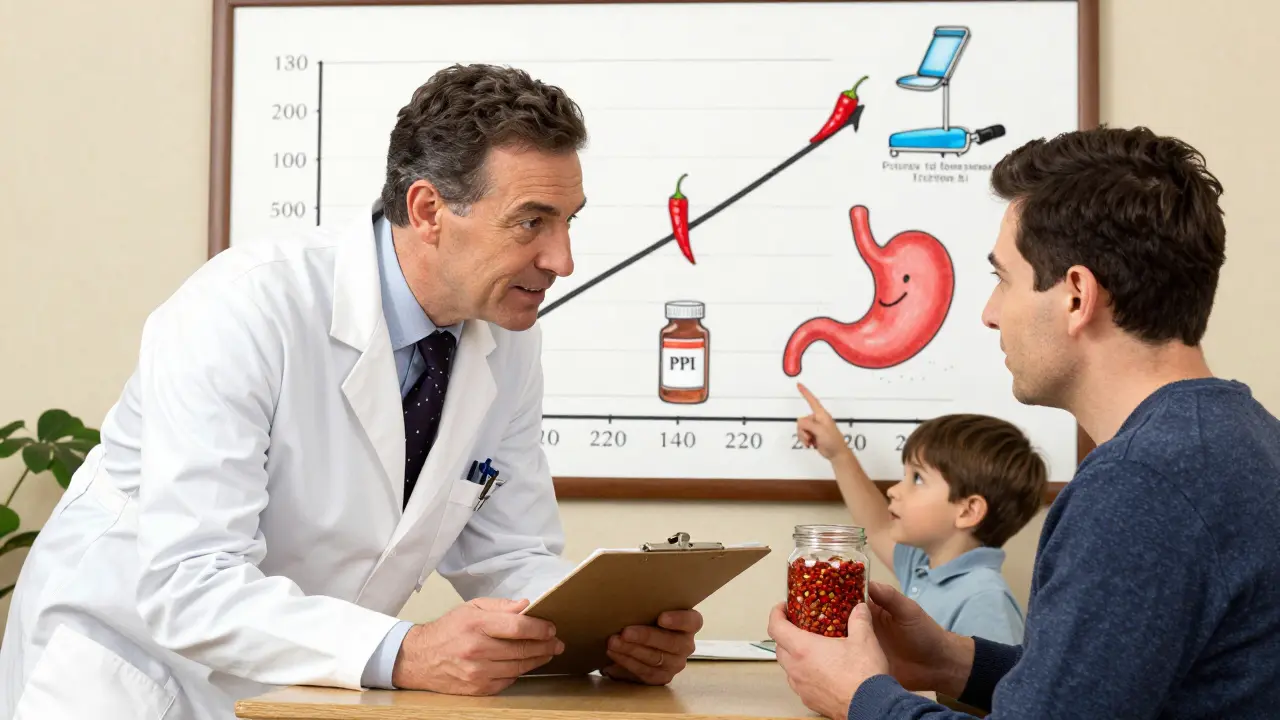
- Wait 3 hours after eating before lying down. This cuts nighttime reflux by 60%.
- Elevate the head of your bed by 6 to 8 inches. Gravity helps keep acid where it belongs.
- Space meals out. Eating every 3 hours gives your stomach time to empty, reducing pressure on the LES.
- Keep a food diary for at least two weeks. Studies show this predicts your triggers with 90% accuracy.
These aren’t just tips-they’re evidence-backed strategies. One 2022 study in Neurogastroenterology & Motility showed that combining bed elevation and meal spacing reduced reflux episodes by nearly half.
The Future: Personalized GERD Care
The $12.5 billion GERD market is shifting. Doctors are moving away from one-size-fits-all PPI prescriptions. New drugs like Vonoprazan (Voquezna), approved by the FDA in August 2023, work better than older PPIs and aren’t affected by how your body metabolizes them. Meanwhile, research at Johns Hopkins showed that 65% of people who followed a 12-week capsaicin desensitization program could eat spicy food again without symptoms.
Companies are starting to test gut microbiomes and genetic markers to predict food sensitivities. In the next 5 to 10 years, you might get a personalized spice tolerance score-just like a caffeine sensitivity test.
For now, the best approach is simple: know your triggers, time your meds, and don’t let antacids become your crutch. You don’t have to give up flavor. You just need to eat smarter.
Can I still eat spicy food if I have GERD?
Yes, but not everyone reacts the same. Some people can eat spicy food without issues, while others get heartburn from even mild heat. The key is to test your tolerance. Try eliminating spicy foods for 3-7 days, then slowly reintroduce them one at a time while tracking symptoms. Use antacids as backup, not a daily solution.
Does pantoprazole stop working if I eat spicy food?
Not exactly. Pantoprazole still works, but its absorption drops by 18-23% if taken within 2 hours of spicy, fatty, acidic, or caffeinated foods. To get the full benefit, take it 30-60 minutes before your first meal of the day-on an empty stomach. Avoid eating trigger foods right after taking it.
Which medications make heartburn worse?
Common culprits include aspirin, ibuprofen, and other NSAIDs (they irritate the stomach lining), beta blockers (for blood pressure), anticholinergics (for allergies or bladder issues), nitrates (for chest pain), and theophylline (for asthma). These either relax the lower esophageal sphincter or increase acid production. Always check with your doctor if you notice more heartburn after starting a new medication.
Are antacids safe to use every day?
No. Using antacids more than 2-3 times a week can lead to side effects like electrolyte imbalances, nutrient malabsorption, and rebound acid production. Aluminum-based antacids can also interfere with antibiotics like tetracycline and fluoroquinolones. Use them only for occasional relief, and always space them at least one hour before or four hours after other medications.
How long does it take to find my personal heartburn triggers?
Most people identify their triggers within 2-4 weeks using a food-symptom diary. Start by eliminating suspected foods (like spicy items, caffeine, or chocolate) for 3-7 days. Then add them back one at a time, waiting 2-3 days between each. Track symptoms daily. People who track consistently see 78% improvement in symptom control compared to those who don’t.
Jerry Rodrigues
January 20, 2026 AT 03:43Been eating ghost peppers since I was 12 and never had heartburn. My grandma said it was because I chewed slow and never lied down after. Turns out she was right about the timing. Just don't eat spicy food right before bed and you'll be fine.
Ben McKibbin
January 20, 2026 AT 15:27Let’s be real-this isn’t about capsaicin sensitivity, it’s about lazy medicine culture. People take PPIs like candy and then wonder why their stomachs turn into acid volcanoes. You don’t need a PhD to know that swallowing ibuprofen with a burrito is a bad idea. The body’s not broken-it’s being abused. Stop medicating your bad habits and start respecting your GI tract.
Melanie Pearson
January 22, 2026 AT 01:17It’s alarming how casually people treat GERD as a lifestyle choice rather than a clinical condition. The data is clear: chronic antacid use correlates with increased risk of pneumonia, C. diff infections, and bone density loss. Yet here we are, treating heartburn like a minor inconvenience. This article skirts the real issue-medical negligence in long-term management. If your doctor prescribes PPIs without a clear end date, find a new one.
Gerard Jordan
January 24, 2026 AT 00:39Just started doing the 3-hour wait after meals and sleeping on a wedge pillow 🛏️🔥-huge difference. Also swapped my afternoon coffee for matcha. No more 2 a.m. burning. You don’t need to give up spice, just give your body a break. 🙌
Dee Monroe
January 24, 2026 AT 01:13There’s something deeply human about the way our bodies negotiate with the world-spicy food isn’t just a taste, it’s a test of resilience, a silent dialogue between evolution and indulgence. We’ve been conditioned to fear discomfort, to silence it with pills, but maybe the real answer isn’t suppression but adaptation. Our ancestors ate fermented, smoked, fiery things without PPIs. Maybe the solution isn’t more drugs, but more patience-with our bodies, our meals, our rhythms. The stomach remembers. It’s not broken. It’s asking to be heard.
Philip Williams
January 25, 2026 AT 12:00The NIH’s position on spicy food and GERD is often misinterpreted. The absence of strong evidence against capsaicin doesn’t equate to safety-it means variability in response is too high to generalize. That’s why personalized elimination diets remain the gold standard. Clinical guidelines must reflect this nuance, not reduce it to ‘eat what you want.’
Alex Carletti Gouvea
January 27, 2026 AT 00:27Why do Americans always think everything can be fixed with a pill? In India, we just eat less spicy food after 6 PM. No fancy timing, no PPIs. We don’t need a 2000-word article to tell us to not eat hot food before bed. Basic common sense.
Ashok Sakra
January 28, 2026 AT 16:08I tried everything-PPIs, antacids, bed elevation, even yoga-and nothing worked until I quit spicy food completely. My wife said I was being dramatic but I cried for three days. I miss my mom’s vindaloo. Now I just stare at pictures of it on Instagram. My stomach is fine. My soul? Not so much.
MARILYN ONEILL
January 29, 2026 AT 09:11Anyone who says they can handle spicy food with GERD is either lying or has undiagnosed Barrett’s esophagus. You think you’re tough? You’re just one biopsy away from cancer. Stop pretending your tongue’s a shield. Your esophagus isn’t.
Barbara Mahone
January 31, 2026 AT 01:23My doctor told me to take pantoprazole before breakfast. I forgot once and ate a spicy burrito first. Heartburn hit like a freight train. Took me two hours to feel normal again. Now I keep the pill next to my coffee maker. Timing isn’t optional-it’s the difference between control and chaos.