
STIs Overview: Chlamydia, Gonorrhea, and Syphilis Management
 Jan, 29 2026
Chlamydia, gonorrhea, and syphilis are the most common bacterial sexually transmitted infections (STIs) in the U.S. and globally. Together, they accounted for over 2.5 million cases in 2021, with half of those infections happening in people between 15 and 24 years old. These infections don’t always cause symptoms, which is why they spread so easily-and why they can cause serious, long-term damage if left untreated.
What You Need to Know About Chlamydia
Chlamydia, caused by the bacteria Chlamydia trachomatis, is the most frequently reported bacterial STI in the United States. About 70% of infected women and half of infected men show no symptoms at all. When symptoms do appear, they might include abnormal vaginal discharge, burning during urination, or pain during sex. In men, it can cause swelling or pain in the testicles.
Left untreated, chlamydia can lead to pelvic inflammatory disease (PID) in up to 15% of women. PID scars the fallopian tubes, which can result in infertility or ectopic pregnancy-a life-threatening condition where the embryo implants outside the uterus. Chlamydia also increases the risk of getting HIV by two to three times because it causes inflammation in the genital lining.
The standard treatment is a single dose of azithromycin (1 gram) or a week-long course of doxycycline (100 mg twice daily). Both are over 95% effective when taken correctly. But reinfection is common: 14 to 20% of young women test positive again within a year. That’s why the CDC recommends retesting three months after treatment, even if your partner was treated.
Gonorrhea: A Growing Threat
Gonorrhea, caused by Neisseria gonorrhoeae, is the second most common bacterial STI. Like chlamydia, it often has no symptoms-especially in women. When symptoms do show up, they include thick yellow or green discharge, painful urination, and bleeding between periods. Rectal infections can cause itching, discharge, or pain during bowel movements.
The real danger with gonorrhea isn’t just its ability to cause PID and infertility-it’s antibiotic resistance. The CDC now classifies gonorrhea as an “urgent threat” because the bacteria have become resistant to nearly every antibiotic ever used to treat it. In some areas, up to half of gonorrhea strains are already resistant to azithromycin, one of the two drugs used in current treatment.
Current CDC guidelines require a dual therapy approach: a single 500 mg injection of ceftriaxone plus a single 1-gram oral dose of azithromycin. Even this combo isn’t foolproof. Pharyngeal (throat) infections have higher failure rates, so a follow-up test is needed 7 to 14 days after treatment. If you’ve had unprotected oral sex, don’t assume you’re in the clear.
There’s hope on the horizon: a new drug called zoliflodacin showed 96% effectiveness in Phase 3 trials and could be approved by the FDA in 2025. Until then, prevention and early testing are your best defenses.
Syphilis: The Silent Resurgence
Syphilis, caused by Treponema pallidum, is the most complex of the three. It doesn’t just disappear after treatment-it can hide in your body for years and come back with devastating consequences.
The infection moves in stages. The first sign is a painless sore (chancre) at the site of infection-usually on the genitals, anus, or mouth. It heals on its own, so many people don’t realize they’re infected. Weeks later, a rash may appear on the palms and soles, along with fever, swollen lymph nodes, and fatigue. This is the secondary stage. If untreated, syphilis can enter a latent phase, where there are no symptoms for years. Then, decades later, it can attack the heart, brain, and nervous system, causing stroke, dementia, or blindness.
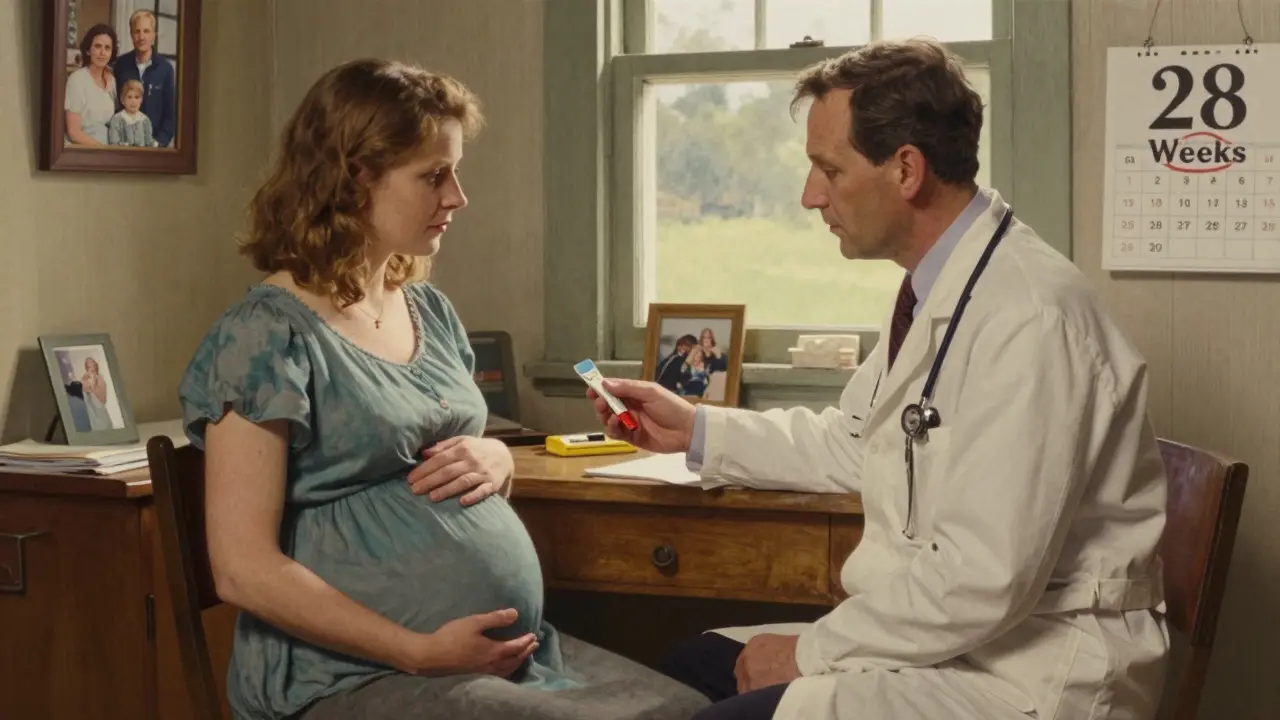
What’s alarming is the recent surge in congenital syphilis-babies born infected. Between 2017 and 2021, cases jumped by 273%. The CDC now recommends that all pregnant women be tested at their first prenatal visit, and again at 28 weeks in areas with high rates. Untreated syphilis during pregnancy can cause stillbirth, premature birth, or severe birth defects.
Treatment is straightforward but depends on the stage. Early syphilis (within the first year) is cured with one shot of benzathine penicillin G (2.4 million units). Late syphilis requires three weekly shots. There’s no alternative to penicillin for pregnant women-other antibiotics won’t protect the baby.
Testing, Partner Notification, and Retesting
Testing is the first step to stopping the spread. Chlamydia and gonorrhea are usually detected with a urine sample or a swab from the genitals or throat. Syphilis requires a blood test. Many clinics offer rapid testing with results in under an hour.
If you test positive, your sexual partners from the last 60 days (for chlamydia and gonorrhea) or up to 90 days (for syphilis) need to be tested and treated-even if they feel fine. This is called partner notification. Many health departments offer anonymous partner notification services to protect your privacy.
Retesting is non-negotiable. For chlamydia and gonorrhea, get tested again three months after treatment. For syphilis, blood tests are repeated at 6 and 12 months to confirm the infection is gone. Don’t skip this step. Reinfection is common, and each new infection increases your risk of complications.
Prevention: Beyond Condoms
Condoms reduce transmission by 60-90% for chlamydia and gonorrhea, and 50-70% for syphilis. But they’re not perfect, especially for infections spread through skin-to-skin contact like syphilis sores.
A newer tool is doxycycline post-exposure prophylaxis, or DoxyPEP. Taking a single 200 mg dose of doxycycline within 72 hours after unprotected sex can cut the risk of chlamydia, gonorrhea, and syphilis by up to 73%-but only for men who have sex with men and transgender women on PrEP. Studies in cisgender women didn’t show the same benefit, so it’s not recommended for them.
The CDC only supports DoxyPEP for high-risk groups because of concerns about antibiotic resistance. It’s not a substitute for regular testing or consistent condom use.
Why This Matters Beyond Your Health
These infections don’t just affect individuals-they strain the entire healthcare system. In the U.S., the annual cost of treating STIs exceeds $16 billion. Chlamydia alone accounts for about $500 million in direct medical costs. Racial disparities are stark: Black Americans have chlamydia rates 5.6 times higher, gonorrhea rates 6.7 times higher, and syphilis rates 3.5 times higher than White Americans.
These gaps aren’t about behavior-they’re about access. People in underserved communities face barriers to testing, treatment, and education. The WHO’s Global STI Strategy 2021-2030 aims to cut syphilis in pregnant women by 90% and reduce chlamydia and gonorrhea by 70%. But without better access to care, those goals won’t be met.
There’s a reason experts call chlamydia a “silent epidemic” and syphilis a “resurgence.” They’re not going away. They’re getting harder to treat. And they’re spreading fastest among the people who need help the most.
What You Can Do Today
- Get tested annually if you’re sexually active-more often if you have new or multiple partners.
- Use condoms every time you have vaginal, anal, or oral sex.
- Ask partners about their STI status and testing history.
- If you test positive, tell your partners and get retested in three months.
- Don’t ignore symptoms like discharge, pain, or rashes-even if they go away.
- Ask your provider about DoxyPEP if you’re a high-risk MSM or transgender woman on PrEP.
These infections are treatable. But they’re not harmless. The best way to protect yourself and others is to know the signs, get tested regularly, and never assume you’re safe just because you feel fine.
Can you get chlamydia or gonorrhea from kissing?
No, chlamydia and gonorrhea are not spread through kissing, hugging, or sharing utensils. They require direct contact with infected genital fluids or mucous membranes-usually during vaginal, anal, or oral sex. Throat gonorrhea can happen from oral sex, but not from casual contact.
Is syphilis curable after years of infection?
Yes, syphilis can be cured at any stage with penicillin. But if it’s progressed to tertiary syphilis-damaging the heart, brain, or nerves-the damage may be permanent. Treatment stops the infection from getting worse, but it can’t reverse what’s already been destroyed. That’s why early detection is critical.
Can you get reinfected after being treated?
Absolutely. Treatment cures the infection you have, but it doesn’t make you immune. You can get chlamydia, gonorrhea, or syphilis again if you have unprotected sex with an infected partner. That’s why retesting and partner treatment are essential.
Do I need to get tested if I have no symptoms?
Yes. Up to 70% of chlamydia infections and 50% of gonorrhea infections show no symptoms. If you’re sexually active, especially under 25 or with new partners, annual testing is recommended-even if you feel perfectly fine. Asymptomatic means you’re still contagious.
Why is DoxyPEP only recommended for some people?
DoxyPEP has been proven effective in reducing STIs among men who have sex with men and transgender women on PrEP. But studies in cisgender women didn’t show the same benefit. There are also concerns about promoting antibiotic resistance if used widely without proper screening. So the CDC limits it to high-risk groups where the benefits clearly outweigh the risks.
How long does it take for STI symptoms to appear?
Symptoms vary by infection. Chlamydia and gonorrhea may appear within 1 to 3 weeks after exposure, but often take longer-or never appear. Syphilis sores show up 10 to 90 days after exposure, usually around 3 weeks. The rash of secondary syphilis can appear weeks to months later. Because timing is unpredictable, testing is the only reliable way to know.
Kimberly Reker
January 29, 2026 AT 16:57Just got tested last week after a new hookup-thank god I caught it early. I know a lot of people think if you feel fine, you’re fine, but that’s how this stuff spreads. Seriously, get checked. It’s quick, it’s free at a lot of clinics, and it saves you from a world of pain later.
Also, doxyPEP is a game changer if you’re in the right group. I’ve been using it since last year and feel way more in control. Not a magic shield, but it’s one less thing to stress about.
Rob Webber
January 31, 2026 AT 04:40This article is pure fearmongering dressed up as public health. Everyone’s acting like chlamydia is the plague. It’s treatable. It’s common. Stop acting like every person who’s had unprotected sex is a walking biohazard. You’re not gonna die from it. You’re gonna get an antibiotic and move on.
And stop shaming people for not using condoms every single time. It’s not 1985. We have science now.
calanha nevin
February 2, 2026 AT 03:13Testing is non-negotiable. Period. The fact that 70% of chlamydia cases are asymptomatic means we can’t rely on symptoms to guide our behavior. That’s not negligence-that’s biology.
Partner notification isn’t about blame. It’s about breaking chains. If you test positive, you’re not a bad person. You’re a person who has a responsibility to protect others. And yes, retesting at three months is mandatory. Not optional. Not ‘if you feel like it.’ Mandatory.
Also, penicillin is still the gold standard for syphilis. No alternatives. Not for pregnant people. Not for anyone. Don’t listen to the ‘natural remedies’ crowd. They’re not helping.
Lisa McCluskey
February 2, 2026 AT 11:15I’ve had chlamydia twice. Both times I didn’t know. No symptoms. No warning. Just a routine test that changed everything.
It’s not about shame. It’s about awareness. And the fact that so many people don’t get tested because they’re scared or embarrassed-that’s the real problem. We need to normalize this. Like getting a flu shot. No big deal.
Also, DoxyPEP isn’t for everyone. But for those it helps? It’s life-changing. Let’s not shut down progress because it doesn’t work the same for everyone.
owori patrick
February 3, 2026 AT 13:56In Nigeria, we don’t have access to testing like this. Most people don’t even know what STIs are beyond ‘bad disease.’ I wish more people here could read this. We need education, not just meds.
Also, the part about racial disparities? So real. It’s not about who’s sleeping with whom. It’s about who can walk into a clinic and be treated like a human.
Thanks for writing this. I’m sharing it with my community group.
Claire Wiltshire
February 4, 2026 AT 03:11Thank you for the clear, well-researched breakdown. As someone who works in public health outreach, I see daily how stigma prevents people from seeking care. This article is exactly the kind of resource we need to distribute.
One small note: when discussing DoxyPEP, it’s worth emphasizing that it’s not a replacement for consistent condom use or regular testing. It’s an additional layer of protection, not a license to skip precautions.
And yes-retesting after treatment is critical. I’ve seen too many patients return with reinfections because they assumed ‘treated’ meant ‘immune.’ It doesn’t work that way.
Darren Gormley
February 4, 2026 AT 15:38LOL at the CDC ‘urgent threat’ label. So gonorrhea is now the new zombie virus? Next they’ll say we need to wear hazmat suits to the gym.
And doxyPEP? Only for gay men and trans women? That’s not science-that’s discrimination. Why not just say ‘only for people we care about’?
Also, syphilis causing dementia? That’s 1920s fear porn. We have antibiotics. It’s not 1890. Chill out.
PS: I’m not saying this isn’t serious. I’m saying we’re being manipulated into panic mode. Again.
Mike Rose
February 5, 2026 AT 08:13bro why is this so long. just say ‘get tested and use condoms’ and leave it at that.
also why is everyone so scared of a little bacteria? i got chlamydia once, took a pill, done. no big deal.
doxypep? sounds like a new energy drink. who even came up with this name?
Russ Kelemen
February 6, 2026 AT 12:20There’s something deeply human here. We treat STIs like moral failures, but they’re biological realities. You don’t get them because you’re reckless-you get them because you’re alive, and sex is part of that.
What this article really shows is how our systems fail people who need care the most. The racial disparities aren’t accidents. They’re the result of decades of underfunded clinics, stigma, and neglect.
And yes, you can get reinfected. But that doesn’t mean you failed. It means the system didn’t catch you in time. We need to stop punishing people for being human.
Testing isn’t a checkmark. It’s a lifeline. And if we treated it that way-like we do with blood pressure or cholesterol-we’d be in a completely different place.
Sidhanth SY
February 7, 2026 AT 07:51From India, where STI education is still taboo. This article is a breath of fresh air. My cousin got syphilis last year and didn’t tell anyone for months because she was scared of being judged.
It’s not about sex. It’s about access. And shame. We need to break both.
Also, the part about congenital syphilis? That broke my heart. No baby should suffer because their parent couldn’t get a simple blood test.
Thank you for writing this. I’m translating it for my local youth group.