
The Science of Medication Safety: Understanding Risk, Benefit, and Real-World Evidence
 Feb, 1 2026
Every time you take a pill, there’s a quiet calculation happening behind the scenes. Your doctor weighed the chance it might help you against the chance it might hurt you. That’s not guesswork-it’s medication safety in action. But what does that really mean? And how do we know if a drug is truly safe for you, not just in a clinical trial, but in your life-with your other medications, your age, your diet, your sleep habits?
Why Clinical Trials Aren’t Enough
Clinical trials are the starting point, not the finish line. A new drug might be tested on 2,000 people over a year. That sounds like a lot. But here’s the problem: if a side effect only happens to 1 in 10,000 people, you’re almost guaranteed to miss it. And if it only shows up after two years of use? Still missed. That’s not a flaw in the system-it’s a limitation of scale and time.Think of it like this: you wouldn’t judge a car’s safety based on a test drive on a closed track. You’d want to know how it handles in rain, snow, heavy traffic, and after 100,000 miles. Medications are the same. The real world is messy. People take multiple drugs. They forget doses. They have kidney problems or take herbal supplements. Clinical trials try to control for all that. Real life doesn’t.
The Rise of Pharmacoepidemiology
This is where pharmacoepidemiology steps in. It’s not a fancy word for luck-it’s the science of studying how drugs behave in large, real populations. It uses data from millions of patient records: Medicare claims, hospital systems like Kaiser Permanente, and federal databases like the FDA’s Sentinel Initiative, which tracks over 190 million people.Instead of giving a drug to one group and a placebo to another, researchers look backward. They find people who took a certain medication and compare them to people who didn’t. Did more of the first group end up in the hospital with a rare reaction? That’s a red flag. They use smart statistical tricks-like matching patients by age, gender, and other health conditions-to make the groups as fair as possible. Some methods even compare a person to themselves before and after taking the drug, cutting out personal factors that could skew results.
This approach caught the attention of regulators after the thalidomide disaster in the 1960s, when thousands of babies were born with severe birth defects because the drug hadn’t been tested in pregnant women. Today, the FDA requires companies to monitor drugs after they’re on the market. That’s called post-marketing surveillance. And 78% of all FDA safety alerts between 2015 and 2022 came from this kind of real-world data.
How We Measure Risk and Benefit
It’s not enough to say a drug has side effects. You need to know how often, how bad, and who’s most at risk.Take opioids. They’re powerful painkillers, but they caused 80,000 deaths in the U.S. in 2022. That’s not a side effect-it’s a public health crisis. Pharmacoepidemiology helped identify patterns: people on high doses for longer than three months, those also taking benzodiazepines, older adults with breathing problems. That’s how guidelines changed. Doctors now check for these risk factors before prescribing.
On the flip side, we’ve seen real wins. At Kaiser Permanente, a simple protocol for using phenobarbital to treat alcohol withdrawal cut severe withdrawal cases by 42% across 12 hospitals. That’s not magic. It’s data-driven practice. Nurses tracked who got the drug, when, and how they responded. They adjusted doses based on what actually worked-not just what the textbook said.
But here’s the catch: not every study agrees. A 2021 review in JAMA Internal Medicine found that 22% of the “significant” links found in observational studies were later disproven by randomized trials. That’s why experts say we need both. RCTs tell us if a drug works under ideal conditions. Observational studies tell us what happens when it’s used in the real world. One doesn’t replace the other-they complete each other.
The Tools Making a Difference
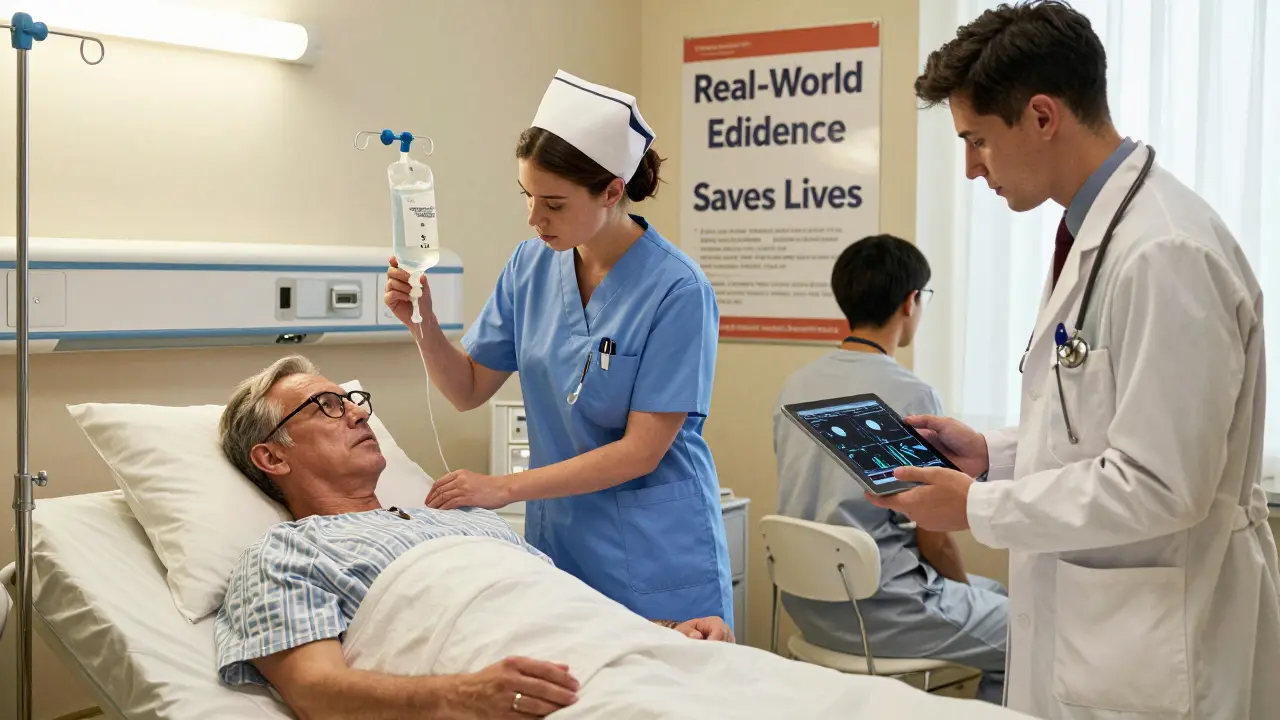
Technology is changing how we catch errors before they happen. Most hospitals now use clinical decision support systems-computer alerts that pop up when a doctor tries to prescribe a drug that might clash with another. Sounds great, right?Here’s the problem: prescribers override 89% of these alerts. Why? Too many false alarms. If your system warns you every time you try to prescribe ibuprofen to someone on blood pressure meds-even when the risk is tiny-you start ignoring them. Alert fatigue is real. And it’s dangerous.
Now, smarter systems are coming. Instead of just flagging interactions, they’re learning. AI tools now analyze a patient’s full history-medications, lab results, even sleep patterns-and predict who’s most likely to have an adverse reaction. Early tests show these systems reduce high-alert medication errors by 22-35%. That’s not just efficiency-it’s lives saved.
Who’s at Greatest Risk?
Medication safety isn’t equal for everyone. Three groups face the highest risk:- Older adults: 15% of Medicare patients have a drug-related problem each year. Why? They often take five or more medications. Each one adds a new chance for interaction.
- People on opioids: As mentioned, over 80,000 died in 2022. The risk spikes when opioids are mixed with sleep aids or alcohol.
- Hospitalized patients: Nearly 40% of preventable drug errors happen at the bedside. Nurses give the wrong dose. The wrong drug. The wrong time. Often because systems are fragmented and communication breaks down.
At the same time, nurses who received training in medication safety showed a 61% improvement in safe practices. That’s not a small number. It means education works. Clear protocols work. Systems that support, not punish, staff work.
What’s Next?
The field is moving fast. The FDA is testing ways to use data from smartwatches and fitness trackers to spot early signs of drug side effects-like unusual heart rhythms or drops in activity levels. By 2025, they plan to include this in safety monitoring.Meanwhile, the global market for drug safety monitoring is expected to grow from $5.2 billion in 2023 to over $11 billion by 2028. More hospitals are hiring dedicated medication safety officers. More drug companies are required to run post-market studies. But challenges remain: data privacy concerns after recent court rulings, inconsistent quality in medical records, and the fact that 25% of medication data in databases is incomplete or wrong.
Still, the direction is clear. We’re moving from reacting to harm to preventing it. From one-size-fits-all prescribing to personalized safety plans. From trusting a trial of 2,000 people to learning from millions.
What You Can Do
You don’t need to be a scientist to protect yourself. Here’s what actually helps:- Keep a list of every medication you take-including vitamins, supplements, and over-the-counter drugs-and bring it to every appointment.
- Ask: “What’s this for? What if I miss a dose? What are the most common side effects?”
- Use one pharmacy. They can flag interactions between your prescriptions and OTCs.
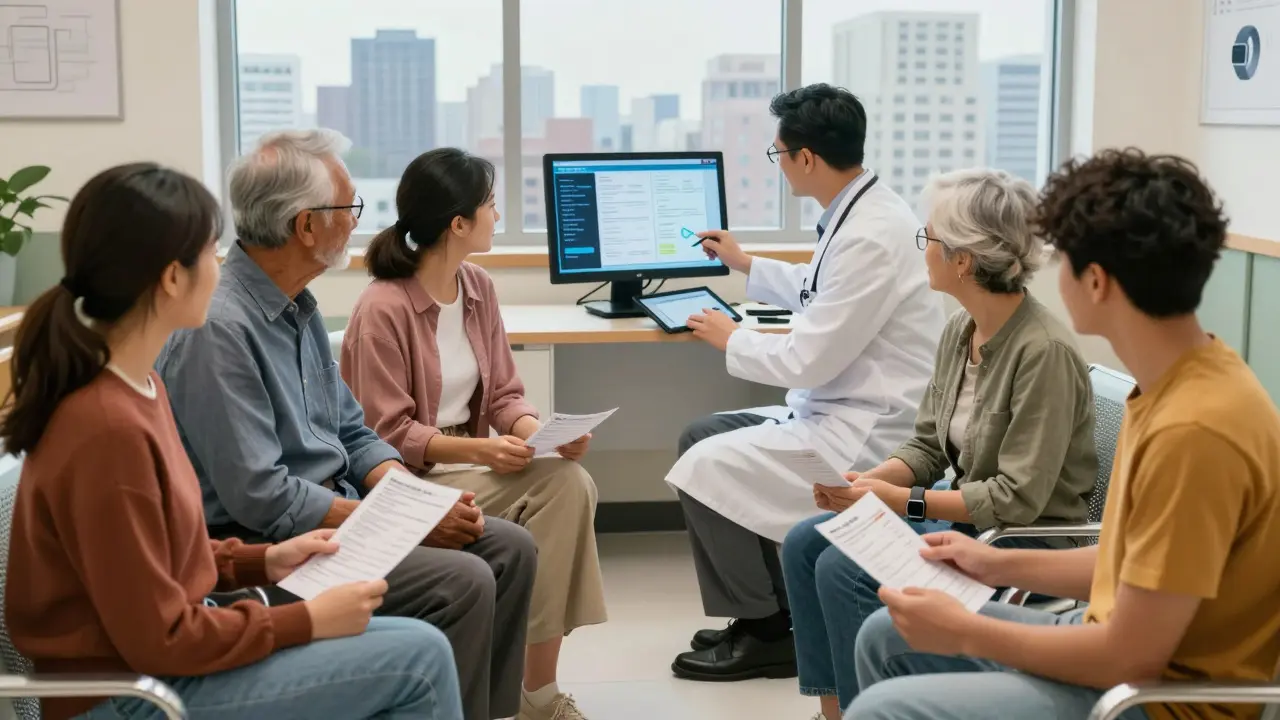
- If you’re over 65 and take five or more drugs, ask your doctor for a medication review. Many clinics offer this for free.
Medication safety isn’t just about regulators and researchers. It’s about you, your doctor, and your pharmacist working together. The science is advanced. The tools are improving. But the most powerful safety net is still a person who asks questions-and listens to the answers.
What’s the difference between a clinical trial and real-world evidence?
Clinical trials test drugs under strict, controlled conditions with a small group of people over a short time. Real-world evidence looks at how drugs behave in everyday life-across millions of people, with all their other health conditions, medications, and habits. Trials tell us if a drug works. Real-world data tells us if it’s safe for you.
Are prescription drugs safer than over-the-counter ones?
Not necessarily. Prescription drugs go through more testing before approval, but people often take OTC drugs longer, in higher doses, or with other medications-without medical supervision. Studies show OTC painkillers like ibuprofen and acetaminophen cause more hospitalizations than many prescription drugs because they’re used so widely and carelessly.
How do I know if a drug warning is serious?
Look for the source. A warning from the FDA or a major medical journal like JAMA or The Lancet carries weight. Be cautious of alerts from websites selling supplements or vague social media posts. Serious warnings usually include specific symptoms (like liver damage, irregular heartbeat, or severe rash) and mention how common the risk is. If you’re unsure, call your pharmacist-they see these alerts every day.
Can AI really prevent medication errors?
Yes, but not perfectly. Early AI tools just flagged interactions and caused alert fatigue. Newer systems use machine learning to predict who’s at risk based on their full health history-not just drug lists. Hospitals using these systems report 22-35% fewer serious medication errors. The key is combining AI with human oversight, not replacing it.
Why do some drug recalls happen years after approval?
Because rare or long-term side effects don’t show up in small, short-term trials. A drug might be tested on 5,000 people for a year. But if it causes a rare liver problem in 1 in 50,000 people-and only after three years of use-it won’t be caught until thousands more are taking it. That’s why post-market surveillance is critical. Recalls aren’t failures-they’re proof the system is working.
What should I do if I think a medication is harming me?
Don’t stop suddenly unless it’s an emergency. Call your doctor or pharmacist first. Then, report it to the FDA’s MedWatch program. You can do it online in under five minutes. Your report helps researchers spot patterns. Thousands of reports led to safety changes for drugs like Vioxx and certain antidepressants. Your voice matters.
jay patel
February 1, 2026 AT 11:58Man i read this whole thing and honestly? My grandpa takes 12 pills a day and still thinks his ginkgo biloba is doing more than his blood pressure med. Real world evidence? Bro he’s been taking that supplement since 1998 and swears it keeps his arthritis away. Meanwhile his kidneys are screaming. We need better systems but also better communication. Like maybe a checklist that doesn’t look like a tax form.
Ansley Mayson
February 2, 2026 AT 13:04Another liberal panic over pills. Clinical trials are fine. People die from accidents, bad diet, and laziness. Stop blaming drugs. If you can’t follow simple instructions don’t blame the FDA. Also why is this even a thing? Just take your meds or don’t. End of story.
phara don
February 3, 2026 AT 12:08Interesting stuff. I wonder how many of those AI systems are trained on data from non-white populations? I’ve seen studies where algorithms fail hard on underrepresented groups. Also-how many of those 190M records actually have accurate dosing info? Just asking 😅
Eli Kiseop
February 4, 2026 AT 06:20My pharmacist caught a deadly interaction between my antidepressant and a common cold med I bought online. No doctor ever asked about supplements. I just thought turmeric was harmless. Turns out it’s not. This article gets it. Also-why do we still use paper lists? My phone has a note called ‘meds’ with pics of the bottles. Works better than any app.
Murarikar Satishwar
February 5, 2026 AT 12:57Excellent breakdown. The shift from RCTs to pharmacoepidemiology is one of the most underappreciated advances in modern medicine. The fact that 78% of FDA safety alerts originate from real-world data underscores how vital post-market surveillance is. However, we must also address data integrity issues-many EHRs still rely on free-text entries that are inconsistently coded. Standardization of SNOMED CT and RxNorm terminologies across institutions would significantly improve signal detection. Furthermore, the 22-35% reduction in errors with AI-driven systems is statistically significant and clinically meaningful, provided human oversight remains embedded in the workflow. Education and system design must evolve together.
Marc Durocher
February 6, 2026 AT 10:35So we’re using AI to stop doctors from making mistakes… but doctors override 89% of alerts because they’re useless. That’s like putting a fire alarm in your kitchen that goes off every time you toast bread. At some point you just turn it off. The real problem isn’t the tech-it’s that we’re drowning in noise. We need smarter alerts, not more alerts. And maybe, just maybe, stop treating every patient like a walking drug interaction checklist.
larry keenan
February 7, 2026 AT 22:22It is imperative to acknowledge that the convergence of clinical decision support systems with longitudinal pharmacovigilance databases represents a paradigmatic shift in pharmacotherapy safety. The algorithmic integration of multimodal patient data-including wearable-derived physiological metrics-holds substantial promise for predictive risk stratification. Nevertheless, the persistent issue of alert fatigue, compounded by suboptimal interoperability among electronic health record platforms, continues to undermine the efficacy of these interventions. Future iterations must prioritize contextual awareness and user-centered design to mitigate cognitive overload among prescribers.
Akhona Myeki
February 8, 2026 AT 04:15Let me tell you something about American medicine. You think this is advanced? In South Africa we don’t have half this data. We don’t have AI, we don’t have 190 million records-we have nurses who memorize every patient’s meds because the system crashed again. And yet, we still save lives. This whole post feels like rich people solving problems they created. Real safety? It’s training. It’s respect. It’s not having to choose between insulin and rent. But sure, let’s build another app.
Gary Mitts
February 8, 2026 AT 05:47Just ask your pharmacist. Done.