
Wilson’s Disease: Understanding Copper Accumulation and Chelation Therapy
 Dec, 15 2025
Wilson’s disease isn’t something you hear about often-but if you or someone you know has unexplained liver problems, tremors, or trouble speaking, it might be the hidden cause. This rare genetic disorder doesn’t attack the body with viruses or toxins. Instead, it lets copper build up silently inside the liver, brain, and eyes-until it’s too late. The good news? If caught early, Wilson’s disease can be managed. The bad news? Most people wait years before getting the right diagnosis.
What Happens When Your Body Can’t Get Rid of Copper
Every day, you absorb copper from food-nuts, shellfish, chocolate, organ meats. Normally, your liver handles it like a sorting center: it uses copper to make ceruloplasmin (a protein that carries copper in your blood) and pushes the rest out through bile into your intestines to be excreted. In Wilson’s disease, that system breaks down.The problem starts with a faulty gene: ATP7B. This gene makes a protein that acts like a copper pump in liver cells. When it’s broken, copper doesn’t get loaded into ceruloplasmin, and it doesn’t get flushed out into bile. Instead, it piles up inside the liver. At first, metallothionein proteins trap it like a sponge. But once those are full, copper leaks into the bloodstream as free copper-unbound, toxic, and ready to damage organs.
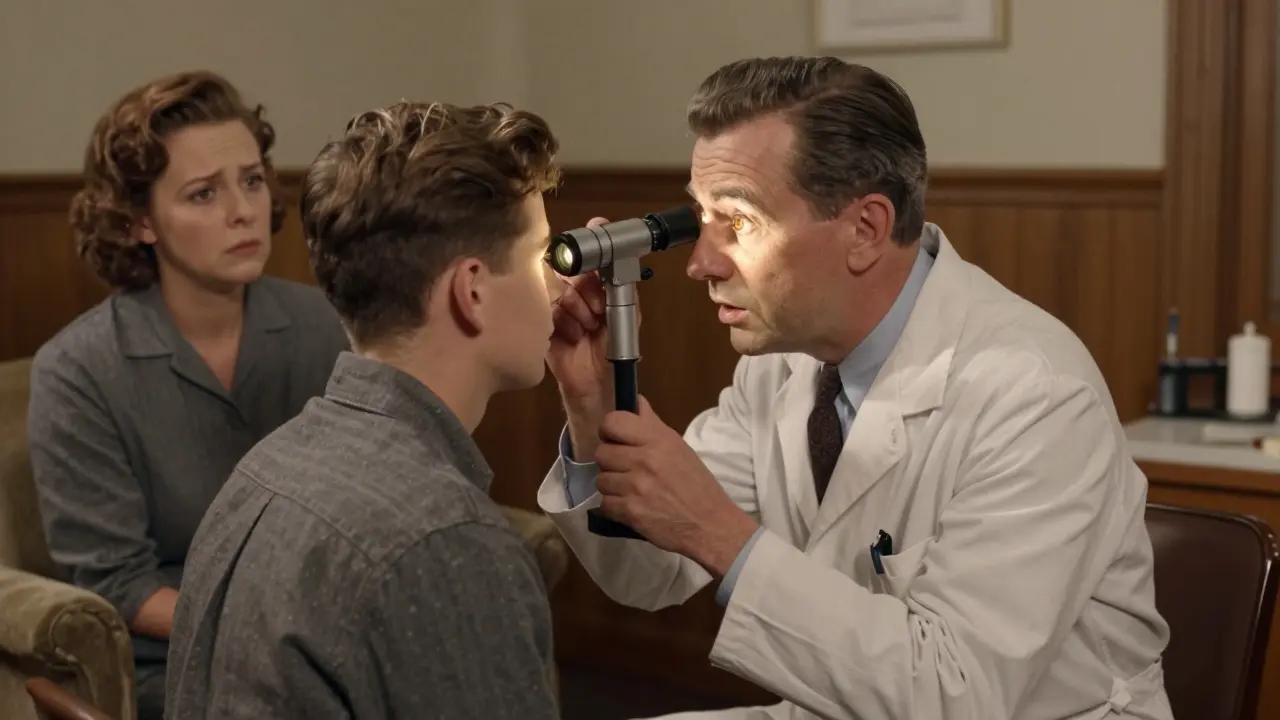
That’s when symptoms start. The liver gets hit first: fatigue, jaundice, abdominal swelling. But the brain is next. Copper settles in the basal ganglia-the part that controls movement. That’s when tremors, stiffness, trouble swallowing, or even sudden personality changes show up. In 95% of people with neurological symptoms, a telltale sign appears in the eyes: Kayser-Fleischer rings. These are golden-brown rings around the iris, visible only through an eye exam. They’re not painful, but they’re a dead giveaway.
Why Diagnosis Takes So Long
Wilson’s disease mimics other conditions. Liver enzymes rise? Autoimmune hepatitis. Tremors and mood swings? Parkinson’s or mental illness. Many patients see five or six doctors before someone runs the right tests.Standard blood tests often miss it. Ceruloplasmin levels are low in 85% of cases, but not always-especially in kids. Urine copper is more reliable: over 100 micrograms in 24 hours strongly suggests Wilson’s. But in neurological cases, that number can be normal. That’s why doctors now use a scoring system that includes:
- Serum ceruloplasmin (below 20 mg/dL)
- 24-hour urinary copper (above 80-100 μg)
- Kayser-Fleischer rings (seen by slit-lamp exam)
- Liver biopsy showing copper over 250 μg/g dry weight
- ATP7B gene mutations (definitive confirmation)
One patient in Brisbane, diagnosed at 28 after seven years of misdiagnoses, told his doctor: “I thought I had hepatitis. I didn’t know copper could kill you.” That’s the reality. Without testing for copper metabolism, Wilson’s disease stays invisible.
Chelation Therapy: How You Remove the Toxin
Once diagnosed, treatment begins immediately. The goal isn’t to eliminate copper-your body needs it for nerve function, iron absorption, and enzyme activity. It’s to stop the overload.The first-line drugs are chelators: molecules that grab copper and carry it out through urine. Two main ones are used:
- D-penicillamine: The oldest option, taken 3-4 times a day on an empty stomach. It’s cheap-under $300 a month in the U.S.-but causes side effects in half of users: nausea, skin rashes, and, dangerously, neurological worsening in the first few weeks. About 22% develop a lupus-like reaction.
- Trientine: A gentler alternative, with fewer side effects. But it’s expensive-around $1,850 a month. Many patients switch to this after bad reactions to penicillamine.
Both drugs can cause copper deficiency if overused. That’s why doctors monitor urinary copper levels every six months. The target? 200-500 μg/day. Too low means you’re losing too much copper. Too high means you’re not removing enough.

Zinc: The Silent Protector
After initial chelation, most patients switch to zinc acetate. Zinc doesn’t pull copper out of the body-it stops it from entering in the first place.How? Zinc triggers your gut to make metallothionein, a protein that binds copper from food and traps it in intestinal cells. That copper then gets shed in stool instead of being absorbed. Zinc is taken three times daily, 30 minutes before meals. It’s safe, cheap (around $450/month), and effective. In fact, 92% of patients on zinc maintenance avoid neurological damage if their free serum copper stays under 10 μg/dL.
But here’s the catch: zinc doesn’t work fast enough for someone already showing brain symptoms. That’s why it’s never the first drug-it’s the long-term guard.
What Patients Really Struggle With
Treatment isn’t just about pills. It’s about lifestyle.Patients must follow a low-copper diet: under 1 mg per day. That means avoiding:
- Shellfish (oysters, crab)
- Organ meats (liver, kidney)
- Mushrooms, nuts, chocolate, dried fruits
- Tap water from copper pipes
- Copper cookware
But cutting out these foods isn’t easy. A 2022 survey of 317 patients found 89% struggled with dietary restrictions. Many lost weight unintentionally or developed iron deficiency from avoiding red meat. One patient said, “I miss steak. I miss nuts. But I’d rather live without them than end up in a wheelchair.”
Medication side effects are another hurdle. Metallic taste, nausea, fatigue-these make people skip doses. In the same survey, 35% admitted to missing pills regularly. Missing even one day can cause copper to creep back up.
New Hope on the Horizon
The field is changing. In 2023, a new drug called CLN-1357 showed promise in a phase 3 trial: it lowered free copper by 82% in 12 weeks with zero neurological worsening. Unlike chelators, it doesn’t pull copper out of the brain-it just binds it in the blood.Another breakthrough is WTX101 (bis-choline tetrathiomolybdate). Approved for breakthrough therapy by the FDA in early 2023, it crosses the blood-brain barrier better than older drugs. In trials, it prevented neurological decline in 91% of patients-far better than trientine’s 72%.
Even more exciting? Gene therapy. Early trials using a modified virus to deliver a working ATP7B gene into liver cells are underway. In a small group of six patients, the treatment was safe and showed signs of restoring copper regulation. It’s not ready yet-but it’s the first real shot at a cure.
What Happens If You Don’t Treat It
Left untreated, Wilson’s disease is always fatal. Copper keeps building. The liver fails. The brain deteriorates. Patients slip into coma. Death usually occurs before age 40.But with treatment, life expectancy returns to normal. A 2023 Lancet review confirmed that patients diagnosed early and treated consistently live just as long as anyone else. The key? Consistency. Regular blood tests. Daily pills. Diet discipline. No exceptions.
One patient, now 45, was diagnosed at 17 after collapsing from liver failure. He’s been on zinc for 28 years. “I don’t think about it anymore,” he says. “It’s just part of my day, like brushing my teeth.”
When to Suspect Wilson’s Disease
If you or someone you know has:- Unexplained liver disease (especially in teens or young adults)
- Tremors, muscle stiffness, or trouble speaking without a clear cause
- Psychiatric symptoms like depression or aggression that don’t respond to therapy
- A family history of liver disease or unexplained neurological issues
Ask for a copper test. Don’t wait for the classic signs. Early detection saves lives.
Can Wilson’s disease be cured?
There’s no cure yet, but with lifelong treatment, Wilson’s disease can be fully controlled. Most patients live normal lifespans if they stick to medication, diet, and monitoring. Gene therapy is in early trials and may one day offer a true cure.
Is Wilson’s disease hereditary?
Yes. It’s an autosomal recessive disorder, meaning you inherit two faulty copies of the ATP7B gene-one from each parent. If both parents are carriers (which happens in about 1 in 90 people), each child has a 25% chance of having the disease. Siblings of diagnosed patients should be tested.
Can you outgrow Wilson’s disease?
No. Wilson’s disease is a lifelong genetic condition. Symptoms may appear in childhood or adulthood, but the underlying defect never goes away. Treatment must continue for life, even if you feel fine.
Are there natural remedies for Wilson’s disease?
No. Diet alone cannot remove enough copper to prevent damage. Chelation therapy and zinc are the only proven treatments. Avoiding copper-rich foods helps, but it’s not a substitute for medication. Unproven supplements can be dangerous and delay proper care.
How often do you need blood tests for Wilson’s disease?
During active treatment, blood tests for liver function and free copper are done every 3 months. Urinary copper is checked every 6 months. Once stable, tests may be spaced to every 6-12 months, but never stopped. Monitoring is non-negotiable.
jeremy carroll
December 16, 2025 AT 10:27Man, I had no idea copper could do this. My uncle had liver issues for years and they kept calling it hepatitis. If someone had just tested for Wilson’s, he might still be here. This post saved my life probably.
Thomas Anderson
December 17, 2025 AT 00:50Simple truth: if you got tremors + liver weirdness + no clear cause, get a copper test. No excuses. It’s cheap, it’s quick, and it beats ending up in a wheelchair.
Daniel Wevik
December 18, 2025 AT 22:16The ATP7B mutation disrupts copper homeostasis by impairing biliary excretion and ceruloplasmin incorporation, leading to free copper accumulation in hepatocytes. Once metallothionein saturation occurs, oxidative stress cascades trigger mitochondrial dysfunction in basal ganglia neurons-hence the Parkinsonian phenotypes. Kayser-Fleischer rings reflect copper deposition in Descemet’s membrane, detectable via slit-lamp biomicroscopy. Diagnostic scoring systems like the Leipzig criteria integrate clinical, biochemical, and genetic parameters for sensitivity >95%. Chelation with trientine avoids the pro-oxidant risks of penicillamine, while zinc induces intestinal metallothionein to block dietary absorption. Long-term monitoring of urinary copper (target 200–500 μg/24h) and serum free copper (<10 μg/dL) is non-negotiable for preventing neurodegeneration.
Sinéad Griffin
December 20, 2025 AT 04:51USA needs to make this screening mandatory for teens with unexplained neurological symptoms. 🇺🇸 We’re wasting lives because doctors are lazy. My cousin was misdiagnosed for 5 years. This isn’t rare-it’s ignored.
Jonny Moran
December 21, 2025 AT 13:27My brother’s on zinc now. He was skeptical at first-thought it was just another pill. But after 3 years? No tremors, no brain fog, liver numbers normal. It’s not glamorous, but it works. Stick with it. You’re not broken-you’re managing.
Rich Robertson
December 22, 2025 AT 22:48I’m from Australia and we’ve got a pretty strong Wilson’s registry here. Early detection programs in schools? Not yet. But in Melbourne, they screen siblings of diagnosed patients automatically. That’s the model we need everywhere. Prevention beats cure every time.
Alexis Wright
December 23, 2025 AT 14:23Let’s be honest-this whole system is a scam. Chelation therapy? Expensive, toxic, and temporary. Zinc? A band-aid. Gene therapy’s in trials? Great. But why did it take 70 years to get here? Because Big Pharma profits more from lifelong maintenance than a cure. You think they want you healed? No. They want you compliant. The real disease isn’t copper-it’s capitalism.
Wade Mercer
December 25, 2025 AT 05:43People who skip their zinc because they ‘feel fine’ are playing Russian roulette with their brains. You don’t get to decide when the copper comes back. It doesn’t care how you feel. It’s not a choice. It’s biology. And if you can’t handle that, then maybe you shouldn’t be alive.
Daniel Thompson
December 25, 2025 AT 20:23As a hepatologist, I’ve seen over 40 cases. The most tragic? Patients who were told their tremors were ‘stress’ or ‘anxiety’-and then died within two years. Diagnosis requires a low ceruloplasmin, elevated urinary copper, slit-lamp exam, and genetic confirmation. No single test is perfect. But if three out of five criteria are met, treat. Don’t wait. Don’t overthink. Act.