
Basal vs. Squamous Cell Carcinoma: Key Differences, Risks, and Treatment
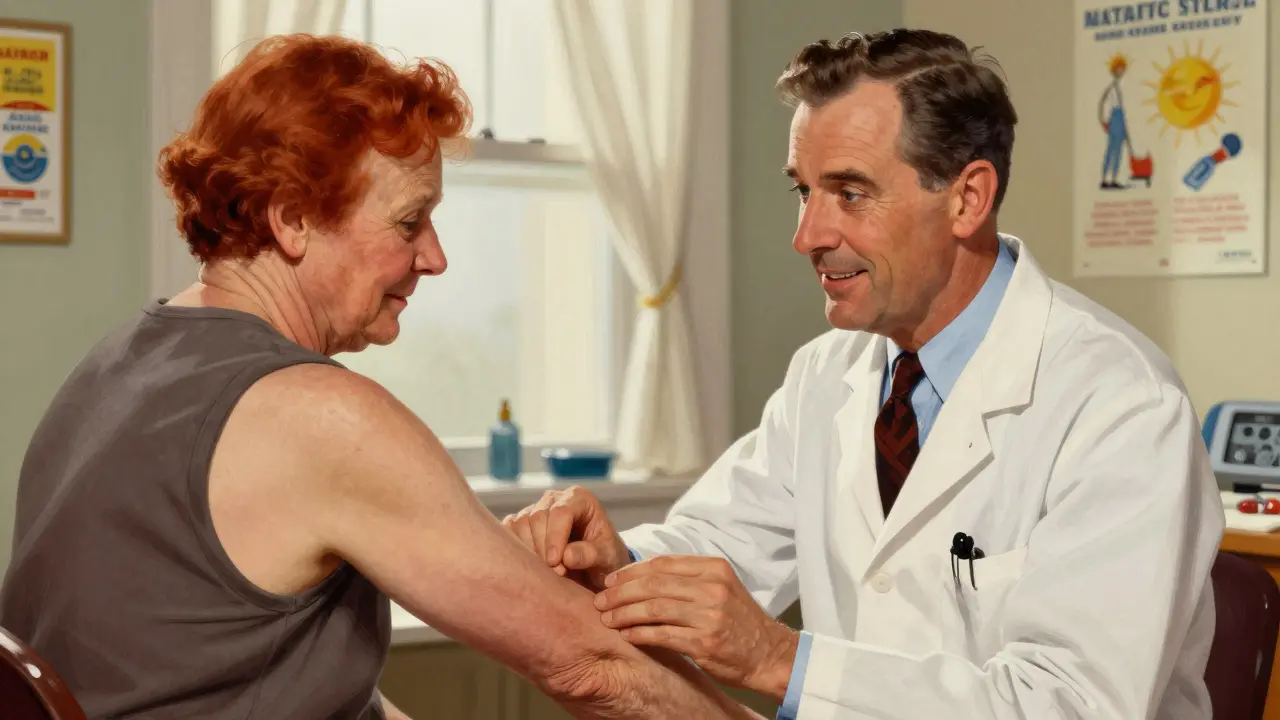 May, 5 2026
Most people know that skin cancer is a serious threat, but they often stop at the word "melanoma." The reality is that nonmelanoma skin cancer, which includes basal cell carcinoma (BCC) and squamous cell carcinoma (SCC), accounts for roughly 95% of all skin cancer cases globally. While both are highly treatable when caught early, they behave very differently under the microscope and in your body. Understanding the distinction between these two types isn't just academic-it can save your life by helping you recognize warning signs earlier.
The Core Difference: Where It Starts
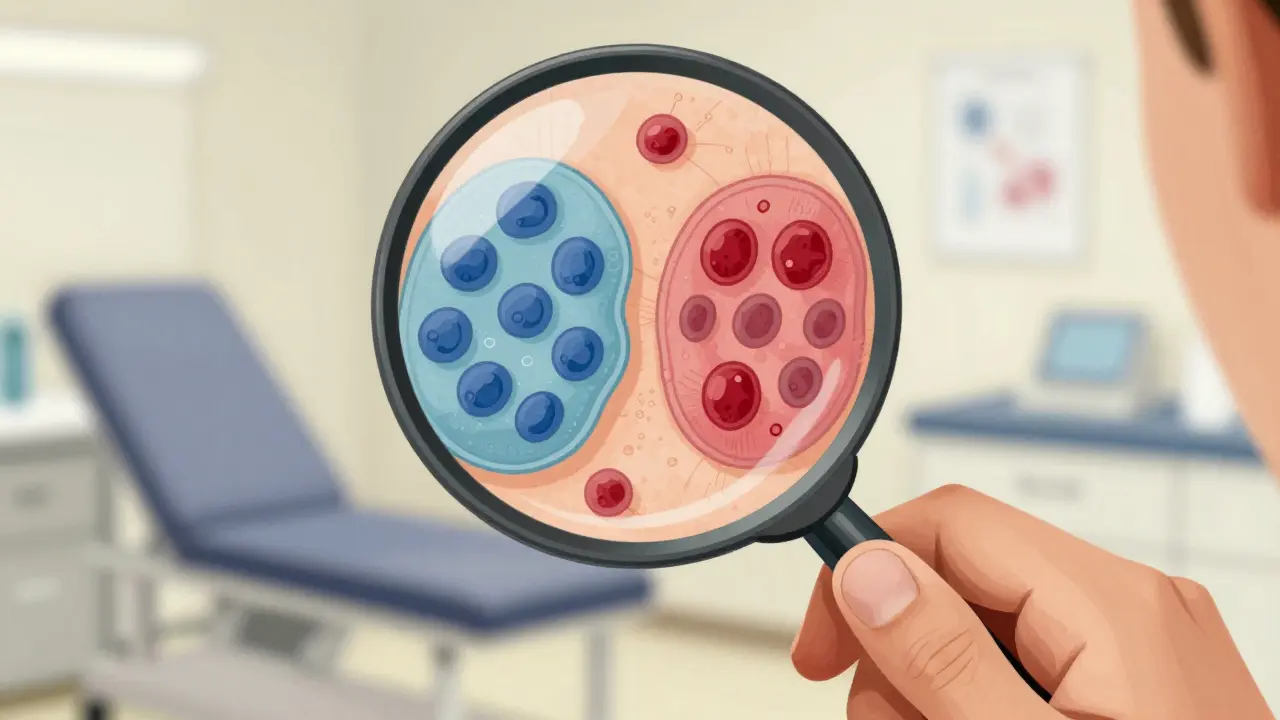
To understand why BCC and SCC act differently, you have to look at where they start in your skin. Your epidermis has several layers. Basal cells sit at the bottom layer (the stratum basale). They are the factory workers, constantly dividing to create new cells that push upward. As these cells move up, they flatten out and become squamous cells.
Basal cell carcinoma begins in those deep basal cells. Because it starts lower down, it tends to grow slowly and locally. It rarely spreads to other parts of the body. In contrast, Squamous cell carcinoma starts in the upper layers. These cells are more exposed to environmental damage over time. This difference in origin explains why SCC is generally considered more aggressive than BCC.
How to Spot Them: Visual Clues
You might not be able to tell them apart with the naked eye, but there are distinct patterns dermatologists look for. Knowing what to expect can help you decide when to book an appointment.
Basal Cell Carcinoma (BCC) usually looks like:
- A shiny, pearly bump (this is the most common presentation, seen in about 70% of cases).
- An open sore that bleeds, scabs, and never fully heals.
- A scar-like patch that is white, yellow, or waxy.
Squamous Cell Carcinoma (SCC) typically presents as:
- A firm, red nodule with a central depression.
- A rough, scaly patch on the skin, lip, or tongue.
- A wart-like growth that may crust or bleed.
- An old sore or scar that suddenly becomes painful or starts bleeding again.
If you notice any new growth that doesn’t heal within a few weeks, don’t wait. Early detection is the single most important factor in treatment success for both types.

Risk Factors: Who Is Most Vulnerable?
Both cancers share a primary enemy: ultraviolet (UV) radiation from the sun. However, the way UV exposure affects them differs slightly. BCC is often linked to intense, intermittent sunburns-think of summer vacations or childhood beach days gone wrong. SCC, on the other hand, is strongly associated with cumulative, long-term sun exposure. If you’ve spent decades working outdoors without adequate protection, your risk for SCC rises significantly.
Other major risk factors include:
- Fair skin: People with lighter skin tones, blue eyes, and blonde or red hair lack sufficient melanin protection.
- Age: About 85% of cases occur in people over 50. The average age of diagnosis is 67 for BCC and 69 for SCC.
- Immunosuppression: This is a critical differentiator. Organ transplant recipients face a 250-fold increased risk of SCC compared to the general population, while their risk for BCC increases only about 10-fold.
- Location: Lesions on high-risk areas like the lips, ears, and genitalia are more likely to metastasize if left untreated.
The Metastasis Gap: Why SCC Is More Dangerous
This is where the conversation shifts from inconvenience to urgency. Basal cell carcinoma is notorious for being locally destructive but rarely spreading. It metastasizes in fewer than 0.1% of cases. However, if ignored for years, it can eat into bone and cartilage, causing significant disfigurement.
Squamous cell carcinoma is different. It has a metastatic potential of approximately 2-5% overall. But here’s the catch: if the SCC is located on the ear or lip, that risk jumps to 9% and 14%, respectively. Once SCC spreads to lymph nodes or distant organs, the five-year survival rate drops dramatically from over 95% to between 25% and 45%. This is why doctors urge faster action for SCC diagnoses.
| Feature | Basal Cell Carcinoma (BCC) | Squamous Cell Carcinoma (SCC) |
|---|---|---|
| Prevalence | ~80% of nonmelanoma skin cancers | ~20% of nonmelanoma skin cancers |
| Growth Rate | Slow (0.5-1.0 cm/year) | Faster (1.5-2.0 cm/year) |
| Metastasis Risk | <0.1% | 2-5% (up to 15% in high-risk sites) |
| Primary Cause | Intermittent intense UV exposure | Cumulative UV exposure |
| Treatment Complexity | Less invasive initially | Often requires wider margins/deeper excision |
Treatment Approaches: What to Expect
Good news: both cancers have excellent cure rates when treated early. Surgical excision achieves 95-98% cure rates for primary lesions. However, the approach differs based on the type and location.
Mohs Micrographic Surgery is the gold standard for many cases, especially on the face. It involves removing thin layers of skin and examining them immediately under a microscope until no cancer cells remain. For primary BCC, Mohs surgery boasts a 99% five-year cure rate. For primary SCC, it’s slightly lower at 97%, largely due to SCC’s tendency to send microscopic roots deeper into the tissue.
For superficial BCC, topical treatments like 5-fluorouracil or imiquimod creams can be effective, clearing 60-70% of cases. These topicals are less effective for SCC, achieving only 40-50% clearance, so surgery is usually preferred for SCC from the start.
In advanced cases, systemic therapies come into play. The FDA approved cemiplimab (Libtayo) in 2018 as an immunotherapy for metastatic SCC, showing response rates of 47% where chemotherapy previously struggled. For advanced BCC, hedgehog pathway inhibitors like vismodegib offer targeted relief, though they come with significant side effects.
Prevention and Monitoring
Prevention remains your best defense. Daily use of broad-spectrum sunscreen reduces BCC risk by 40% and SCC risk by 50%. Wear protective clothing, seek shade during peak UV hours (10 am to 4 pm), and avoid tanning beds entirely.
If you’ve had one skin cancer, you’re at higher risk for another. High-risk patients-including those with a history of multiple cancers, fair skin, or immunosuppression-should see a dermatologist every three to four months. Studies show that 73% of recurrent SCC cases are detected within 12 months of prior treatment, making regular check-ups crucial.
Perform monthly self-exams using a mirror. Check your scalp, back, and hard-to-see areas. Look for changes in size, color, or texture. Remember: a spot that doesn’t heal in four weeks needs professional evaluation.
Is basal cell carcinoma more dangerous than squamous cell carcinoma?
No, squamous cell carcinoma (SCC) is generally considered more dangerous because it has a higher potential to metastasize (spread to other parts of the body). While basal cell carcinoma (BCC) is more common and rarely spreads, it can cause significant local tissue destruction if left untreated. SCC has a 2-5% metastasis rate overall, which can rise to 15% in high-risk locations like the ears or lips.
Can you tell the difference between BCC and SCC by looking at them?
Not definitively. Both can appear as open sores or bumps. However, BCC often presents as a shiny, pearly bump or a scar-like patch, while SCC tends to look like a firm, red nodule or a rough, scaly patch. Only a biopsy performed by a dermatologist can confirm the diagnosis.
How fast does squamous cell carcinoma grow?
SCC grows faster than BCC. On average, BCC expands at 0.5-1.0 cm per year, while SCC progresses at 1.5-2.0 cm per year. Aggressive subtypes of SCC can double in size within 4-6 weeks, which is why prompt medical attention is critical for any rapidly changing lesion.
What is the survival rate for metastatic squamous cell carcinoma?
When SCC is localized, the five-year survival rate is over 95%. However, if it metastasizes to distant organs, the five-year survival rate drops significantly to between 25% and 45%. This highlights the importance of early detection and treatment before spread occurs.
Are organ transplant recipients at higher risk for skin cancer?
Yes, significantly. Due to immunosuppressive medications, organ transplant recipients have a 250-fold increased risk of developing squamous cell carcinoma compared to the general population. Their risk for basal cell carcinoma also increases, but to a lesser extent (about 10-fold). Regular dermatological screenings are essential for this group.