
How to Stop Medication Errors: A Guide to Safe Drug Use at Home
 Apr, 13 2026
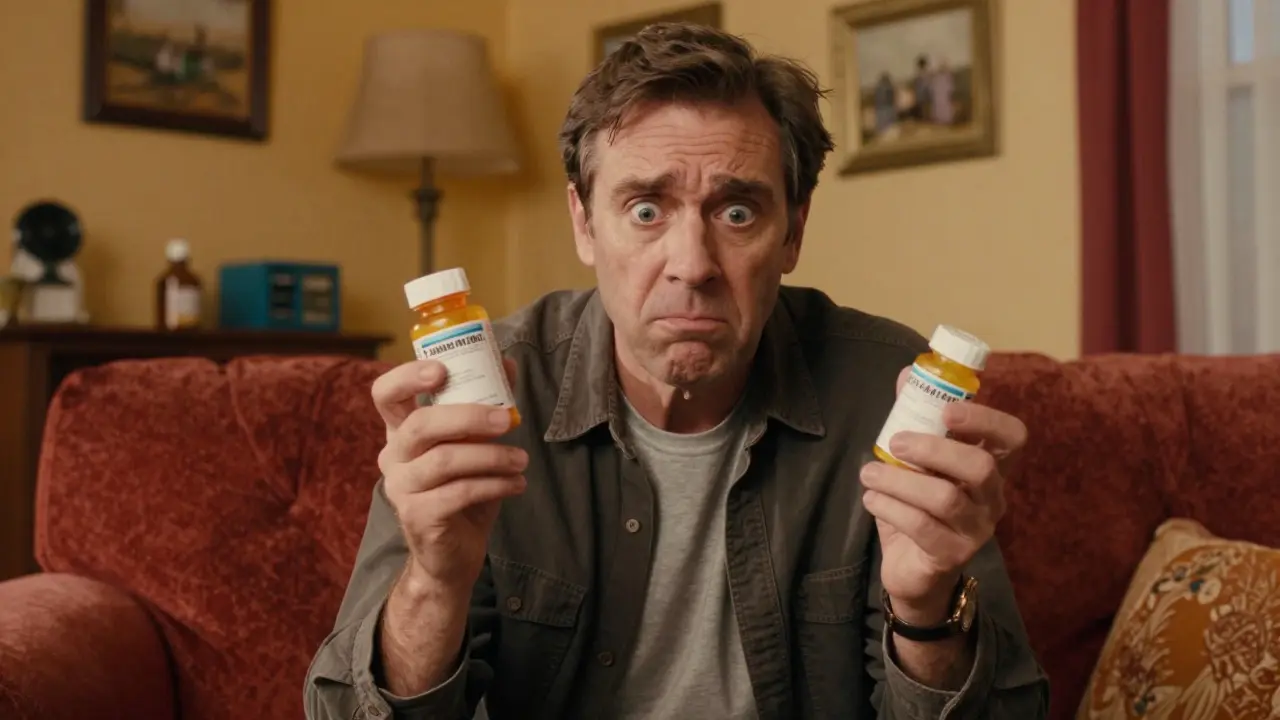
Imagine leaving a hospital after a successful surgery, only to end up back in the emergency room because you took the wrong dose of a blood thinner. It sounds like a nightmare, but for millions of people, this is a reality. In the United States alone, preventable drug mistakes harm at least 1.5 million people every year. The scary part? Many of these errors happen not in a clinic, but in the safety of your own living room.
When we talk about medication errors is any preventable event that may cause or lead to inappropriate medication use, patient harm, or death, we aren't just talking about pharmacy mistakes. We're talking about the simple slip-ups that happen when we're tired, confused by a label, or forget if we already took our morning pill. Whether you're managing a chronic illness or dosing a toddler, the stakes are incredibly high.
The Most Common Ways Mistakes Happen
Not all errors look the same. Some are obvious, like taking the wrong bottle, while others are subtle, like taking a pill with food when the instructions specifically said to take it on an empty stomach. In home settings, errors happen at rates between 2% and 33%, depending on the complexity of the care.
The most frequent culprits include:
- The "Wrong Dose" Trap: Taking too much (overdose) or too little (underdose). This often happens with liquid medications where the measuring tool is inaccurate.
- The Missing Dose: Simply forgetting a pill or skipping a day, which can lead to a relapse in symptoms or antibiotic resistance.
- Timing Issues: Taking a drug too early or too late. Some meds need a strict window to work; others can cause stomach upset if not timed with meals.
- The "Leftover" Error: Continuing to take a medication that your doctor actually told you to stop weeks ago.
A major trigger for these mistakes is the confusion between brand names and generics. Many people don't realize that two different-looking pills might actually be the same drug, leading them to accidentally take a double dose.
Special Risks for Children and Seniors
Certain age groups are far more vulnerable to these mistakes. For parents, the margin for error is razor-thin. Research from UC Davis Health suggests a child experiences a medication error at home every 8 minutes. The biggest danger here is concentration. For example, infant-strength formulations are often much more concentrated than children's versions. If a parent uses the wrong product but the same volume (e.g., 5ml), the child could receive a dangerous overdose.
Then there is the risk of "alternating" fever reducers. Some parents swap between acetaminophen and ibuprofen to keep a fever down, but this practice actually increases the likelihood of an error by 47% because it's so easy to lose track of which drug was given and when.
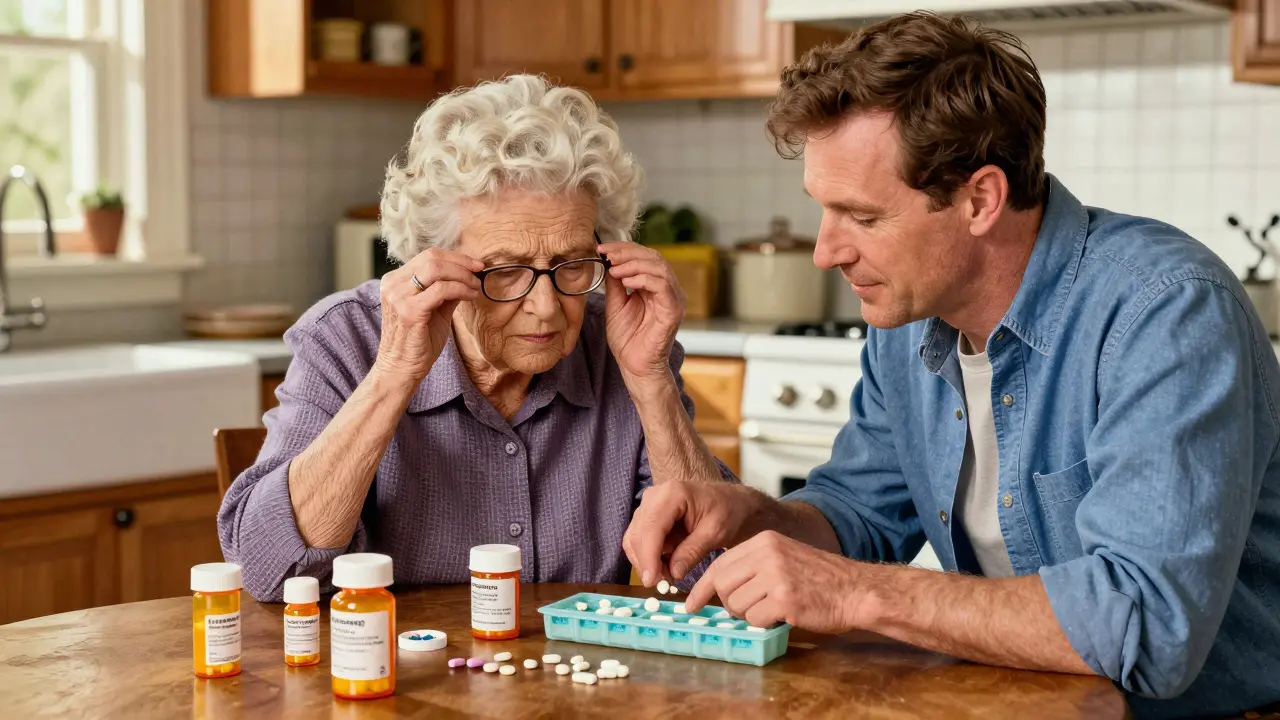
On the other end of the spectrum, seniors face a different set of challenges. If you're 75 or older, your risk of a medication error is 38% higher. This is often due to polypharmacy-the use of five or more medications daily. When you're juggling a dozen different bottles, the chance of a mix-up skyrockets. Vision loss and cognitive decline only make reading small print on a pharmacy label more difficult.
| Group | Primary Risk Factor | Key Danger |
|---|---|---|
| Children (≤ 6 years) | Dosing Concentration | Overdose due to product confusion |
| Adults/Caregivers | Health Literacy | Misunderstanding discharge instructions |
| Seniors (75+ years) | Polypharmacy | Interactions and missed doses |
Why Do We Make These Mistakes?
It's rarely just "forgetfulness." There are systemic reasons why we mess up. One of the biggest is poor communication during the transition from hospital to home. Up to 80% of the information patients receive during a doctor's visit is either forgotten or remembered incorrectly. If a nurse tells you a complex dosing schedule while you're in pain and exhausted from surgery, the odds of you getting it right at home are low.
Other contributing factors include:
- Look-Alike/Sound-Alike (LASA) Drugs: Some medications have names that sound almost identical, leading to the wrong drug being picked up or administered.
- Language Barriers: When labels are in a language the patient doesn't fully master, dosing errors become much more common.
- Cost Concerns: Some people skip doses or split pills in half to make a prescription last longer, which can render the medication ineffective.
- Lack of Training: Administering an injection or using an inhaler requires a specific technique. If you weren't shown how to do it properly, the drug simply won't work.
Practical Strategies to Avoid Drug Mistakes
You don't need a medical degree to make your home safe. You just need a system. One of the most effective methods used by professionals is the Dual Control Principle (DCP). While usually for nurses, you can adapt this by having a second person (like a spouse or adult child) double-check the dose before administration.
Here are concrete steps to secure your medicine cabinet:
- Use the "Teach-Back" Method: When your doctor gives you instructions, don't just nod. Say, "Okay, so you want me to take one tablet of this at 8 AM on an empty stomach, and then another at 8 PM with food. Is that correct?" This forces the provider to correct any misunderstandings immediately.
- Invest in a Pill Organizer: A weekly pill box with AM/PM slots removes the guesswork. If the Monday morning slot is still full, you know you missed a dose.
- Create a Master Medication List: Keep a written list of every drug, the exact dose, why you're taking it, and the prescribing doctor. Take this list to every single appointment.
- Check the Weight, Not Just the Volume: For children, always verify the dose based on their current weight. Don't rely on the "spoonful" recommended on the box if your child's weight has changed.
- Avoid Multi-Symptom Cold Meds: Many "all-in-one" cold medicines contain acetaminophen. If you take a separate Tylenol on top of that, you could accidentally overdose on the same active ingredient.

The Danger of the "Home Pharmacy"
Many of us have a "junk drawer" of half-used prescriptions from five years ago. This is a recipe for disaster. Expired medications can lose their potency or, in some cases, become chemically unstable. Furthermore, keeping old prescriptions increases the risk that someone will take a drug that is no longer appropriate for their current health status.
Set a date every six months to purge your medicine cabinet. Any medication that is expired or no longer prescribed should be taken to a pharmacy for proper disposal. Never flush medications down the toilet or throw them in the trash where children or pets could find them.
What is the best way to track multiple medications?
The most reliable method is a combination of a physical pill organizer and a written master list. Digital apps can help with reminders, but a physical organizer provides a visual confirmation that a dose was actually taken. Ensure your list includes both brand and generic names to avoid confusion.
Is it safe to use a kitchen spoon for liquid medicine?
No. Kitchen spoons vary wildly in size and are not accurate measuring tools. Always use the oral syringe or dosing cup that comes with the medication. If you lost it, ask your pharmacist for a replacement. An inaccurate measurement can lead to significant under- or over-dosing, especially in children.
What should I do if I realize I missed a dose?
Do not automatically take a double dose to "catch up," as this can be dangerous. Check the patient information leaflet or call your pharmacist immediately. Some medications should be taken as soon as you remember, while others should be skipped entirely until the next scheduled dose.
Why are generic drugs sometimes confusing?
Generic drugs have the same active ingredients as brand-name drugs but often look different (different color, shape, or packaging). This can lead patients to believe they are taking two different medications when they are actually taking the same thing twice, resulting in an accidental overdose.
How do I prevent my child from taking the wrong medicine?
Store all medications in a locked cabinet, high out of reach. Never refer to medicine as "candy" to get a child to take it, as this encourages them to seek it out. Always double-check the concentration (e.g., Infant's vs. Children's) on the label before every single dose.
Next Steps for Your Home Safety Audit
If you're managing meds for yourself or a loved one, start with a "Medication Reconciliation" today. Sit down with all your bottles and your doctor's latest notes. If anything doesn't match-or if you find a pill and can't remember what it's for-call your pharmacist. It's better to have an awkward ten-minute conversation now than a trip to the ER later.
Billy Wood
April 14, 2026 AT 23:50GET THOSE PILL ORGANIZERS NOW!!! LIFE SAVER!!!
Mary Johnson
April 15, 2026 AT 21:58Big Pharma loves these 'guides' because they keep you dependent on the meds in the first place. They design these confusing labels on purpose to make us feel incompetent so we keep going back to their specialists. It's all a game of control and the side effects are usually worse than the original ailment anyway. Don't let them gaslight you into thinking a little confusion is just 'human error' when it's actually a systemic failure of the medical industrial complex.
mimi clouet
April 17, 2026 AT 17:27I always tell people that a digital alarm is a total game changer too! 📱 Adding your meds to a calendar with a loud notification helps so much if you have a hectic schedule 🌸✨ It's all about creating those little safety nets for yourself!
Scott Lofquist
April 19, 2026 AT 10:02Typical advice. The 'Teach-Back' method is basically just treating doctors like they're the ones who might mess up, which they are, but it's just a band-aid on a bullet hole 🙄. Most people don't even have the health literacy to know what they're repeating back. Also, the obsession with 'brand vs generic' is just a way to keep people paying more for fancy packaging when the molecular structure is identical 🤡.
Haley Moore
April 19, 2026 AT 21:04Ugh, imagine actually using a kitchen spoon in 2024... like, really? 💅 I can't even believe some people still do that. It's just so... pedestrian. 🙄 My pharmacist literally looks at me with pity when I ask for a proper syringe because the standard of care for some of you is just abysmal. Seriously, get it together! 🙄✨
Shaylia Helland
April 20, 2026 AT 10:25it's so interesting how our healthcare system just throws us into the deep end after discharge without really checking if we've processed the info... i remember my grandmother struggling with her meds for years just because the font on the bottle was too small for her to see and she was too proud to ask for help which is just a really heartbreaking cycle of loneliness and medical risk in the elderly population
Princess Busaco
April 21, 2026 AT 17:47The sheer audacity of suggesting a 'second person' check your meds as if we all have a supportive spouse or a dutiful child waiting around to play nurse, which is such a privileged assumption to make in a guide that claims to be for everyone, and frankly, the idea that a spouse who can't even find the remote is going to be a reliable 'Dual Control' mechanism is laughable at best and dangerous at worst, yet here we are pretending that a simple checklist solves the systemic failure of a medical system that treats patients like conveyor belts rather than human beings with complex emotional and cognitive needs.
melissa mac
April 22, 2026 AT 21:52That's a very valid point about the 'Dual Control' system. For those of us living alone, maybe we can reach out to a trusted friend or even a community pharmacist to help us set up our weekly organizers together.
john chiong
April 24, 2026 AT 04:01absolute madness that people keep a junk drawer of expired chemicals in the house it is a moral failing to leave those things where a kid could find them pure negligence
Olivia Lo
April 24, 2026 AT 23:31The phenomenological experience of illness often precipitates a cognitive overload that renders these prescriptive frameworks secondary to the immediate somatic distress. We must acknowledge the heuristic biases that affect patient adherence, particularly when the pharmacological intervention is decoupled from the patient's subjective understanding of their own pathology.
Tabatha Pugh
April 25, 2026 AT 15:07I bet the person who wrote this doesn't even know that some pill organizers actually leach chemicals into the medication if they aren't BPA-free. You really need to check the material of the plastic because otherwise, you're just swapping one error for a slow-acting toxin. I've seen studies on this and it's honestly shocking how many people just buy the cheapest one from a drugstore without checking the grade of polymer used.
Catherine Mailum
April 26, 2026 AT 14:52oh sure just 'teach back' the instructions to a doctor who has a 15 minute window and is already halfway out the door... that'll definitely work out great 🙄
Mark Dueben
April 28, 2026 AT 09:48It might be helpful for some to realize that pharmacists are often understaffed and stressed too. If we approach them with a list and a bit of patience, they are usually more than happy to spend an extra five minutes ensuring we're safe.
Rim Linda
April 29, 2026 AT 00:00Omg the part about children's meds is literally my biggest fear!! I spend an hour double checking the labels every single time 😱😭