
Medication Dosing: How Age, Weight, and Kidney Function Change Your Prescription
 Mar, 20 2026
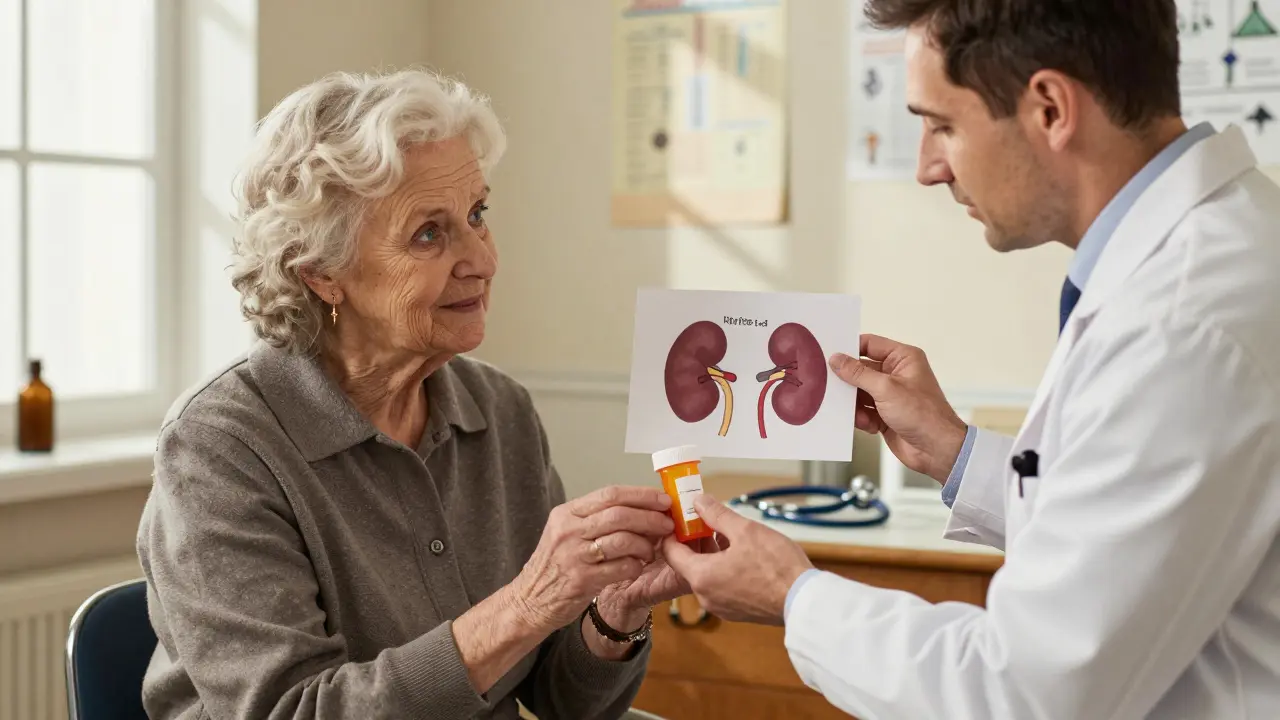
Getting the right dose of medication isn't just about what’s written on the prescription. It’s about your body-your age, your weight, and how well your kidneys are working. A pill that works perfectly for one person might be too strong-or too weak-for another. Too much can land you in the hospital. Too little might do nothing at all. This isn’t guesswork. It’s science, and it’s built into how doctors and pharmacists decide what you take, and how much.
Why One Size Doesn’t Fit All
Think of your body like a car. A 20-year-old sedan and a 30-year-old truck don’t use the same amount of gas to go the same distance. Your body works the same way. As you age, your organs change. Your kidneys slow down. Your muscle mass drops. Fat distribution shifts. All of this affects how drugs move through your system. For example, a 72-year-old woman with kidney disease might need just half the dose of an antibiotic that a healthy 35-year-old takes. If she gets the full dose? She could end up with dizziness, confusion, or even kidney damage. That’s not rare. In fact, studies show that nearly one in three adverse drug reactions in older adults happens because their dose wasn’t adjusted for kidney function.Kidney Function: The Silent Gatekeeper
Your kidneys don’t just make urine. They filter out drugs. About 40 to 60% of all commonly prescribed medications-antibiotics, blood pressure pills, diabetes drugs, painkillers-rely on your kidneys to get cleared from your body. If your kidneys aren’t working well, those drugs build up. Slowly. Silent. Dangerous. Doctors don’t just look at your creatinine level. They calculate something called estimated glomerular filtration rate, or eGFR. This number tells them how well your kidneys are filtering blood. It’s measured in mL/min/1.73m². Here’s what it means:- eGFR ≥ 90: Normal kidney function
- eGFR 60-89: Mildly reduced
- eGFR 45-59: Moderately reduced (Stage 3a)
- eGFR 30-44: Severely reduced (Stage 3b)
- eGFR 15-29: Very severe (Stage 4)
- eGFR < 15: Kidney failure (Stage 5)
Weight Matters-More Than You Think
Weight isn’t just about being overweight or underweight. It’s about how your body holds onto the drug. Some medicines dissolve in fat. Others float in water. If you’re obese, your body might hold onto a drug longer than expected. If you’re very thin, it might clear it too fast. For people with a BMI over 30, doctors use something called adjusted body weight. It’s not your real weight. Not your ideal weight. It’s a mix. Here’s how it works:- Calculate your ideal body weight (IBW): For men, 50 kg + 2.3 kg for every inch over 5 feet. For women, 45.5 kg + 2.3 kg per inch over 5 feet.
- Then: Adjusted weight = IBW + 0.4 × (your actual weight − IBW)

Age: Slower Clearance, Higher Risk
People over 65 are 2.5 times more likely to be hospitalized for a bad drug reaction than younger adults. Why? Three big reasons:- Less kidney function-even if creatinine looks normal, kidney filtration drops with age
- More body fat, less muscle → changes how drugs are stored and released
- More medications taken at once → higher chance of dangerous interactions
The Tools Doctors Use
There are two main formulas for estimating kidney function. Both are used, but for different reasons.Cockcroft-Gault is older, from 1976. It uses age, weight, sex, and serum creatinine. It’s still used in 85% of drug labels because it was used in the original studies that set dosing rules. It’s also better for obese people. But it doesn’t account for race, and it’s less accurate in elderly patients.
CKD-EPI is newer, from 2009. It’s more accurate for people with normal or near-normal kidney function. It’s used for diagnosing chronic kidney disease. But it’s not always the best for dosing. It can overestimate clearance in very thin or very old patients.
Here’s the catch: CKD-EPI is used to diagnose kidney disease. Cockcroft-Gault is often used to dose medications. That means your doctor might be using two different numbers to make two different decisions. It’s confusing. And it’s why mistakes happen.

What Goes Wrong-And How to Spot It
Pharmacists report seeing bad dosing at least once a week. The most common errors:- Metformin too high in patients with eGFR under 45
- Vancomycin doses not lowered in elderly patients with Stage 3B CKD
- Antibiotics like cefazolin dosed differently across hospitals-some use eGFR, others use CrCl
What You Can Do
You don’t need to calculate your own kidney function. But you can ask the right questions:- "Is my dose adjusted for my kidney function?"
- "What’s my eGFR number?"
- "Has this drug been checked for my age and weight?"
The Future: Smarter, Personalized Dosing
New tools are coming. Hospitals are now using electronic alerts that pop up when a doctor prescribes a drug that’s risky for low kidney function. One study showed these alerts cut serious errors by 47%. In the next few years, wearable sensors might measure kidney function in real time-like a smartwatch that checks your filtration rate daily. AI tools are being tested to combine your genetics, age, weight, and lab results to predict exactly how much of a drug you need. But for now? The best tool is awareness. Ask questions. Know your numbers. Don’t assume a pill is safe just because it’s prescribed. Your body is unique. Your dose should be too.How do I know if my medication dose is too high for my kidneys?
Look for signs like dizziness, confusion, nausea, or unusual fatigue-especially if you’ve just started or changed a medication. Ask your doctor for your eGFR number. If it’s below 60, your dose may need adjustment. Common drugs that need changes include metformin, statins, antibiotics, and painkillers like ibuprofen. If you’re over 65 or have diabetes, ask for a medication review every year.
Why do some doctors use eGFR and others use CrCl for dosing?
eGFR is used to diagnose kidney disease-it’s more accurate for staging. But most drug dosing guidelines were created using CrCl (calculated with the Cockcroft-Gault formula). So even though eGFR is the standard for diagnosis, many prescriptions still rely on CrCl for dose changes. This mismatch causes confusion. The best practice is to use CrCl for dosing, even if your eGFR is the number your doctor talks about.
Does being overweight mean I need a higher dose?
Not always. Some drugs are stored in fat, so higher doses might be needed. Others are cleared by the kidneys, and obesity can make kidney function estimates inaccurate. For most medications, doctors use adjusted body weight-not your actual weight-to calculate kidney clearance. If you have a BMI over 30, ask if your dose was calculated using adjusted weight. Many doses are still based on real weight, which can lead to overdosing.
Can I check my kidney function at home?
Not directly. You can’t measure eGFR or CrCl at home. But you can track your serum creatinine levels from blood tests. If your creatinine goes up over time, your kidneys may be slowing down. Talk to your doctor about trends-not just one number. Also, watch for swelling in your legs, foamy urine, or frequent urination at night-these can be signs of kidney trouble.
What should I do if I’m on multiple medications?
Get a full medication review. Many pharmacies offer this for free. Bring a list of everything you take-including vitamins, supplements, and over-the-counter drugs. Ask if any of them need dose adjustments for your age, weight, or kidney function. People on five or more medications have a 50% higher risk of a harmful interaction. A review can catch problems before they become emergencies.
trudale hampton
March 22, 2026 AT 02:33Really glad someone broke this down without the medical jargon overload. I’ve seen too many older folks get hit with side effects because doctors just looked at creatinine and said 'all good.' But kidneys slow down even if creatinine looks fine. My grandma almost got hospitalized over a simple antibiotic dose. She’s 78, not obese, not diabetic-just old. And yeah, her eGFR was 42. No one told her until her pharmacist caught it.
Ask for your eGFR. Seriously. It’s not hard. Just say 'I want to know my kidney number.'
Solomon Kindie
March 22, 2026 AT 07:32so like if your kidneys arent working right then drugs just sit there like a lazy roommate right? and then boom you get dizzy or confused or worse and its not your fault its the system being dumb. they still use cockcroft-gault like its 1976 while the rest of medicine moved on. why? because pharma studies were done with it and now we’re stuck with this glitchy legacy code for human bodies. also why is no one talking about how bmi formulas are outdated? like i get adjusted weight but what if you’re muscular? or asian? or just naturally skinny? we’re all just lab rats in a system that still thinks one size fits all
Natali Shevchenko
March 23, 2026 AT 06:14I’ve been thinking about this a lot since my dad’s stroke last year. He’s 74, on metformin, blood pressure meds, and a statin. His doctor kept saying his creatinine was normal so everything was fine. But then he got dizzy, started falling, and we had to rush him in. Turned out his eGFR was 38. He’d been on 1000mg of metformin twice a day for five years. The hospital pharmacist nearly had a heart attack. They cut it to 500mg once daily and he’s been fine since.
It’s not just about kidney disease-it’s about aging. Your body changes. Your meds should too. But doctors don’t always check. And patients don’t know to ask. We need better systems. Not just better patients. We need alerts built into the EHR, not just a footnote on a prescription pad. This isn’t rocket science. It’s basic physiology. Why isn’t it standard?
Nishan Basnet
March 25, 2026 AT 03:01As someone from India where access to proper lab tests is uneven, this article hits home. In rural clinics, doctors often prescribe based on weight alone or just guess. I’ve seen patients on full doses of vancomycin with eGFR under 20. No wonder so many end up with hearing loss or kidney failure.
The Cockcroft-Gault formula isn’t perfect, but it’s better than nothing. If your hospital uses CKD-EPI for dosing, you’re playing Russian roulette. I’ve worked with pharmacists who print out dosing charts and tape them to the wall. That’s not innovation-that’s survival. We need mobile apps that auto-calculate adjusted weight and eGFR from basic inputs. No more manual math in a 10-minute consult.
shannon kozee
March 25, 2026 AT 18:38Ask for your eGFR. If your doctor doesn’t know it, ask for a pharmacist consult. Simple.
Casey Tenney
March 27, 2026 AT 11:18People are dying because doctors are lazy. You think this is complicated? It’s not. It’s basic math. If you’re over 65 and on more than three meds, you’re a walking time bomb. Stop blaming the system. Start asking questions. Or stop being a victim.
Bryan Woody
March 28, 2026 AT 14:50Let me guess-the next thing they’ll tell us is that we should all get wearable kidney monitors like smartwatches. Yeah right. Meanwhile, my uncle’s doctor gave him 1000mg of metformin twice daily even though his eGFR was 25. The pharmacist called it. The doctor said 'I didn’t know.' I’m sorry, but ignorance isn’t an excuse. It’s negligence.
And don’t get me started on how hospitals use different formulas. One says cut by 50%, another says 75%, another says 'no change.' That’s not medicine-that’s chaos. We need one standard. Not five. One.
Also, if you’re obese and your doctor uses your real weight to dose you? You’re being overdosed. Period. Adjusted weight isn’t a suggestion. It’s science. Use it or lose your license.
Timothy Olcott
March 29, 2026 AT 12:56AMERICA IS THE ONLY COUNTRY THAT DOES THIS RIGHT 😎💊
other countries just guess. we have algorithms. we have eGFR. we have pharmacists who care. if you're not in the US you're basically playing russian roulette with your meds. #americanmedicine #trustthesystem 🇺🇸
Johny Prayogi
March 31, 2026 AT 10:03My mom’s pharmacist caught a dangerous interaction between her blood thinner and a new OTC painkiller. She was on 6 meds. The pharmacist did a free review. Changed 3 doses. Saved her from a bleed.
Do it. Ask for it. It’s free. It’s easy. And it might save your life. You don’t need to be a doctor to ask: 'Is this right for me?'
Nicole James
April 1, 2026 AT 21:11...but have you ever wondered who really controls the eGFR formulas? The pharmaceutical companies? The same ones that profit from overprescribing? The FDA guidelines? Written by former industry execs? And the 'adjusted body weight' model? It was developed by a team funded by a drug maker that makes kidney-targeted meds...
They don’t want you to know your real numbers. They want you to stay on the drugs. Forever. And the 'free pharmacist review'? It’s a trap. They upsell you on supplements and 'specialized' formulations.
Don’t trust the system. Question everything. The truth? They’re not trying to help you. They’re trying to keep you dependent.
Check your meds. Cross-reference with independent studies. Look up the original clinical trials. Don’t take their word for it. You’re not a patient. You’re a target.