
Scleroderma: Understanding the Progressive Autoimmune Disease That Hardens Skin and Organs
 Mar, 3 2026
Scleroderma is not just a skin condition. It’s a systemic autoimmune disease that turns soft tissues into scar-like hardening, affecting everything from your fingers to your lungs. Unlike common autoimmune diseases like lupus or rheumatoid arthritis, scleroderma doesn’t just attack joints or organs-it rebuilds them with too much collagen, literally stiffening your body from the inside out. This isn’t rare. Around 300,000 people in the U.S. live with it, and most are women between 30 and 50. Yet, many patients wait over a year to get diagnosed because the early signs look like nothing serious-cold fingers, tiredness, a little stiffness.
What Actually Happens in Your Body?
Scleroderma, or systemic sclerosis, is built on three dangerous processes working together: autoimmunity, blood vessel damage, and fibrosis. Your immune system, which should protect you, starts attacking your own connective tissues. This triggers inflammation, but instead of healing, your body goes into overdrive-producing way too much collagen. Collagen is normally the glue that holds skin and organs together. Too much of it? That’s when your skin tightens, your lungs stiffen, and your digestive tract slows down.
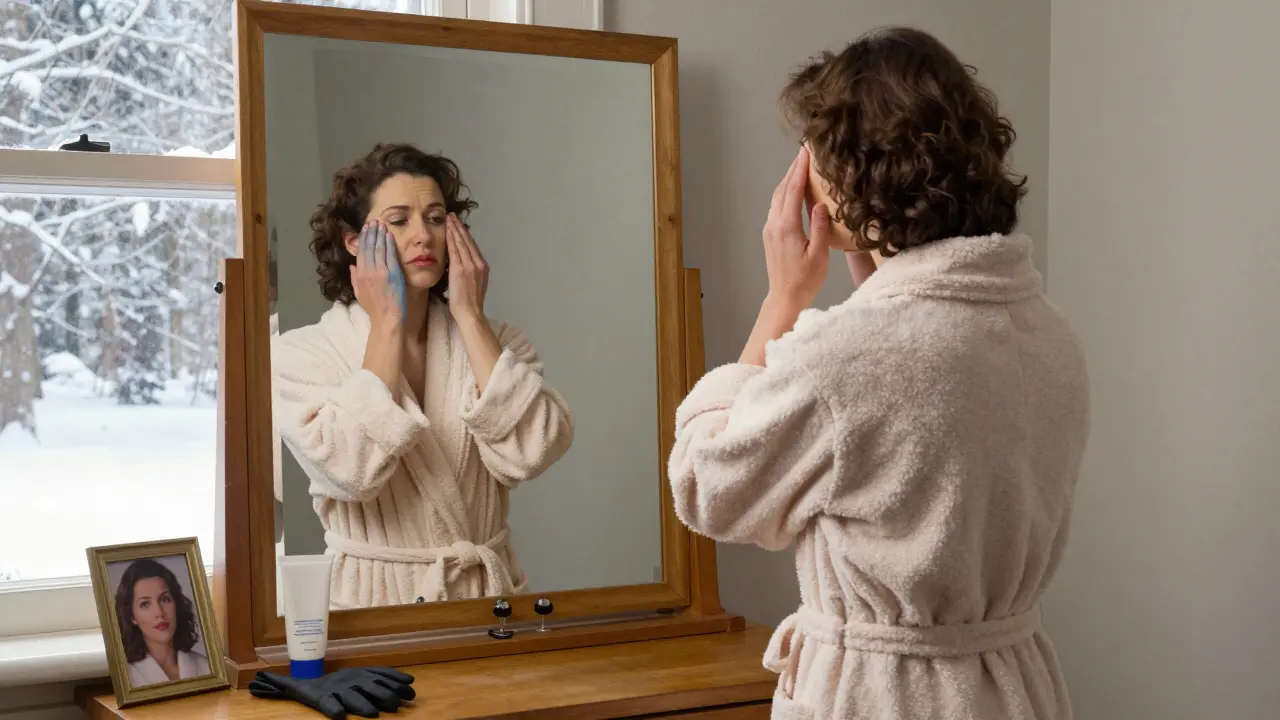
Almost everyone with systemic scleroderma develops Raynaud’s phenomenon first. Your fingers turn white, then blue, then red when you’re cold or stressed. It’s not just discomfort-it’s a warning sign. For 90% of patients, this happens 5 to 10 years before other symptoms appear. Then comes sclerodactyly: fingers that won’t fully bend or straighten because the skin has thickened and stuck to the underlying tissue. By the time you notice trouble buttoning a shirt or opening a jar, the disease may already be moving inward.
Localized vs. Systemic: Not All Scleroderma Is the Same
There are two main types. Localized scleroderma (often called morphea) only affects the skin in patches. It’s rare for it to spread, and it rarely causes internal damage. Most people with this type don’t need aggressive treatment.
Systemic scleroderma is the real threat. It comes in two forms: limited and diffuse. Limited cutaneous systemic sclerosis (lcSSc) usually stays confined to the skin of the fingers, face, and forearms. It progresses slowly over 10 to 20 years. People with this type often develop anti-centromere antibodies, which are linked to a lower risk of lung scarring. Many live for decades with manageable symptoms.
Diffuse cutaneous systemic sclerosis (dcSSc) is the more aggressive version. Skin thickening spreads quickly-sometimes within months. It’s linked to anti-Scl-70 (Topoisomerase I) and anti-RNA polymerase III antibodies. These markers mean higher risk of lung fibrosis, kidney crises, and cancer. About 80% of dcSSc patients develop lung scarring. One in three gets heart involvement. And 10-15% face kidney failure from sudden high blood pressure. This is where survival rates drop: 55-70% live 10 years after diagnosis, compared to 75-85% for the limited form.
How Is It Diagnosed? It’s Not Just One Test
There’s no single blood test for scleroderma. Diagnosis is a puzzle made of symptoms, physical exam, and lab markers. Doctors look for:
- Thickened skin on fingers (sclerodactyly)
- Raynaud’s phenomenon with color changes
- Antinuclear antibodies (ANA)-present in 95% of cases
- Specific autoantibodies: anti-Scl-70, anti-centromere, or anti-RNA polymerase III
- Changes in lung, heart, or kidney function
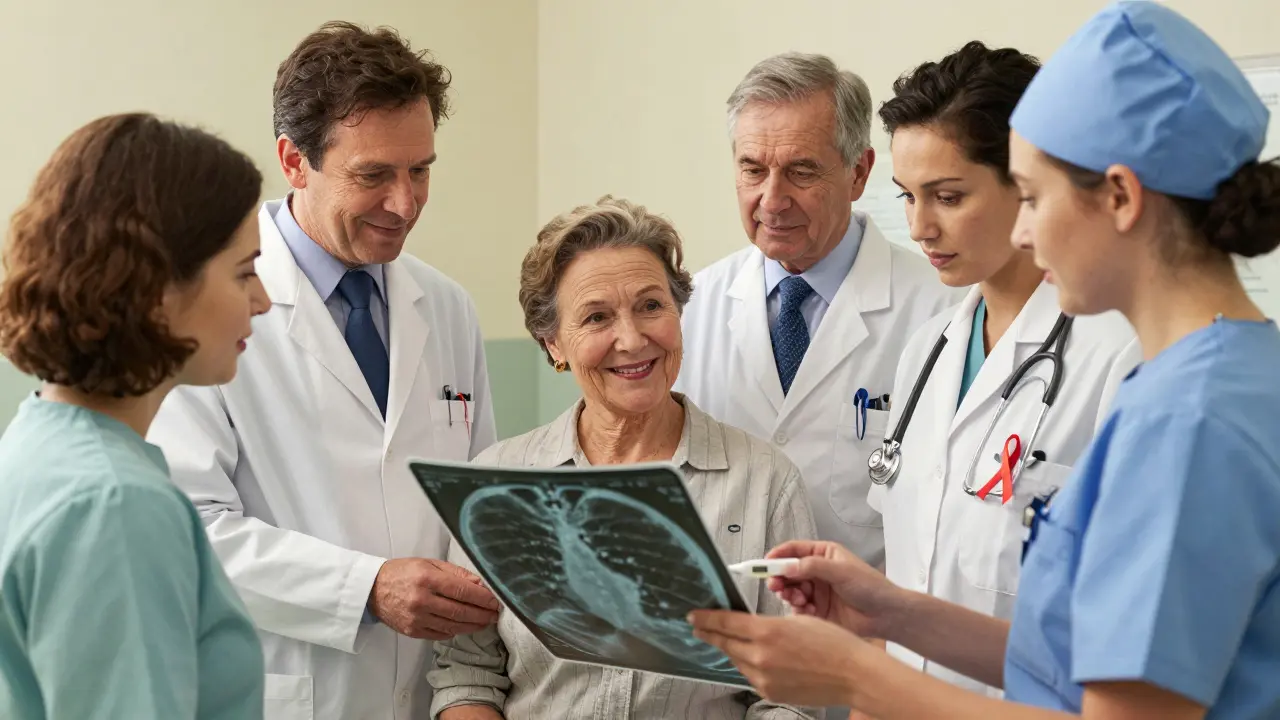
One key clue? The modified Rodnan skin score. Doctors press their fingers along 17 areas of your body to measure skin thickness. A score above 15 means significant hardening. Another tool? High-resolution CT scans of the lungs. They catch scarring before you even feel short of breath. Pulmonary function tests check how well your lungs move air. Echocardiograms monitor for pulmonary arterial hypertension-the #1 cause of death in scleroderma.
Patients often see three or more doctors over 18 months before getting the right diagnosis. A rheumatologist is essential. But if you’re only seeing a general practitioner, you’re likely being told it’s arthritis, carpal tunnel, or just stress.
What Sets Scleroderma Apart From Other Autoimmune Diseases?
Lupus causes joint pain and rashes. Rheumatoid arthritis attacks joint linings. Polymyositis weakens muscles. Scleroderma? It makes tissue hard. That’s the difference.
Take joint pain. In rheumatoid arthritis, swelling comes from inflammation. In scleroderma, joint stiffness comes from skin tightening around the joints. You can’t just take anti-inflammatories and expect relief. You need to treat the fibrosis.
And while lupus affects 1.5 million Americans, scleroderma affects about 300,000. But it’s deadlier. Why? Because the fibrosis doesn’t stop. It doesn’t flare and fade. It creeps. And it doesn’t respond well to standard immunosuppressants. Even the best drugs only help 40-50% of patients control symptoms.
There’s also a big difference in treatment options. Lupus has several FDA-approved drugs. Rheumatoid arthritis has dozens. Scleroderma? Only one drug-tocilizumab-is FDA-approved specifically for scleroderma-related lung disease. Everything else is borrowed from other conditions: steroids, methotrexate, mycophenolate. And they don’t stop the hardening.
Life With Scleroderma: The Hidden Struggles
Most people don’t realize how much daily life changes. In a 2023 survey of over 1,200 patients:
- 78% struggled with hand function-buttoning shirts, opening jars, holding utensils
- 82% had digestive problems, with 45% suffering severe acid reflux
- 70% said fatigue made working impossible
- 60% developed painful digital ulcers on fingers or toes
Digital ulcers are open sores from poor blood flow. They’re slow to heal and prone to infection. Some patients need weekly wound care visits. Others lose fingertips. Digestive issues mean no spicy food, no coffee, no large meals. Many eat six small meals a day and sleep propped up to avoid choking on stomach acid.
Fatigue isn’t just tiredness. It’s bone-deep exhaustion that doesn’t go away with sleep. For many, it’s the reason they quit jobs or can’t care for their kids.
How Is It Managed? It Takes a Team
There’s no cure. But you can slow damage and manage symptoms-with the right team. The best outcomes come from specialized scleroderma centers. Johns Hopkins, Stanford, and the University of Michigan run multidisciplinary clinics with rheumatologists, pulmonologists, cardiologists, gastroenterologists, and wound care specialists-all working together.
Here’s what a typical care plan looks like:
- Raynaud’s: Calcium channel blockers (like nifedipine), avoiding cold, wearing gloves
- Lung fibrosis: Annual CT scans, pulmonary function tests, and if needed, nintedanib or pirfenidone (drugs originally for lung scarring in other diseases)
- Pulmonary hypertension: Echocardiograms every 6-12 months; if detected, drugs like endothelin receptor antagonists or PDE-5 inhibitors
- Digital ulcers: Prostacyclin analogs like iloprost (given as inhalation), wound care, avoiding trauma
- GI issues: Proton pump inhibitors, dietary changes, motility drugs like metoclopramide
- Immune suppression: Mycophenolate mofetil or cyclophosphamide for rapid skin or lung progression
Only 35% of U.S. patients get care at one of the 45 designated centers of excellence. If you live in a rural area, telemedicine programs are starting to help. Stanford’s virtual care initiative cut hospitalizations by 32% in just six months.
What’s New? Hope on the Horizon
There’s real progress. In 2023, the SCOT trial showed that stem cell transplants (using the patient’s own blood stem cells) improved skin thickness by 50% over four and a half years. It’s risky, but for young patients with aggressive disease, it’s a game-changer.
New drugs are in trials. Researchers are testing B-cell therapies, tyrosine kinase inhibitors, and drugs that block collagen production directly. A blood test for CXCL4, a protein that rises early in scleroderma, could diagnose the disease before skin changes appear.
The FDA approved tocilizumab in 2021 for lung scarring linked to scleroderma-the first drug made specifically for this condition. That’s huge. And the Scleroderma Research Foundation just committed $15 million in 2024 to fund fibrosis-targeted therapies.
But access is still a problem. Iloprost, a life-changing treatment for digital ulcers, costs over $10,000 per infusion. Insurance often denies it. Patients in rural areas may drive 300 miles for a single appointment.
What Should You Do If You Suspect Scleroderma?
If you’ve had Raynaud’s for years and now your fingers are stiff, your skin feels tight, or you’re constantly tired, don’t wait. See a rheumatologist. Ask specifically about scleroderma. Bring a symptom log: when your fingers change color, how your skin feels, what you can’t do anymore.
Keep a diary. Track your skin thickness. Note how often you get Raynaud’s attacks. Record your digestion and energy levels. Bring this to your doctor. It’s not about being pushy-it’s about giving them the clues they need.
Find a scleroderma center if you can. Even if you’re not near one, ask your rheumatologist to consult with one. Johns Hopkins, Stanford, and the University of Michigan all offer remote consultations. You don’t have to be alone in this.
And if you’re diagnosed-know this: survival has improved. Twenty years ago, many didn’t make it past five years. Now, with early detection and better care, many live decades. It’s not easy. But it’s manageable. And science is moving faster than ever.
Is scleroderma contagious?
No, scleroderma is not contagious. It’s an autoimmune disease, meaning your own immune system attacks your tissues. You can’t catch it from someone else, and you can’t pass it on through contact, blood, or air.
Can scleroderma be cured?
There is no cure for scleroderma yet. But treatments can slow progression, manage symptoms, and improve quality of life. Some patients with aggressive disease may benefit from stem cell transplants, which have shown long-term improvement in skin and lung function. Research into new drugs targeting fibrosis is ongoing.
Why does scleroderma affect women more than men?
Women are four times more likely to develop scleroderma, but the exact reason isn’t known. Researchers believe hormones, especially estrogen, may play a role in triggering autoimmune responses. Genetic factors and environmental triggers like silica dust or certain chemicals may also interact differently in women’s immune systems.
Can you still work with scleroderma?
Many people with scleroderma continue working, especially with accommodations. Fatigue, hand stiffness, and digestive issues can make traditional jobs difficult. Some adjust by switching to remote work, using voice-to-text tools, or modifying their schedule. Early diagnosis and good symptom control make it more possible to stay employed.
Are there lifestyle changes that help?
Yes. Avoid cold exposure to prevent Raynaud’s attacks. Quit smoking-it worsens blood vessel damage. Eat small, low-fat meals to reduce reflux. Stay active with gentle stretching to keep joints flexible. Manage stress, as it can trigger flare-ups. Hydration and skin moisturizing are also critical to prevent cracking and ulcers.
How do you know if your scleroderma is getting worse?
Watch for new or worsening symptoms: shortness of breath during light activity, persistent dry cough, unexplained weight loss, more frequent or severe Raynaud’s attacks, new skin tightness, or difficulty swallowing. These may signal lung, heart, or GI involvement. Regular monitoring with a specialist-including lung scans and heart tests-is key to catching changes early.
For those newly diagnosed, the hardest part isn’t the physical changes-it’s the loneliness. Few people understand what it’s like to live with a disease that hardens your skin and steals your energy. But you’re not alone. Support groups, specialized clinics, and new research are building a future where scleroderma doesn’t have to mean a life on hold.
Tobias Mösl
March 3, 2026 AT 23:46Let me get this straight - we’re treating a disease that turns your skin into a suit of armor with *steroids* and *methotrexate*? That’s like trying to stop a tsunami with a bucket. The FDA approved ONE drug in 2021? That’s not medical progress - that’s a national disgrace. And don’t even get me started on iloprost costing $10K per infusion. This isn’t healthcare. This is a corporate experiment on disabled women. Someone’s making bank while people lose fingers. Who’s on the board of these pharma companies? I bet they’ve got Raynaud’s too - and they’re too rich to care.
Mariah Carle
March 4, 2026 AT 04:01ugh. i just read this and cried. :(((
it’s like… your body betrays you, slowly, silently. one day you’re fine, next day your fingers won’t uncurl. you start avoiding hugs because you’re scared your skin will crack. no one gets it. not even your partner. they say ‘you look fine’ and you just… nod. because how do you explain that you’re dying inside, but your skin is the only thing that shows it?
but. we’re still here. 💪
Justin Rodriguez
March 5, 2026 AT 00:09As someone who works in rheumatology research, I want to clarify a few things that get missed in mainstream coverage. The anti-Scl-70 antibody isn’t just a marker - it’s a predictor. Patients with it have a 7x higher risk of interstitial lung disease within 3 years. That’s why early HRCT screening is non-negotiable. Also, the ‘modified Rodnan score’ isn’t some arbitrary number - it’s validated across 12 international centers. And yes, stem cell transplants are risky, but in young, aggressive dcSSc cases, the 5-year survival rate jumps from 58% to 82%. We’re not just managing symptoms anymore - we’re changing trajectories. The real tragedy? Most patients never see a scleroderma center. If you’re reading this and have Raynaud’s + skin tightness - go to Johns Hopkins’ telehealth portal. They’ll take you.
Megan Nayak
March 6, 2026 AT 21:39So let me summarize: women get a disease that hardens their bodies, and the medical system responds with… a single FDA-approved drug? And we’re supposed to be grateful? This isn’t science - it’s neglect dressed up in lab coats. And the fact that 80% of dcSSc patients develop lung fibrosis? That’s not ‘natural progression.’ That’s systemic failure. Who funds the research? Who decides what’s ‘rare’ enough to ignore? Hint: it’s never the people whose fingers are turning black. And don’t even get me started on ‘lifestyle changes’ - like, oh, just don’t get cold? Like I control the weather. Or quit smoking? Like I didn’t start because my body was screaming for relief from the pain. This isn’t about health. It’s about who gets to be seen.
Sharon Lammas
March 8, 2026 AT 08:05I’ve been living with limited scleroderma for 12 years. I used to think I was just ‘getting older.’ Then I read this. It’s like someone finally put words to the silence. The fatigue isn’t laziness. The stiffness isn’t arthritis. The way my mouth won’t open wide enough to eat an apple? That’s not ‘just aging.’ It’s fibrosis. I didn’t know I could feel this seen. I thought I was alone in this slow unraveling. Thank you for writing this. I’m not crazy. I’m not broken. I’m just… hardened. And I’m still here.
marjorie arsenault
March 9, 2026 AT 22:07You are not alone. I see you. I’ve been there. Every small win matters - buttoning a shirt, holding a coffee cup, laughing without coughing. You’re not failing. You’re adapting. And that’s strength. Reach out. Join a group. Even one person who gets it changes everything. You’ve got this. One day at a time. 💛
Deborah Dennis
March 10, 2026 AT 13:03Wait - so the whole thing is just… collagen? Overproduction? That’s it? No viruses? No toxins? No GMOs? No 5G? No glyphosate? No aluminum in deodorant? This is the best you’ve got? You’re telling me the entire medical establishment missed this for decades because they were too busy chasing ‘autoimmunity’ instead of looking at the real culprits? I knew it. This is all Big Pharma. They don’t want a cure - they want lifelong customers. And they’re selling ‘management’ like it’s a subscription. I’m out. I’m going raw vegan, doing infrared saunas, and taking colloidal silver. Watch me heal.
Diane Croft
March 11, 2026 AT 00:41Thank you for sharing this. This is the kind of information that saves lives. If you’re reading this and you’ve had cold fingers for years and now your skin feels tight - don’t wait. Don’t be polite. Go to a rheumatologist. Say ‘I think I have scleroderma.’ Bring this article. They need to hear it. You’re not being dramatic. You’re being smart. And you deserve care. You deserve to be heard. Keep going.
Donna Zurick
March 11, 2026 AT 07:24My sister was diagnosed last year. She’s 39. She can’t hold a toothbrush anymore. She’s on 7 medications. She cried because she couldn’t hug her niece. But she’s alive. And she’s fighting. And she’s not giving up. This isn’t just a disease. It’s a battle. And every person who reads this? You’re part of the team now. Don’t look away.
tatiana verdesoto
March 13, 2026 AT 01:24My best friend has it. She doesn’t talk about it much. But last week, she showed me her hands. They’re like leather. She said, ‘I used to play piano.’ I didn’t know. I didn’t ask. I’m sorry. I’m learning. I’m here. And I’m not going anywhere.
Ethan Zeeb
March 13, 2026 AT 01:29Stop romanticizing ‘survival.’ This isn’t a motivational poster. People are losing lungs. Losing fingers. Losing jobs. Losing relationships. And the system is still treating this like a footnote. If your kid has Raynaud’s at 12? Get them to a scleroderma clinic. NOW. Don’t wait for ‘it to get worse.’ It won’t wait. And if you’re a doctor reading this? Stop dismissing it as ‘just Raynaud’s.’ It’s not. It’s the canary in the coal mine. And we’re all breathing the same air.
Darren Torpey
March 13, 2026 AT 18:06Imagine your body turning into a statue - slowly, quietly, while you’re still alive inside. That’s scleroderma. It’s not dramatic. It’s not flashy. It’s the quiet horror of watching your own skin become a prison. And yet - we’re still here. Still breathing. Still loving. Still fighting. Maybe we’re not cured. But we’re not gone. And that? That’s the kind of courage that doesn’t make headlines. But it changes everything.
Jeff Card
March 14, 2026 AT 14:25Just wanted to say - I’m a nurse at a scleroderma clinic. We see 300+ patients a year. Every single one of them has a story like this. And every time someone says ‘I didn’t know this existed,’ I feel a little less alone. You’re not crazy. You’re not alone. And you’re not invisible. Keep showing up. We’re here.