
Behind-the-Counter Medications: What They Are and How Restrictions Work
 May, 19 2026
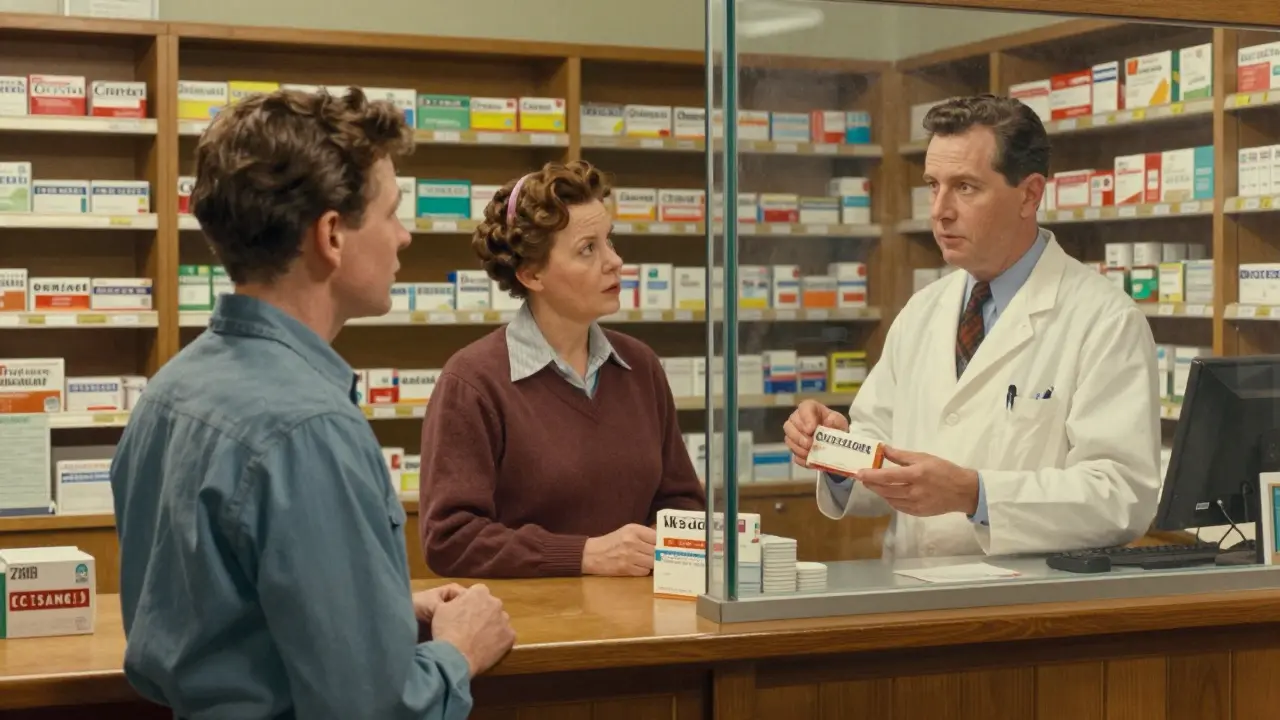
Have you ever walked into a pharmacy to buy a simple cold remedy, only to be told you need to wait for the pharmacist? You didn't have an appointment. You don't need a doctor's note. Yet, you can't just grab the box off the shelf like the other medicines. This is the world of behind-the-counter (BTC) medications, which are drugs that require pharmacist interaction but not a formal prescription. These medications sit in a unique middle ground between standard over-the-counter (OTC) products found in supermarkets and strict prescription-only drugs.
Understanding this category is crucial for navigating modern healthcare access. It affects everything from how quickly you can get relief for nasal congestion to accessing emergency contraception or insulin. Let's break down what these restrictions mean, why they exist, and how they impact your ability to get the care you need.
The Third Class of Drugs: Defining Behind-the-Counter
Traditionally, medicines fall into two camps. First, there are General Sales List (GSL) items, which you can buy anywhere, including gas stations or grocery stores. Second, there are Prescription Only Medications (POM), which require a physician's authorization. BTC medications form a distinct "third class." They are legally classified as non-prescription drugs, but regulators mandate that they be stored behind the pharmacy counter.
This classification emerged formally in the United States following the Combat Methamphetamine Epidemic Act of 2005. The goal was to balance public health safety with medication accessibility. By requiring a pharmacist's presence, regulators ensure professional oversight without creating the bureaucratic hurdles of a doctor's visit. As of 2023, approximately 15-20 commonly recognized BTC medications exist, representing about 3% of all OTC sales according to National Community Pharmacists Association data.
| Category | Prescription Required? | Pharmacist Consultation? | Purchase Location |
|---|---|---|---|
| General Sales List (GSL) | No | No | Supermarkets, Pharmacies, Online |
| Behind-the-Counter (BTC) | No | Yes | Pharmacy Counter Only |
| Prescription Only (POM) | Yes | Yes (for dispensing) | Pharmacy with Script |
Common Examples of BTC Medications
Not all behind-the-counter drugs are created equal. They serve different medical needs and carry different regulatory burdens. Here are the most prominent categories you will encounter.
- Pseudoephedrine Products: Brands like Sudafed, Allegra-D, and Claritin-D contain pseudoephedrine, a powerful decongestant. Because this chemical can be diverted for illicit methamphetamine production, federal law strictly controls its sale. You typically receive 30-60mg doses per tablet. Federal limits cap purchases at 3.6 grams per day and 9 grams per 30-day period. In 45 states, pharmacies must log your purchase in electronic tracking systems like NPLEx (National Precursor Log Exchange) and verify your ID.
- Emergency Contraceptives: Plan B One-Step became available behind-the-counter for customers aged 17 and older in 2013 after an FDA ruling. While no prescription is needed, age verification is mandatory. This change increased access significantly, contributing to a 46% decline in teen pregnancy rates between 2007 and 2017, according to CDC data.
- Insulin: Regular insulin (Humulin R) and NPH insulin (Novolin N) are available without a prescription at major retailers like Walmart under their ReliOn brand. Prices hover around $25-40 per 10mL vial. However, newer analog insulins like NovoLog remain prescription-only due to complex dosing requirements.
- Codeine Cough Syrups: Regulations vary wildly by state. Oregon and Mississippi maintain BTC status for codeine-containing cough syrups with doses up to 12.8mg per tablet. Most other states now require prescriptions for any codeine products following 2018 FDA guideline revisions.

Why Do These Restrictions Exist?
You might wonder why we don't just put pseudoephedrine on the open shelf if it helps so many people breathe easier during allergy season. The answer lies in risk management. Pseudoephedrine offers superior efficacy compared to phenylephrine, the common OTC alternative. Clinical studies show pseudoephedrine relieves nasal congestion effectively in 72% of cases, versus only 38% for phenylephrine (Journal of Allergy and Clinical Immunology, 2019).
However, this potency comes with risks. Without controls, large quantities could be harvested for illegal drug manufacturing. The BTC model acts as a friction point. It doesn't stop determined criminals entirely-illicit manufacturers have shifted to alternative precursors-but it creates a significant barrier for casual diversion. Dr. Aaron Kesselheim of Harvard Medical School noted in JAMA Internal Medicine (2022) that while BTC restrictions create access barriers, they do not significantly reduce meth production overall. Still, for public health officials, the trade-off is often deemed necessary.
For medications like emergency contraceptives, the restriction serves a different purpose: ensuring informed use. A pharmacist can confirm the patient understands the timing window (within 72 hours for 89% effectiveness) and potential side effects. This professional guidance reduces inappropriate use among minors while maintaining immediate access for those who need it.

The Consumer Experience: Access vs. Friction
Buying a BTC medication is not like buying toothpaste. It requires specific steps that can frustrate consumers, especially when they are sick or in a hurry.
- Identification: You must provide government-issued photo identification. For pseudoephedrine, this is logged electronically. For age-restricted items like Plan B, the pharmacist checks your ID to verify you meet the minimum age requirement.
- Consultation: Expect to spend 5-7 minutes talking to a pharmacist. They may ask about your symptoms, current medications, and medical history. This isn't just bureaucracy; it's a safety check to prevent dangerous interactions.
- Quantity Limits: You cannot buy bulk supplies. State laws dictate these limits. For example, Oregon limits pseudoephedrine to 7.5 grams monthly, while Texas allows 9 grams. If you travel across state lines, these rules change, which can cause confusion.
User experiences reveal a mixed bag. On Reddit's r/pharmacy community, a September 2023 thread titled 'Pseudoephedrine purchase frustrations' collected 247 comments, with 68% expressing frustration about purchase limits during cold season. Rural users suffer most, as 60 million Americans live more than 10 miles from a pharmacy (National Rural Health Association, 2023). Conversely, a Drugs.com user review analysis of Plan B shows 82% satisfaction among verified purchasers. One 24-year-old user commented: 'Being able to get Plan B at 2am without waiting for a doctor's appointment likely prevented an unwanted pregnancy.'
Unfortunately, the human element introduces bias. A 2021 University of Michigan study documented that Black customers were 3.2 times more likely to experience refusal or questioning when purchasing pseudoephedrine compared to white customers, despite identical purchase patterns. This disparity highlights a critical flaw in relying solely on pharmacist discretion without standardized protocols.
Market Trends and Future Expansion
The BTC segment is growing. It occupies a niche within the $120 billion U.S. OTC drug market. Pseudoephedrine products alone generated $1.2 billion in sales in 2022, with Sudafed capturing 42% market share (IQVIA data). The BTC segment has grown at 4.7% annually since 2016, outpacing the overall OTC market's 3.2% growth.
Regulators are looking to expand this category. The FDA's Over-the-Counter Drug Innovation Roadmap released in 2022 identifies BTC as a 'promising pathway for certain therapeutic categories.' In May 2023, the FDA approved the first BTC transition for an opioid treatment medication: LoRez (low-dose naltrexone) for alcohol use disorder. Industry analysts predict 5-7 additional prescription medications will transition to BTC status by 2027. Strong candidates include low-dose atorvastatin for cholesterol management and 150mg mifepristone for gynecological conditions.
The American Society of Health-System Pharmacists projects the BTC market will reach $8.5 billion by 2026. However, inconsistency remains a hurdle. There are currently 28 different state-level BTC frameworks in effect. Dr. Joshua Sharfstein of Johns Hopkins warns that 'without federal standardization, the BTC category risks becoming a patchwork of regulations that undermines its original purpose.'
Do I need a prescription for behind-the-counter medications?
No, you do not need a traditional prescription from a doctor. However, you do need to interact directly with a licensed pharmacist who will authorize the sale based on a consultation. They may verify your identity and check for potential drug interactions before handing you the medication.
Why is pseudoephedrine kept behind the counter?
Pseudoephedrine is a key ingredient used in the illicit manufacture of methamphetamine. The Combat Methamphetamine Epidemic Act of 2005 mandated that these products be stored behind the counter to limit bulk purchases and track sales through electronic logging systems like NPLEx, making it harder for criminals to obtain large quantities.
Can I buy Plan B without showing my ID?
In most cases, yes, you must show ID. Since 2013, Plan B One-Step has been available behind-the-counter for individuals aged 17 and older. Pharmacists are required to verify age to ensure compliance with these regulations, although enforcement can sometimes be inconsistent.
How much does over-the-counter insulin cost?
Regular insulin (Humulin R) and NPH insulin (Novolin N) available behind-the-counter at retailers like Walmart typically cost between $25 and $40 per 10mL vial. This is significantly cheaper than many prescription analog insulins, though it lacks the advanced delivery mechanisms of newer brands.
Are behind-the-counter medications safe?
Yes, they are considered safe when used as directed. The pharmacist consultation adds a layer of safety by ensuring the medication is appropriate for your specific health condition and does not conflict with other drugs you are taking. This makes them safer than self-selecting OTC drugs without professional advice.