
Cluster Headaches: Why Oxygen Therapy Is the Gold Standard for Pain Relief
 Jul, 28 2026
Imagine waking up at 3 AM with a pain so intense it feels like an ice pick is being driven into your eye. You can’t lie still. You pace the room, desperate for anything to stop the agony. This isn’t just a bad migraine; this is a cluster headache, often called the 'suicide headache' because of its excruciating severity. If you or someone you love suffers from these attacks, you know that standard painkillers do nothing. But there is a treatment that works faster and safer than most medications: breathing pure oxygen.
Oxygen therapy has become the gold standard for treating acute cluster headache attacks. It’s not a new concept-Dr. Harold Wolff pioneered this approach in the 1950s-but modern guidelines have refined it into a highly effective protocol. According to the American Migraine Foundation, 82% of headache specialists recommend high-flow oxygen as the first line of defense. Why? Because it stops the pain in minutes, carries virtually no risk of side effects, and doesn’t interact with other drugs. In this guide, we’ll break down exactly how it works, what equipment you need, and how to get it covered by insurance.
What Exactly Is a Cluster Headache?
To understand why oxygen works, you first need to understand the enemy. A cluster headache is a primary neurological disorder characterized by severe, one-sided pain around the eye, temple, or forehead. Unlike migraines, which can last days, cluster attacks are shorter but far more intense. They typically last between 15 and 180 minutes.
The pain is unilateral, meaning it hits only one side of the head. During an attack, you might experience autonomic symptoms on that same side, such as:
- Tearing or redness in the eye (lacrimation)
- Nasal congestion or runny nose
- Drooping eyelid (ptosis)
- Extreme restlessness or agitation
These headaches occur in cycles or "clusters," which can last weeks or months, followed by remission periods where you feel completely fine. The International Classification of Headache Disorders (ICHD-3) notes that about 0.1% of the global population suffers from this condition, with men affected three times more often than women. The key takeaway here is speed: when an attack starts, you have a narrow window to treat it before the pain peaks.
Why Oxygen Therapy Works Better Than Pills
When a cluster headache strikes, time is critical. Oral medications take too long to absorb. Even injectable triptans, while effective, come with risks. High-flow oxygen offers a different path. Research published in Medical Gas Research shows that 78% of patients achieve pain-free status within 15 minutes of starting oxygen therapy. Compare that to subcutaneous sumatriptan, which helps 74% of patients but causes side effects like chest tightness and dizziness in 34% of users.
The mechanism isn't fully understood, but experts believe oxygen dilates blood vessels in the brain and reduces inflammation in the trigeminal nerve pathway. More importantly, it’s safe. There are no known significant adverse events associated with short-term high-flow oxygen use. For patients with heart conditions who can’t take triptans, oxygen is often the only viable option.
| Treatment Method | Pain-Free Rate (15 mins) | Common Side Effects | Best For |
|---|---|---|---|
| High-Flow Oxygen | 78% | None significant | All patients, especially those with heart issues |
| Subcutaneous Sumatriptan | 74% | Chest tightness, dizziness (34%) | Patients without cardiovascular risks |
| Intranasal Zolmitriptan | 50% | Nose irritation, fatigue (22%) | Those who prefer non-invasive options |
Setting Up Your Home Oxygen Station
You can’t wait until the pain hits to set up your equipment. Speed matters. Studies show that starting oxygen within 5-10 minutes of onset yields the best results. Here’s what you need to know to build an effective home setup.
The Right Equipment
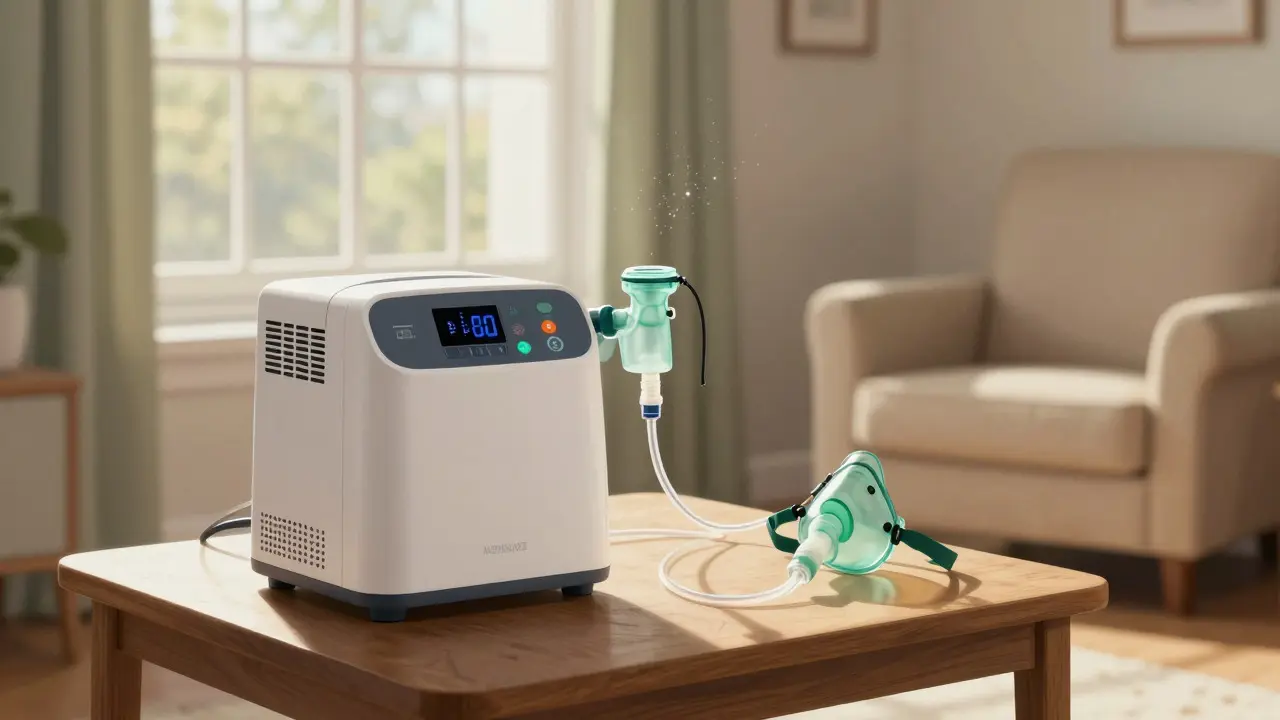
Not all oxygen devices work the same. You need a medical-grade oxygen concentrator capable of delivering continuous flow at high rates. Portable units designed for walking (like the Inogen One G5) often max out at 2-5 liters per minute, which is insufficient for cluster headaches. You need a stationary unit like the Invacare Perfecto2 or similar models that can push 12-15 liters per minute (L/min).
Pair this with a non-rebreather face mask with a reservoir bag. This mask ensures you’re breathing 100% oxygen and prevents you from re-breathing carbon dioxide. Nasal cannulas are generally ineffective for cluster headaches because they don’t deliver enough volume quickly enough.
The Protocol: Flow Rate and Duration
According to the American Academy of Neurology guidelines, the standard protocol is:
- Flow Rate: Start at 12-15 L/min. Some older studies suggested 6 L/min, but recent data shows significantly higher efficacy at 12 L/min (78% pain-free vs. 20% with placebo).
- Duration: Breathe deeply for 15-30 minutes. Most people find relief within the first 15 minutes.
- Technique: Ensure a tight seal on the mask. Leaks reduce effectiveness. Take slow, deep breaths rather than shallow gasps.
If you live alone, consider placing oxygen stations in multiple rooms-bedroom, living room, office-so you never have to walk far during an attack. One user on Reddit noted that keeping a demand-valve mask nearby reduced their treatment delay by over four minutes, which made all the difference.
Getting Insurance Coverage: The Battle Plan
This is where many patients hit a wall. Oxygen therapy is medically proven, but insurance companies aren’t always eager to pay for it. In the U.S., Medicare covers oxygen for cluster headaches under specific conditions outlined in National Coverage Determination NCA-00296R. To qualify, you typically need:
- A documented diagnosis of cluster headache (ICD-10 code G44.0).
- Proof that you’ve tried and failed two different triptans.
- An attack frequency of at least once per week.
Private insurers vary wildly. UnitedHealthcare approves about 68% of claims, while Aetna approves only 42%. Don’t give up if you get denied initially. Work with your neurologist to submit a Letter of Medical Necessity. Cite the 2022 American Academy of Neurology guidelines and the Cochrane Review showing oxygen’s superiority in safety profile. Organizations like Clusterbusters provide templates and advocacy support to help navigate these denials.
Who Doesn’t Respond to Oxygen?
While oxygen is the gold standard, it’s not magic for everyone. About 20% of patients report little to no relief. Researchers have identified predictors for poor response:
- No history of smoking: Surprisingly, patients who have never smoked are less likely to respond (Odds Ratio 2.3).
- Persistent interictal headache: If you have background pain between attacks, oxygen may be less effective.
- Long attack duration: Attacks lasting longer than 180 minutes are harder to abort with oxygen alone.
If you fall into these categories, don’t despair. Discuss preventive treatments with your doctor, such as verapamil or lithium, and ask about emerging neuromodulation devices like gammaCore, which show promise for refractory cases.

Practical Tips for Success
Based on patient surveys and expert advice, here are actionable tips to maximize your chances of success:
- Practice early: Use the mask during mild symptoms or even when pain-free to get used to the sensation. 85% of users master proper technique within three attempts.
- Check seals: Facial hair can break the seal. Shave before use if necessary.
- Stay calm: Anxiety increases oxygen consumption. Try box breathing (inhale 4 seconds, hold 4, exhale 4) while wearing the mask.
- Keep logs: Track attack times, flow rates, and relief duration. This data helps doctors adjust your treatment plan and supports insurance appeals.
Frequently Asked Questions
How fast does oxygen therapy work for cluster headaches?
For most patients, high-flow oxygen begins relieving pain within 15 minutes. Clinical trials show that 78% of users are pain-free at the 15-minute mark when using 12-15 liters per minute via a non-rebreather mask. Starting treatment within 5-10 minutes of onset yields the best results.
Can I use a portable oxygen concentrator for cluster headaches?
Most small portable concentrators are not suitable because they cannot deliver the required high flow rate. You need a device capable of 12-15 liters per minute continuously. While newer models like the O2VERA (cleared by FDA in 2023) offer higher flows, traditional stationary concentrators remain the most reliable and cost-effective option for home use.
Does insurance cover oxygen therapy for cluster headaches?
Coverage varies. Medicare covers it if you meet specific criteria, including documented failure of two triptans and frequent attacks. Private insurers like UnitedHealthcare have higher approval rates (68%) compared to others like Aetna (42%). Many initial claims are denied, so working with a specialist to submit a Letter of Medical Necessity is often required.
Are there any side effects to breathing high-flow oxygen?
Oxygen therapy has an excellent safety profile with no significant adverse events reported in clinical trials. Unlike triptans, it does not cause chest tightness, dizziness, or cardiovascular strain. Minor issues may include dry nasal passages or skin irritation from the mask, but these are easily managed.
What should I do if oxygen therapy doesn't work for me?
About 20% of patients do not respond well to oxygen. Predictors include never having smoked, having persistent background pain, or very long attack durations. If oxygen fails, discuss alternative acute treatments like intranasal zolmitriptan or preventive medications such as verapamil with your neurologist. Neuromodulation devices are also emerging as options for refractory cases.