
Guillain-Barré Syndrome: Understanding Acute Weakness and IVIG Treatment
 Jul, 27 2026
Imagine your legs suddenly feeling like lead. You try to stand up, but your knees buckle. Within hours, that weakness creeps up your torso, making it hard to breathe. This isn't a stroke or a heart attack-it’s Guillain-Barré Syndrome, also known as GBS, a rare but serious condition where the immune system attacks the nerves. It is a medical emergency that requires immediate attention. If you or someone you know experiences rapid-onset muscle weakness, time is critical. Understanding what GBS is, how it progresses, and why intravenous immunoglobulin (IVIG) is the standard treatment can make the difference between full recovery and long-term disability.
What Is Guillain-Barré Syndrome?
GBS is an autoimmune disorder. Normally, your immune system fights off invaders like viruses and bacteria. In GBS, it gets confused. It mistakes the protective coating of your nerves-called myelin-for a threat and starts attacking it. This damage disrupts the signals your brain sends to your muscles, leading to weakness and paralysis.
The condition was first described in 1916 by French physicians Georges Guillain, Jean Alexandre Barré, and André Strohl. Today, it remains relatively rare, affecting about 1 to 2 people per 100,000 annually in the United States. That translates to roughly 3,000 to 6,000 cases each year. While it can happen at any age, the risk increases slightly after age 50.
The hallmark of GBS is its speed. Symptoms usually start with tingling or weakness in the feet and legs. In 85% to 90% of cases, this weakness ascends symmetrically, moving up to the arms, chest, and face. For many patients, the progression is frighteningly fast. About 90% of people reach their maximum level of weakness within three to four weeks. In severe cases, this can mean complete paralysis and the need for mechanical ventilation to help with breathing.
Triggers: What Starts the Attack?
Most people who develop GBS have had an infection just before symptoms began. The body’s attempt to fight that infection seems to trigger the mistaken immune response. This is known as molecular mimicry.
- Campylobacter jejuni: This bacterium causes food poisoning and is linked to 20% to 40% of GBS cases in the U.S., especially those following gastroenteritis.
- Cytomegalovirus (CMV): A common virus associated with 10% to 15% of cases.
- Epstein-Barr Virus (EBV): Known for causing mononucleosis, it triggers 5% to 10% of cases.
- Zika Virus: During the 2015-2016 epidemic in Latin America, post-infectious GBS cases rose by 25%.
- Other Factors: Rarely, recent surgeries or vaccinations have been implicated, though the link is much weaker than with infections.
Knowing these triggers helps doctors suspect GBS earlier. If you’ve had a bad stomach bug or viral illness and now feel weak, don’t ignore it.
Diagnosing GBS: Speed Matters
Because GBS mimics other conditions like botulism or myasthenia gravis, getting the right diagnosis quickly is vital. Misdiagnosis occurs in 5% to 10% of cases, often delaying life-saving treatment.
Doctors rely on a combination of clinical signs and tests:
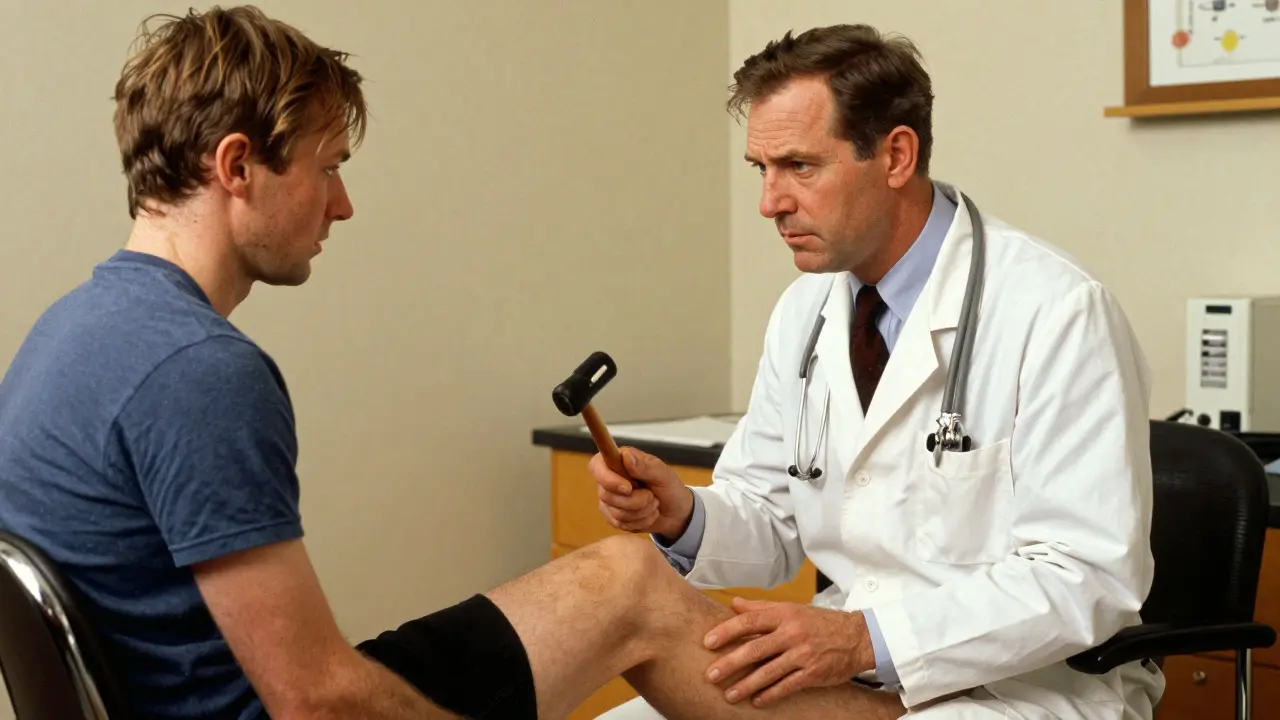
- Physical Exam: They look for symmetrical weakness and absent reflexes (areflexia). If you tap your knee and there’s no kick, that’s a red flag.
- Lumbar Puncture: Also called a spinal tap, this test checks cerebrospinal fluid. In GBS, protein levels are often high while white blood cell counts remain normal-a pattern called albuminocytological dissociation. This shows up in 80% of cases by the second week.
- Nerve Conduction Studies: These electrical tests measure how well your nerves send signals. They can confirm nerve damage and help identify the specific subtype of GBS.
The most common subtype in North America and Europe is Acute Inflammatory Demyelinating Polyradiculoneuropathy (AIDP), which accounts for 90% of cases. It involves damage to the myelin sheath. Other subtypes affect the axons (the core of the nerve) and may respond differently to treatment.
IVIG Treatment: How It Works
Once GBS is suspected, treatment shouldn’t wait for all test results to come back. The goal is to stop the immune attack as soon as possible. The two main treatments are plasma exchange and Intravenous Immunoglobulin (IVIG). IVIG has become the preferred first-line therapy in most hospitals.
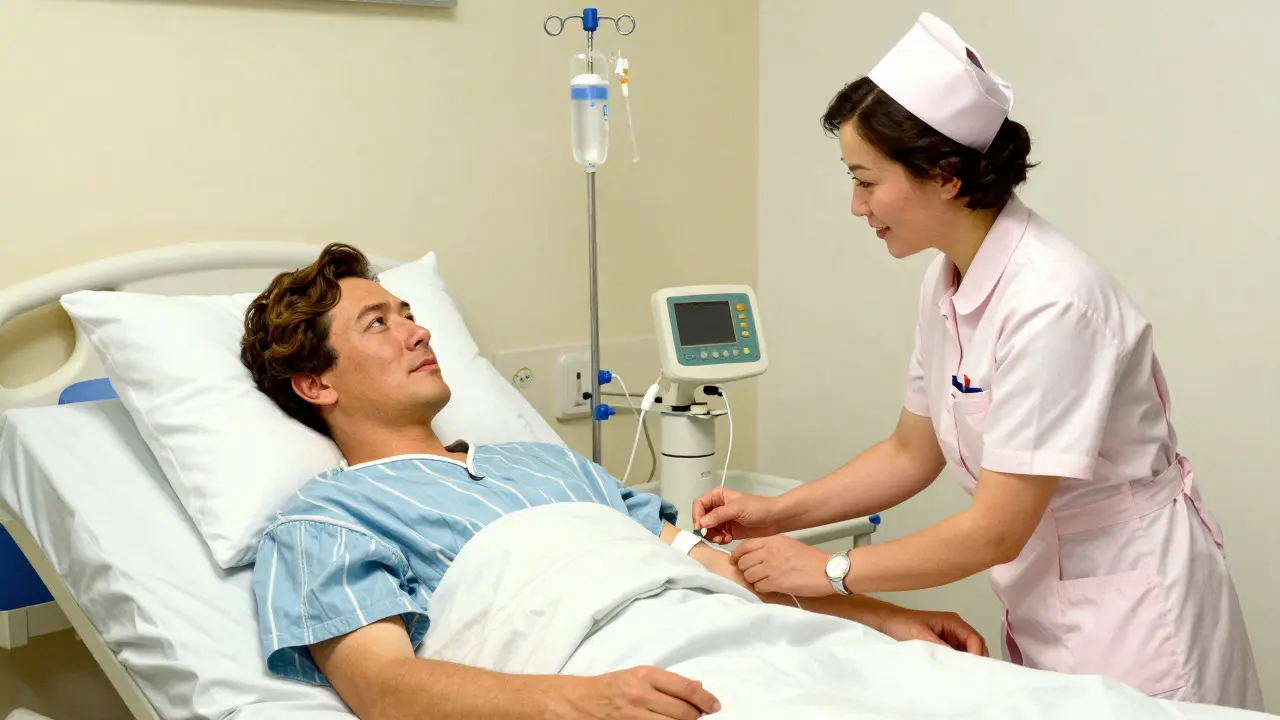
IVIG is a solution made from donated human plasma containing antibodies. When given intravenously, it helps modulate the immune system, calming the overactive response attacking your nerves. The standard dose is 0.4 grams per kilogram of body weight per day, given for five consecutive days.
Timing is everything. Experts recommend starting IVIG within two weeks of symptom onset, ideally within seven to fourteen days. Each day of delay can reduce treatment efficacy by approximately 5%. Clinical trials show that IVIG reduces the time to independent walking by about three weeks compared to supportive care alone. About 60% of treated patients show improvement within two to four weeks, versus only 40% in control groups.
IVIG vs. Plasma Exchange: Choosing the Right Path
Plasma exchange (plasmapheresis) filters harmful antibodies out of your blood. It’s just as effective as IVIG in improving functional outcomes at four weeks. However, IVIG is generally preferred for several reasons:
| Feature | IVIG | Plasma Exchange |
|---|---|---|
| Administration | Standard IV line | Central venous catheter required |
| Invasiveness | Low | High |
| Complication Rate | ~15% | ~30% |
| Cost (U.S.) | $15,000 - $25,000 | $20,000 - $30,000 |
| Patient Satisfaction | Higher (7.2/10) | Lower (5.8/10) |
IVIG is easier to administer, less invasive, and cheaper. It doesn’t require a central line, which lowers the risk of infection and bleeding. However, IVIG isn’t for everyone. People with IgA deficiency are at risk of anaphylaxis, and those with kidney problems may struggle with the load. Side effects like headaches (25% of patients), fever (15%), and rarely thromboembolic events (1-3%) are common but manageable.
If you’re in respiratory failure and need immediate stabilization, some experts prefer plasma exchange because it might work faster initially. But for most patients, IVIG strikes the best balance of safety and effectiveness.

Recovery and Long-Term Outlook
Recovery from GBS is a marathon, not a sprint. Even with IVIG, the process takes time. Nerves heal slowly, growing back at a rate of about one millimeter per day.
Here’s what the data says about long-term outcomes:
- Full Recovery: About 60% of patients achieve full functional recovery within six to twelve months.
- Residual Weakness: Roughly 30% have lingering weakness that may require assistive devices like braces or walkers.
- Severe Disability: About 10% remain severely disabled at one year.
Patient stories reflect this reality. Many report noticeable improvement within ten to fourteen days of starting IVIG, describing a "gradual return of leg strength." Others deal with significant side effects during treatment, such as brutal headaches or flu-like symptoms. One patient noted, "By day 12 I could wiggle toes, day 18 stand with assistance. But the headaches during infusion were brutal."
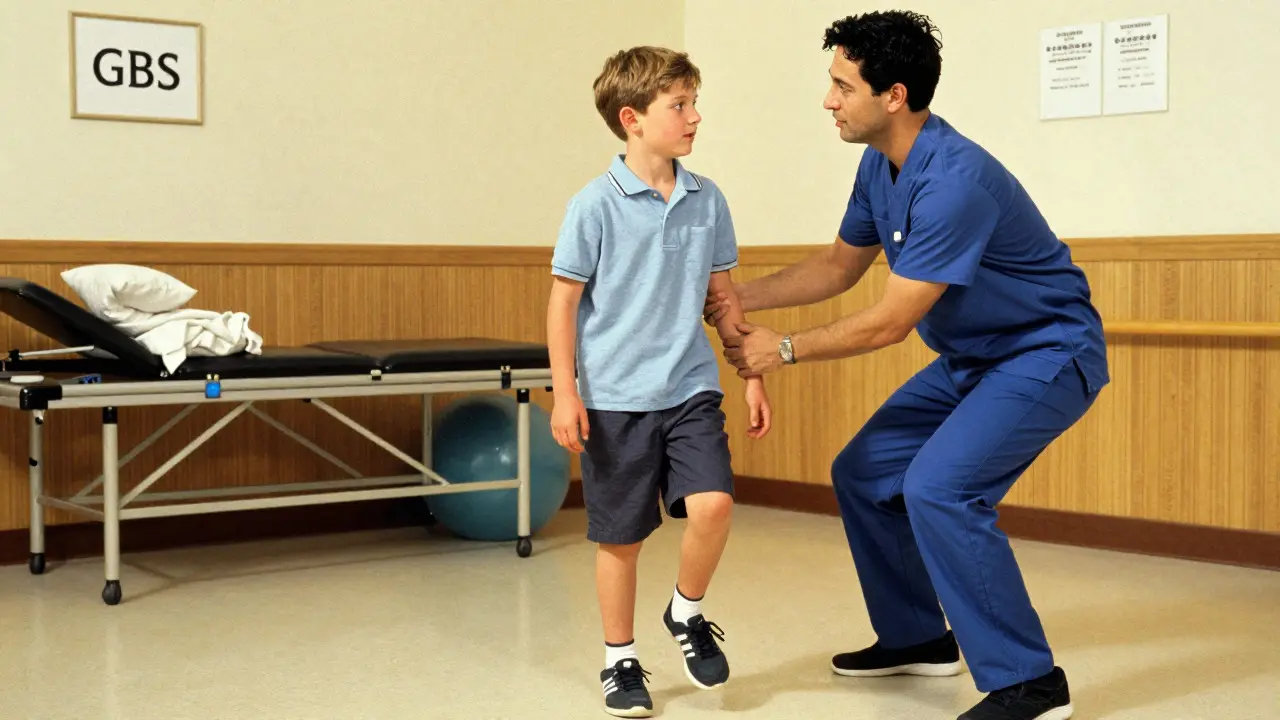
Physical therapy is crucial during recovery. It helps prevent muscle atrophy, maintains joint flexibility, and rebuilds strength. Autonomic instability-fluctuations in blood pressure and heart rate-affects 65% of severe cases and requires careful monitoring even after the acute phase passes.
Prevention and Future Directions
There’s no surefire way to prevent GBS since it’s often triggered by common infections. However, practicing good hygiene to avoid gastrointestinal illnesses can lower your risk. Vaccinations are generally safe; the benefit of preventing diseases like flu or pneumonia far outweighs the tiny risk of triggering GBS.
Research is ongoing. Scientists are looking into biomarkers like anti-ganglioside antibodies to predict who will respond best to which treatment. New therapies, such as complement inhibitors (e.g., eculizumab), showed promise in early trials, potentially speeding up recovery by 30%. The International GBS Outcome Study (IGOS) continues to gather data from thousands of patients worldwide to refine guidelines. Preliminary results suggest that starting IVIG within 72 hours could improve six-month outcomes by 15%.
For now, awareness is your best defense. Know the signs: sudden weakness, tingling, loss of reflexes. If you suspect GBS, go to the emergency room immediately. Early intervention saves lives and limbs.
Is Guillain-Barré Syndrome fatal?
GBS can be life-threatening if it affects the muscles used for breathing. About 20-30% of patients require mechanical ventilation. With modern intensive care, the mortality rate is low, around 3-5%, mostly due to complications like blood clots or infections rather than the disease itself.
How long does IVIG treatment take?
The standard protocol involves five consecutive days of infusions. Each session can take several hours depending on the dose and how well your body tolerates it. Most patients see some improvement within two to four weeks after starting treatment.
Can GBS come back?
Relapses occur in about 2-5% of patients. If symptoms return or worsen after initial improvement, doctors may repeat IVIG or plasma exchange. Chronic inflammatory demyelinating polyneuropathy (CIDP) is a related condition with a slower onset and more frequent relapses, requiring long-term maintenance therapy.
What are the side effects of IVIG?
Common side effects include headache (25%), fever (15%), chills, nausea, and fatigue. More serious but rare risks include kidney damage, blood clots, and allergic reactions. Doctors monitor vital signs closely during infusion to manage these risks.
Does stress cause Guillain-Barré Syndrome?
Stress itself doesn’t cause GBS. The primary triggers are infections like Campylobacter, CMV, or Zika. However, physical stressors like surgery or trauma have been rarely associated with onset, likely due to the immune system’s heightened activity during healing.
Kieran Healy
July 27, 2026 AT 16:59Man, reading this made my heart sink a bit. I had a cousin who went through something similar years ago and it was terrifying for the whole family. The part about the legs feeling like lead really hits home because he described it exactly like that. It’s scary how fast it can move up your body. Glad there is treatment now though. Hope everyone out there stays safe. :)
Sinead Doyle
July 27, 2026 AT 22:41typical mainstream medical propaganda pushing IVIG which is just processed blood from who knows where. they dont tell you about the contaminants or the fact that big pharma makes billions off these 'treatments' while ignoring natural immune boosting methods. molecular mimicry? please. its all about controlling the population with vaccines and then selling the cure. do your own research on histamine blockers instead of trusting these doctors who misdiagnose 10% of cases anyway. :)
Samuel Friday
July 29, 2026 AT 07:19The author presents a rather pedestrian overview of GBS, failing to adequately address the nuanced pathophysiological distinctions between AIDP and AMAN subtypes in developing economies. While IVIG is indeed the standard of care in Western hospitals due to logistical convenience, one must consider the economic burden placed on underfunded healthcare systems. It is amusing how the article glosses over the significant variance in outcomes based on socioeconomic status. Perhaps if the author spent less time on basic definitions and more time on global health disparities, we might have a truly insightful piece. But then again, nuance is often lost on the general public.
Emily Schor
July 29, 2026 AT 19:42This is a very clear explanation of the condition. I appreciate the breakdown of the triggers, especially Campylobacter jejuni. It is good to know that hygiene can help lower risk. The comparison table between IVIG and plasma exchange is also helpful for understanding why one is preferred over the other in most cases. Thanks for sharing this information.
Arun Krishnan
July 31, 2026 AT 02:18Great post. It is important to remember that recovery takes time. Many people get frustrated when they do not see immediate results. Physical therapy is key here. Keep pushing yourself gently. You are stronger than you think. Stay positive and keep moving forward. One step at a time is all that matters.
Bobby Christiansen
August 2, 2026 AT 01:43Oh wow, another article telling us to be scared of our own bodies! Like, seriously, who has time to monitor every little tingle? We are supposed to live our lives, not sit around waiting for paralysis! And don't get me started on the side effects of IVIG. Headaches? Fever? That sounds like a flu shot gone wrong! People need to take responsibility for their own health instead of relying on expensive infusions. It's just so dramatic and unnecessary. :/
anna arifiana
August 3, 2026 AT 15:38I find it quite interesting, albeit somewhat alarming, that the incidence of GBS appears to be linked to such common pathogens as CMV and EBV; however, one must question whether the correlation implies causation or if there are underlying genetic predispositions that remain unexplored by current medical literature, which tends to focus heavily on symptomatic treatment rather than preventative measures, thus leaving patients vulnerable to recurrence despite the initial administration of immunoglobulins, which themselves carry risks that are often downplayed in clinical settings.
Marie-Gladys Darcelin
August 5, 2026 AT 09:28It is imperative that individuals recognize the severity of this condition without succumbing to panic. The data presented regarding mortality rates is accurate, yet the emphasis on mechanical ventilation may induce undue anxiety among the layperson. One must maintain composure and seek professional evaluation promptly upon observing symmetrical weakness. Negligence in this regard is unacceptable.
Kyle Bonnette-Lykens
August 6, 2026 AT 14:47ivig is expensive but necessary. plasma exchange is too invasive for most. just go to the er if you feel weak. dont wait.
Jasmine Agito
August 8, 2026 AT 09:48As a nurse, I can confirm that early recognition is critical. The lumbar puncture finding of albuminocytological dissociation is a classic sign we look for. However, it can take time to develop, so clinical judgment is paramount. IVIG is indeed easier to administer than plasmapheresis in an acute setting. Patients should be monitored closely for autonomic instability during recovery.
Tony Malvagna
August 9, 2026 AT 06:12Life is tough but we gotta keep fighting. This disease is no joke but people come back strong. Ive seen it happen. Its all about mindset and support. Dont let the stats scare you. Every person is different. Keep believing in yourself and the process. You got this man. Lets go!