
How to Use Automated Dispensing Cabinets Safely in Clinics
 Apr, 21 2026
Putting a high-tech machine in a clinic doesn't automatically make it safer. In fact, some studies have shown that dispensing errors can actually jump by over 30% in certain nursing units if the system is poorly set up. The problem isn't the hardware; it's how the humans interact with it. To stop dispensing errors, you have to move beyond just "using" the machine and start managing it as a critical safety tool.
What Exactly is an Automated Dispensing Cabinet?
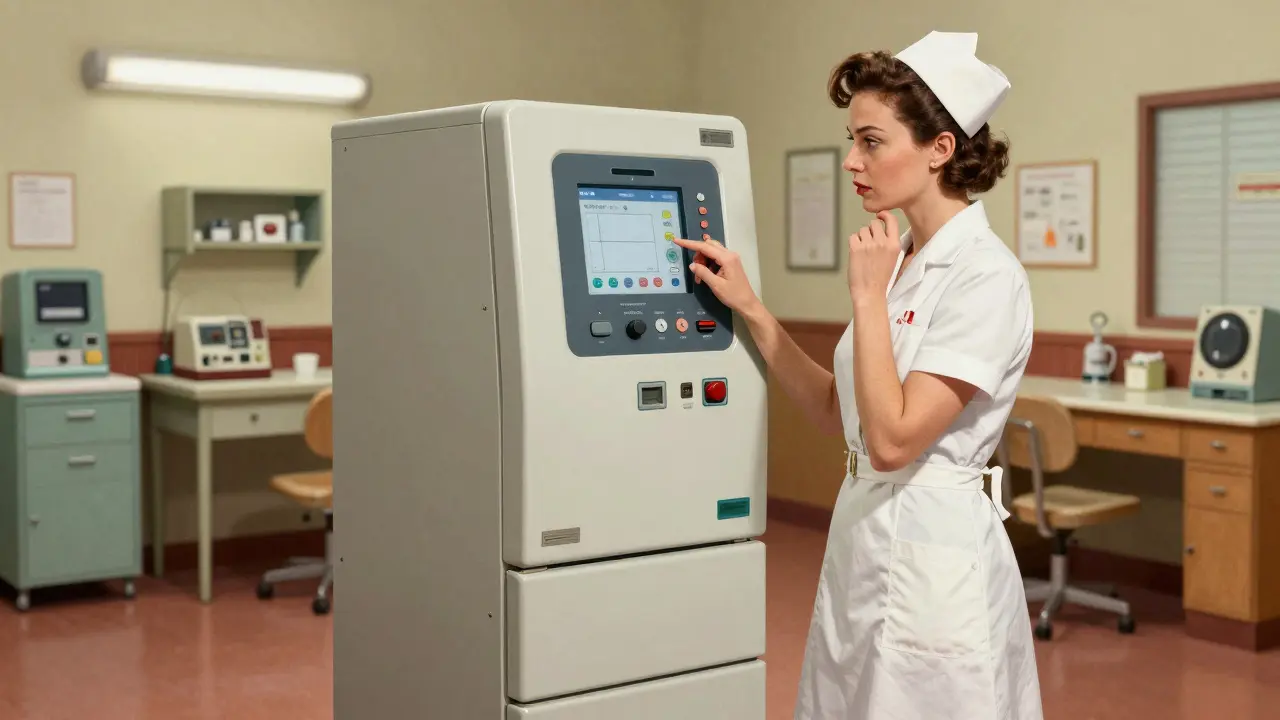
An Automated Dispensing Cabinet (ADC) is a computerized medication storage system located at the point of care, designed to control and track drug distribution. Think of it as a smart vending machine for medicine. Instead of a pharmacist manually filling cassettes in a basement, nurses and clinicians can pull medications directly from the unit in the clinic. Common examples include the BD Pyxis MedStation and the Omnicell XT Automated Dispensing System.
These systems rely on a mix of hardware-like locked drawers and refrigerated compartments-and software that connects to the clinic's Electronic Health Record (EHR) via HL7 interfaces. When they work, they cut down on manual handling and contamination risks. When they don't, they can lead to catastrophic dosing mistakes.
The Biggest Risks: Where Things Go Wrong
The most dangerous part of an ADC is the "override" function. This allows a clinician to bypass the pharmacist's review to get a drug quickly during an emergency. However, when overrides are used too often or without strict rules, the risk of error skyrockets. Data shows that facilities with unrestricted override capabilities see error rates 2.3 times higher than those with tight controls.
Then there's the physical layout. If a high-alert medication like fentanyl is stored right next to a different but similarly packaged drug, a tired nurse might grab the wrong one. This is a classic case of look-alike/sound-alike (LASA) errors. Without barcode verification, the machine only knows a drawer was opened, not necessarily that the correct vial was pulled.
| Feature | Manual Unit-Dose Filling | Properly Configured ADC | Poorly Configured ADC |
|---|---|---|---|
| Error Rate | Baseline | 15-20% Reduction | Up to 30% Increase |
| Speed of Access | Slow (Pharmacy dependent) | Rapid (Point of care) | Rapid (High risk) |
| Tracking | Paper/Manual logs | Real-time electronic logs | Over-reliance on overrides |
| Contamination Risk | Higher manual touch | Lower (approx. 40% less) | Similar to manual |

Step-by-Step Guide to Safe Operation
Safe use starts with the Institute for Safe Medication Practices (ISMP) guidelines. You can't just plug it in; you need a system of checks and balances.
- Set Up Patient Profiling: Never run an ADC as a standalone "drug drawer." Ensure it is linked to the pharmacy information system. This ensures the nurse sees alerts for allergies, duplicate therapies, or unsafe doses before the drawer even opens.
- Control the Override Process: Create a specific, limited list of medications that can be overridden. Require a written rationale for every override and, for high-risk drugs, implement a "dual-witness" protocol where two licensed providers must sign off.
- Optimize Physical Storage: Keep look-alike/sound-alike drugs far apart. Use barcode scanning for every single medication added to the cabinet to prevent restocking errors.
- Manage Temperature-Sensitive Meds: Store refrigerated items in dedicated compartments. Ensure they are labeled with clear Beyond-Use Dates (BUD) and are kept away from the machine's heat-generating electronics.
- Standardize Training: New staff shouldn't touch the machine until they complete a 4-6 week learning curve and pass a competency validation.
Preventing the "Human Error" Factor
Even with the best software, humans get tired and distracted. Ergonomics play a huge role here. If a pharmacist has to strain or reach awkwardly to stock the machine, they are more likely to make a mistake. A 2022 survey found that 31% of pharmacists struggled with poor ADC ergonomics.
To fight this, clinics should use a "clean hands" protocol and keep disinfectants right next to the cabinet to prevent cross-contamination. More importantly, the focus should be on cognitive load. When a nurse is managing a critical patient in an ICU, the mental effort of navigating a clunky override menu can lead to a slip-up. The goal is to make the safe path the easiest path.

The Role of the Pharmacist in ADC Safety
The American Society of Health-System Pharmacists (ASHP) emphasizes that a written plan for safe use must be developed by both pharmacy and nursing. The pharmacist isn't just the person who fills the machine; they are the safety filter. The Joint Commission advocates for pharmacist review of almost all medications prior to dispensing.
When the pharmacist's review is skipped via an override, the system loses its primary safety check. This is why unit-specific override lists are so effective. By tailoring the allowed overrides to the specific needs of a Cardiovascular Surgery unit versus an ICU, clinics can reduce override-related errors significantly-some by as much as 63%.
Do ADCs automatically reduce medication errors?
No. While they reduce errors related to manual filling, they can actually increase errors if they are poorly configured or if staff rely too heavily on override functions without pharmacist review.
What is a "look-alike/sound-alike" (LASA) error in an ADC?
This happens when two different medications have similar names or packaging and are stored next to each other in the cabinet, leading a clinician to pull the wrong drug.
How often should ADC competency be validated?
Per ISMP guidelines, new staff should undergo a training period of 4-6 weeks, followed by a formal competency validation before they are allowed to operate the system independently.
Which ADC systems are most common in clinics?
The market is dominated by Omnicell and BD Pyxis, with Capsa Healthcare providing popular smaller-footprint options for ambulatory clinics.
What is the risk of the override function?
Overrides bypass the pharmacist's check for drug interactions, allergies, and correct dosing. Unrestricted override use is linked to error rates 2.3 times higher than controlled systems.
Next Steps for Clinic Managers
If you're managing a clinic and want to tighten your safety protocols, start with a gap analysis. Use the ISMP's free ADC self-assessment tool to see how many of the nine Core Safety Processes you're actually following. Most facilities only hit about 63% compliance.
Next, bring your pharmacy and nursing leads together to review your override logs. If you see a specific drug being overridden constantly, don't just let it happen-evaluate if that drug should be on a patient-specific profile or if the workflow needs to change. Finally, check your physical layout. If your high-alert meds are huddled together, spend an afternoon reorganizing the drawers to create a physical buffer between look-alike drugs.