
Medicaid Generic Policies: How States Control Prescription Drug Costs
 May, 15 2026
Prescription drug costs are the biggest headache for state budgets right now. You might think that because generic drugs are cheap, they aren't a problem. But here is the reality: in fiscal year 2021, generic drugs made up nearly 85% of all prescriptions filled in Medicaid, the joint federal-state health insurance program for low-income Americans. Even though they account for only about 16% of total drug spending, their sheer volume makes them a massive lever for savings. If states can squeeze even a small percentage out of generic prices, it adds up to billions of dollars.
This article breaks down how states are using specific policies to control these costs without cutting off patient access. We will look at the tools they use, from Maximum Allowable Cost lists to new laws targeting price gouging.
The Federal Foundation: The Medicaid Drug Rebate Program
To understand state strategies, you first need to understand the rules set by Washington. The backbone of Medicaid drug pricing is the Medicaid Drug Rebate Program (MDRP), a federal program requiring drug manufacturers to pay rebates to Medicaid for covered outpatient drugs. Established by the Omnibus Budget Reconciliation Act of 1990 (OBRA '90), this program forces manufacturers to kick back money if they want their drugs covered by Medicaid.
For generic drugs, the math is strict. Manufacturers must pay a base rebate equal to 13% of the Average Manufacturer Price (AMP) or the difference between the AMP and the best price they offer anyone else, whichever is higher. This formula leaves states with very little room to negotiate extra discounts on generics. Unlike brand-name drugs, where states can often bargain for supplemental rebates, generic pricing is largely locked into this statutory structure. This limitation is why states have had to get creative with other levers to control costs.
Maximum Allowable Cost (MAC) Lists
If the federal rebate floor doesn't change, states turn to their own payment caps. The most common tool is the Maximum Allowable Cost (MAC) list. As of 2024, 42 states maintain these lists. A MAC list sets a hard ceiling on what the state will pay for a specific generic drug, regardless of what the pharmacy charges the wholesaler.
Here is how it works in practice:
- Identification: State agencies identify high-volume generic drugs that have multiple manufacturers.
- Pricing: They research the actual acquisition cost pharmacies pay.
- Capping: They set a reimbursement rate slightly above that cost to ensure pharmacies stay in business but don't overcharge.
Thirty-one states update these lists quarterly or more frequently. However, this strategy comes with friction. In 2024, 68% of states admitted they update their MAC lists monthly or less often. When drug prices fluctuate rapidly, outdated MAC lists can cause chaos. Independent pharmacies reported that 74% experienced delayed payments or claim rejections due to discrepancies between their costs and the state's MAC limits. It’s a balancing act: keep the cap too low, and pharmacies refuse to stock the drug; keep it too high, and the state loses savings.
Mandatory Substitution and Preferred Drug Lists
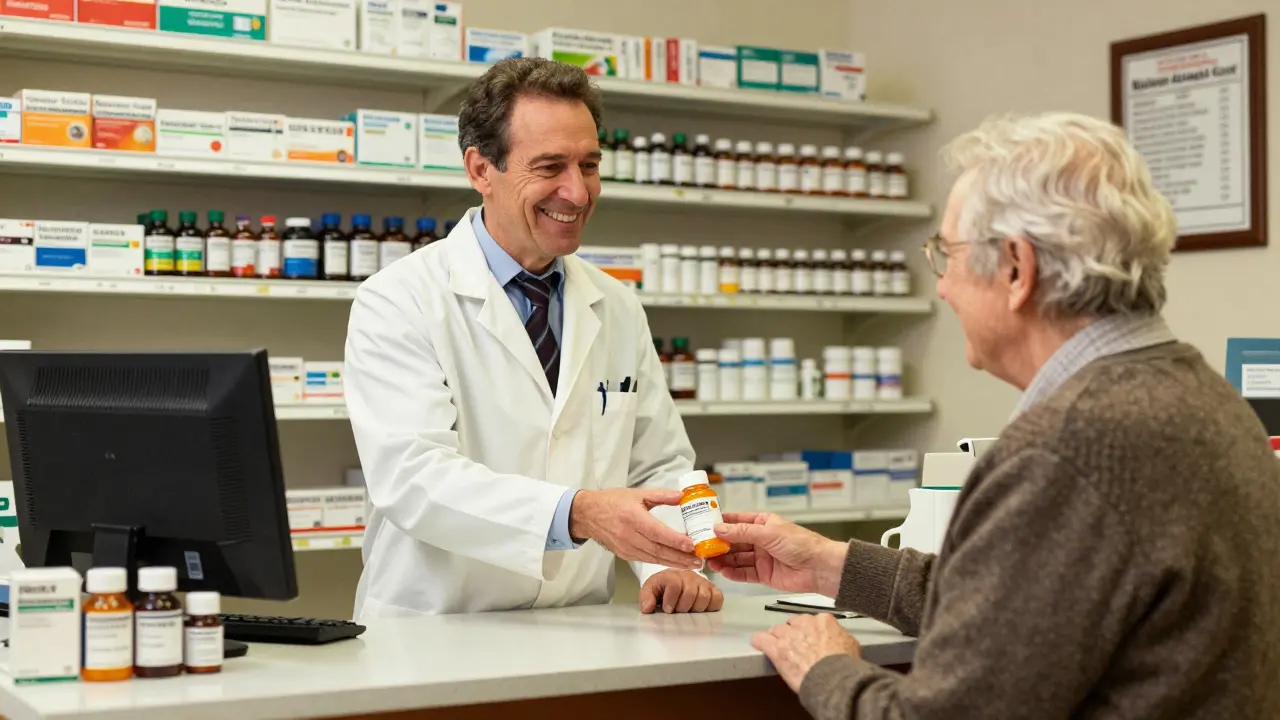
Beyond just paying less, states push patients toward the cheapest options through utilization management. Forty-nine states enforce mandatory generic substitution. This means if a doctor prescribes a brand-name drug that has a generic equivalent, the pharmacist must automatically fill the prescription with the generic version unless the doctor specifically writes "Dispense as Written."
States also use Preferred Drug Lists (PDLs). Twenty-eight states have implemented PDLs that include therapeutic interchange policies for generics. These lists categorize drugs into tiers. Generics are usually placed in the lowest tier, meaning patients pay little to no copay. Brand-name drugs sit in higher tiers with significant cost-sharing. By making generics the path of least resistance for both patients and providers, states drive volume toward lower-cost options.
| Strategy | Adoption Rate (Approx.) | Primary Mechanism | Key Challenge |
|---|---|---|---|
| Maximum Allowable Cost (MAC) Lists | 42 States | Cap reimbursement rates for specific generics | Frequent updates needed to match market fluctuations |
| Mandatory Generic Substitution | 49 States | Require filling generic instead of brand when available | Doctor pushback for specific formulations |
| Preferred Drug Lists (PDLs) | 28 States | Tiered copays favoring generics | Administrative burden for prior authorizations |
| Risk Mitigation Programs | 4 New in FY2024 | Caps on spending for high-cost specialty/generic hybrids | Complexity in defining eligible drugs |
New Frontiers: Price Gouging Laws and PDABs
States are not waiting for federal action to tackle aggressive pricing. Nine states, including California, Colorado, and Maryland, have established Prescription Drug Affordability Boards (PDABs) by 2024. These boards have the power to investigate drug prices and, in some cases, set upper payment limits.
Maryland took a direct shot at generic pricing in 2020 by enacting legislation that penalizes manufacturers for unjustified price increases on generic drugs. If a manufacturer raises the price of a generic drug significantly without providing new clinical data to justify the increase, they face penalties. This model policy, advanced by the National Academy for State Health Policy (NASHP), aims to stop "price gouging" in the off-patent market. While these policies achieve their greatest savings outside of Medicaid-in state-regulated commercial markets-they send a strong signal to manufacturers that states are watching.
The Supply Chain Risk
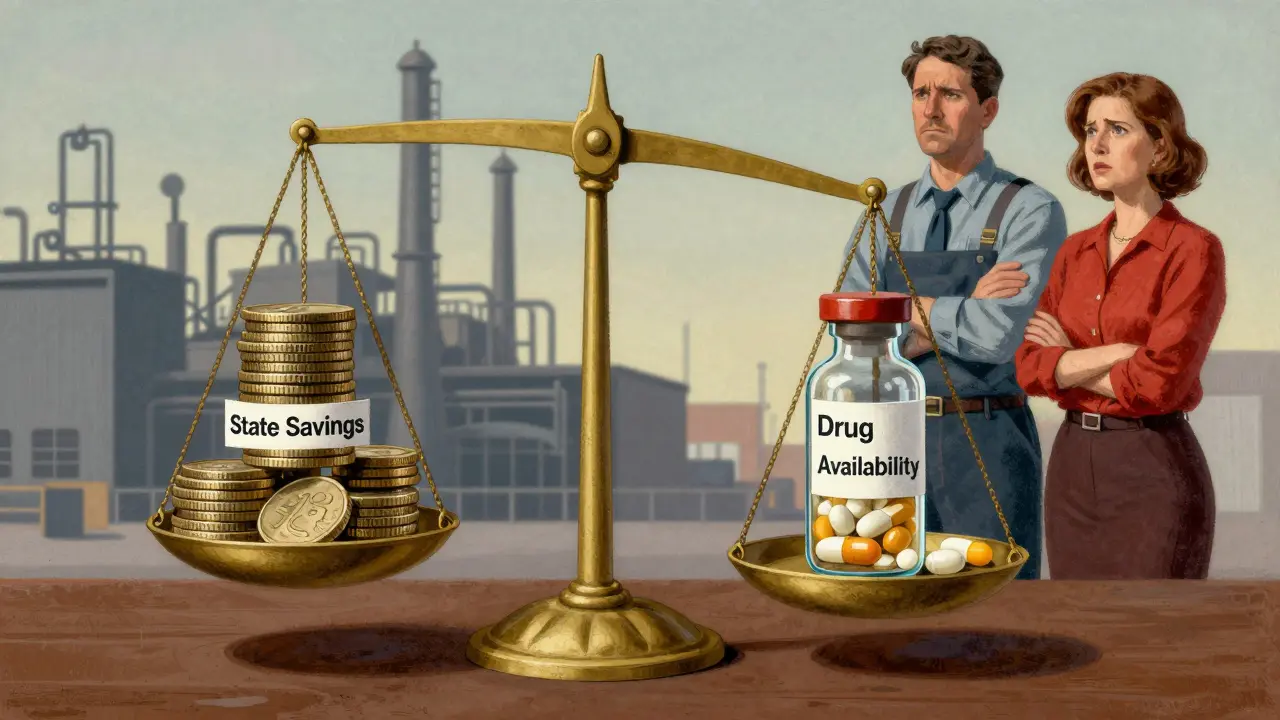
There is a dark side to aggressive cost control: shortages. The Congressional Budget Office warned in May 2024 that overly aggressive pricing interventions could disrupt supply chains. This isn't theoretical. In 2023, 23 states experienced shortages of critical generic medications, with each shortage lasting an average of 147 days.
Why does this happen? The generic manufacturing sector is highly consolidated. Three companies now control 65% of the generic injectables market, according to FDA data. When states impose tight MAC limits or threaten penalties, manufacturers may decide the profit margin is too thin to justify the risk of production. If a manufacturer exits the market, competition drops, and prices for the remaining suppliers can actually go up. To combat this, 12 states introduced legislation in 2024 to address shortages through strategic stockpiling and alternative sourcing provisions.
Emerging Challenges: GLP-1s and Specialty Generics
The landscape is shifting with new drug classes. GLP-1 medications, used for obesity and diabetes, are becoming a major budget item. The average annual treatment cost is $12,000. Thirteen state Medicaid programs cover certain GLP-1 drugs for obesity, typically requiring prior authorization. A proposed federal rule requiring coverage for these drugs could add $1.2 billion annually to state Medicaid budgets. While these are currently brand-name drugs, states are already preparing policies for when generics enter the market, ensuring they have the infrastructure to manage high-volume, high-cost therapies.
Additionally, states are experimenting with risk mitigation strategies for gene therapies and high-cost biologics that function similarly to generics in terms of volume. Four states-New Hampshire, Texas, Maryland, and Oregon-are implementing new risk pools or carve-outs in FY2024 to handle these financial spikes.
What is the Medicaid Drug Rebate Program (MDRP)?
The MDRP is a federal program established in 1990 that requires pharmaceutical manufacturers to pay rebates to Medicaid for every prescription drug they sell through the program. For generic drugs, the rebate is typically 13% of the Average Manufacturer Price or the difference between the AMP and the best price offered to any purchaser, whichever is greater.
How do Maximum Allowable Cost (MAC) lists work?
MAC lists set a maximum reimbursement rate that a state Medicaid program will pay for a specific generic drug. Pharmacies are reimbursed based on this capped amount rather than their actual wholesale acquisition cost. States update these lists regularly to reflect market prices, aiming to prevent overpayment while ensuring pharmacies remain profitable enough to stock the medication.
Why are generic drug shortages a concern for Medicaid?
Generic drugs make up the vast majority of prescriptions in Medicaid. When aggressive cost controls or market consolidation lead to shortages, patients lose access to essential medications. Shortages can last for months, forcing patients to switch to more expensive alternatives or go without treatment, which ultimately increases long-term healthcare costs and risks patient safety.
What is a Prescription Drug Affordability Board (PDAB)?
A PDAB is a state-level entity created to monitor and regulate drug prices. By 2024, nine states had established these boards. They investigate price increases, particularly for generic and off-patent drugs, and can impose penalties on manufacturers for unjustified price hikes or establish upper payment limits to curb costs.
Do states have flexibility to negotiate generic drug prices directly?
Direct negotiation for generic rebates is limited due to the federal statutory structure of the MDRP. However, states use indirect methods like MAC lists, preferred drug lists, and therapeutic interchange policies to influence net costs. Some states are also exploring multi-state purchasing pools to gain leverage in negotiating supplemental rebates for high-volume generics.