
Narcolepsy with Cataplexy: Diagnosis and Sodium Oxybate
 Aug, 10 2026
Imagine standing up to speak in a meeting, feeling a surge of laughter or excitement, and suddenly your knees buckle. Your legs feel like jelly, but you are fully conscious. This isn't a fainting spell; it is cataplexy, the defining symptom of narcolepsy type 1. For millions living with this condition, the world operates on a broken sleep-wake cycle that defies common sense. It is not just about being tired. It is a neurological disorder where the brain loses its ability to regulate REM sleep properly.
Narcolepsy with cataplexy, formally known as narcolepsy type 1 under the International Classification of Sleep Disorders (ICSD-3-TR), is a chronic condition affecting approximately 0.02% to 0.05% of the population. While symptoms often start between ages 10 and 30, most people wait six to ten years for a correct diagnosis. During that decade, they are often misdiagnosed with depression, anxiety, or simple laziness. The good news? We now have precise diagnostic tools and powerful treatments like sodium oxybate that can restore quality of life.
Understanding the Biology: Why Does This Happen?
To understand narcolepsy type 1, we have to look at the hypothalamus, a small region in the brain that acts as the body's control center for sleep and wakefulness. In healthy individuals, neurons in this area produce a neurotransmitter called hypocretin (also known as orexin). Hypocretin keeps you awake and stable during the day. In people with narcolepsy type 1, these specific neurons die off, leading to a severe deficiency of hypocretin.
This loss is not random. Research shows a strong genetic link. About 90% to 95% of patients with narcolepsy type 1 carry the HLA-DQB1*06:02 allele, a genetic marker found in only 25% of the general population. However, having the gene doesn't guarantee you will get the disease. It usually requires an environmental trigger, such as a viral infection or stress, to initiate the immune system's attack on hypocretin-producing cells.
The result is a "leaky" boundary between wakefulness and REM sleep. Normally, your muscles are paralyzed during REM sleep to prevent you from acting out dreams. In narcolepsy, this paralysis intrudes into wakefulness, causing cataplexy. Simultaneously, the drive for sleep becomes overwhelming, leading to excessive daytime sleepiness (EDS).
The Diagnostic Journey: From Misdiagnosis to Clarity
Getting diagnosed is rarely straightforward. The average delay is nearly nine years. Why? Because the symptoms mimic other conditions. Doctors must rule out sleep apnea, idiopathic hypersomnia, and mental health disorders before considering narcolepsy.
According to the American Academy of Sleep Medicine (AASM), a definitive diagnosis of narcolepsy type 1 requires meeting specific criteria:
- Daily Excessive Daytime Sleepiness: Irresistible need to sleep or lapses into drowsiness occurring for at least three months.
- Cataplexy: Sudden, bilateral loss of muscle tone triggered by strong emotions like laughter, surprise, or anger.
- Objective Testing: Either a Mean Sleep Latency (MSL) of ≤8 minutes with ≥2 Sleep-Onset REM Periods (SOREMPs) on a Multiple Sleep Latency Test (MSLT), OR a cerebrospinal fluid (CSF) hypocretin-1 concentration ≤110 pg/mL.
The Multiple Sleep Latency Test (MSLT) is the gold standard for many clinicians. It involves an overnight polysomnography (PSG) followed by five nap opportunities every two hours during the day. If you fall asleep quickly (under 8 minutes) and enter REM sleep twice or more, it suggests your brain is rushing into dream sleep without the usual restorative stages first.
However, the MSLT has limitations. False positives can occur due to sleep deprivation or other medications. That is why the CSF hypocretin-1 test is gaining traction. By measuring hypocretin levels in spinal fluid via lumbar puncture, doctors can achieve 98% sensitivity and 99% specificity for narcolepsy type 1. If your level is below 110 pg/mL, the diagnosis is virtually certain. Despite its accuracy, the invasive nature of the procedure means it is often reserved for cases where MSLT results are ambiguous.
| Test | Invasiveness | Accuracy/Sensitivity | Primary Use Case |
|---|---|---|---|
| MSLT (Nap Test) | Non-invasive | High, but prone to false positives (5-10%) | First-line objective testing when cataplexy is clear |
| CSF Hypocretin-1 | Invasive (Lumbar Puncture) | Very High (98% sensitivity, 99% specificity) | Definitive diagnosis when MSLT is inconclusive or cataplexy is atypical |
| HLA Typing | Minimal (Blood draw) | Low specificity (present in 25% of general population) | Ruling out narcolepsy if negative; supportive evidence if positive |

Sodium Oxybate: The Game-Changer Treatment
While stimulants like modafinil help with daytime sleepiness, they do little for cataplexy. Enter sodium oxybate, marketed as Xyrem. Approved by the FDA in 2002, it was the first medication specifically approved to treat both EDS and cataplexy in narcolepsy. Chemically, it is gamma-hydroxybutyrate (GHB), which may sound alarming given its street reputation, but in medical doses, it works differently. It consolidates nighttime sleep, reducing the fragmented sleep that fuels daytime exhaustion, and significantly reduces cataplexy episodes.
Clinical data shows dramatic improvements. Patients report a reduction in cataplexy frequency from a median of seven episodes per week to just over one. Many regain the ability to drive and return to work without fear of sudden muscle weakness. In 2020, the FDA approved Xywav, a lower-sodium formulation, offering a safer option for patients concerned about sodium intake, though the efficacy remains similar.
Navigating the REMS Program and Dosing Challenges
Because GHB has abuse potential, sodium oxybate is strictly regulated through the Risk Evaluation and Mitigation Strategy (REMS) program. You cannot simply pick it up at any pharmacy. Prescribers must be certified, and pharmacies must be authorized. This adds a layer of complexity but ensures safety.
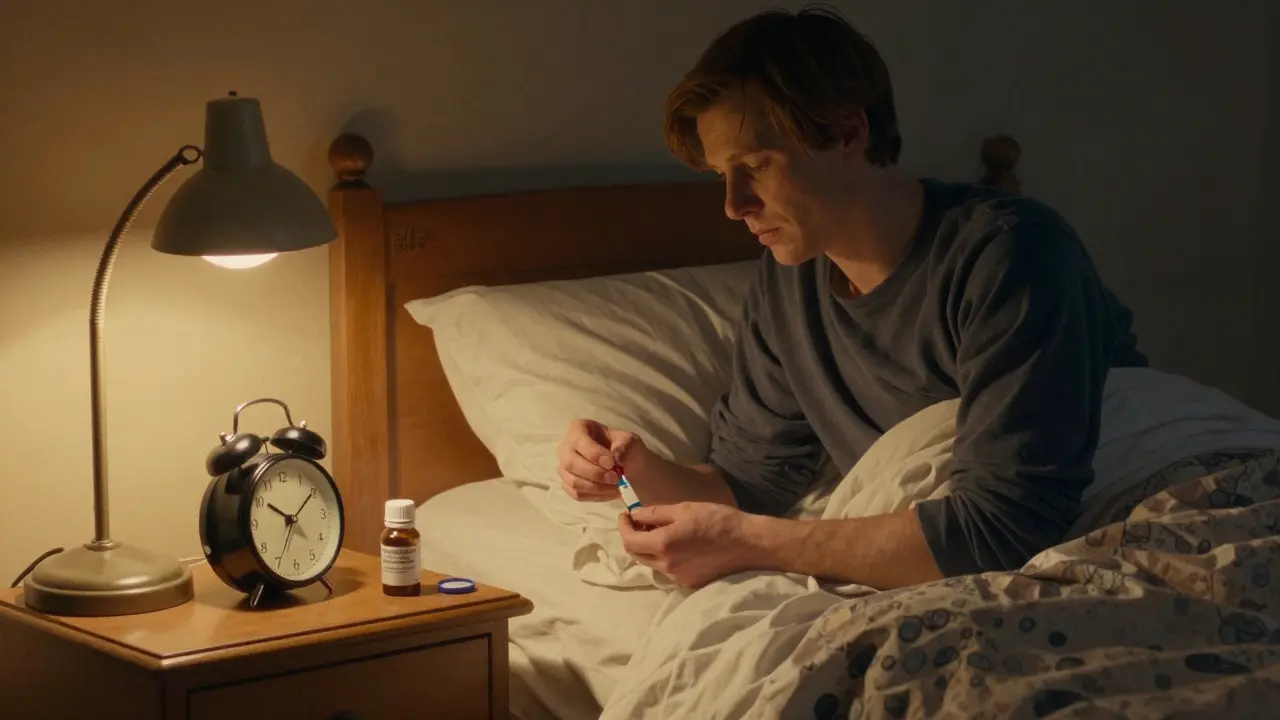
The dosing schedule is unique and challenging. Unlike most medications taken once or twice daily, sodium oxybate requires a split dose. The first half is taken at bedtime, and the second half is taken exactly two to four hours later, typically around midnight. Patients must set alarms and wake up to take the second dose. Failure to do so can lead to rebound insomnia or reduced efficacy.
Titration starts low, usually at 4.5 grams per night, and increases weekly by 1.5 grams until the optimal dose is reached, often capping at 9 grams for Xyrem or 7.5 grams for Xywav. Most patients take two to three months to find their maintenance dose. Common side effects include nausea, dizziness, and bedwetting (enuresis), particularly in younger patients.
Cost, Access, and Future Alternatives
Despite its effectiveness, access is a major barrier. Before insurance, monthly costs can range from $10,000 to $15,000. Prior authorization denials are common, forcing patients and doctors into lengthy appeals processes. Only 45% of eligible patients receive sodium oxybate, largely due to these financial and logistical hurdles.
The landscape is evolving. Newer treatments like pitolisant (a histamine-3 receptor antagonist) and solriamfetol (a norepinephrine-dopamine reuptake inhibitor) offer alternatives for EDS, though they are less effective for cataplexy than sodium oxybate. Researchers are also exploring hypocretin replacement therapies, such as oral agonists, which could one day replace the need for nightly injections or complex dosing regimens. Until then, sodium oxybate remains the most potent tool for managing the full spectrum of narcolepsy type 1 symptoms.
Living with Narcolepsy: Practical Strategies
Medication is only part of the equation. Lifestyle adjustments are critical. Scheduled naps, even short 15-to-20-minute ones, can provide significant relief. Maintaining a strict sleep schedule helps stabilize the circadian rhythm. Avoiding alcohol and heavy meals before bed prevents further sleep fragmentation. Support groups, such as those hosted by the Narcolepsy Network, provide invaluable community support, helping patients share coping strategies and navigate insurance battles together.
What is the difference between narcolepsy type 1 and type 2?
Narcolepsy type 1 includes cataplexy and is associated with low hypocretin levels. Narcolepsy type 2 presents with excessive daytime sleepiness but lacks cataplexy and typically has normal hypocretin levels. Type 1 is generally considered more severe due to the impact of cataplexy on daily functioning.
Is sodium oxybate addictive?
Sodium oxybate contains GHB, which has a high potential for abuse and dependence. However, when used strictly as prescribed under the REMS program, addiction rates among narcolepsy patients are low. The structured dosing and medical supervision mitigate this risk significantly compared to recreational use.
How long does it take to get a diagnosis for narcolepsy?
The average diagnostic delay is 6 to 10 years. This is due to symptom misattribution by primary care providers and the complexity of sleep studies. Early recognition of cataplexy and referral to a sleep specialist can shorten this timeline considerably.
Can narcolepsy go away on its own?
No, narcolepsy type 1 is a chronic, lifelong neurological condition. While symptoms may fluctuate in severity, the underlying hypocretin deficiency is permanent. Management focuses on controlling symptoms rather than curing the disease.
What are the side effects of Xywav compared to Xyrem?
Both medications share similar side effects like nausea, dizziness, and enuresis. Xywav contains significantly less sodium than Xyrem, making it a better option for patients with hypertension or heart conditions who need to limit sodium intake. The efficacy profile is comparable.
Does insurance cover sodium oxybate?
Most major insurers cover sodium oxybate for narcolepsy, but prior authorization is almost always required. Patients often face initial denials and must provide extensive documentation of failed alternative treatments. Patient assistance programs from manufacturers can help offset costs.
Is the CSF hypocretin test painful?
The test involves a lumbar puncture, which can cause discomfort and post-procedure headaches in 10-30% of patients. However, it is a quick procedure performed under local anesthesia. For many, the certainty of diagnosis outweighs the temporary discomfort.
Can children take sodium oxybate?
Yes, since July 2023, Xywav has been FDA-approved for pediatric patients aged 7 and older with narcolepsy and cataplexy. Dosing is weight-based, and careful monitoring is required to manage side effects like bedwetting.