
Opioids and Depression: Understanding the Link, Risks, and Monitoring
 Jul, 3 2026
Opioid & Depression Risk Estimator
Enter your current medication details to see how they correlate with clinical data regarding depression risk.
Analysis Results
Enter your details and click "Analyze Risk Profile" to view your estimated risk factors and recommendations.
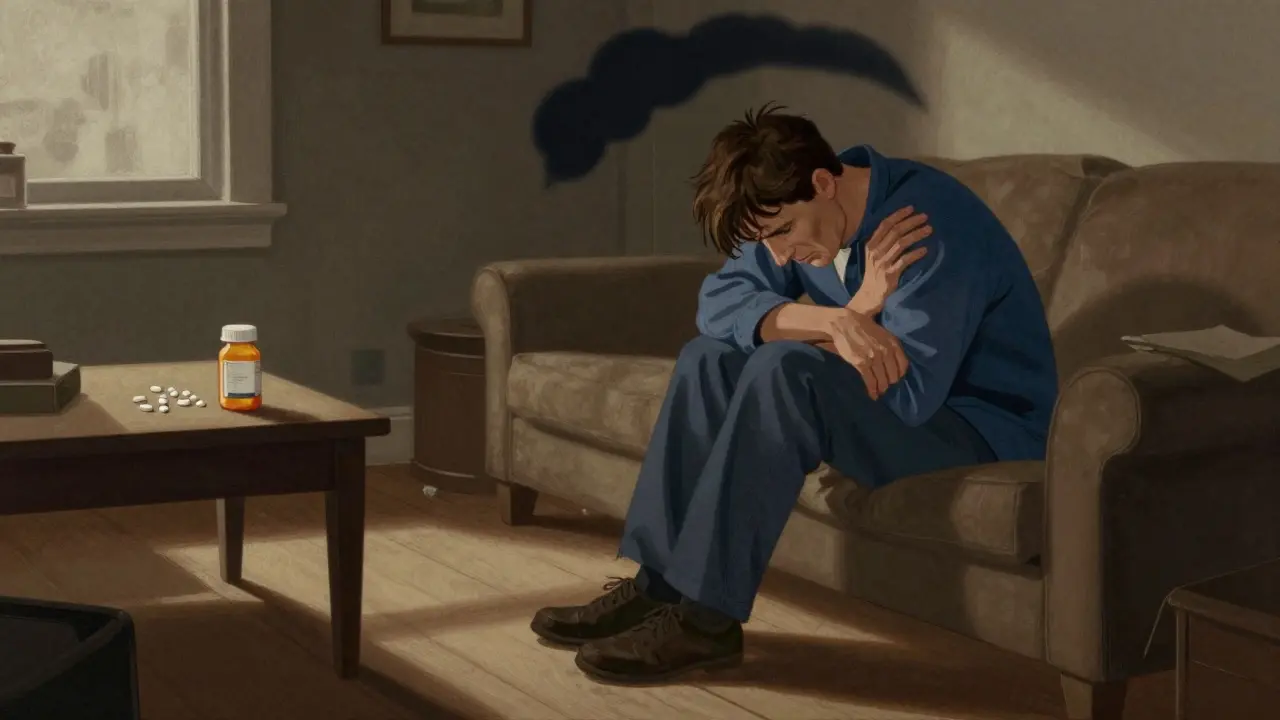
Chronic pain is exhausting. It drains your energy, disrupts your sleep, and isolates you from the people you love. When a doctor prescribes opioids, it often feels like a lifeline-a chance to finally breathe again. But for many patients, that relief comes with an unexpected shadow: a deepening sense of sadness, numbness, or hopelessness. You might wonder if these feelings are just part of living with pain, or if the medication itself is changing your brain chemistry.
The relationship between opioids and depression is not simple. It is a complex, bidirectional cycle where pain, mental health, and medication interact in ways that can trap patients in worsening symptoms. Recent research suggests that while opioids may offer short-term mood relief by blocking pain signals, long-term use significantly increases the risk of developing major depressive disorder. Understanding this link is crucial for anyone managing chronic pain, as it changes how we approach treatment, monitoring, and recovery.
The Bidirectional Trap: Pain, Mood, and Medication
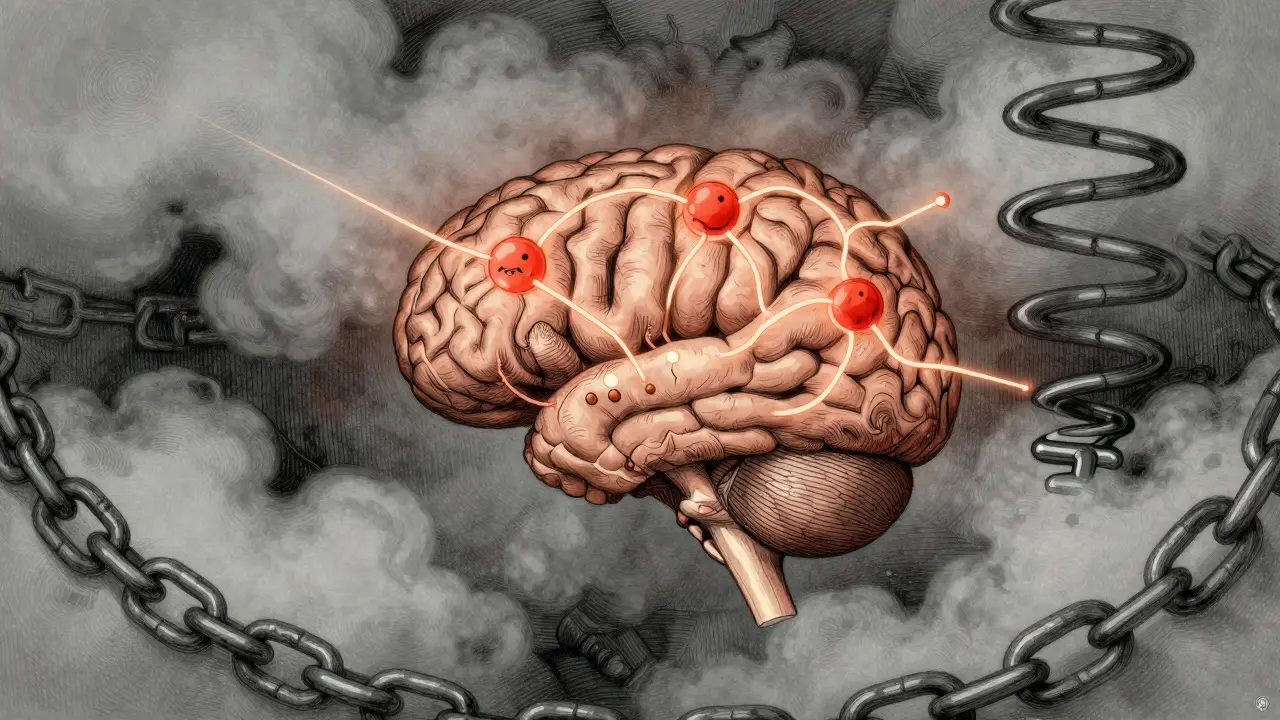
To understand why mood changes happen, we have to look at the biological connection between pain and emotion. Your brain does not process physical pain and emotional distress in separate silos. They share neural pathways, particularly involving the endogenous opioid system. This system uses natural chemicals to regulate both pain perception and mood stability.
Here is the tricky part: depression and pain often feed each other. Studies show that between 30% and 54% of people with chronic pain also suffer from major depressive disorder (MDD). Conversely, having depression makes you more sensitive to pain. A study published in JAMA Psychiatry (Kember et al., 2020) used genetic data to prove that prescription opioid use isn't just associated with depression-it likely causes it. The genetic liability for using opioids was linked to a statistically significant increase in depression risk. This means the direction of causality matters: taking opioids can lead to depression, not just the other way around.
This creates a dangerous cycle. You take opioids for pain. The pain lessens, but over time, the medication alters your brain's reward system. You start feeling emotionally flat or sad. To cope with this new emotional pain, you might rely more on the medication, leading to higher doses and deeper depression. Breaking this cycle requires recognizing that your mood changes are a medical symptom, not a personal failure.
How Opioids Change Brain Chemistry
Opioids work by binding to mu-opioid receptors in the brain. In the short term, this activation can produce antidepressant-like effects. Preclinical studies in rodents showed that drugs like morphine and codeine decreased immobility time in forced swim tests-a standard measure of despair behavior-by 35-60%. Even partial agonists like buprenorphine showed similar results, reducing signs of behavioral despair.
However, human brains adapt differently than rodent models in longitudinal settings. Long-term exposure to opioids leads to neuroadaptive changes. Your brain downregulates its own natural opioid production because it is getting so much external supply. This dysregulation of the endogenous opioid system contributes to depression development. When the drug wears off, or when tolerance builds, you are left with a deficit in natural mood-regulating chemicals.
Dose-response relationships are clear. Research indicates that taking more than 50 mg morphine equivalent daily dose (MED) is associated with an odds ratio of 3.32 for developing depression compared to non-use. In a hospital burn unit study, cumulative opioid doses positively correlated with higher scores on the Hamilton Depression Scale. The more opioids you take over time, the higher your risk of clinical depression becomes.
| Timeframe | Primary Effect | Mood Impact | Risk Level |
|---|---|---|---|
| Short-Term (Days to Weeks) | Pain blockade, euphoria | Temporary relief, improved outlook | Low |
| Medium-Term (Months) | Tolerance development | Emotional numbing, irritability | Moderate |
| Long-Term (Years) | Neuroadaptation, receptor downregulation | Increased depression risk, anhedonia | High |
Why Depressed Patients Are Prescribed More Opioids
Clinicians face a difficult dilemma. Patients with depression often report higher pain levels and greater interference with daily activities. Data shows that depressed patients initiate opioid therapy slightly more often than those without depression, but they are twice as likely to transition to long-term use. This is partly because untreated depression amplifies pain perception.
A large study of over 10 million patients found that depression doubled the hazard ratio for long-term opioid use. Doctors may inadvertently prescribe higher doses to depressed patients in an attempt to control what appears to be severe pain, unaware that the root cause is partly psychological. This leads to a feedback loop: higher doses lead to worse depression, which leads to higher reported pain, which leads to even higher doses.
The National Institute on Drug Abuse (NIDA) reports that major depressive disorder is associated with a 2.5-fold increase in the risk of developing opioid use disorder (OUD). This comorbidity makes treatment challenging. If you have both chronic pain and depression, treating only one condition often fails because the other remains active and disruptive.
Monitoring Your Mood: Tools and Protocols
If you are taking opioids, monitoring your mental health is just as important as tracking your pain levels. The American Pain Society recommends screening for depression using validated tools like the Patient Health Questionnaire-9 (PHQ-9) at baseline and quarterly during therapy. However, implementation gaps are widespread. Only 58% of primary care providers routinely screen for depression in chronic pain patients.
You should advocate for regular mood checks. Dr. Roger Weiss, principal investigator of the POATS trial, recommends monthly depression screening during the first six months of opioid therapy, then quarterly thereafter. His team found that depression symptoms emerged or worsened in 27.3% of patients within three months of starting long-term opioid therapy. Early detection is key to preventing a full-blown depressive episode.
- Baseline Assessment: Before starting opioids, complete a PHQ-9 or Beck Depression Inventory (BDI) to establish your current mood status.
- Regular Check-ins: Schedule monthly mental health reviews for the first half-year. Track any changes in sleep, appetite, interest in hobbies, or energy levels.
- Qualitative Observations: Pay attention to "anhedonia"-the inability to feel pleasure. If activities you once enjoyed no longer bring joy, note this for your doctor.
- Dose Correlation:** Keep a log of your opioid dosage alongside your mood scores. Look for patterns where mood dips coincide with dose increases or withdrawals.

Integrated Treatment Approaches
The most effective strategy for managing pain and depression simultaneously is integrated care. Treating depression aggressively can actually reduce opioid requirements. In the COMBINE trial, patients who received cognitive behavioral therapy (CBT) alongside pain management saw a 32% reduction in their average morphine equivalent daily dose. By addressing the emotional component of pain, patients required less chemical intervention.
Non-opioid treatments for depression, such as SSRIs (selective serotonin reuptake inhibitors) and SNRIs (serotonin-norepinephrine reuptake inhibitors), can also help manage neuropathic pain. Drugs like duloxetine serve a dual purpose, treating both mood disorders and certain types of chronic pain. This approach breaks the cycle by stabilizing mood without relying solely on opioids.
For patients with opioid use disorder, buprenorphine/naloxone therapy offers a unique advantage. The POATS trial found that nearly half of participants achieved successful abstinence outcomes while on this medication. Furthermore, studies show that buprenorphine maintenance therapy can improve depressive symptoms. One study recorded BDI scores dropping from 24.7 (severe) to 13.4 (mild) over three months. While the FDA has not approved buprenorphine specifically for depression, its ability to stabilize mood while treating addiction makes it a valuable tool in complex cases.
Emerging Research and Future Directions
Science is still unraveling the exact mechanisms behind the opioid-depression link. The National Institutes of Health awarded $4.2 million in 2023 to researchers at Columbia University to investigate neural mechanisms using fMRI and PET imaging. These studies aim to visualize how opioid use alters brain connectivity related to mood regulation.
Current consensus suggests that short-term opioid use provides mood benefits through pain relief and direct receptor effects. Chronic use, however, leads to neuroadaptive changes that contribute to depression. The CDC’s 2022 Clinical Practice Guideline Update acknowledges that the evidence is complex. As research progresses, we may see more targeted interventions that protect against mood deterioration while managing pain.
Until then, the best defense is awareness. Recognize that mood changes are a potential side effect of your medication. Do not ignore them. Communicate openly with your healthcare provider about any feelings of sadness, numbness, or hopelessness. Integrated treatment, regular monitoring, and a willingness to adjust your care plan are essential for maintaining both physical comfort and mental well-being.
Can opioids cause depression?
Yes. Genetic and observational studies indicate that long-term prescription opioid use increases the risk of developing major depressive disorder. The mechanism involves the downregulation of the brain's natural opioid system, leading to mood dysregulation.
How do I know if my mood changes are due to opioids or pain?
It can be difficult to distinguish. However, opioid-induced mood changes often include emotional numbing, anhedonia (loss of pleasure), and fatigue that persists even when pain is controlled. Tracking your mood alongside your pain levels using tools like the PHQ-9 can help identify patterns.
What is the recommended frequency for depression screening on opioids?
Experts recommend monthly screening during the first six months of opioid therapy, followed by quarterly assessments. Early detection allows for timely adjustments in treatment to prevent severe depression.
Does treating depression reduce opioid needs?
Yes. Studies show that aggressive treatment of depression, particularly with cognitive behavioral therapy, can reduce opioid requirements by up to 32%. Addressing mental health improves pain coping mechanisms and reduces reliance on medication.
Is buprenorphine effective for both addiction and depression?
Buprenorphine is primarily used for opioid use disorder, but research shows it can also improve depressive symptoms. Patients on buprenorphine maintenance therapy have shown significant reductions in depression scores, though it is not FDA-approved specifically for treating depression.