
Prior Authorization for Generics: Why Insurance Requires Approval and How to Navigate It
 Aug, 14 2026
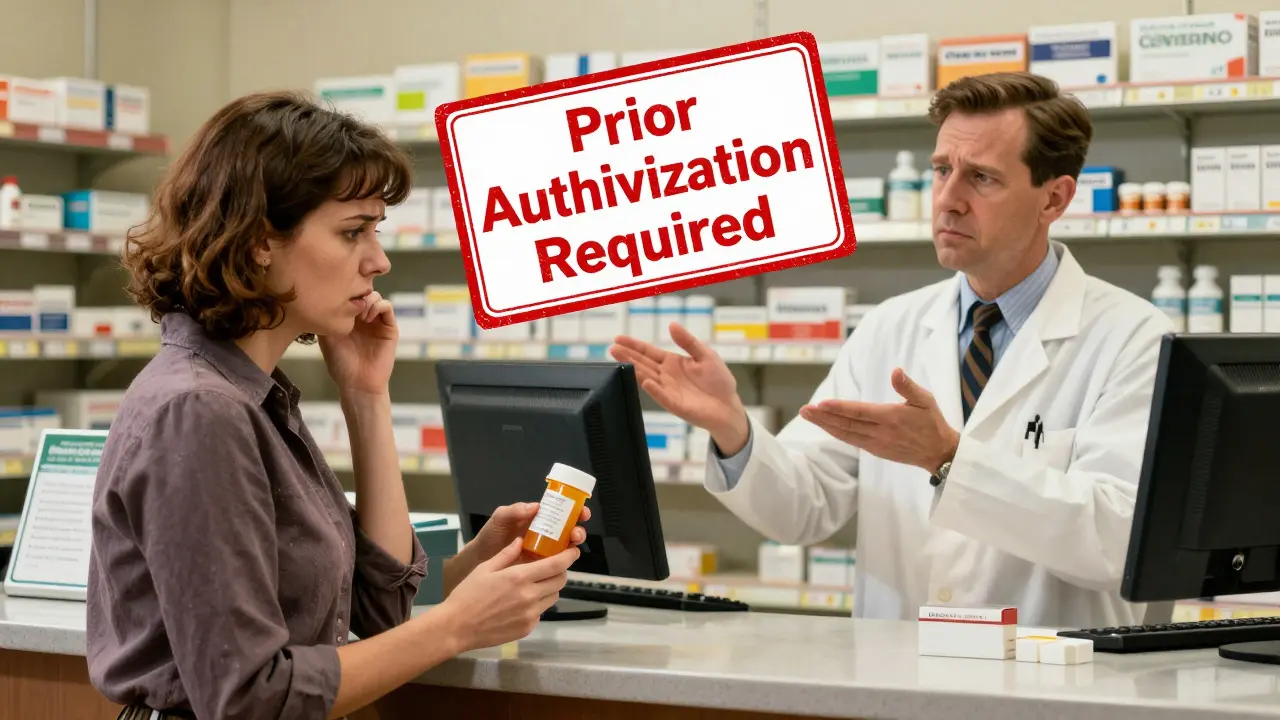
You walk into the pharmacy with a prescription for a common generic medication is a bioequivalent copy of a brand-name drug that has been approved by regulatory agencies like the FDA. You expect it to be cheap and ready to go. Instead, the pharmacist tells you the insurance company won't pay for it yet. They need "prior authorization." This feels backward. After all, generics are supposed to be the cost-saving option. So why does your insurer suddenly want to play doctor?
This isn't a glitch in the system; it's a growing trend. While prior authorization (PA) was originally designed to control spending on expensive brand-name drugs, it has expanded significantly. Today, 15-20% of generic prescriptions face this hurdle, up from just 5% in 2018. Understanding why this happens and how to beat the clock is crucial for patients who rely on these medications for chronic conditions.
Why Insurers Require Prior Authorization for Generics
The core reason insurers use prior authorization is utilization management. They want to ensure that the right patient gets the right drug at the right time. For brand-name drugs, this usually means forcing you to try the cheaper generic first. But when the drug *is* already generic, the logic shifts.
Insurance companies and Pharmacy Benefit Managers (PBMs) are organizations that administer prescription drug plans on behalf of health insurers, Medicare, Medicaid, and others. often apply PA to generics for three main reasons:
- Step Therapy Requirements: Even among generics, there are tiers. An insurer might require you to fail on Generic A before they will cover Generic B, even if both treat the same condition. This is common in categories like diabetes or high blood pressure.
- Dose Restrictions: Some generic medications have high maximum doses that insurers consider risky without close monitoring. If you are prescribed a high dose, the system flags it for review.
- Formulary Placement: PBMs negotiate rebates with manufacturers. Sometimes, requiring PA helps steer patients toward specific generic suppliers that offer better financial terms to the insurer, rather than the most clinically obvious choice.
According to data from the Generic Pharmaceutical Association, this shift has created a paradox. Generics make up about 90% of prescriptions filled in the United States, but they account for only 23% of total drug spending. By placing barriers on generics, insurers are trying to squeeze more savings out of an already low-cost segment of the market.
The Real Cost of Delays
The administrative burden of prior authorization falls heavily on healthcare providers. The American Medical Association reported in June 2023 that 93% of physicians say PAs lead to treatment delays. More alarmingly, 24% of doctors have witnessed serious adverse events-like hospitalizations-directly caused by these delays.
Consider a patient with type 2 diabetes. In a case study by the Kaiser Family Foundation in June 2024, a patient faced a 14-day delay accessing generic metformin due to PA requirements. During those two weeks, their HbA1c levels rose from 6.8% to 8.2%. That spike represents a significant loss of glycemic control, potentially leading to long-term complications.
For providers, the time cost is staggering. A survey by CoverMyMeds found that healthcare practices complete an average of 43 prior authorizations per physician each week. Of those, 38% involve generic medications. One healthcare provider noted on Reddit that their clinic spends nearly half a full-time employee’s week just handling PA paperwork for generics. This is time taken away from actual patient care.
| Drug Category | PA Requirement Rate | Primary Reason for PA |
|---|---|---|
| Brand-Name Drugs | ~75% | Steer to generic alternatives |
| Generic Medications | 15-20% | Step therapy, dose limits, formulary rules |
| Specialty Generics | 35% | High cost, complex administration |
| Cardiovascular Generics | 12% | Standard of care variations |

How the Process Works
When your doctor prescribes a generic that requires PA, the process doesn't stop at the prescription pad. Here is what happens behind the scenes:
- Submission: Your provider must submit clinical documentation to your insurer or PBM. This can be done electronically, via fax, or over the phone. Electronic submission is faster and increasingly mandated by new laws.
- Review: The insurer reviews the request against its clinical criteria. They look for proof of medical necessity. This might include lab values, diagnostic codes (ICD-10), or notes showing previous treatments failed.
- Decision: Most standard requests take 5-10 business days. However, if you qualify for an "urgent" review, timelines shorten significantly. Cigna, for example, processes urgent requests within 72 hours.
- Outcome: If approved, the authorization typically lasts for 12 months, though this varies by insurer. If denied, you can appeal.
The key to success is documentation. Insurers don't just want to know you need the drug; they want evidence that no other option works. For instance, if you are prescribed a generic immunosuppressant like methotrexate for inflammatory bowel disease, the insurer may require proof that simpler anti-inflammatories were ineffective.
Strategies to Speed Up Approval
Waiting weeks for a decision is rarely an option for chronic conditions. Here are practical steps patients and providers can take to navigate the system:
- Use Electronic Platforms: Providers using platforms like CoverMyMeds see a 32% reduction in approval times compared to fax or phone submissions. Ask your doctor if they use electronic PA tools.
- Request Urgent Status: If you are out of medication and facing health risks, ask your provider to mark the request as "urgent." This triggers expedited review protocols under federal law.
- Appeal Denials Early: According to the Crohn's & Colitis Foundation, 67% of denials can be overturned with additional clinical documentation. Don't accept the first "no" as final.
- Check State Laws: Some states have banned PA for certain essential drugs. California’s SB 1024, effective January 2025, prohibits PA for medications on the state’s Essential Drug List, including 47 commonly prescribed generics. Check if your state has similar protections.

New Reforms and What’s Coming
The tide is turning against excessive prior authorization. Recognizing the administrative burden and health risks, regulators and insurers are making changes.
In December 2023, the Improving Seniors' Timely Access to Care Act was signed into law. This mandates electronic prior authorization for Medicare Advantage plans by 2026 and requires decisions within 72 hours for expedited requests. This aligns with the current date of August 2026, meaning these rules are now in effect for Medicare beneficiaries.
Additionally, on June 23, 2025, major insurers-including CVS Health (Aetna), UnitedHealthcare, Cigna, Humana, Elevance Health, and Blue Cross Blue Shield-agreed to streamline PA processes. These reforms, implemented in January 2026, include:
- Standardized electronic templates to reduce back-and-forth communication.
- Elimination of PA requirements for 12 commonly prescribed generic classes, including ACE inhibitors, statins, and metformin.
- Strict 72-hour response timelines for urgent requests.
Despite these improvements, challenges remain. The Congressional Budget Office projects a 40% reduction in PA requirements for generics by 2028, but until then, patients still face hurdles. The American Gastroenterological Association estimates that unnecessary PAs increase total healthcare costs by 18% due to delays and complications, arguing that first-line generic medications for chronic conditions should never require pre-approval.
Frequently Asked Questions
Does prior authorization mean my drug isn't covered?
Not necessarily. It means the drug is covered, but only after the insurer verifies that it is medically necessary. Once approved, you pay your standard copay or coinsurance.
How long does prior authorization take for a generic drug?
Standard requests typically take 5-10 business days. However, if marked as "urgent," most insurers are required to respond within 72 hours. Electronic submissions are generally faster than fax or phone requests.
Can I appeal a denied prior authorization?
Yes. You have the right to appeal. Success rates are high if you provide additional clinical documentation. About 67% of denials are overturned on appeal when supported by strong medical evidence.
Why do insurers require PA for cheap generic drugs?
Insurers use PA to enforce step therapy (trying cheaper options first), manage high-dose risks, or steer patients toward preferred generic suppliers that offer better rebates to the Pharmacy Benefit Manager.
Are there any generics exempt from prior authorization?
Yes. Recent reforms in 2026 have eliminated PA for several common generic classes, including statins, ACE inhibitors, and metformin. Additionally, some states like California have banned PA for essential drugs on their state lists.
What should I do if I run out of medication while waiting for approval?
Contact your doctor immediately. They can issue a bridge prescription (a small supply to last until approval) or switch you to a non-restricted alternative temporarily. Always document the gap in treatment for potential appeals.
How long does a prior authorization last once approved?
Typically, a prior authorization is valid for 12 months. After that, your provider may need to renew it, especially if your diagnosis or dosage has changed.