
Rosuvastatin Potency and Side Effects: What to Monitor
 Mar, 13 2026
Rosuvastatin Dosing and Monitoring Calculator
Recommended Monitoring Schedule
Enter your kidney function to see personalized recommendations
Enter your information to see your personalized risk assessment
When doctors prescribe rosuvastatin, they’re not just giving you a pill-they’re giving you one of the most powerful cholesterol-lowering drugs available. At 20 mg, it can slash your LDL (bad) cholesterol by over 50%. That’s more than simvastatin or atorvastatin at the same dose. But with that kind of power comes real risks. You need to know what to watch for, when to call your doctor, and how to avoid the side effects that send thousands of people off the drug every year.
Why Rosuvastatin Is So Potent
Rosuvastatin works by blocking HMG-CoA reductase, the enzyme your liver uses to make cholesterol. Sounds simple, right? But here’s what sets it apart: it’s 15 to 20 times more potent than atorvastatin on a milligram-for-milligram basis. That means a 10 mg dose of rosuvastatin does more than a 40 mg dose of simvastatin. The numbers don’t lie. In clinical trials, 20 mg of rosuvastatin lowered LDL by 55%. Atorvastatin at 40 mg? Only about 40%. Simvastatin at 40 mg? Around 30%.This isn’t just theory. Real-world data from IQVIA in 2022 showed rosuvastatin was the second most prescribed statin in the U.S., behind only atorvastatin. Why? Because for patients with very high cholesterol or a history of heart disease, doctors need maximum effect. Rosuvastatin delivers it.
It also stays in your system longer. With a half-life of about 19 hours, one daily dose is enough. And unlike other statins, only 10% of it is processed by liver enzymes that interact with other drugs. That means fewer conflicts with common medications like blood pressure pills or antibiotics. That’s a big reason why it’s preferred in older adults on multiple prescriptions.
What Side Effects Actually Happen
Let’s cut through the noise. Most people tolerate rosuvastatin just fine. But for those who don’t, the side effects are real-and often avoidable if caught early.Muscle pain is the #1 reason people stop taking it. Studies show 5-10% of users report mild aches or cramps. That’s normal. But if it turns into deep, persistent pain, especially in your thighs or shoulders, or if you feel weak or notice dark urine, you’re at risk for rhabdomyolysis-a rare but dangerous breakdown of muscle tissue. The FDA reports that 28.7% of rosuvastatin adverse events in 2022 were muscle-related. And according to a 2022 survey of 450 lipid specialists, 74% of discontinuations were because of muscle symptoms.
Liver enzyme spikes used to be a major concern. But the FDA changed its guidance in 2012. Routine monthly blood tests? No longer needed unless you have symptoms. Still, your doctor should check your ALT and AST before you start, and again after 3 months. If those numbers go above 3 times the normal limit, you’ll likely be switched off the drug.
Diabetes risk is real, but often misunderstood. Statins slightly raise blood sugar. Meta-analyses show a 9-12% increased chance of developing type 2 diabetes over 5 years. That doesn’t mean you’ll get it. But if you’re already prediabetic, have obesity, or have a family history, your doctor should check your HbA1c before starting rosuvastatin and again at 3 and 6 months. The FDA updated labeling in 2023 to reflect this.
Proteinuria (protein in urine) is unique to rosuvastatin. At 40 mg, the risk jumps 2.3 times compared to 10 mg. That’s why the 40 mg dose is banned in anyone with kidney issues. Even at 20 mg, if you have mild kidney disease, your doctor should monitor your urine for protein. It’s not common, but it’s a red flag that can lead to long-term kidney damage if ignored.
Who Should Avoid Rosuvastatin
Not everyone is a candidate. Here are the clear red flags:- Severe kidney disease (eGFR below 30 mL/min/1.73m²): Rosuvastatin is completely off-limits. It’s cleared by the kidneys, and if they’re failing, the drug builds up dangerously.
- Moderate kidney disease (eGFR 30-59): You can still take it-but only up to 10 mg. Never 20 or 40 mg.
- Active liver disease: If your liver enzymes are already high, don’t start.
- Pregnancy or breastfeeding: Statins can harm fetal development. Avoid completely.
- History of rhabdomyolysis on any statin: Don’t risk it.
And here’s something many don’t realize: your genes matter. Some people carry a variation in the SLCO1B1 gene that makes them absorb rosuvastatin too well. This can raise blood levels by over 200%. If you’ve had unexplained muscle pain on rosuvastatin before, genetic testing might explain why. While not routine yet, some specialists are starting to use it.
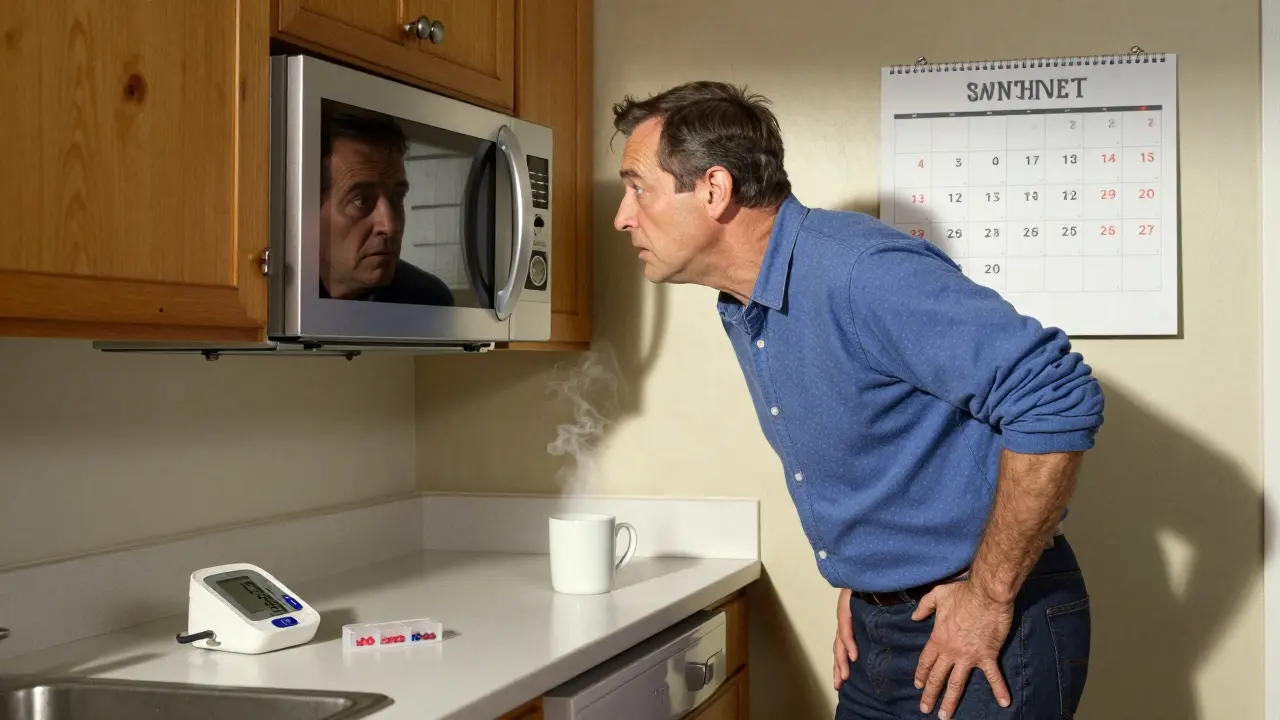
What to Monitor and When
You don’t need endless blood tests. But you do need the right ones at the right time.- Before starting: Get a full panel: ALT, AST, CK (creatine kinase), eGFR, and HbA1c. This is your baseline.
- After 3 months: Repeat ALT and AST. If they’re normal, you probably won’t need them again unless you change dose or feel unwell.
- Annually: Check eGFR. If your kidney function drops below 60, your dose may need to be lowered.
- When you have symptoms: If you feel unexplained muscle pain, weakness, or dark urine-get your CK checked immediately. A level over 5 times the upper limit means stop the drug.
- Every 6 months if prediabetic: Monitor HbA1c. A rise of 0.1-0.3% is common, but if it climbs faster, your doctor may switch you.
And here’s a pro tip: don’t wait for lab results to speak up. If you feel different-more tired, stiff, or sore than usual-tell your doctor. The 2023 National Lipid Association survey found that 42% of specialists now rely more on patient-reported symptoms than on CK numbers alone.
What Patients Are Saying
Real stories matter. On Drugs.com, rosuvastatin has a 5.8/10 rating. Half the users say it worked. The other half say it didn’t.One Reddit user wrote: “My LDL dropped from 190 to 85 in 3 months. No side effects at 10 mg. I’ve been on it for 4 years.”
Another said: “20 mg gave me leg cramps so bad I couldn’t walk. Stopped it. Symptoms gone in 10 days.”
These aren’t outliers. They’re common patterns. The dose matters. The body matters. Your history matters. What works for one person may not work for you.

When to Switch
If you can’t tolerate rosuvastatin, you’re not out of options. Pravastatin and fluvastatin are much gentler on the kidneys and liver. They’re less potent, sure-but for many, that’s enough. In fact, for patients with kidney disease, they’re the preferred choice. The 2023 ACC guidelines recommend switching to these if eGFR drops below 60.And if muscle pain is the issue, sometimes lowering the dose helps. A 5 mg or 10 mg dose of rosuvastatin still lowers LDL by 40-50%. That’s enough for many people. You don’t always need maximum power.
Final Thoughts
Rosuvastatin is a powerful tool. It saves lives. But it’s not a magic bullet. It demands respect. If you’re on it, know your numbers. Know your body. Know when to speak up.The benefit? For someone with heart disease, it reduces the chance of a heart attack or stroke by nearly half. The risk? A 1 in 5,000 chance of serious muscle damage. For most, the math is clear.
But if you’re feeling off, don’t ignore it. Don’t assume it’s just aging. Don’t think you’re being dramatic. Your body is giving you a signal. Listen.
Can rosuvastatin cause kidney damage?
Rosuvastatin doesn’t directly damage kidneys, but it’s cleared by them. If your kidneys are already impaired (eGFR below 60), the drug can build up in your blood, increasing side effect risks. At higher doses (20-40 mg), it can also cause protein in the urine (proteinuria), which, if ignored, may lead to long-term kidney stress. The 40 mg dose is banned in anyone with eGFR below 60, and 20 mg is risky below 60. Always monitor kidney function with an eGFR test before starting and yearly after.
Is muscle pain from rosuvastatin normal?
Mild muscle soreness affects 5-10% of users and often goes away on its own. But severe pain, weakness, or dark urine are not normal. These could signal rhabdomyolysis-a rare but dangerous condition where muscle tissue breaks down and can damage kidneys. If you experience these, stop the drug and get your creatine kinase (CK) levels checked immediately. Most cases resolve within 1-2 weeks after stopping, but waiting too long can be dangerous.
Do I need regular liver tests while on rosuvastatin?
No, not if you feel fine. The FDA stopped recommending routine liver enzyme checks in 2012. You only need tests before starting, 3 months after beginning or changing dose, and if you develop symptoms like nausea, fatigue, or yellowing skin. Liver damage from rosuvastatin is extremely rare. Most elevated liver enzymes are temporary and return to normal even if you keep taking the drug.
Can rosuvastatin cause diabetes?
Yes, but the risk is small and mostly affects people already at risk. Studies show statins, including rosuvastatin, slightly raise blood sugar and HbA1c by 0.1-0.3%. This increases the chance of developing type 2 diabetes by 9-12% over 5 years. If you’re overweight, have prediabetes, or have a family history, your doctor should check your HbA1c before starting and again at 3 and 6 months. The benefit of preventing heart attacks still far outweighs this risk for most people.
Is 5 mg of rosuvastatin enough?
For many, yes. A 5 mg dose lowers LDL by about 35-40%. A 10 mg dose drops it by 45-50%. These are still considered moderate- to high-intensity reductions by current guidelines. If you’re at moderate risk for heart disease, or if you’ve had side effects at higher doses, 5-10 mg is often sufficient. You don’t need the highest dose unless your LDL is extremely high or you’ve had a heart attack or stroke.
Can I take rosuvastatin with other medications?
Rosuvastatin has fewer drug interactions than most statins because only 10% is processed by liver enzymes. It’s generally safe with blood pressure meds, aspirin, and most antibiotics. But avoid high-dose niacin, cyclosporine, and gemfibrozil-they can raise rosuvastatin levels dangerously. Always tell your doctor and pharmacist about every supplement and over-the-counter drug you take. Even herbal ones like red yeast rice can act like statins and increase risk.
How long does it take for side effects to go away after stopping?
Most side effects fade within 1-4 weeks after stopping. Muscle pain usually resolves in 1-2 weeks. Liver enzymes return to normal in about 4-6 weeks. Proteinuria may take longer-up to 8 weeks-to clear. Cognitive symptoms like memory fog, if they occurred, typically improve within 3 weeks. The key is to stop the drug at the first sign of serious symptoms and not wait to see if it gets worse.
Katherine Rodriguez
March 15, 2026 AT 01:06Also why is everyone acting like 20mg is the only option? I'm not a heart attack waiting to happen.
Devin Ersoy
March 16, 2026 AT 13:25Also, the "15x more potent" claim? Bro, that's like saying a Ferrari is 15x faster than a bicycle. Yeah, but I don't need to race to Target.
Adam M
March 18, 2026 AT 13:11Hugh Breen
March 18, 2026 AT 19:42So many docs just hand out scripts like candy. You? You gave us the full playbook. The proteinuria warning? The SLCO1B1 gene mention? That’s next-level stuff. I’m sharing this with my entire family. 💪❤️
Byron Boror
March 19, 2026 AT 02:02Also, if you're prediabetic, you should've fixed your diet before popping pills. This is why we have a healthcare crisis.
Lorna Brown
March 20, 2026 AT 00:46Are we healing? Or are we optimizing?
Kandace Bennett
March 20, 2026 AT 22:52Also, why is 40mg even a thing? Who’s prescribing this? Are they trying to kill us?
Tim Schulz
March 22, 2026 AT 07:35"Oh, but the benefits outweigh the risks!" - said every doctor who hasn’t had to explain to a 62-year-old why she can’t climb stairs anymore.
Also, the "1 in 5,000" muscle damage stat? That’s like saying "there’s a 1 in 5,000 chance your plane will crash." I’m not boarding.
Jinesh Jain
March 23, 2026 AT 09:34douglas martinez
March 23, 2026 AT 19:33Sabrina Sanches
March 24, 2026 AT 02:49Shruti Chaturvedi
March 25, 2026 AT 06:52Scott Smith
March 26, 2026 AT 14:09