
Sunscreen Science Explained: SPF, UVA/UVB, and Daily Protection Guide
 Aug, 7 2026
You probably know you should wear sunscreen. But do you actually know what’s inside that bottle? Most of us grab whatever is on sale or looks nice in the mirror. We apply it before a beach trip but skip it on cloudy Tuesday mornings. This habit leaves our skin vulnerable to damage we can’t see until years later.
Understanding sunscreen science is the study of how ultraviolet radiation interacts with skin and how chemical or physical filters block that energy isn't just about avoiding sunburns. It is about preventing premature aging and reducing your risk of skin cancer. The difference between a product that works and one that doesn’t often comes down to understanding three things: what SPF really means, the difference between UVA and UVB rays, and why "broad spectrum" is the only label that matters for daily use.
What SPF Actually Means (And What It Doesn’t)
SPF stands for Sun Protection Factor. You see the number everywhere-15, 30, 50, 70. It feels like a higher number means twice the protection, right? If SPF 30 blocks 97% of harmful rays, surely SPF 60 blocks 98%? Well, yes. And that is exactly where the confusion starts.
SPF measures protection against UVB radiation is short-wave ultraviolet light (290-320 nm) that primarily affects the epidermis, causing sunburn and direct DNA mutations. Think of UVB as the burning ray. It peaks during midday hours from 10 am to 4 pm. The math behind SPF is straightforward but misleading. SPF 15 blocks about 93.3% of UVB rays. SPF 30 blocks 96.7%. SPF 50 blocks 98%. Notice the jump? Going from SPF 30 to SPF 50 only adds 1.3% more protection. That tiny increase is why many dermatologists argue that obsessing over SPF 100 is unnecessary if you aren’t applying enough product.
| SPF Rating | % UVB Blocked | % UVB Penetrates |
|---|---|---|
| SPF 15 | 93.3% | 6.7% |
| SPF 30 | 96.7% | 3.3% |
| SPF 50 | 98.0% | 2.0% |
| SPF 100 | 99.0% | 1.0% |
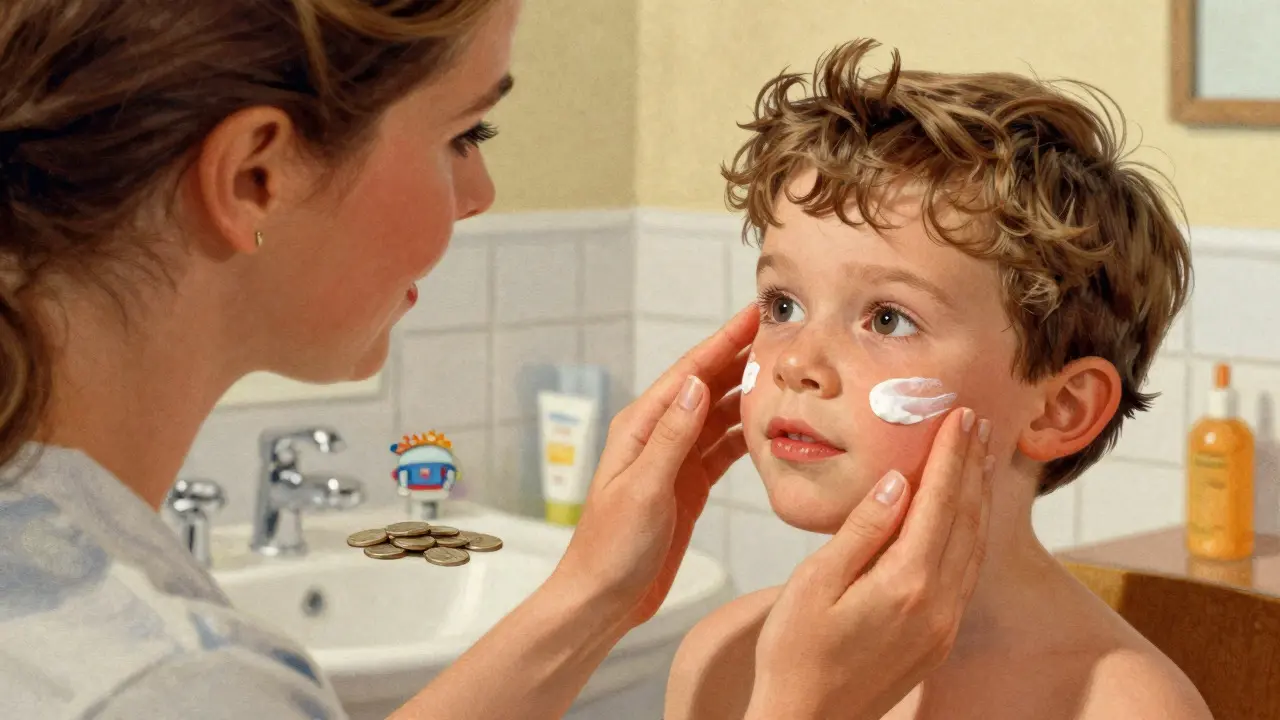
The real problem isn’t the number on the bottle; it’s how much you put on your face. Studies show that most people apply only 25% to 50% of the recommended amount. The standard dose for testing SPF is 2 milligrams per square centimeter of skin. For your face alone, that’s roughly a quarter teaspoon. If you apply half that amount, your SPF 50 sunscreen performs like SPF 25. So, picking a higher SPF acts as an insurance policy against under-application, which is something almost everyone does.
UVA vs. UVB: The Invisible Threat
If UVB is the burner, UVA radiation is long-wave ultraviolet light (320-400 nm) that penetrates deep into the dermis, causing long-term damage through free radical generation and oxidative stress is the ager. While UVB rays are strongest at noon and change with seasons, UVA rays remain constant throughout the day and year. They penetrate glass. They go through clouds. They reach your skin while you’re sitting in your car or working near a window.
UVA accounts for up to 95% of the ultraviolet radiation reaching Earth’s surface. These longer wavelengths dive deeper into your skin, hitting the dermis layer where collagen and elastin live. When UVA hits these structures, it creates free radicals-unstable molecules that steal electrons from healthy cells. This process, called oxidative stress, breaks down collagen fibers. The result? Wrinkles, sagging, and dark spots. Dermatologists call this photoaging. Unlike sunburns, which heal in a week, photoaging accumulates silently over decades.
This is why "Broad Spectrum" is non-negotiable. A sunscreen labeled only with an SPF number protects you from burning (UVB) but might leave you wide open to aging (UVA). Under U.S. Food and Drug Administration (FDA) regulations, to claim "Broad Spectrum," a product must pass a critical wavelength test of at least 370 nanometers. It also needs to provide UVA protection proportional to its UVB protection. Specifically, the UVA Protection Factor (UVA-PF) must be at least one-third of the SPF value. If you buy SPF 30, it needs a UVA-PF of at least 10. Without this balance, you’re getting partial protection at best.
Mineral vs. Chemical Sunscreens: How They Work
Sunscreens fall into two main camps based on their active ingredients: mineral (physical) and chemical. Both protect you, but they do it in completely different ways. Choosing between them usually depends on your skin type and cosmetic preferences rather than raw efficacy.
Mineral sunscreens use inorganic compounds like zinc oxide and titanium dioxide that sit on top of the skin to reflect and scatter UV rays. Imagine putting a shield on your skin. Zinc oxide and titanium dioxide particles bounce UV light away before it can penetrate. These ingredients have been used for decades and are generally considered gentle. They are less likely to cause allergic reactions, making them ideal for sensitive skin, rosacea, or children. However, they often leave a white cast, especially on darker skin tones, and can feel thicker or heavier.
Chemical sunscreens contain organic compounds like avobenzone, octinoxate, and oxybenzone that absorb UV radiation and convert it into heat. Instead of reflecting light, these ingredients soak it up. Molecules like avobenzone absorb UVA rays, while others like octocrylene handle UVB. Once absorbed, the energy transforms into harmless heat that releases from the skin. Chemical sunscreens tend to be lighter, clearer, and easier to blend into makeup. They don’t leave a white residue. But because they interact with skin chemistry, they can sometimes irritate sensitive skin or trigger breakouts in acne-prone individuals.
There is also an environmental angle. Some chemical filters, specifically oxybenzone and octinoxate, have been linked to coral reef bleaching. Hawaii and Key West have banned sunscreens containing these chemicals to protect marine ecosystems. If you swim in ocean waters frequently, look for "reef-safe" labels or stick to mineral options with non-nano zinc oxide, which is considered safer for reefs.
Daily Protection: Why Every Day Counts
We associate sunscreen with summer vacations. But skin damage happens year-round. Even on cloudy days, up to 80% of UV rays penetrate cloud cover. In winter, snow reflects up to 80% of UV radiation, doubling your exposure if you’re skiing or hiking. Dr. Leslie Baumann, a board-certified dermatologist, notes that UVA rays are equally intense during all daylight hours throughout the year. Skipping sunscreen on gray days is like skipping seatbelts because the road is empty-you’re still exposed to risk.
Daily use prevents cumulative DNA damage. Each time UV rays hit your skin, they cause microscopic injuries. Your body repairs most of them, but some errors slip through. Over time, these mutations accumulate, increasing the risk of basal cell carcinoma, squamous cell carcinoma, and melanoma. The American Academy of Dermatology recommends using a broad-spectrum SPF 30+ every single day. This isn’t just advice; it’s the gold standard for prevention.
Application technique matters as much as the product itself. Here is the routine that actually works:
- Morning Application: Apply sunscreen as the last step of your skincare routine, before makeup. Use a nickel-sized amount for your face and neck.
- Absorption Time: Wait 15 minutes after applying chemical sunscreen before going outside. This allows the film-forming agents to bind properly. Mineral sunscreens work immediately upon application.
- Reapplication: Reapply every two hours if you are outdoors. If you are indoors near windows, once in the morning is usually sufficient unless you spend extended time by the glass.
- Water Resistance: If you sweat or swim, choose a water-resistant formula. Note that "water-resistant" only lasts 40 or 80 minutes. No sunscreen is truly waterproof.
A common mistake is mixing sunscreen with moisturizer. While convenient, this often leads to under-application. People tend to use less product when it’s mixed in, dropping their effective SPF significantly. Keep them separate to ensure you get the full rated protection.

Choosing the Right Product for You
With thousands of options on the market, how do you pick? Start with your skin type. If you have oily or acne-prone skin, look for terms like "non-comedogenic" or "oil-free." Gel-based chemical sunscreens or lightweight fluid mineral formulas work well here. Avoid heavy creams that clog pores.
If you have dry or mature skin, richer creams with hydrating ingredients like hyaluronic acid or ceramides will feel better and encourage consistent use. Texture is key-if it feels sticky or greasy, you won’t wear it. Consistency beats perfection. A mediocre sunscreen worn daily is better than a perfect one left in the cabinet.
For those with sensitive skin or conditions like eczema, mineral sunscreens with zinc oxide are the safest bet. Patch test any new product on your inner arm for 24 hours before applying it to your face. Watch for stinging, redness, or itching. Ingredients like fragrance and alcohol denat can be major irritants, so opt for fragrance-free versions when possible.
Don’t ignore the Skin Cancer Foundation’s Seal of Recommendation. Their criteria were updated in 2023 to require higher standards. Products earning the seal must now meet stricter UVA protection ratios and stability tests. Looking for this seal takes the guesswork out of shopping.
Frequently Asked Questions
Does SPF expire?
Yes, sunscreen expires. Check the expiration date on the bottle. Once opened, chemical sunscreens typically last about one year. Mineral sunscreens may last slightly longer, but the preservatives degrade over time. Using expired sunscreen reduces its effectiveness, leaving you unprotected without realizing it. Store it in a cool, dry place away from direct sunlight to extend its life.
Can I wear sunscreen under makeup?
Absolutely. Sunscreen should always go on before makeup. Apply it as the final step of your skincare routine. Wait 15 minutes for it to set and form a protective film. If your foundation has SPF, it rarely provides enough coverage to replace dedicated sunscreen. You would need to apply several layers of foundation to match the protection of a proper sunscreen product.
Is natural sunscreen effective?
Most "natural" sunscreens sold in stores are actually mineral-based, using zinc oxide or titanium dioxide, which are naturally occurring minerals. True DIY recipes using coconut oil or shea butter offer very low SPF (usually below 5) and are not reliable for serious protection. Stick to FDA-approved mineral sunscreens if you want a natural approach that actually works.
Do I need sunscreen if I’m indoors?
If you sit near a window, yes. UVA rays penetrate standard glass. Over time, this exposure contributes to uneven skin tone and wrinkles. If you work far from windows or in a basement, you may skip it. However, for most office workers, a lightweight SPF 30 in the morning is a simple habit that prevents long-term damage.
Why does my sunscreen pill?
Pilling happens when sunscreen doesn’t mix well with other skincare products, particularly those containing silicones or certain polymers. To fix this, simplify your routine. Apply sunscreen to damp skin, wait for each previous layer to fully absorb before adding the next, and avoid rubbing vigorously. Letting the sunscreen sit for 10-15 minutes before applying makeup also helps prevent pilling.
Morikeoluwa Ayodeji
August 7, 2026 AT 21:17hey everyone! just wanted to drop a quick note about the mineral vs chemical debate because i see so much confusion around it. honestly both work if you actually apply enough of them. the real issue is that most of us are stingy with sunscreen and think a pea-sized amount covers our whole face. you need a full nickel sized dollop for your face and neck combined. i started using a tinted mineral one recently and it saves me from looking like a ghost which was my biggest hurdle before. also dont forget about your ears and the back of your neck those spots get burned easily when you least expect it.
Gary Browne
August 9, 2026 AT 16:19so do you guys actually wash this stuff off at night or just let it sit there all day? i feel like i am clogging my pores if i leave it on but then again maybe im overthinking it. what is the routine after sunset?
Morikeoluwa Ayodeji
August 9, 2026 AT 17:05you definitely should wash it off especially if its not water resistant. leaving it on can trap dirt and oil throughout the night. i use a double cleanse method oil cleanser first then a gentle foaming cleanser. it takes two minutes extra but my skin has never looked better since i started doing that. trust me on this one.
Michelle Alavaski
August 10, 2026 AT 00:42It is rather disconcerting to consider that the very institutions purporting to safeguard our health are simultaneously endorsing products laced with potentially carcinogenic organic compounds under the guise of scientific consensus. One must question whether the push for chemical sunscreens is driven by genuine dermatological necessity or merely by the lucrative interests of multinational cosmetic conglomerates who have long-standing ties to regulatory bodies. The historical precedent of asbestos and lead paint suggests that 'safe' designations are often provisional and subject to revision only after significant public harm has occurred. Furthermore, the ban on certain chemicals in Hawaii appears less like an environmental triumph and more like a localized panic reaction lacking comprehensive global data support. We are essentially conducting a massive, uncontrolled experiment on the human population, assuming that the conversion of UV radiation into heat is entirely benign without considering potential systemic absorption effects that remain poorly understood. It would be prudent to exercise extreme skepticism towards any product that requires daily ingestion-like application onto the body's largest organ.
Lilith Stepanyan
August 11, 2026 AT 01:22the article misses the point entirely. people are scared of chemicals because they have been lied to for decades. but now we are being told to slather zinc oxide on our faces which is literally dust from rocks. who decided that grinding up minerals is safer than synthetic molecules? nobody checks the nanoparticle size distribution in these lotions. you are breathing in microscopic particles every time you apply it. it is a slow poison disguised as self-care. the industry wants you dependent on their new formula every year. wake up.
Veronica Agbanyim
August 11, 2026 AT 20:07it is frankly embarrassing how many adults still treat sunscreen as an optional accessory for beach days rather than a fundamental hygiene practice like brushing teeth. we know the science. we know uv rays penetrate clouds and glass. yet here we are debating the ethics of zinc oxide while ignoring the moral imperative to protect our own bodies from preventable cellular damage. laziness is not a valid excuse for neglecting basic health maintenance. if you cannot be bothered to spend thirty seconds applying lotion you probably deserve the wrinkles. it is that simple. stop making excuses and start taking responsibility for your own longevity.
Christina Thygesen
August 11, 2026 AT 21:05i totally get why people hate the white cast though it feels so weird putting something that visible on your face every morning. i switched to a japanese brand that uses micronized titanium and it disappears completely. it changed my life honestly. no more feeling like a clown.
Josh Atkinson
August 12, 2026 AT 06:26Look, I've been studying skincare formulations for years and let me tell you, the obsession with 'natural' is largely a marketing scam designed to prey on fear-mongering consumers who don't understand chemistry 😊. Chemical filters like avobenzone are incredibly stable when paired correctly with octocrylene, and the amount absorbed through intact skin is negligible compared to what you ingest in food or breathe in air. The real danger isn't the sunscreen; it's the complacency of thinking SPF 15 is enough for a midday hike. You need high protection, broad spectrum, and reapplication. If you're too lazy to reapply, you're failing yourself. Also, coral reefs are dying due to agricultural runoff and ocean acidification, not your vacation tan lotion. Stop blaming the messenger and start fixing the actual problem. 🌞
Sansaray Jones
August 12, 2026 AT 06:30just buy the cheap stuff at walgreens. works fine. dont overthink it.
Tegan Morey
August 12, 2026 AT 17:08does anyone else struggle with sunscreen pilling under makeup? i try everything and it always ends up looking like little balls of grease on my forehead. is it the sunscreen or my primer?
jackie healey
August 13, 2026 AT 14:09The pilling issue is unfortunately quite common! It usually happens when silicone-based products clash with polymer-heavy sunscreens. To mitigate this, try applying your sunscreen to slightly damp skin instead of dry skin. This helps the formula spread more evenly and reduces friction. Additionally, allow each layer of your skincare routine to fully absorb-wait about 60 seconds between steps. Finally, when applying sunscreen, press it into your skin using your palms rather than rubbing it in circular motions. This technique significantly reduces the likelihood of pilling and ensures a smoother base for your makeup. Hope this helps!
Minal Aditi
August 14, 2026 AT 04:33oh wow another lecture on how to live my life. thanks for nothing. i'll just continue to ignore the sun until it burns me. sounds like a plan. really inspiring stuff here. truly. 🙄
Fenton Quinn
August 14, 2026 AT 06:25the concept of protection is inherently paradoxical. we seek to shield ourselves from nature's energy yet in doing so we disconnect from the very force that sustains life. vitamin d synthesis requires exposure. perhaps the solution lies not in avoidance but in moderation. balance is key. too much sun harms. too little starves. find the middle path.
charlie student
August 14, 2026 AT 10:51i used to hate sunscreen because it felt greasy and heavy. then i found a gel cream texture that feels like nothing on the skin. game changer. consistency is better than perfection. if you wear a mediocre one daily you win. if you buy the best one and never wear it you lose. simple math.